

Topics
-
Fifty-five women engineering students completed an AI bootcamp focused on rural Karnataka. Participants developed AI-based solutions after visiting villages and conducting field interviews. The She Innovates bootcamp partnered with several organizations to achieve its goals. This initiative aims to boost women's participation in AI and entrepreneurship. It encourages AI applications for rural development and community-focused sectors. View the full article
-
Besi's quarterly orders more than doubled, fueled by AI and hybrid bonding technology. The company saw increased customer adoption of its advanced chip packaging solutions. Demand for AI applications continues to drive growth in data centers. Besi anticipates revenue growth between ten and fifteen percent. This strong performance aligns with other semiconductor sector reports. View the full article



Leaderboard
-
PriyankaBose
Members1Points10Posts

Popular Content
Showing content with the highest reputation on 02/22/2022 in Posts
-
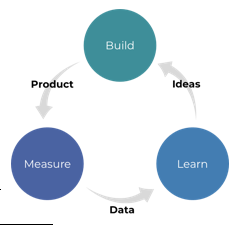
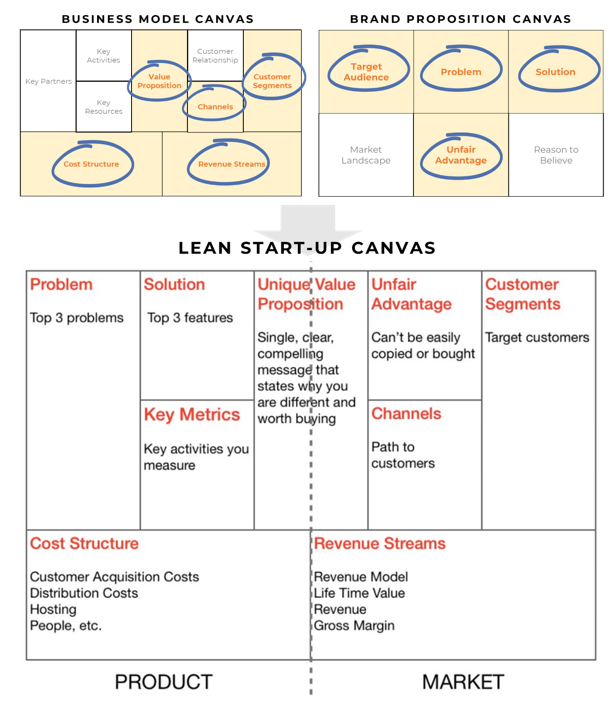
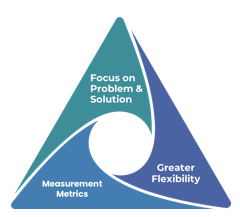
1 pointOne of the primary requirements for a start-up to be successful, is to have an innovative or disruptive idea that will witness sizable market adoption. However, when they start, founders have no idea, whether their idea will actually gain any market acceptance at all. Founders and companies spend months and sometimes even years in building a perfect a product / service, to eventually learn that customers don’t even want that specific feature, or USP, or quite often than not, the product all together. This is the problem that the lean start-up solves. The Lean Start-up The lean start-up is an approach to build companies and launch products quicker, that are in-sync with customer needs. It was proposed in 2008 by Eric Ries (also the author of the book “The Lean Start-up”), with his entrepreneurial learnings from adapting customer focused development and lean practices to technology start-ups. As the name suggest, the lean start-up evolved from the lean management framework of continuous and iterative improvement through Plan Do Check Act (PDCA) cycle. Lean Principals in a Lean Start-up Testing before Investing The lean start-up demonstrates the importance of iteratively development, and involves building an MVP (Minimum Viable Product), viz. a version of the product that has just enough features to be released for testing and feedback from early customers. This approach essentially limits the exposure to associated market and financial risks, by reducing and often eliminating the need for enormous capital investment in extensive product development and expensive product launches, for ideas that not even be accepted by the market. The lean approach is centered around the concept of agile development and aims to, o Shorten product development cycles o Rapidly validate the business model’s is viability o Build products are in sync is customer requirements and wants This is achieved by framework of hypothesis-driven experimentation, iterative product releases and validated learning. Customer Centric Approach + Flexibility + Rapid, Responsive Development The lean start-up emphasizes on a customer centricity, by that it follows a rapid development and validation through a consistent customer feedback methodology (rather than intuition), prioritizing flexible and iterative development, over stringent planning. Companies use these customer feedbacks to learn if and what in the products, do the customers want and don’t, and use these learnings for validation on whether to continue to build the product, pivot and/ or enhance some product features. The company continues this cycle called the Build, Measure, learn loop, also called the lean principles. This framework hence, enables recovery more often, vis-à-vis a full-fledged product deployment. The Lean Canvas The lean canvas was devised by Ash Maurya, that helps deconstruct and brainstorm ideas from their fundamental business assumptions. Adapted from Alex Osterwalder's Business Model Canvas and optimized for Lean Start-ups, the lean canvas a has striking, and rather tactical combination of the Business Model Canvas and Brand Proposition Canvas, keeping in sight the critical aspects of and symbiosis between both the product and the market. Lean Canvas in creation of a Lean Start-up While, traditional business model canvases offer a long-term view of the business with limited capabilities for performance measurement; Start-ups really need something that keeps them focussed on the fundamental elements and targets of the business. Lean canvas model on the other hand offers constant visibility to these elements, enhanced problem solving, iterative planning & flexibility and tools to monitor goal – performance measurement metrics, the lean canvas is instrumental to the success and growth start-ups and development business, both. The General Electric – Used Case General Electric is often cited as one of the most a successful example of a large organization demonstrating the power and potential of the lean start-up approach and principles (to read more follow the link: https://hbr.org/2014/04/how-ge-applies-lean-startup-practices) Lean canvas graphic source: https://medium.com/@steve_mullen/an-introduction-to-lean-canvas-5c17c469d3e0; References: https://yonderconsulting.com/3-examples-of-lean-startup/

 1 point
This leaderboard is set to Kolkata/GMT+05:30