

Topics
-
OpenAI, which is expected to need about 3,200 megawatts (MW) of power for its new facility, has agreed to provide up to 1,000 MW to the Southern Co subsidiary Georgia Power's systems in times of high demand. View the full article
-
The affected startup, Hugging Face, said it had turned to Zhipu AI's open-source GLM-5.2 model last week to analyze data from the hack after leading US AI models declined the task, unable to distinguish between a defender and an attacker. View the full article



Leaderboard
-
Sai Kotari
Lean Six Sigma Black Belt1Points11Posts -
Vinod GC
Lean Six Sigma Black Belt1Points26Posts -
RahulGarg
Members1Points28Posts


Popular Content
Showing content with the highest reputation on 07/20/2021 in Posts
-
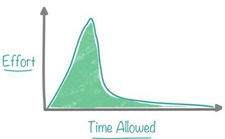
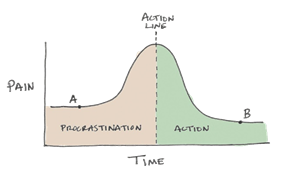
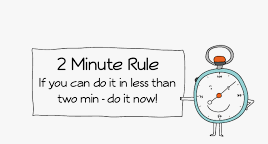
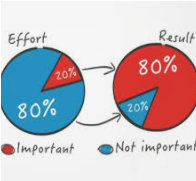
1 pointWhat is Parkinson’s Law? In 1955, Cyril Northcote Parkinson, a British historian and author, mentioned in an essay that “work expands so as to fill the time available for its completion”. He called this theory Parkinson’s Law. Over the years, his theory has become a success in business theory regarding the organisation of work tasks. Why does this happen and what are its impact? According to Parkinson’s Law, instead of working efficiently to do more in less time, we lengthen the process which is a natural tendency of human beings. This makes us delay our work and noticeably our productivity tumbles. Though you know the amount of time set for a task to be completed, you tend to leave it to the very last minute. This is called procrastination which is a key player in Parkinson’s Law. While you allocate too much time for a task, you tend to waste all the precious time that could have been productively used in other areas. The extra time allocated and spent doesn’t necessarily reflect in the outcome of the work as well Majority of people will get tensed and stressed out before they really get around doing the work and will disguise of working well under pressure. How to overcome and improve productivity? Combating Parkinson’s Law is not something that can happen without cautious efforts. A good starting point would be to start assuming that a task or work doesn’t have to be completed by necessarily consuming all of the allocated duration. Generically tested and applied productivity and time-management principles could be adopted to optimize time. Here are some steps that you need to follow to implement it in your work life. a) Use a time-blocking technique: This is about assigning specific blocks of time to each activity. This technique forces us to allocate specific time for each of the scheduled tasks to avoid interruptions and distractions while doing the task. For example, you may set allocate 45 minutes to prepare an analysis report, 5 minutes to review and reply to emails, another 45 minutes to continue with the report, 10 minutes coffee break and so on. This will help stay focussed on the specific tasks and avoid any procrastination. Apply the two-minute rule: This is a basic rule of the Getting Things Done (GTD) method, developed by productivity consultant David Allen. It works on the principle that any task we can perform in less than two minutes should be completed immediately, rather than rescheduling or postponing. The duration a) may vary depending on context, however the principle remains same: do what you can do right away and avoid postponing it. For example, replying to an email, forwarding an available record to a colleague and so on. b) Follow the Pareto principle: Often referred to as the 80/20 rule, this principle states that 80% of the results come from 20% of the effort applied to a task or project. This means that a majority of our tasks have less impact on the end result, whereas the most important result is produced in a shorter timeframe. The challenge here is to identify those tasks that are most important and the assigned them to the 20% so as to ensure to achieve the result in the shortest possible time. c) Create your own method: All the techniques above propose generic approaches, however you may tailor a method specifically to meet your challenges and limitations. Applying any of the renowned time-management techniques, you may create a method that seamlessly fits your daily activity and your requirements. For example, if you are finding it hard to overcome distractions, create suitable strategies and routines to overcome. Similarly if you tend to procrastinate, develop a system with realistic time blocking for tasks and ensure sticking to it.
 1 point
 -
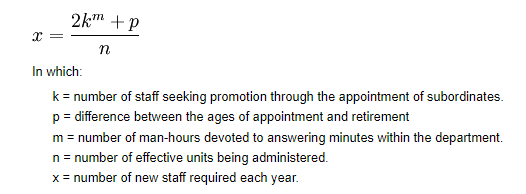
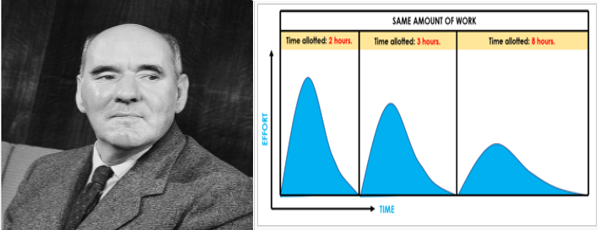
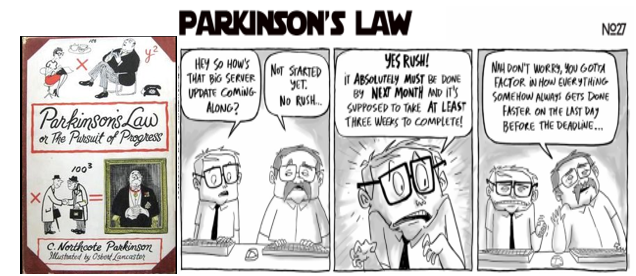
1 pointParkinson's law is known for its famous statement i.e. "work expands so as to fill the time available for its completion". This law is also applied into growth of bureaucracy in an organization. Cyril Northcote Parkinson published this law in one of his famous books i.e. The Economist in year 1955. Current form of the law is not the one to which Parkinson referred initially, but rather it was a mathematical equation describing the rate at which bureaucracies expand over the period of time. The thought that triggered this law was “Increase in the number of the employees at Colonial Office of British empire though there was considerable decline in the number of colonies that the office has to administer. He thought over the same and explained this growth primarily due to 2 reasons i.e. i) An official wants to multiply the subordinates, not rivals and ii) Official make work for each other. He also noticed that number employed in a bureaucracy increased by 5-7% per year though the work has not increased at all or even if decreased as depicted in formula below : The Law not only applies to individuals, but also teams, organizations, armed forces, universities, corporations etc. Famous Corollaries derived from Parkinson’s law : i) Work complicates to fill in the available time ii) If you wait until the last minute, it only takes a minute to do iii) Work contracts to fit in the time we give it iv) In the world of computers , Data expands to fill the space available for storage v) In corporate offices, In ten hours a day you have time to fall twice as far behind your commitments as in five hours a day Examples / Evidences of Parkinson’s law in day to day tasks / events : i) An elderly lady can spend a whole day merely composing and sending a postcard. An hour spent to find postcard, another hour in looking for spectacles, an hour and a half in composition of the same, and another thirty minutes in deciding whether to wear a coat or not when heading to the postbox. However a busy person could complete the same task in a few minutes. ii) Sometimes we see this also in the game of Cricket, teams usually play all the overs (50 overs) even to chase a small target (200 / 250 runs) and in T20-T20 they make same runs in 20 overs as well. Again Parkinson coming into the play here. iii) In a construction projects, if Labor is per day basis, same amount of work takes almost double of the time than the contract basis work. Clearly Parkinson coming into picture. iv) In Engineering degree / programs, students cover the same amount of syllabus at last night of the exam that was supposed to be done in the complete semester. v) During Deepawali / festivals, if we start cleaning / decorating our houses 2 weeks before or 2 days before, there would be almost same amount of the output / result that will reflect at the day of Deepawali. vi) We see often in Bollywood movies or typical Indian serials that they keep on pulling the story too much to either complete the 3 hours of movie or to extend to the maximum episodes in a serial. Again, Parkinson law is writing its script here. vii) During travel to a particular place, we see sometime we take more time than required but same distance in case of any emergency or if less time is available gets traveled in lesser time too. Again it’s the Parkinson effect ! viii) In consulting assignments, if the billing is per day basis, team take more than required time to complete the same amount of work / assignment than they take if Billing is fixed / assignment. How to use Parkinson’s law to Improve the Team’s Productivity ? i) Make deadlines for everything for the completion e.g. all the activities in project. ii) Break down your project into tasks and Measure the each activity time that it normally take to complete (Industry sources, estimation techniques e.g. Planning Poker in Agile etc., surveys etc.) like we normally do in project management as WBS (Work Breakdown Structure) iii) Allocate the time to team as per the realistic time it takes and do not allocate without any logic or basis the instincts but there shall be some measurement in place. Scope of work must be clear. iv) Track the time taken by the team to complete the tasks. v) Take small breaks to improve upon the productivity and keep yourself aligned to activity. vi) Make your team aware what is the definition of done or the completion vii) Challenge the tea and Next time, when you give the same activity to team, reduce the time to half to complete the same activity and you may offer the incentives to do the same or early finisher will get the high incentives – Constantly push the team for higher efficiency. viii) You will wonder that the team is able to complete the same in half of the time than they took initially and also learning curve is coming into picture. Also, the team wont be distracted by the distractions around as they have a tight deadline in hand. ix) It shall be clear to team what to do next or task to pick up post completion of a task. Ways to improve Productivity : i) Time Boxing : It’s important that you focus on time instead of tasks. This concept is known as time boxing. It involves setting / allocating a particular amount of the time to work on task, regardless of complexity. Tesla CEO Elon Musk uses this strategy to get more done in less time. He’s famous for his ability to handle / juggle between multiple projects and accomplish his goals despite of his quite hectic schedule. ii) Tow minutes Rule : This is a basic rule of the Getting Things Done (GTD) method, created by productivity consultant David Allen. It works on the principle that any task we can perform in less than two minutes must be completed immediately, rather than be scheduled or postponed. iii) Follow Pareto Principle , ABC techniques for prioritization of your tasks Its rightly described by Parkinson in below sentence : “It is not the business of the botanist to eradicate the weeds. Enough for him if he can tell us just how fast they grow” - C. Northcote Parkinson

 1 point
 -
1 pointParkinson’s Law: In 1955, British Historian and Author Cyril Northcote published an article that described and defined the natural tendency of officials to make more work for each other. He also mentioned common observation that work expands to fill the time available for its completion. He used the example of an elderly lady writing a postcard to her niece. Since she has no other work, much obvious simple task takes up entire day. Though he was hinting inefficiency prevalent at bureaucratic level from his studies. A task feels bigger and more difficult the more time you allot. This leads to procrastination and do less important things first, takes mental energy with stress and pressure. If a Project has 2 weeks to complete, its most likely that team will start to put it together in last 2 days. Last minute thing that we all have in projects. Quality of deliverable will be almost same even if you have more time in hand. I would like to discuss its impact in various fields and tips to master and benefit from the law. A. Parkinson law in personal productivity: I find this critical as we can not manage any organisational goal without understanding its impact at individual level. If you allow a week to complete for something that usually takes 3 hours, it will take a week. Task expands in complexity and takes longer to complete. Common examples: Last day before holiday is always busy, chaotic, feeling exhausted, brain fog, multiple tabs open on screen, not able to focus, failed multitasking. For ex. Writing a book, Preparing for Exam Set shorter deadlines -Intense attention for shorter period is often better than extended, lazy attention over a long period of time. Set up time block - Set a timer for start and end time, push yourself to get it done during this time. If you are competitive, then see this as your personal competition that you are trying to improve yourself on this. 100% undivided attention is must. Eliminate distractions. Keep actionable tasks – Activity breakdown to clear tasks with measurable time is key. Avoid broad tasks which have difficulty estimating time required to complete Rule of Five - Begin with 5 most imp things you must do for the day. Stay committed to 5 task list Prioritise - Order 5 imp things in priority. Don’t go to 2nd unless 1st one is complete. Understanding how our brain perceives time helps make most out of the day by setting shorter time limits which increases focus and making sure we are not wasting our time. Limit time wasting activities - scrolling through social media, reading headlines again and again, checking emails B. Managing teams and Project deadlines: Managing project deadlines is a common challenge as it involves a team to work together towards the goal in that limited time. Team manager is always found busy, so much so that their most important job of managing the team gets neglected. A few tips to improve productivity: Ensure activity breakdown – Projects always start with detailed project plan, but key here would be to have daily realistic goals, clear ownership and follow up. Create tighter deadlines – Self-reflection, assess your abilities and team’s abilities and estimate accordingly, Identify team’s strengths and weaknesses. Set up ambitious deadlines based on how long it took last time, do we have any time constraints. Analyse team mix – Understand your team mix, introverts and extroverts have different traits and approach to the tasks assigned. Harmonize on the individual strengths and weaknesses to maximize outcome Stop working late - productivity per hour declines sharply if someone works more than 50 hours per week. Encourage team to finish on time. Use 80/20 rule to your advantage - Identify most imp elements, focus on what matters and eliminate non important activities (VA and NVA) review your work, identify more important elements, and drop the rest Track your time - Identify critical tasks and time taken to complete, ROI of the task. Team will find there are activities that does not bring any value Make a time limit rule - Compressed time, for ex. Daily tasks. Make a rule to complete daily tasks in set time Take frequent breaks - During your moments of focused productivity, check how long you can stay highly focused. Apply “Pomodoro technique" – break down work into intervals and enjoy the break C. Bureaucracy and demand management: Two of his findings indicate organisations have tendency to expand: - Officials wants to multiple subordinates to avoid direct competition - Officials make unnecessary work for each other While this is not true everywhere but sounds familiar too i.e. without considerable increase in workload, we have layers of management that continue to grow. Usually companies start with flat hierarchy, as they grow, they hire subordinates, and a pyramid starts to grow. As the pyramid gets large, it gets expensive. Create awareness - Companies should be more aware and transparent of time spent on all kind of activities Maximise value – Through understanding of value added and non-value added activities Demand and capacity management – Review demand for its relevance, efficiency possibility. Simple example of resource back fill without assessment of workload Consistent pyramid reviews - Revisit organisation structure against the set strategy and goals, ROI of the role Conclusion: We can get more done in less time using Parkinson’s law. This gives a sense of achievement, allows better time management, focusing on one activity at a time. Important in today’s time when we all work from home, dealing with conflicting priorities between home and office chores. Key to getting it done is Commitment of building daily structures, breakdown of activities and adhering to time blocks.1 point
This leaderboard is set to Kolkata/GMT+05:30