Everything posted by Vishwadeep Khatri
-
AI News from ET - OpenAI says Chinese firms try to copy US AI tech
OpenAI's statement follows a week of panic on Wall Street after Chinese startup DeepSeek unveiled a powerful new chatbot, developed at a fraction of the cost of its US rivals. DeepSeek's performance has led to accusations of reverse engineering the capabilities of top US technologies, including the AI behind ChatGPT. View the full article
-
The One Reason Deepseek Wins Over ChatGPT (And It’s Not What You Think!)
I posed the same question to both ChatGPT 4o and Deepseek: "What is the best city in the world for professional growth as an employee?" Both provided a similar list of cities with explanations, but Deepseek's response stood out by highlighting not just the pros but also the cons of each city. But here’s the real kicker: The magic isn’t just in the balanced insights or cleaner formatting. It’s in the transparent thinking Deepseek reveals before delivering an answer—a roadmap of assumptions, priorities, and logic that lets users hack the AI’s reasoning to refine their queries. Below is Deepseek’s full thought process. Okay, so the user wants to know the best city in the world for professional growth as an employee. Hmm, where do I start? First, I need to figure out what factors contribute to professional growth. Let's think: job opportunities, obviously. Cities with a lot of industries, especially booming sectors like tech, finance, healthcare, etc. Then there's the economic stability of the city. If the economy is strong, companies are hiring more, right? Also, networking opportunities. Places with a lot of professionals, conferences, meetups. Maybe cities that are hubs for certain industries. Then there's the aspect of salary versus cost of living. Even if a city has high salaries, if the cost of living is too high, it might not be worth it. So maybe cities where salaries are competitive but living expenses are manageable. Education and continuous learning opportunities. Access to universities, training programs, certifications. Companies that invest in employee development. Work-life balance is another factor. Cities where the culture supports a healthy balance, maybe with flexible working hours or good vacation policies. Diversity and inclusion. A city that's welcoming to people from different backgrounds might attract more talent and offer more opportunities for collaboration and growth. Infrastructure, like public transportation, internet connectivity, which affects daily work life. Government policies and ease of doing business. Tax incentives for companies, visa regulations for expats, which can influence how many multinational companies set up offices there. Also, the overall quality of life—safety, healthcare, cultural amenities. People might be more willing to relocate to a city that offers a good quality of life. Now, which cities usually come up in these discussions? Silicon Valley for tech, but that's more a region. San Francisco and San Jose are part of that. New York City for finance, media, etc. London is another financial hub. Maybe cities in Asia like Singapore, Hong Kong, Tokyo. European cities like Berlin, which has a growing tech scene. Maybe places like Dubai, which is tax-free and has a lot of expats. Wait, but each city has its pros and cons. For example, San Francisco has high salaries in tech but very high cost of living. Singapore is business-friendly but also expensive. Berlin has a lower cost of living compared to other major cities but maybe fewer opportunities in certain sectors. I should check some recent rankings. Maybe the Global Financial Centres Index for finance cities. The Startup Genome Report for tech hubs. Mercer's Quality of Living rankings. Also, consider reports from organizations like the World Economic Forum or OECD. Another angle: remote work is becoming more common, so maybe the importance of physical location is changing. But the user specified "as an employee," which might imply working in a physical office, but maybe not. However, some industries still require in-person presence. Also, industry-specific answers. The best city for a software engineer might be different from a finance professional or a healthcare worker. But the question is general, so need to find cities that are strong across multiple industries or have a dominant industry that drives professional growth. Possible contenders: New York, London, Singapore, San Francisco, Berlin, Tokyo, Dubai, maybe cities in Canada like Toronto or Vancouver. Each has different strengths. For example, Singapore is known for its ease of doing business, low taxes, and as a gateway to Asia. Berlin has a vibrant startup scene. New York has a diverse economy. I need to weigh the factors. If professional growth is about climbing the corporate ladder quickly, maybe cities with a lot of corporate headquarters. If it's about entrepreneurship, then cities with a strong startup ecosystem. But the user is asking as an employee, not necessarily an entrepreneur. So maybe focus on job availability, career advancement opportunities, training, networking, salary, and cost of living. Also, consider expat-friendliness. Cities that are easy to move to, with English widely spoken, might be better for international professionals. Language barriers could hinder professional growth if the employee isn't fluent in the local language. Let me think about some data points. For example, according to the 2023 Mercer Cost of Living Survey, cities like Hong Kong, Zurich, and Geneva are expensive. The World's Best Cities Report by Resonance Consultancy ranks cities based on various factors including economy and opportunities. In 2023, London, New York, Paris, Tokyo, Singapore are often in the top. But which of these is best for professional growth? Maybe cities with a combination of high job opportunities, good salaries, and reasonable cost of living. For instance, cities in the US like Austin or Seattle might offer good opportunities with lower living costs than SF or NYC. However, they might not be as globally dominant. Alternatively, cities in Germany like Berlin or Munich have strong job markets, good work-life balance, and social safety nets. But language could be a barrier, though many companies operate in English. Singapore is a hub for many industries, English-speaking, business-friendly, but high cost of living. Dubai has tax-free salaries, lots of expats, but the job market can be volatile depending on oil prices and other factors. I should also consider the current trends. Post-pandemic, some cities are recovering faster. Remote work has changed dynamics, but again, assuming the employee is looking to relocate. Another aspect is industry specialization. For tech: San Francisco, Seattle, Austin, Bangalore. For finance: New York, London, Hong Kong, Singapore. For healthcare: Boston, Zurich. For manufacturing: Stuttgart, Shanghai. But the question is about the best overall. Maybe cities that are strong in multiple sectors. New York and London come to mind as they are diversified. Singapore is also quite diversified now, with finance, tech, and logistics. In terms of professional development, cities with many multinational companies offer more opportunities for advancement and international experience. Access to professional networks, conferences, and training programs. Also, look at unemployment rates. Cities with low unemployment might indicate a thriving job market. But that's not always the case—sometimes low unemployment can mean a tight job market where it's hard to find employees, which could be good for job seekers. Taxation is another factor. Higher taxes can eat into salaries. Cities with lower income taxes might allow for higher disposable income, even if salaries are slightly lower. For example, Dubai has no income tax, which is a big plus. Work visa policies. Some cities make it easier for foreign professionals to get work permits, which is important for international employees. Canada's Express Entry system, Germany's Blue Card, Singapore's Employment Pass. Quality of life factors like healthcare, safety, cultural activities, and environment. These contribute to overall satisfaction, which can affect one's ability to focus on career growth. Putting this all together, the best cities would likely be those that score highly across most of these factors. Based on various rankings and considerations, the top contenders are often: 1. **Singapore**: Strong economy, business-friendly, English-speaking, excellent infrastructure, gateway to Asia, diverse industries, low taxes, but high cost of living. 2. **New York City, USA**: Diverse industries (finance, tech, media, healthcare), vast networking opportunities, high salaries, but very high cost of living and competitive. 3. **London, UK**: Major financial hub, diverse economy, multicultural, many multinational HQs, but Brexit has caused some uncertainty, high cost of living. 4. **Berlin, Germany**: Growing tech scene, lower cost of living compared to other major cities, strong work-life balance, but German language can be a barrier. 5. **Dubai, UAE**: Tax-free salaries, booming sectors like finance, tech, and logistics, safe, high quality of life, but can be expensive and hot climate. 6. **Tokyo, Japan**: Major economy, leading in technology and innovation, safe, efficient public transport, but language barrier and work culture can be challenging. 7. **San Francisco/Silicon Valley, USA**: Tech hub, high salaries, innovation-driven, but extremely high cost of living and competitive job market. 8. **Zurich, Switzerland**: High salaries, excellent quality of life, stable economy, but very high cost of living and smaller job market. 9. **Toronto, Canada**: Diverse economy, welcoming to immigrants, strong tech sector, relatively lower cost of living compared to US cities. 10. **Sydney/Melbourne, Australia**: Strong job markets, high quality of life, but remote location and time zone differences. Considering all factors, Singapore often ranks highly because of its strategic location, business environment, and quality of life. However, if someone is in tech, San Francisco or Berlin might be better. For finance, New York or London. But if we have to pick one overall, Singapore or New York might be the most balanced. But I should check recent rankings. Looking at the 2023 reports: The Global Talent Competitiveness Index (GTCI) 2023 ranks cities based on their ability to attract and retain talent. In the 2022 index, the top cities were New York, London, Singapore, San Francisco, Boston. The ranking considers enabling, attracting, growing, and retaining talent. Another report, the Decoding Global Talent series by Boston Consulting Group, lists cities preferred by global job seekers. In recent years, London, New York, Amsterdam, Berlin, Dubai, Singapore, and Tokyo have been popular. Mercer's Quality of Living Survey 2023 ranks Vienna highest, but that's more about quality of life than professional growth. Considering all this, perhaps Singapore or New York are the best all-rounders. But depending on industry, the answer varies. Since the user didn't specify industry, maybe go with Singapore for its business-friendly environment, English-speaking, diverse economy, and strategic location. Alternatively, New York for the sheer volume and diversity of opportunities across sectors. However, the high cost of living in both cities is a downside. Maybe mention that the "best" depends on individual priorities but highlight top contenders with their pros and cons. If the assumptions made by Deepseek are correct, you may consume the answer as it is. However, for most individuals, the generic response does not make sense, and they would love to get a personalized response. I have highlighted many elements in the thought process above that can help me provide more details. I can convert them into questions that I must answer to get a personalised response. Here are those questions for this example. Career & Industry What is your industry or field (e.g., tech, finance, healthcare, engineering)? Are you targeting a specific sector (e.g., startups, corporate roles, academia, government)? Do you prioritize working in a global hub for your industry, or are you open to emerging markets? Goals & Preferences What’s your primary career goal? Climbing the corporate ladder quickly. Gaining international experience. Transitioning to a leadership role. Building a specialized skill set. Do you value salary over cost-of-living, or vice versa? How important is work-life balance to you (e.g., flexible hours, vacation policies)? Location & Lifestyle Are you willing to learn a new language, or do you prefer an English-speaking environment? Do you prioritize cities with strong expat communities and streamlined visa processes? How important are quality of life factors (e.g., safety, healthcare, public transport, cultural activities)? Would you thrive in a fast-paced, competitive environment (e.g., NYC, Singapore) or a more relaxed culture (e.g., Berlin, Melbourne)? Networking & Development Do you need access to networking opportunities (e.g., conferences, industry events)? How critical are professional development resources (e.g., training programs, universities)? Risk Tolerance and work style Are you open to cities with economic/political volatility for higher rewards (e.g., Dubai, emerging markets)? Do you prefer stable, established economies (e.g., Zurich, Singapore) or high-growth regions (e.g., Southeast Asia)? Are you open to remote/hybrid work, or do you need in-office opportunities? Financial Considerations Are tax incentives (e.g., Dubai’s tax-free salaries) a priority? Would you trade lower salaries for lower living costs (e.g., Berlin vs. Zurich)? Current Situation Where are you based now, and what’s your willingness to relocate (e.g., continents, language barriers)? ________________________________________ Here’s the secret sauce: When you reverse-engineer Deepseek’s thought process—using the questions it surfaces to guide your next prompt—you unlock highly personalized, actionable answers. Over time, this turns Deepseek into your AI prompt engineering coach, teaching you how to ask smarter questions and refine your approach. What do you think about this advantage? You can reply here or on LinkedIn - https://www.linkedin.com/posts/vishwadeepkhatri_the-one-reason-deepseek-wins-over-chatgpt-activity-7290599806547161088-TtZ_/
-
Nemawashi
Q 742. In the context of business excellence, how can the Japanese practice of 'Nemawashi' be used to align stakeholders and ensure the successful deployment of strategic initiatives? Provide some relevant examples Note for website visitors - This platform hosts two weekly questions, one on Tuesday and the other on Friday. All previous questions can be found here: https://www.benchmarksixsigma.com/forum/lean-six-sigma-business-excellence-questions/. To participate in the current question, please visit the forum homepage at https://www.benchmarksixsigma.com/forum/. The question will be open until Tuesday or Friday at 5 PM Indian Standard Time, depending on the launch day. Responses will not be visible until they are reviewed, and only non-plagiarised answers with less than 5-10% plagiarism will be approved. If you are unsure about plagiarism, please check your answer using a plagiarism checker tool such as https://smallseotools.com/plagiarism-checker/ before submitting. All correct answers shall be published, and the top-rated answer will be displayed first. The author will receive an honourable mention in our Business Excellence dictionary at https://www.benchmarksixsigma.com/forum/business-excellence-dictionary-glossary/ along with the related term. Some people seem to be using AI platforms to find forum answers. This is a risky approach as AI responses are error-prone because our questions are application-oriented (they are never straightforward). Have a look at this funny example - https://www.benchmarksixsigma.com/forum/topic/39458-using-ai-to-respond-to-forum-questions/ We also use an AI content detector at https://quillbot.com/ai-content-detector. Only answers with less than 45-50% AI-generated content will be approved.
-
AI News from ET - Microsoft's cloud growth in focus as doubts grow over AI spending
The software company became a leader in Big Tech's AI race last year by making an early investment in OpenAI, but investor concerns have been mounting about its ability to generate profit from the technology, despite planning to invest around $80 billion in capital spending this fiscal year. View the full article
-
AI News from ET - DeepSeek's new AI chatbot and ChatGPT answer sensitive questions about China differently
DeepSeek's AI assistant became the No. 1 downloaded free app on Apple's iPhone store on Tuesday afternoon and its launch made Wall Street tech superstars' stocks tumble. Observers are eager to see whether the Chinese company has matched America's leading AI companies at a fraction of the cost. View the full article
-
AI News from ET - DeepSeek's low-cost model rattles Australian AI shares
The new model's sudden rise sent global technology stocks crashing overnight, with leader Nvidia losing $592.7 billion in market capitalization, the biggest one-day loss for a Wall Street stock, according to data compiled by LSEG. Australia's data-centre market saw outsized investment last year as the AI boom drove a frenzied demand, with giants such as Nvidia pouring billions to build capacity. View the full article
-
AI News from ET - SAP: more efficient AI will drive demand for our AI products
"Yesterday ... (DeepSeek) showed that AI infrastructure will scale, it will become a commodity. Without this infrastructure you cannot run the gen (general) AI models," CEO Christian Klein told journalists in a call. View the full article
-
AI News from ET - DeepSeek breakthrough raises AI energy questions
The company claims to have created its open-source R1 model using just around 2,000 Nvidia chips, a small fraction of the computational power typically believed to be needed to train similar programs. This has major implications for both the cost of AI development and the energy requirements of the data centres, which are the backbone of the rapidly expanding industry. View the full article
-
AI News from ET - Donald Trump pumps coal as answer to AI power needs but any boost could be short-lived
Trump suggested that coal could help meet the growing electricity demand from manufacturing and large data centres for artificial intelligence (AI). Energy experts warn that any boost for coal under Trump is likely to be short-lived, as natural gas remains cheaper and there is a sustained demand for renewable energy. View the full article
-
AI News from ET - Paul McCartney says he fears AI will rip off artists
The government is considering allowing tech firms to use copyrighted material for training artificial intelligence models unless creators explicitly opt out. Paul McCartney told the BBC that it would make it more difficult for artists to maintain control of their work and harm Britain's creative industries. View the full article

-
AI News from ET - What Mark Zuckerberg said about his $60-$65 billion AI investment to compete with OpenAI, Google
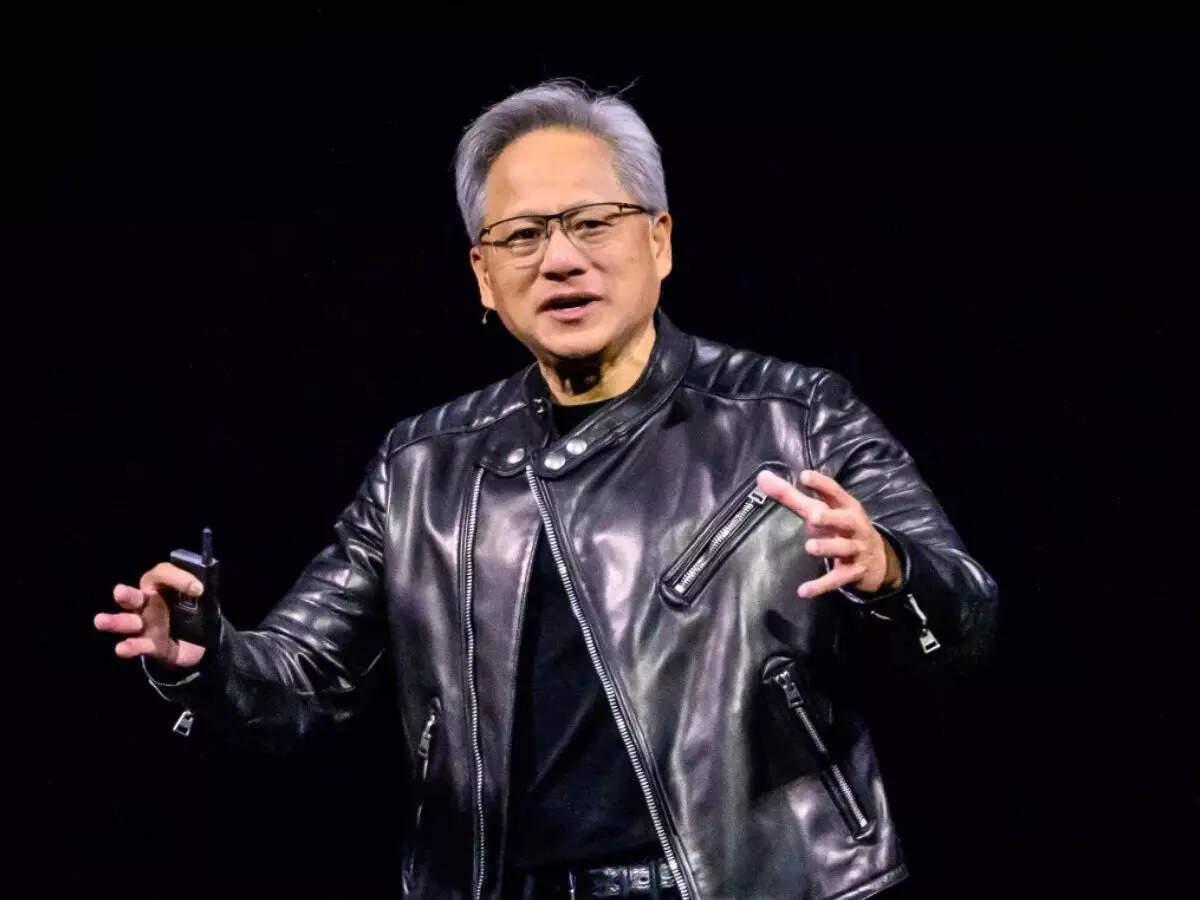
Meta Platforms plans to invest $60-$65 billion in 2025 to enhance its AI infrastructure, aiming to compete with OpenAI and Google. CEO Mark Zuckerberg envisions their AI, Llama 4, becoming the industry benchmark and expects it to serve over 1 billion users by 2025. This includes developing a massive data center with over 1.3 million GPUs. View the full article
-
AI News from ET - Meet ‘Operator’, a web-enabled AI agent that performs tasks for You
OpenAI's Operator is an AI agent that automates web tasks like ordering food, scheduling appointments, and creating memes. It uses GPT-4o and reinforcement learning to understand and interact with websites, improving user productivity. Currently in research preview for US Pro users, Operator will expand to other user tiers and regions soon. View the full article

-
AI News from ET - OpenAI faces new copyright case, from global publishers in India
The New Delhi-based Federation of Indian Publishers told Reuters it had filed a case at the Delhi High Court, which is already hearing a similar lawsuit against OpenAI. The case was filed on behalf of all the federation's members, who include publishers like Bloomsbury, Penguin Random House, Cambridge University Press and Pan Macmillan, as well as India's Rupa Publications and S.Chand and Co, it said. View the full article

-
Boundary Spanning
Q 741. What is boundary spanning and how does it help organizations foster innovation, improve collaboration, and adapt to dynamic business environments? Discuss its relevance in breaking silos across departments, industries, or geographic regions, with real-world examples. Note for website visitors - This platform hosts two weekly questions, one on Tuesday and the other on Friday. All previous questions can be found here: https://www.benchmarksixsigma.com/forum/lean-six-sigma-business-excellence-questions/. To participate in the current question, please visit the forum homepage at https://www.benchmarksixsigma.com/forum/. The question will be open until Tuesday or Friday at 5 PM Indian Standard Time, depending on the launch day. Responses will not be visible until they are reviewed, and only non-plagiarised answers with less than 5-10% plagiarism will be approved. If you are unsure about plagiarism, please check your answer using a plagiarism checker tool such as https://smallseotools.com/plagiarism-checker/ before submitting. All correct answers shall be published, and the top-rated answer will be displayed first. The author will receive an honourable mention in our Business Excellence dictionary at https://www.benchmarksixsigma.com/forum/business-excellence-dictionary-glossary/ along with the related term. Some people seem to be using AI platforms to find forum answers. This is a risky approach as AI responses are error-prone because our questions are application-oriented (they are never straightforward). Have a look at this funny example - https://www.benchmarksixsigma.com/forum/topic/39458-using-ai-to-respond-to-forum-questions/ We also use an AI content detector at https://quillbot.com/ai-content-detector. Only answers with less than 45-50% AI-generated content will be approved.
-
AI News from ET - Pope decries 'crisis of truth' in AI message to Davos forum
In a written message, the leader of the Catholic Church raised "critical concerns" about humanity's future while also praising the capabilities of technology. He talked about how AI's capacity to produce things that are indistinguishable from those of human beings could create problems such as the inability to differentiate truth in the public forum. View the full article
-
AI News from ET - ByteDance plans $20 billion capex in 2025, mostly on AI, sources say
ByteDance plans to invest over $20.64 billion in capital expenditure this year, mainly focusing on artificial intelligence infrastructure such as data centers and networking equipment. This spending aims to bolster AI capabilities both domestically and internationally, with significant investments in chipmakers like Huawei, Cambricon Technologies, and Nvidia. View the full article
-
AI News from ET - Samsung aims to turn its next generation of Galaxy smartphones into AI companions
In its next phase, Samsung is positioning the Galaxy S25 as an "AI companion" capable of pulling more requests out of conversations, learning people's routines, anticipating people's needs and performing more technological tricks, such as being able to remove unwanted sounds from videos or identifying the name of a song upon request. View the full article
-
AI News from ET - Global leaders call for action on AI, regional reforms, environmental initiatives at WEF 2025
Global leaders at the World Economic Forum 2025 call for action on AI, social media reform in Europe, regional integration in Asia, climate action, and a new tropical forest reserve in Africa. Key figures include DRC's President announcing a large forest reserve and Spain's PM urging social media governance reforms. View the full article
-
AI News from ET - AI (model) of the tiger: India to back local language AI foundation model, RFP to be issued soon
Foundation models are artificial intelligence (AI) models trained on vast data repositories, which can be used as the base for other applications. The debate over whether India should have its own foundational model or just work on open-source models "was going on for a long time, but it's no longer an either-or debate anymore. We need to do both", said a senior official. View the full article
-
Blockchain Technology and Lean Six Sigma
Q 740. Discuss how blockchain technology can be integrated with Lean Six Sigma initiatives to enhance process transparency, data integrity, and efficiency in an organization? What are the challenges of implementing blockchain in such contexts? Provide examples of some successful integrations of blockchain with LSS initiatives. Note for website visitors - This platform hosts two weekly questions, one on Tuesday and the other on Friday. All previous questions can be found here: https://www.benchmarksixsigma.com/forum/lean-six-sigma-business-excellence-questions/. To participate in the current question, please visit the forum homepage at https://www.benchmarksixsigma.com/forum/. The question will be open until Tuesday or Friday at 5 PM Indian Standard Time, depending on the launch day. Responses will not be visible until they are reviewed, and only non-plagiarised answers with less than 5-10% plagiarism will be approved. If you are unsure about plagiarism, please check your answer using a plagiarism checker tool such as https://smallseotools.com/plagiarism-checker/ before submitting. All correct answers shall be published, and the top-rated answer will be displayed first. The author will receive an honourable mention in our Business Excellence dictionary at https://www.benchmarksixsigma.com/forum/business-excellence-dictionary-glossary/ along with the related term. Some people seem to be using AI platforms to find forum answers. This is a risky approach as AI responses are error-prone because our questions are application-oriented (they are never straightforward). Have a look at this funny example - https://www.benchmarksixsigma.com/forum/topic/39458-using-ai-to-respond-to-forum-questions/ We also use an AI content detector at https://quillbot.com/ai-content-detector. Only answers with less than 45-50% AI-generated content will be approved.
-
AI News from ET - Donald Trump revokes Biden executive order on addressing AI risks
Biden's order required developers of AI systems that pose risks to US national security, the economy, public health or safety to share the results of safety tests with the US government, in line with the Defense Production Act, before they were released to the public. Last week, the US Commerce Department issued new restrictions on AI chip and technology exports that drew criticism from industry including companies like Nvidia. View the full article
-
AI News from ET - UK aims to quicken civil service with AI 'Humphrey'
Prime Minister Keir Starmer's Labour administration said the AI tools would "make the civil service more efficient to turbocharge" his plans to change Britain. A press release from the Department for Science, Innovation and Technology said Humphrey would improve public services and help reach £45 billion ($55 billion) in savings. View the full article
-
AI News from ET - AI is changing the way people interact with cars
Katrin Lehmann, chief information officer at auto giant Mercedes-Benz tells Annapurna Roy that the culture of innovation at Mercedes-Benz goes beyond building a ‘cool’ product to boosting internal productivity with AI. View the full article
-
AI News from ET - Reimagining tech! AI’s the art of the possible
GenAI is rapidly changing the IT services landscape presenting both opportunities and challenges. Annapurna Roy spoke to some of India’s top IT CTOs on how they approach their roles in the AI era and what’s their advice to young techies. View the full article
-
AI News from ET - GenAI may generate 20-40% productivity gains, no risk to tech spends: Axis Capital report
Generative AI (GenAI) is projected to deliver savings of 20-40% in the software development lifecycle, with those savings being reinvested into further tech innovations. Axis Capital's report highlights that such efficiencies will neither reduce tech spending nor hinder developmental progress, as productivity gains of 26% were observed among software developers using AI. View the full article