Vishwadeep Khatri
Administrators
-
Joined
-
Last visited
Everything posted by Vishwadeep Khatri
-
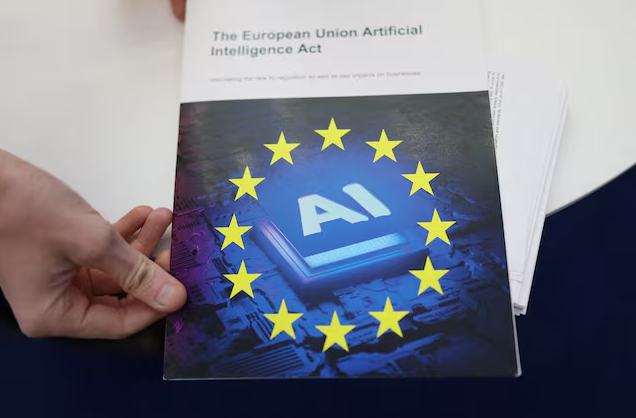
Under the landmark act that was passed a year earlier after intense debate between EU countries, its provisions would come into effect in a staggered manner over several years. Some important provisions, including rules for foundation models like those made by Google, Mistral and OpenAI, will be subject to transparency requirements such as drawing up technical documentation, complying with EU copyright law and providing detailed summaries about the content used for algorithm training. View the full article

-
"On the AI Act's GPAI rules, the European AI Board is discussing the timing to implement the Code of Practice, with the end of 2025 being considered," a Commission spokesperson said. View the full article
-
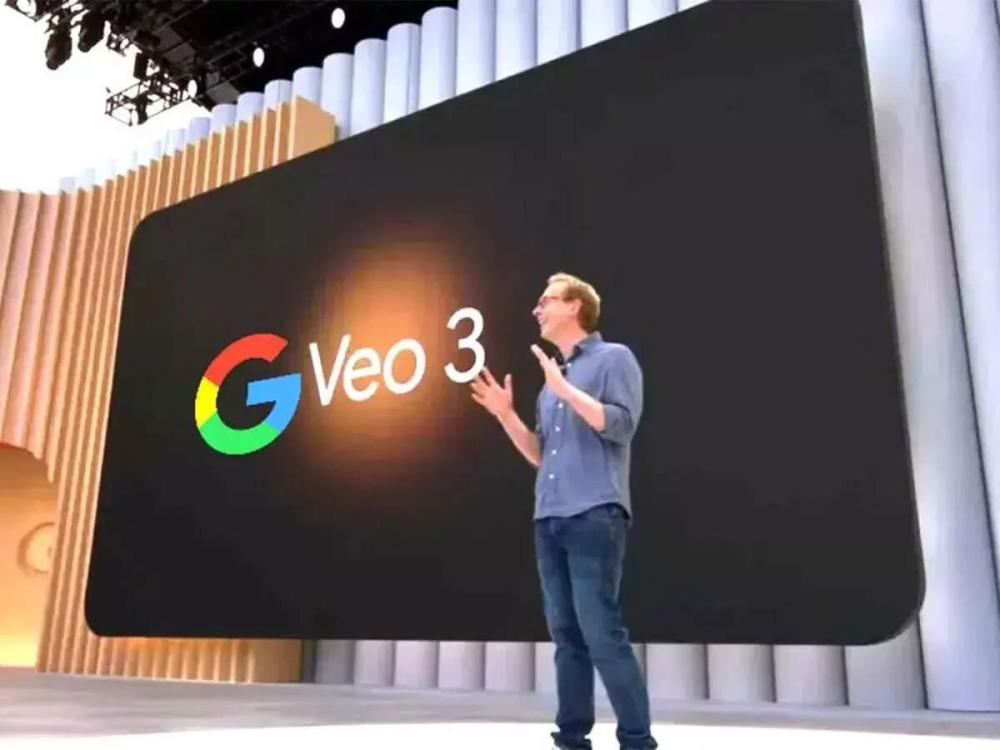
Announced at Google’s I/O 2025 developer conference in May, Veo 3 was accessible only to AI Ultra subscribers at $249.99 a month. In June, Google brought it to the more affordable $19.99 AI Pro plan under the name Veo 3 Fast. These videos are still 8 seconds long and in 720p resolution, but Google claims that they’re now twice as fast to generate, due to backend improvements. View the full article
-
Q 783. MBBs are trained to challenge assumptions, dig deep into root causes, and define problems with precision. But AI projects often jump straight to solution-building based on surface-level symptoms or available data. Think of a situation where an AI solution might deliver technically correct results — but still miss the mark because the problem wasn’t framed right. How can MBBs contribute at the problem-definition stage to avoid this trap? The best answer will be selected on the basis of: Clarity and relevance of the example Insight into how misframing leads to suboptimal AI outcomes Practical ways for MBBs to influence AI problem-framing Note for website visitors - This platform hosts two weekly questions, one on Monday and the other on Thursday. All previous questions can be found here: https://www.benchmarksixsigma.com/forum/lean-six-sigma-business-excellence-questions/. To participate in the current question, please visit the forum homepage at https://www.benchmarksixsigma.com/forum/. The question will be open until Monday or Thursday at 5 PM Indian Standard Time, depending on the launch day. Responses will not be visible until they are reviewed, and only non-plagiarised answers with less than 5-10% plagiarism will be considered for winner selection. If you are unsure about plagiarism, please check your answer using a plagiarism checker tool such as https://smallseotools.com/plagiarism-checker/ before submitting. All correct answers shall be published, and the top-rated answer will be displayed first. The author will receive an honourable mention in our Business Excellence dictionary at https://www.benchmarksixsigma.com/forum/business-excellence-dictionary-glossary/ along with the related term. Some people seem to be using AI platforms to find forum answers. This is a risky approach as AI responses are error-prone because our questions are application-oriented (they are never straightforward). Have a look at this funny example - https://www.benchmarksixsigma.com/forum/topic/39458-using-ai-to-respond-to-forum-questions/ We also use an AI content detector at https://quillbot.com/ai-content-detector. Only answers with less than 45-50% AI-generated content will be considered for winner selection.
-
Conservatives passionate about getting rid of the provision had spent weeks fighting others in the party who favored the legislative moratorium because they saw it as essential for the country to compete against China in the race for AI dominance. The schism marked the latest and perhaps most noticeable split within the GOP about whether to let states continue to put guardrails on emerging technologies or minimize such interference. View the full article

-
Generative AI is increasingly disrupting global elections, spreading deepfakes and disinformation that manipulate voters and erode trust in democracy. Used by both domestic groups and foreign actors, AI has influenced outcomes in multiple countries. Experts warn its speed, scale, and sophistication pose a growing threat to electoral integrity and public discourse. View the full article

-
Micron Technology is shifting focus from products to market segments, prioritising data centres and AI-driven demand. Executive VP Sumit Sadana highlighted strong AI monetisation, rising inferencing workloads, and growth in memory needs across PCs, smartphones, and robotics. Backed by record earnings, Micron is also advancing its semiconductor facility in Gujarat. View the full article

-
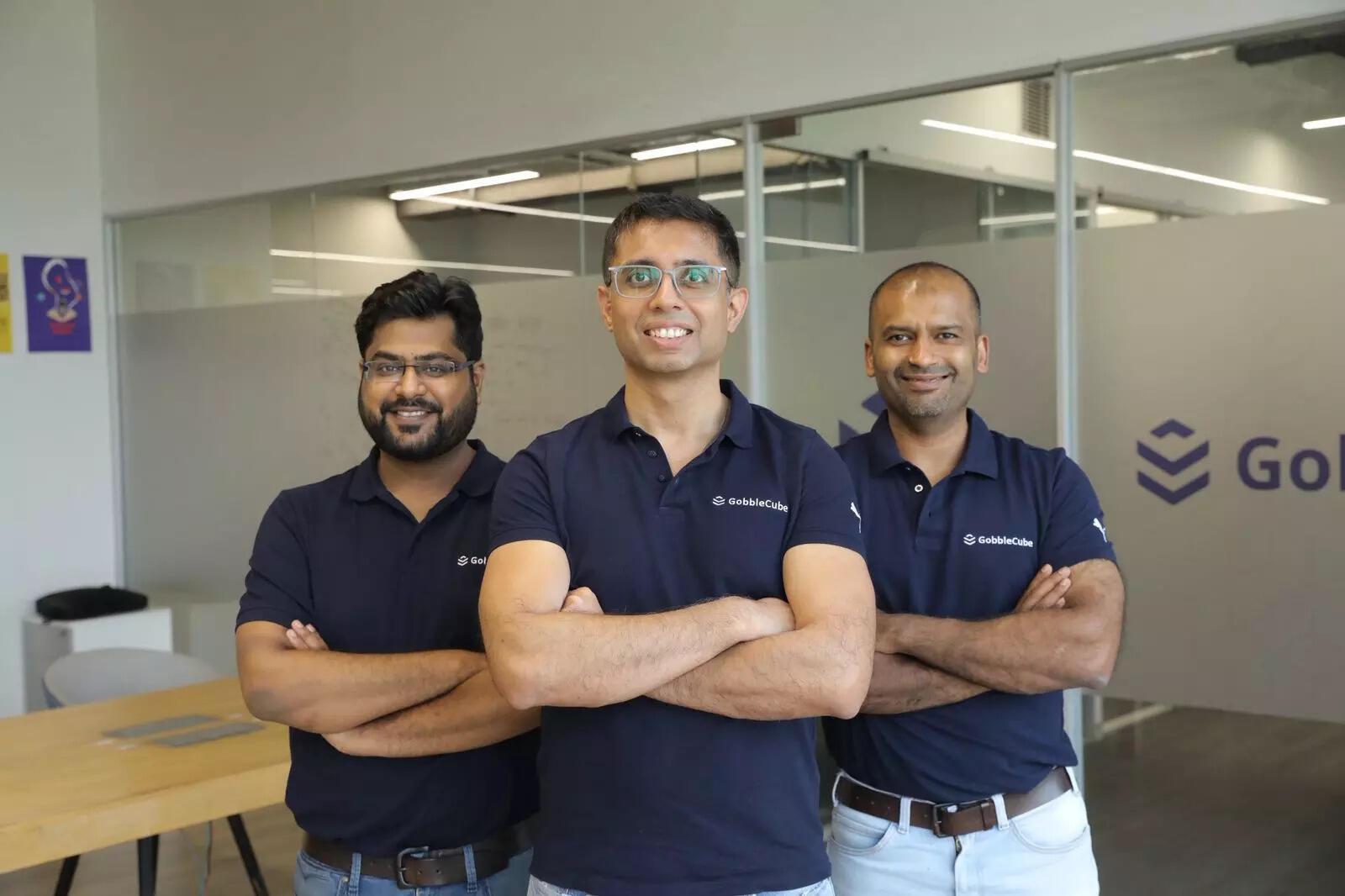
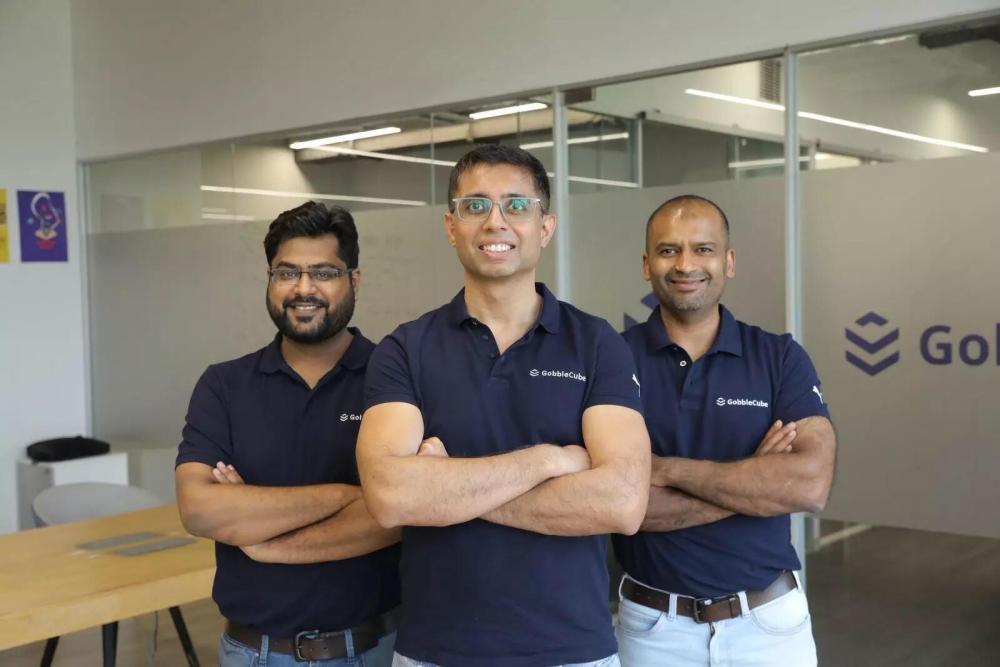
Existing investor Kae Capital participated in the funding round. The fresh funds will be used to deepen its AI capabilities, expand platform coverage, and accelerate its global go-to-market efforts. Earlier in a seed round led by Kae Capital in 2024, the startup had raised $1.9 million. View the full article
-
The research, conducted by cybersecurity startup Astra Security, shows how LLMs can be manipulated to leak sensitive data or make dangerous errors. The findings were presented at CERT-In Samvaad 2025, a government-backed cybersecurity conference. View the full article

-
Community Notes, a user-driven system for adding context to posts, was originally introduced when the platform was known as Twitter. It has been expanded under Elon Musk’s ownership. Per X, rating feedback can help develop AI agents that can deliver more accurate, less biased, and broadly helpful information. View the full article

-
Some players say they find the new calls too quiet while others lament the passing of a 148-year-old tradition at the All England Club in southwest London. Last October Wimbledon announced it was finally scrapping its line officials in favour of ELC, following the lead of the Australian Open and US Open, emptying its courts. View the full article

-
Rezolve Ai’s newly created Professional Services platform supports over 50 enterprise customers and engages 16.5 million monthly active users across 42 million devices. The division is expected to speed up adoption further as organisations seek expertise to integrate AI across all layers of operations. View the full article

-
This is the first time that NotebookLM—an AI-powered research and writing tool that helps summarise and extract information across dense and complex sources—will be made available to minors. View the full article

-
The Senate voted 99-1 to strike the AI provision for the legislation after weeks of criticism from both Republican and Democratic governors and state officials. Originally proposed as a 10-year ban on states doing anything to regulate AI, lawmakers later tied it to federal funding so that only states that backed off on AI regulations would be able to get subsidies for broadband internet or AI infrastructure. View the full article

-
The tool allows website owners to choose whether artificial intelligence crawlers can access their material and set a price for access through a "pay per crawl" model, which will help them control how their work is used and compensated, Cloudflare said. View the full article

-
Q 782. As AI solutions become embedded in core operations, decisions that once required human oversight are now automated. This shift demands new forms of governance — ones that align with Business Excellence values like transparency, accountability, and continuous improvement. What elements would you include in a governance framework that ensures responsible, high-impact use of AI in a process-driven organization? Who should be involved, and what mechanisms would you put in place to maintain both agility and control? The best answer will be selected on the basis of: Relevance and completeness of the proposed governance elements Practicality of implementation in real-world settings Alignment with Business Excellence principles Note for website visitors - This platform hosts two weekly questions, one on Monday and the other on Thursday. All previous questions can be found here: https://www.benchmarksixsigma.com/forum/lean-six-sigma-business-excellence-questions/. To participate in the current question, please visit the forum homepage at https://www.benchmarksixsigma.com/forum/. The question will be open until Monday or Thursday at 5 PM Indian Standard Time, depending on the launch day. Responses will not be visible until they are reviewed, and only non-plagiarised answers with less than 5-10% plagiarism will be considered for winner selection. If you are unsure about plagiarism, please check your answer using a plagiarism checker tool such as https://smallseotools.com/plagiarism-checker/ before submitting. All correct answers shall be published, and the top-rated answer will be displayed first. The author will receive an honourable mention in our Business Excellence dictionary at https://www.benchmarksixsigma.com/forum/business-excellence-dictionary-glossary/ along with the related term. Some people seem to be using AI platforms to find forum answers. This is a risky approach as AI responses are error-prone because our questions are application-oriented (they are never straightforward). Have a look at this funny example - https://www.benchmarksixsigma.com/forum/topic/39458-using-ai-to-respond-to-forum-questions/ We also use an AI content detector at https://quillbot.com/ai-content-detector. Only answers with less than 45-50% AI-generated content will be considered for winner selection.
-
The survey, conducted in Q4 2024 with 432 respondents across the US, UK, France, Germany, India, and Japan, assessed AI maturity using Gartner's AI Maturity Model. High-maturity organisations, scoring an average of 4.2-4.5 on a 5-level scale, demonstrated that selecting AI projects based on business value and technical feasibility, coupled with robust governance and engineering practices, is key to long-term success. View the full article

-
Backed by the likes of Index Ventures, Shopify, Plug and Play, and Radical Ventures, the AI startup has raised more than $13.5 million across multiple rounds. View the full article
-
AI chatbots like ChatGPT rely on human feedback for safety, use tokens instead of words, and don't auto-update, needing web searches for recent info. They're prone to “hallucinations” and can make confident errors. For complex maths, they combine step-by-step reasoning with built-in calculators to ensure accurate results. View the full article

-
Mark Zuckerberg has been hiring aggressively to build an AI team and had offered signing bonuses as high as $100 million to some OpenAI employees, Sam Altman said in his brother’s podcast. The Facebook cofounder is building a new 50 people AI ‘superintelligence’ team after Meta’s latest Llama models failed to gain traction compared to rivals. View the full article
-
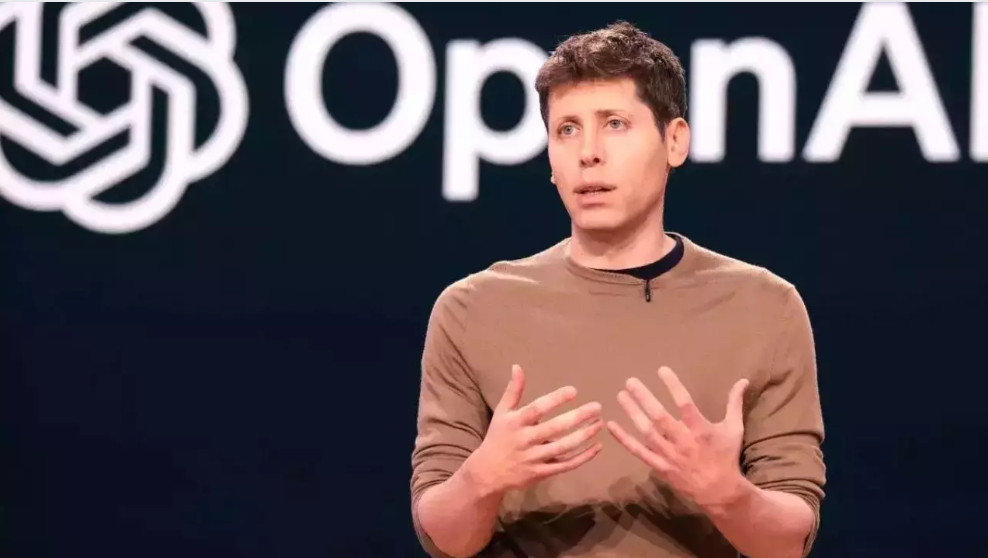
In a podcast with his brother Jack Altman, Sam said current hardware is not able to keep up with changing and increasing AI demands. “Now, we’re in a different world, and what you want out of hardware and software is changing quite rapidly," he said. View the full article
-
OpenAI has struck custom AI deals with the Pentagon, the Indian government and Grab, The Information reported. View the full article
-
Free and easy to use, AI tools have generated a flood of fake photos and videos of candidates or supporters saying things they did not or appearing in places they were not -- all spread with the relative impunity of anonymity online. View the full article

-
The world's most advanced AI models are exhibiting troubling new behaviors - lying, scheming, and even threatening their creators to achieve their goals. Users report that models are "lying to them and making up evidence," according to Apollo Research's co-founder. View the full article

-
The researchers, Shengjia Zhao, Jiahui Yu, Shuchao Bi and Hongyu Ren have each agreed to join, the report said, citing a person familiar with their hiring. View the full article