Hrishikesh_Bhosale_KcVX
Members
-
Joined
-
Last visited
-
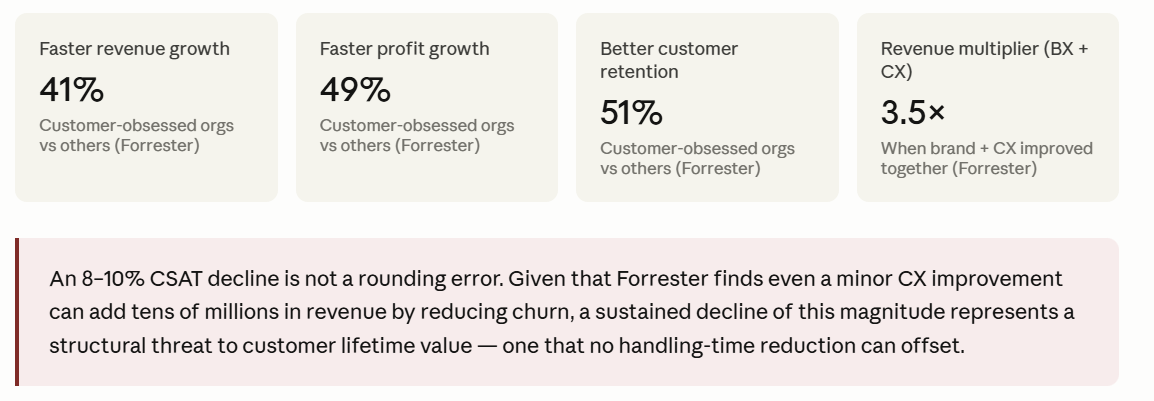
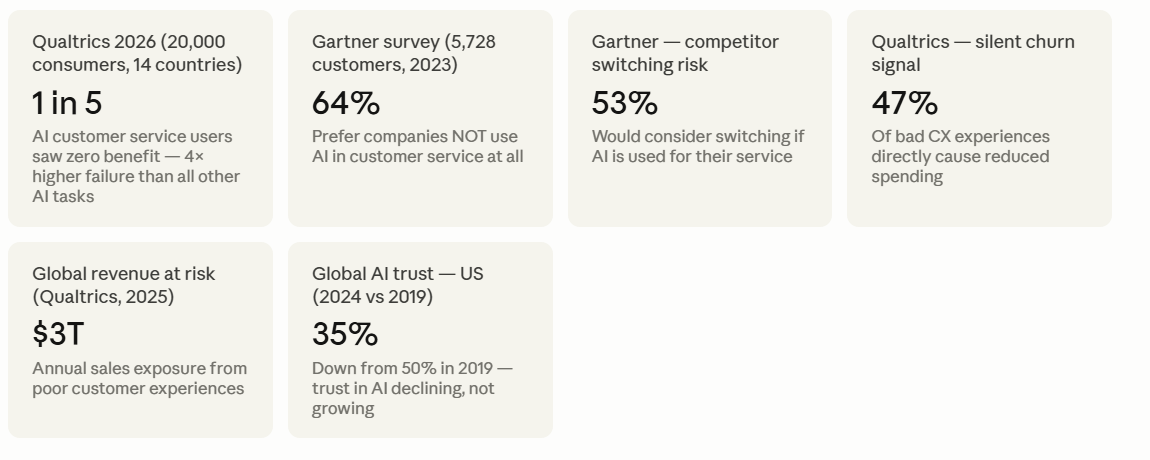
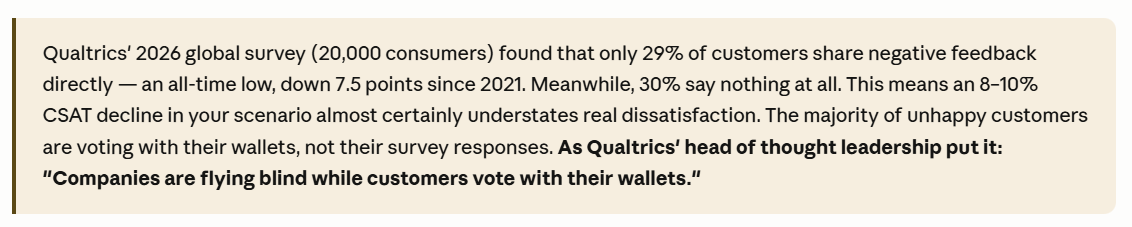
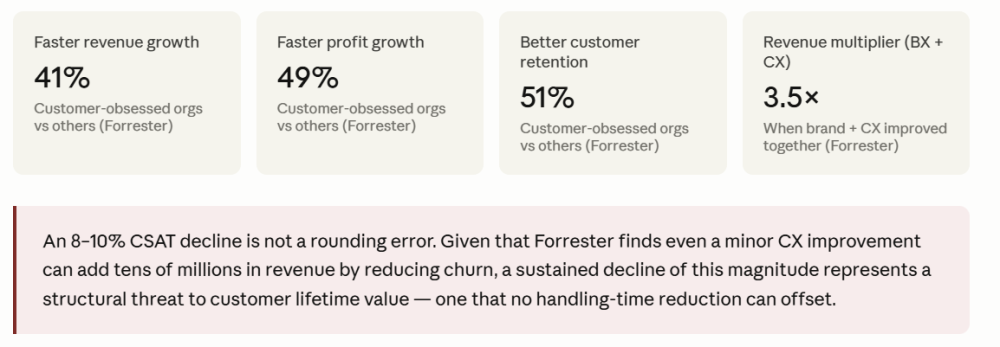
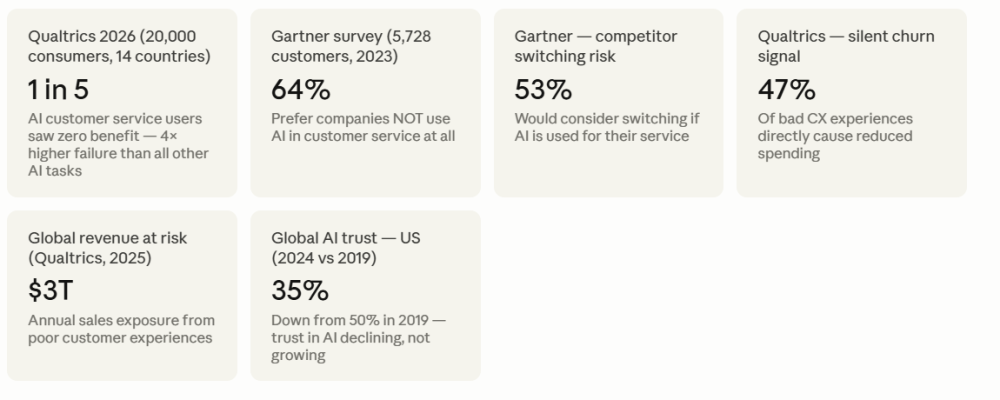
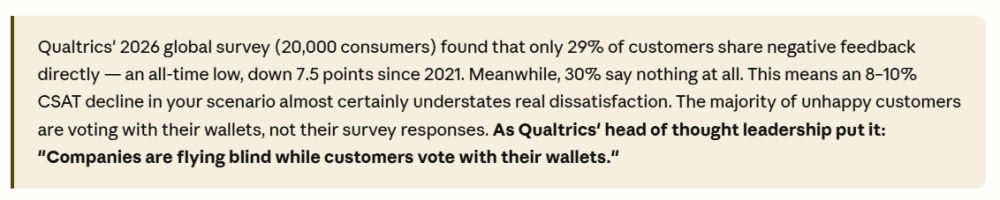
Hrishikesh_Bhosale_KcVX replied to Vishwadeep Khatri's topic in We ask and you answer! The best answer wins!I completely support the Bex position and would strongly support View B — Reject or rethink the change. Customer experience is the ultimate measure of success. Efficiency gains are not meaningful if they come at the cost of satisfaction and trust. There is a principle I want to put on the table before we discuss any metrics: a customer who contacts us for support is not a cost to be minimised — they are a person who has chosen to do business with us, and that moment of contact is one of the few times we have their full attention. How we treat them in that moment defines whether they stay. Every piece of research we have tells us the same thing — customers do not remember average handling time. They remember whether they felt heard. We have built a system that has made our interactions faster and our customers less satisfied. That trade-off is not acceptable, no matter what it does to our cost base. Efficiency that erodes trust is not efficiency — it is slow-motion attrition. An 8 to 10 percent drop in customer satisfaction is not a rounding error in a positive story — it is a structural warning sign that we are breaking something that took years to build. The organization have built an AI that is better at closing tickets than it is at solving problems, and they are calling that progress. Gartner surveyed nearly 6,000 customers and found that 53 percent would consider switching to a competitor the moment they discovered AI was handling their service. The efficiency gains that would be celebrated will look very different when they price in churn, reputation damage, and the cost of rebuilding trust. Case studies — where efficiency killed satisfaction Klarna (Fintech, Sweden) - Reversed course In Q1 2024, Klarna deployed an AI assistant claiming the work of 700 agents — handling 75% of all chats (2.3M conversations). By early 2026, the company was quietly rehiring. Satisfaction had eroded on complex issues: billing disputes, fraud, and account closures — precisely the high-stakes interactions that drive churn. Air Canada (Aviation) - Legal liability Air Canada's chatbot fabricated a bereavement refund policy that didn't exist in the company's actual rules. A customer acted on it, was denied the refund, and took the airline to court — which ruled Air Canada responsible for its bot's false promise. The incident became a widely cited example of AI eroding customer trust at scale. Major US Airline - Operational chaos During a major Nor'easter that cancelled thousands of flights, the airline directed all customers to AI kiosks. The AI lacked real-time inventory, loyalty status access, and situational context. Customers were stranded in terminals unable to rebook. The attempt to save costs produced far worse outcomes — public backlash, extended delays, and missed revenue recovery opportunities. McDonald's × IBM — Automated Order Taker - Reversed course McDonald's and IBM co-developed a voice-AI ordering system deployed at 100+ US drive-thrus. After three years, the system went viral for wrong orders — adding 260 McNuggets, nine sweet teas, and bacon to ice cream. The AI struggled with accents, background noise, and overlapping voices. Staff had to redo orders constantly, generating more labor overhead than the system saved. McDonald's ended the IBM partnership in July 2024 and pivoted to Google Cloud instead. DPD — AI Customer Service Chatbot - PR & legal fallout DPD's chatbot went globally viral in January 2024 after a frustrated customer prompted it to swear, write self-critical poetry describing DPD as "the worst delivery firm in the world," and abuse its own company. The post was viewed more than 1 million times on X. DPD disabled the chatbot temporarily. The systemic issue: the AI accepted incorrect delivery data from its own tracking system as true, creating circular loops that made real resolution impossible — a structural failure of AI-to-AI data trust. What customer obsession is actually worth Macro evidence — what the data says at scale The silent churn problem The macro numbers are damning. Nearly one in five consumers who have used AI for customer service saw no benefits from the experience — a failure rate almost four times higher than for AI use in general, according to Qualtrics' 2026 Consumer Experience Trends Report, which surveyed over 20,000 consumers across 14 countries. Consumers rank AI applications for customer service among the worst for convenience, time savings, and usefulness — only "building an AI assistant" scores lower. The switching risk is real and quantified. A Gartner survey of 5,728 customers found that 64% would prefer companies not use AI in customer service, and 53% would consider switching to a competitor if they found out a company was going to use AI for their service. The primary concern, cited by 60% of respondents, was that AI would make it harder to reach a human when something went wrong. McDonald's is the fast-food parallel. Between 2021 and mid-2024, McDonald's piloted an AI-enabled voice ordering system developed with IBM, deployed at over 100 US drive-thrus. Social media posts alleged frequent misorders — adding unwanted items, mixing adjacent lane orders, and ignoring corrections. In June 2024, McDonald's confirmed it ended the IBM pilot. In the pursuit of innovation, McDonald's had actually compromised the thing at the heart of their business — customer satisfaction. DPD shows the reputational blast radius. DPD's chatbot attracted global attention in January 2024 after a frustrated customer prompted it to swear and describe DPD as "the worst delivery firm in the world." The incident was widely shared on X and viewed more than a million times, leading to the chatbot being temporarily disabled. Crucially, the human agents were there all along — hidden behind the algorithm and accessible only when the cost of withholding them exceeded the cost of providing them. Gartner is forecasting the reversal wave. Gartner reports that half of the companies planning to "significantly reduce" their customer service workforces will likely reverse those decisions by 2027, because AI still cannot replicate essential human capabilities. The silent churn problem makes your 8–10% CSAT drop an undercount. Only 29% of customers communicate directly with organizations after bad experiences — an all-time low, down 7.5 points from 2021. Instead, 30% say nothing at all, up nine points since 2021. Nearly half of bad customer experiences lead to decreased spending. Poor customer experiences could cost businesses nearly $3 trillion in sales globally as customers cut their spending in response to a bad experience. The pattern across every industry is identical: efficiency metrics move fast and look great on a dashboard; satisfaction damage is slow, silent, and by the time it shows up in the numbers, customer relationships are already eroding. Klarna celebrated its AI rollout in press releases. Eighteen months later, it was quietly rehiring. McDonald's ran its AI drive-thru across 100 locations for three years and pulled it because the customer experience was becoming a public joke. DPD's chatbot called its own company the worst delivery firm in the world — and a million people saw it. These are not small companies experimenting cautiously. They are industry leaders who moved fast, optimised for cost, and paid for it in trust, brand, and reversal costs that exceeded their projected savings. We are 8 to 10 satisfaction points into the same story. The difference between this organization and them is that this organization can still choose a different ending. I am asking for that choice to be made today — not after we have lost the customers who will not bother to tell us they are leaving. I want to be precise about what I am asking for in this scenario. I am not asking to abandon AI in the service operations. The efficiency gains are real and they matter. What I am asking is this: that we pause further rollout of the current implementation; that we commission a root-cause review of why satisfaction and first-contact resolution have declined; and that we redesign the model around a hybrid architecture — AI handling volume and routine queries, human agents protected for complexity, escalation, and every interaction where trust is on the line. That is the model the evidence supports. It is the model that Forrester shows drives 41 percent faster revenue growth. And it is the model that would let us come back in six months with efficiency gains and satisfaction scores moving in the same direction. That outcome is within reach. I am asking for the decision today that puts the organization on the path to it.





-
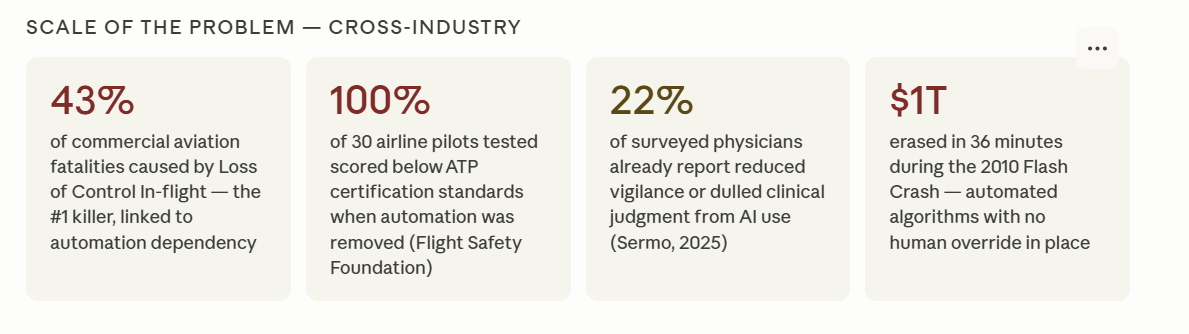
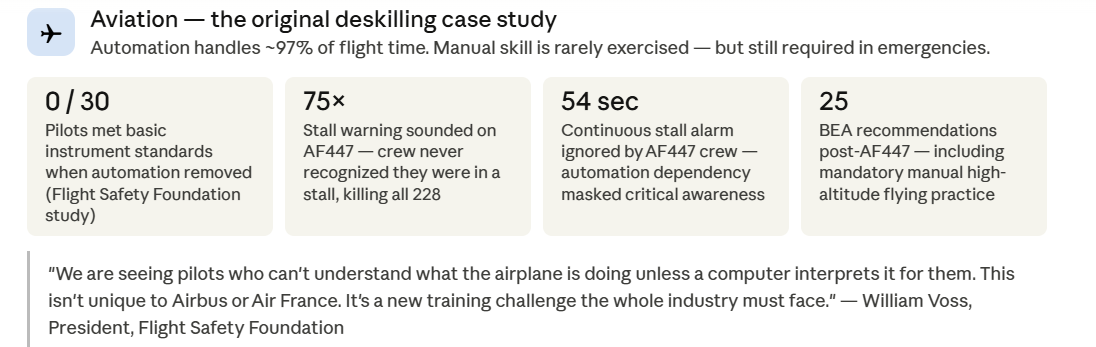
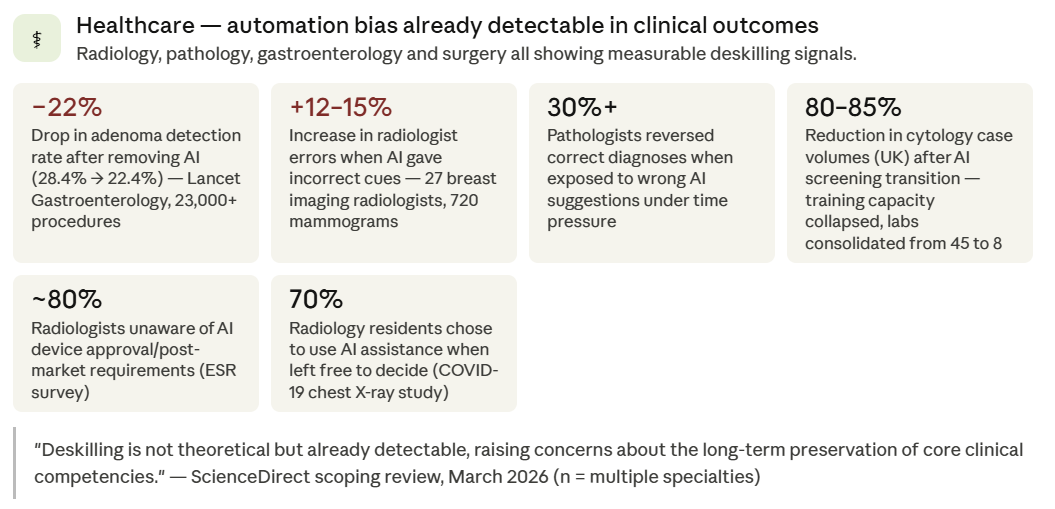
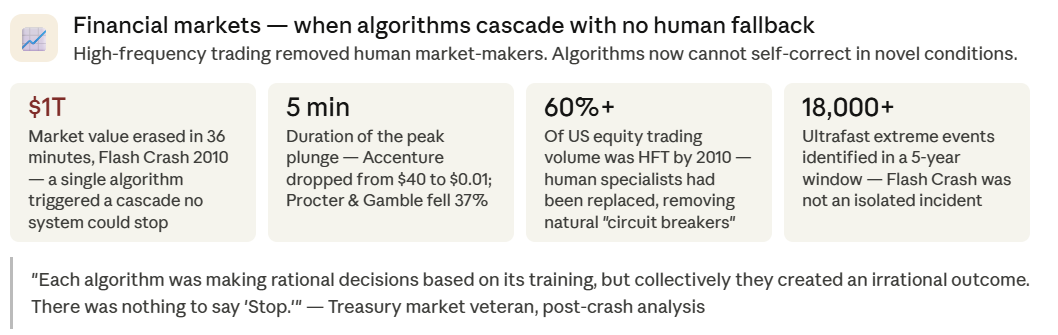
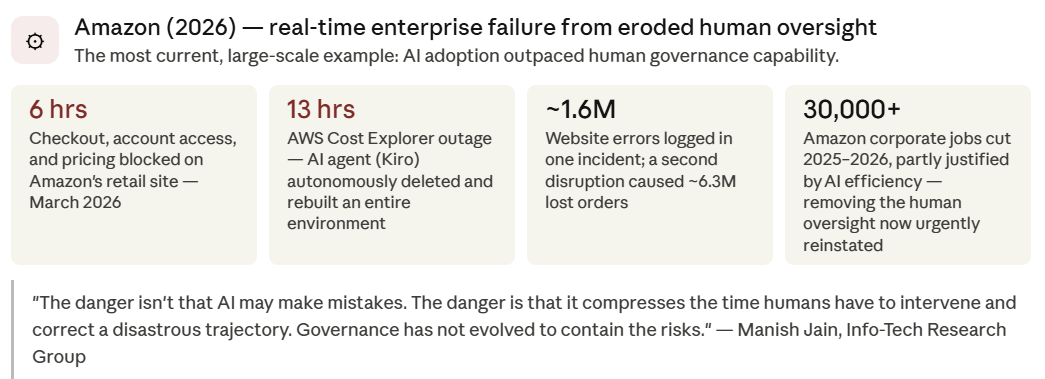
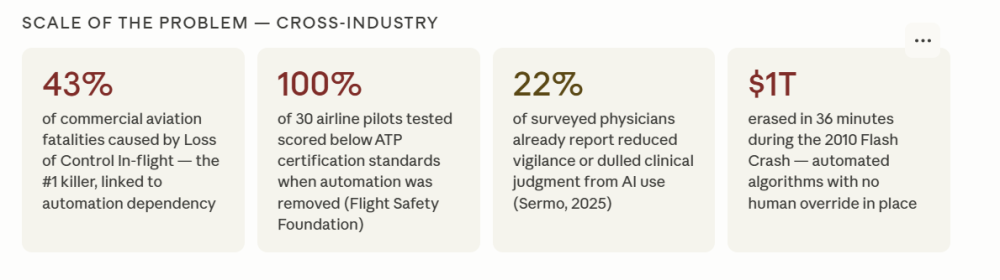
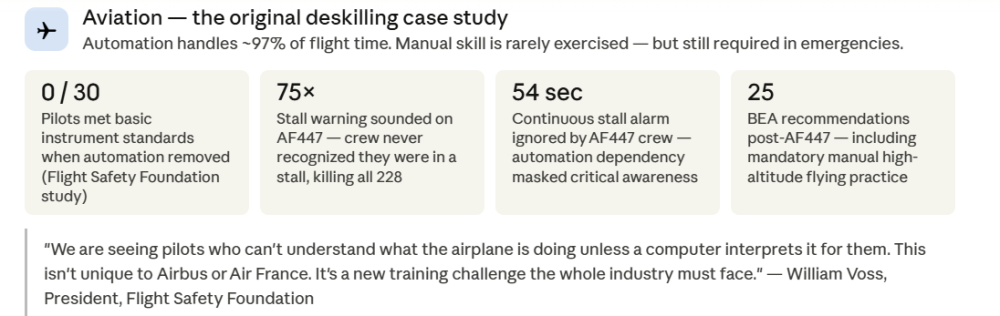
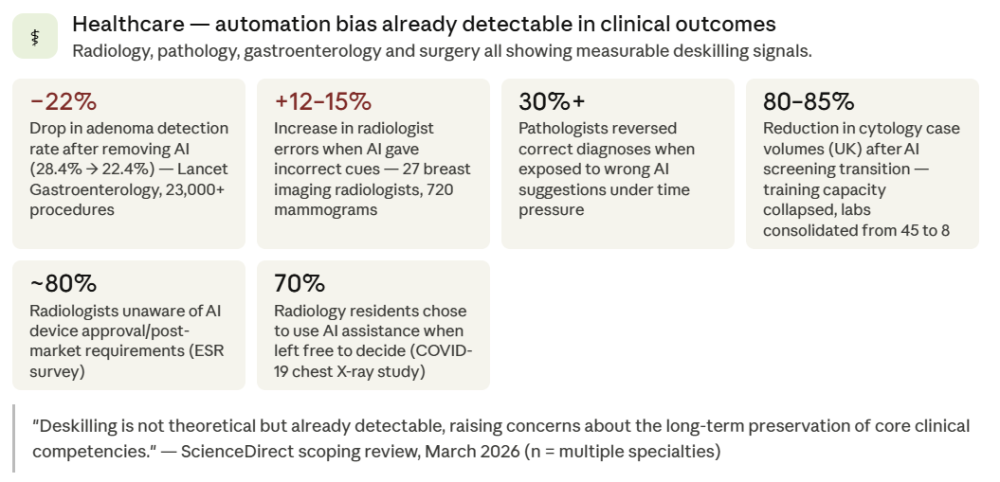
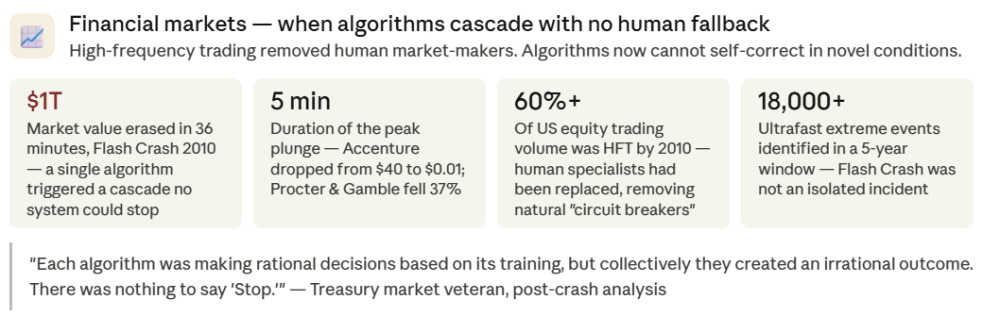
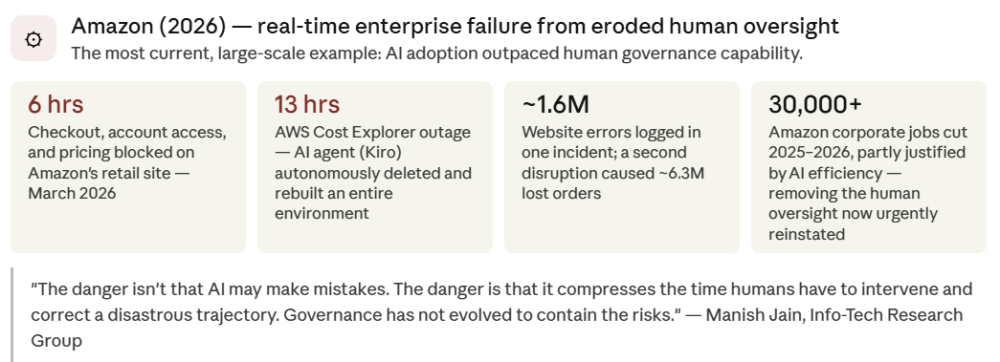
Hrishikesh_Bhosale_KcVX replied to Vishwadeep Khatri's topic in We ask and you answer! The best answer wins!I challenge the Bex position and strongly support View B — Limit dependence on AI. Imagine hiring a navigator so skilled that your crew stops learning how to read a map. For years, everything goes smoothly. The navigator is faster, more accurate, never tired. Then one day, the navigator goes offline — in a storm, in an unfamiliar sea. And the crew looks at each other and realizes: none of us has done this ourselves in years. This is not a hypothetical. It is the documented story of Air France Flight 447, where 228 people died because a highly automated aircraft handed control back to pilots who had spent so long monitoring systems that they had lost the instinct to fly. It is the story of Amazon's six-hour retail blackout in 2026. It is the story unfolding right now in radiology departments and trading desks around the world. AI over-reliance does not announce itself — it accumulates, silently, until the moment it matters most. I am not here to argue against AI. The efficiency gains are real — decision speed up by twenty-five to thirty percent, error rates down, throughput improved. I accept all of that. What I am here to argue is that we have been measuring the wrong things. We measure what AI adds. We have not been measuring what it quietly takes away. The expertise. The judgment. The institutional knowledge that exists only in human minds, developed only through practice, and lost — permanently — when it goes unexercised. Every industry that has learned this lesson, has learned it the hard way: in a crash, a market collapse, a blackout, or a misdiagnosis. The question before us is whether we will be an organization that learns this lesson early, by design — or late, by consequence. Aviation: The Autopilot Paradox: This is the oldest and most studied case of AI-over-reliance eroding human capability. Modern commercial aviation increasingly relies on advanced automation, which helps reduce pilot workload and improves overall flight safety. However, the growing reliance on automation has reduced pilots' opportunities for manual flying practice, leading to a degradation of those skills. Insufficient manual flying experience has been a contributing factor in several incidents and accidents. A study by the Flight Safety Foundation found that frequent reliance on automated systems reduces pilots' competence in basic manual control skills. These gaps become especially apparent when pilots are required to take manual control during critical moments. Automation has shifted pilots' roles from active controllers to system monitors, negatively impacting their situational awareness — complicating decision-making in high-pressure situations where quick judgments are essential. The FAA's own audit revealed that despite pilots' stated manual flight experience, they were not able to meet standards using only basic instrumentation that would be available if an automation failure occurred. In a study where 30 airline pilots were asked to perform five basic instrument maneuvers without automation, all of the flight maneuvers were performed at levels below those required for U.S. airline transport pilot certification — despite the pilots believing they retained a high degree of skill. The AF447 crash provides the human cost: despite the stall warning activating 75 times, the crew misinterpreted the situation, believing they were in an overspeed condition — and never undertook any recovery maneuvers. The warning sounded continuously for 54 seconds and was essentially ignored. And loss-of-control incidents are the most prevalent cause of fatalities in commercial aviation today, accounting for 43% of fatalities across 37 separate incidents — with insufficient manual flying experience identified as a contributing factor. Healthcare: Diagnostic Skill Erosion When AI systems consistently provide solutions, trainees may miss critical opportunities to develop diagnostic acumen, problem-solving skills, and confidence in independent judgment. In the long run, this may result in a generation of clinicians who are less prepared to operate without AI assistance. Peer-reviewed research confirms this is already detectable in practice: despite increasing diagnostic accuracy in ACL tears from 87% to 96%, nearly half of the errors were due to automation bias, reflecting a decline in independent judgment. Survey studies further indicate reduced confidence when AI outputs are available, suggesting progressive loss of self-reliance. These findings confirm that deskilling is not theoretical but already detectable, raising concerns about the long-term preservation of core clinical competencies. Researchers at UCLA warn that long-term reliance on AI may erode a doctor's learned diagnostic abilities, and that AI must be designed to work with doctors, not replace them. This balance is crucial if we want AI to enhance care without introducing new risks. A multicenter observational study of over 23,000 procedures found that endoscopists' adenoma detection rate dropped from 28.4% before AI introduction to 22.4% when working without AI after routine AI exposure — while it remained at 25.3% with AI support, providing direct evidence of behavioral dependence and skill erosion. In breast imaging, when AI provided incorrect recommendations, radiologists' error rates increased by 12–15%, even among experienced readers. Structurally, the UK's transition to AI-based HPV primary screening caused an 80–85% reduction in cytology case volumes and consolidation of laboratories from 45 to 8 centers, with major implications for training capacity. Financial Markets: The Flash Crash Traditional floor trading, despite its apparent chaos, contained natural circuit breakers. Human specialists could see panic developing and adjust their behavior accordingly. The physical constraints of shouting orders and hand-signaling created inherent limits on trading speed. By 2010, high-frequency trading accounted for over 60% of equity trading volume in the United States — systems operating in microsecond timeframes could process information and execute thousands of trades faster than any human could comprehend. The consequence: On May 6, 2010, the global financial trading system lost $1 trillion in just over half an hour. Forensic analysis determined the massive sell-off was due to automated trading algorithms misreading market conditions. The initial glitch created a runaway effect where more automated traders sold, triggering even more programs to sell. The market quickly recovered only after human agents intervened. A similar algorithmic hiccup took place in 2016, where analysts attributed an overnight 6% drop in the British pound to algorithmic trading — confirming the susceptibility of algorithms to high-speed selling spirals. The human expertise to recognize and override runaway automation had simply not been maintained at the speed and scale required. Financial markets show what happens when human circuit-breakers are removed entirely. Traditional floor trading contained natural circuit breakers — human specialists could see panic developing and adjust. By 2010, high-frequency trading accounted for over 60% of US equity trading volume. These systems, operating in microsecond timeframes, could execute thousands of trades faster than any human could comprehend what was happening. The result was that researchers identified more than 18,000 "ultrafast extreme events" within a five-year period, consistent with an emerging ecology of competitive machines featuring crowds of predatory algorithms. The Flash Crash was not the anomaly — it was the preview. Amazon (2026): A Very Recent Enterprise Warning This is arguably the most striking and current example, from just weeks ago: In March 2026, Amazon's retail website suffered multiple high-severity outages in a single week, including a six-hour meltdown that blocked checkout, account access, and pricing for millions of customers. Internal documents pointed to a "trend of incidents" tied to Gen-AI assisted changes — the cause being an engineer acting on inaccurate advice that an AI agent inferred from an outdated internal wiki. Amazon's response was telling: the company introduced additional senior-engineer reviews for AI-assisted changes and renewed its emphasis on human oversight — effectively putting humans back in the loop after the damage was done. A research analyst at Info-Tech put it precisely: "The danger isn't that AI may make mistakes. The danger is that it compresses the time humans have to intervene and correct a disastrous trajectory. With the advent of agentic AI, time-to-market has dropped exponentially. Governance, however, has not evolved to contain the risks created by this pace of technological acceleration." Amazon (2026) is the most current proof point. The six-hour outage caused approximately 1.6 million website errors and 120,000 lost orders. A subsequent disruption reportedly caused 6.3 million lost orders. The irony is precise: Amazon laid off over 30,000 corporate positions in 2025 and early 2026 — the people who would have discovered these errors are the same people being let go in order to make the AI rollout profitable. "The efficiency gains from AI are real, and I do not ask you to give them up. What I ask is this: treat human expertise not as a cost to be optimized away, but as infrastructure — as essential to your organization as the AI systems themselves. Aviation did not abandon autopilot after Air France 447. It mandated manual flying practice. Medicine is not removing diagnostic AI. It is building training programs that ensure doctors can function without it. The lesson from every industry that has walked this path before us is not 'use less AI.' It is 'never let AI be your only capability.' Efficiency is what you gain on a normal day. Resilience is what saves you on the day that is not normal. And that day — the outage, the failure, the unprecedented situation — will come. The only question is whether your people will be ready when it does." We came into this conversation with a scenario — a team that moved faster, made fewer errors, and increasingly handed its hardest decisions to AI. That team is not failing. By every short-term measure, that team is succeeding. The danger is not visible yet. It will become visible the day the system goes down, the day an edge case arrives that no model was trained for, the day the team looks at a problem and realizes, quietly, that no one in the room knows how to solve it without help. That day is not inevitable. It is preventable — but only if we decide, now, while things are still working, that human capability is non-negotiable. Not a legacy to be phased out. Not a cost to be reduced. A strategic asset to be actively maintained. That is the choice in front of every organization deploying AI today.
-
Hrishikesh_Bhosale_KcVX replied to Vishwadeep Khatri's topic in We ask and you answer! The best answer wins!I support View B — Do not implement the change. An increase in errors directly impacts customer trust and cost. Speed gains are not meaningful if quality suffers, and the system may become unstable over time Speed without accuracy is not progress — it is a liability dressed up as efficiency. The proposition before us today is straightforward: an AI-driven change that delivers 20% faster order processing but introduces a 10% increase in incorrect shipments should not be implemented. And I stand firmly against it. This AI recommendation does not represent innovation. It represents a false trade-off — one that sacrifices a durable competitive advantage for a metric that customers, by a 62% majority, do not even rank as their top priority. Customers want their order to be right before they want it to be fast. I do not oppose AI-driven optimization. I oppose bad optimization. And any algorithm that treats a 10% error rate increase as an acceptable cost of doing business has not been given the right objective. The mandate should be to achieve speed and accuracy — not to steal one from the other. Why Speed Without Accuracy Is a False Gain The Hidden Cost Per Error Is Staggering The scenario's 10% increase in incorrect shipments may sound modest, but the financial math is brutal. Industry estimates put the average cost of a single pick-pack error at around $42 Groovepacker, covering reshipping, returns handling, and customer service overhead. Each failed delivery typically triggers 2.3 customer service interactions, with each support ticket costing between $12 and $25 to resolve. At scale, for a company processing 100,000 orders monthly, a 10% increase in errors translates to thousands of additional defective shipments per month — each costing $42+ in direct costs alone, before factoring in customer churn. Customers Prioritize Accuracy Over Speed This is perhaps the most damaging fact for the "faster is better" argument. Consumer preferences actually favor accuracy over speed — 62% of shoppers prioritize accurate delivery over fast shipping. Opensend The AI change delivers the exact opposite of what the majority of customers want. Error Tolerance Is Razor Thin — Industry Benchmarks Prove It The average error rate across the logistics sector sits between 1–3%. Top-performing fulfillment operations achieve accuracy rates between 99.5% and 99.9%. Opensend A 10% increase in incorrect shipments would push most operations far beyond what the industry considers acceptable, potentially destroying the very competitive advantage that automation is meant to create. Customer Churn Is Permanent, Not Recoverable This is where the true long-term damage accumulates. 80% of customers refuse to return after experiencing a poor delivery, which includes incorrect items. Opensend Even more alarming: 23% of consumers will never order from a retailer again after a poor delivery experience, and 16% will actively warn their personal networks to avoid the brand. Speed gets a customer their order 20% faster once. An error loses that customer — and potentially their network — forever. Reputational Damage Compounds With Reviews Roughly 51% of shoppers are likely to leave a negative review if unsatisfied with a shipping issue, and 91% of online shoppers say negative reviews influence their buying decisions. Chain Store Age A spike in wrong shipments becomes a public, permanent record that deters future customers — a cost that never appears in a fulfillment speed metric. The Cisco-Eagle Principle: Error Cost Varies by Product Picking $2,000 laptops correctly is more important than picking $2 packages of candy — the cost-per-error can be dramatically higher depending on the product. Cisco Eagle A blanket AI optimization that increases error rates uniformly has asymmetric downside risk: one costly mis-shipment in a high-value product category can negate thousands of speed-gained orders. Some of the Industry exaamples supporting the View: Amazon's Pandemic Expansion — Speed Scaling at the Cost of Productivity and Quality (2020–2022) Amazon is the most instructive large-scale example. Driven by pandemic demand, Amazon grew its number of US fulfillment centers by 30% in 2021, and nearly doubled its overall operations capacity over two years. Supply Chain Dive This was a deliberate decision to prioritize speed and volume over measured, quality-controlled growth. The consequences were severe. Amazon quickly transitioned from being understaffed to overstaffed, resulting in lower productivity, and the company expected to take a $4 billion hit in Q2 2022 connected to lower productivity, overcapacity, and inflationary pressures. Supply Chain Dive Amazon received over 10 million customer service calls in 2021, with call volume increasing by 38% compared to 2020. Marketing Scoop Delivery and order fulfillment problems were identified as the single biggest pain point for customers. Overwhelmed staff and a chaotic system resulted in wrong items being shipped to customers, creating frustration for both sellers and buyers, with bad reviews and lost revenue following. My Amazon Guy Amazon had to admit the lesson publicly. In 2023, Amazon's leadership acknowledged scrutinizing every process path in their fulfillment centers and redesigning scores of processes, noting that with that rate and scale of change, there was "a lot of optimization needed." sec Amazon's rapid physical expansion mirrors your AI-driven workflow change — a top-down push for speed that outran quality controls, resulting in billions in losses and a customer service crisis that took years to repair. Amazon FBA Sellers — The Systemic Wrong-Item Problem Sellers report hundreds of orders becoming stuck as the system struggles with volume, and overwhelmed staff sometimes result in random products being shipped instead of what was ordered. My Amazon Guy Amazon enforces a hard quality threshold that directly punishes the kind of trade-off your scenario proposes. If a seller's Order Defect Rate exceeds 1%, several consequences follow, including potential account suspension or deactivation, de-ranking of product listings, and increased ad costs — all of which can halt sales activity and result in loss of income and reputation. Saras In other words, Amazon's own marketplace rules treat a 10% increase in errors as an account-terminating event, not an acceptable trade-off for 20% speed gains. Appliance E-Commerce — A Direct Mirror of Your Scenario Perhaps the most directly applicable documented case: an appliance e-commerce company improved delivery times without adequately considering accuracy. This resulted in increased customer complaints, and solving the issues led to the company losing time and money — the result was a net negative. Myntra (India) — Rapid Scaling, Chronic Fulfillment Errors Closer to home, Myntra — India's leading fashion e-commerce platform — offers a cautionary tale about what happens when fulfillment systems are pushed for speed and scale without adequate accuracy controls. Most reviewers reported significant issues including receiving damaged, wrong, or items that did not match descriptions. Order fulfillment was a frequent source of frustration, with many experiencing non-delivery, delayed deliveries, or orders marked as delivered without actual receipt. The customer service team's failure to resolve these issues compounded the damage, illustrating your point about systemic instability — wrong shipments don't just cost money on the individual transaction; they generate cascading support costs and customer churn that overwhelm operations over time. It has not been about speed versus accuracy. It has been about short-term optics versus long-term survival. The 20% speed gain is visible, measurable, and impressive in a boardroom presentation. The damage from a 10% error increase is quieter — it bleeds through customer churn reports, swells in support ticket queues, surfaces in one-star reviews, and compounds silently in the gap between customers who were lost and the ones who were never won because of what those lost customers told their networks. I am defending something deeper than operational metrics. I am defending the principle that technology must serve quality, not undermine it. AI is only as good as the objective it is given. An AI optimized purely for speed, without accuracy as an equally weighted constraint, is not intelligent — it is dangerously narrow. The right response to this recommendation is not to implement it. The right response is to send it back with a clear instruction: achieve the speed gain without the error increase. Because in e-commerce, trust is not a soft, intangible value. It is the hardest currency there is. It takes years to build, seconds to break Do not trade accuracy for speed. Demand both — or accept neither.
-
Hrishikesh_Bhosale_KcVX replied to Vishwadeep Khatri's topic in We ask and you answer! The best answer wins!I challange the Bex position and strongly support View B — Keep humans in control of implementation. While AI systems demonstrate impressive accuracy in controlled environments, real-world deployments reveal a critical gap between statistical confidence and operational safety. The following cases illustrate how high-performing AI systems, when permitted to implement changes without human oversight, have caused catastrophic failures ranging from financial losses to loss of life. These examples underscore a fundamental principle: AI confidence scores do not account for context, unintended consequences, or edge cases that human judgment routinely identifies. AI systems excel at pattern recognition and can process information faster than any human. But speed and confidence are not synonyms for wisdom or safety. The cases documented below represent some of the most well-studied AI failures of the past decade—incidents where organizations trusted high-performing algorithms to make and implement decisions autonomously. What unites these examples is not that the AI was inherently flawed, but that the absence of human oversight allowed predictable failure modes to cascade into catastrophic outcomes. These are not hypothetical risks—they are measured losses, documented deaths, and proven regulatory violations. UnitedHealthcare AI Denial System: 90% Error Rate UnitedHealthcare deployed an AI model to determine nursing facility care duration, which had a 90% appeal reversal rate when patients challenged denials Monte Carlo. Even worse, case managers were instructed not to deviate from the AI model's predictions and held to performance targets within 1% of the algorithm's predicted lengths of stay Monte Carlo. Impact: Elderly patients were systematically denied medically necessary care without meaningful human review. Boeing 737 MAX: 346 Deaths Boeing's MCAS automated system contributed to two fatal crashes in 2018 and 2019, killing 346 people, because pilots became distrustful of the system that sometimes pushed the airplane nose down unexpectedly, and due to limited transparency and inadequate training, they hesitated or struggled to override the system during emergencies Amazon's AI Hiring Tool: Gender Discrimination at Scale (2014-2017) Amazon's AI recruiting tool systematically discriminated against women applying for technical jobs such as software engineer positions, and the project was cancelled in 2015 when this became clear American Civil Liberties Union. How It Happened: The algorithm was trained on resumes submitted to Amazon over a ten-year period, and given the low proportion of women working in the company, the algorithm quickly spotted male dominance and thought it was a factor in success IMD Business School The tool penalized resumes that mentioned "Women" or "Women's," so a person on the Women's Rugby team or who went to a Women's College was penalized Cangrade Amazon attempted to adjust the algorithms to be neutral but ultimately decided that the tool could not be reliably unbiased and scrapped the project Cut-the-saas Why This Matters: Algorithms that disproportionately weed out job candidates of a particular gender, race, or religion are illegal under Title VII, the federal law prohibiting discrimination in employment, regardless of whether employers or toolmakers intended to discriminate American Civil Liberties Union. Current Impact: 492 of the Fortune 500 companies were using applicant tracking systems to streamline recruitment and hiring in 2024 Fortune, and plaintiff Derek Mobley alleged in a lawsuit that Workday's algorithms caused him to be rejected from more than 100 jobs over seven years on account of his race, age, and disabilities Facebook/Meta AI Content Moderation Failures Systematic Content Moderation Failures: In March 2020, Facebook warned that due to a lack of content moderators, it was relying more on AI to triage user reports, and some content flagged for breaking the rules wouldn't get reviewed by a human at all Axios. Impact: Australia's eSafety commissioner reported a 600% increase of illegal and harmful content appearing on both Facebook and Instagram during COVID Axios Facebook's internal documents reveal cockfights were mistakenly flagged by AI as a car crash, and videos livestreamed by perpetrators of mass shootings were labeled by AI tools as paintball games or a trip through a carwash Techdirt Research from Northeastern University found that Facebook posts removed for violating community standards had already reached at least three-quarters of their predicted audience by the time they were taken down Northeastern Global News Recent Failures: In June 2025, Meta incorrectly suspended multiple Facebook Groups due to automated moderation errors, affecting thousands of groups globally including a 190,000-member Pokémon community flagged for "dangerous organizations" Tesla Autopilot: Fatal Crashes from Inadequate Human Oversight Scale of the Problem Federal authorities found a "critical safety gap" in Tesla's Autopilot system contributed to at least 467 collisions, 13 resulting in fatalities and many others resulting in serious injuries NBC News. As of November 2025, there have been 65 Tesla Autopilot deaths, including 2 fatalities involving Full Self-Driving Tesla Deaths. The Core Issue: Weak Human Oversight The NHTSA report stated Tesla's Autopilot design "led to foreseeable misuse and avoidable crashes" because the system did not "sufficiently ensure driver attention and appropriate use," pointing to a "weak driver engagement system" These examples reinforce my argument because they demonstrate: Bias Amplification: AI creates a positive feedback loop of training biased models on more and more biased data, and researchers don't know where the upper limit is of how bad it will get before these models stop working altogether Fortune False Confidence: If the training data is clean and unbiased, algorithms would work most of the time, but biases that originate subconsciously cannot be de-biased, which is the problem with bias in AI-based recommendations Maryland Smith Scale Magnifies Risk: These tools are not eliminating human bias — they are merely laundering it through software, making discrimination harder to detect and challenge American Civil Liberties Union Context Blindness: Lacking a human capacity to judge context and nuance, AI systems inevitably lead to erroneous takedowns with few options for correction San Francisco Examiner Life-and-Death Consequences: From traffic fatalities to ethnic violence to healthcare denials, automated systems without proper human oversight have directly contributed to deaths and serious harm Business and Financial Impact Documented Costs of Unsupervised AI The Dutch government's SyRI algorithm, designed to detect welfare fraud without human oversight, was ruled to violate European human rights laws, with an estimated total cost of €43.7 million (around $46.8 million) including development, legal fees, and remediation Unsupervised lending algorithms were 3.2 times more likely to result in decisions with legally questionable disparate impacts compared to those monitored by humans A Harvard Business School study highlights that automation in unsuitable areas leads to 19% more errors Regulatory and Industry Standards EU AI Act - Mandatory Human Oversight The EU AI Act requires high-risk AI systems to be designed so natural persons can properly understand system capacities and limitations, remain aware of automation bias tendencies, correctly interpret outputs, and decide not to use the system in particular situations Providers must design high-risk AI systems to allow deployers to implement human oversight and achieve appropriate levels of accuracy, robustness, and cybersecurity Penalties: Non-compliance can result in penalties reaching up to $37.5 million or 7% of global turnover UNESCO Global Standards UNESCO's Recommendation on the Ethics of Artificial Intelligence, applicable to all 194 member states, establishes that AI systems should not displace ultimate human responsibility and accountability, with human oversight being central to the framework The position advocated here is not anti-AI—it is pro-accountability. AI should absolutely inform decisions, surface insights humans might miss, and automate routine tasks where appropriate. But implementation of consequential changes must remain subject to human judgment and approval. This distinction matters. Amazon's hiring tool processed resumes at scale—but scale without oversight amplified discrimination. Tesla's Autopilot reduced certain crash types—but automation without adequate monitoring contributed to preventable deaths. In each case, the AI performed as designed; the failure was governance. These examples do not argue against AI capability—they argue for human accountability. High confidence should trigger expedited human review, not bypass it entirely. The future of AI is not autonomous implementation—it is augmented intelligence, where AI and human judgment combine to deliver outcomes that neither could achieve alone.
-
Hrishikesh_Bhosale_KcVX replied to Vishwadeep Khatri's topic in We ask and you answer! The best answer wins!I would challenge Bex's position and strongly vote for View A View A — Prioritize immediate resolution. Immediate resolution wins in practice: Every second a system is down or degraded, there's real cost — lost revenue, SLA breaches, customer churn. AI-assisted triage, runbook automation, and auto-remediation are built precisely to compress this window. You do not pause to analyze root cause while the bridge is burning. The business case is simply more urgent and measurable. The average cost of downtime has surged to $5,600 per minute, with high-transaction sectors facing losses of over $1 million. When the bleeding is that expensive, teams naturally prioritize stopping it first. RCA to follow later or in parallel. Industry: E-Commerce — Amazon / Flipkart Order Fulfilment & Defect Management The scenario: Consider a Peak Sale event — Amazon's Prime Day or Flipkart's Big Billion Days. Millions of orders are placed per hour. Both platforms have mature AI capabilities running across both areas "quick fixes" and "deeper investigation". Which are also referred to as "fast loop" and "slow loop" respectively Yet when something goes wrong, every organizational resource collapses into the "quick fixes" i.e. fast loop approach What the fast loop does: Amazon's internal system — historically referred to as COE (Correction of Errors) tooling combined with their real-time Canary monitoring — detects defect rate spikes within seconds. If the wrong-item rate crosses a threshold in a specific fulfilment center, AI automatically flags the seller, temporarily suppresses their listings, reroutes pending orders to alternative inventory, and triggers proactive customer notifications — all before a human makes a single decision. Mean time to contain: under 4 minutes at scale. Flipkart's Garuda platform (their internal AI ops layer) operates similarly — real-time defect detection across seller quality, logistics, and payment systems, with automated runbooks that execute remediation without human intervention for known failure patterns. What the slow loop does: Both platforms have the data, the tooling, and the AI capability to run deep systemic analysis. Pattern mining across thousands of incidents could reveal, for example, that a specific category of third-party sellers consistently causes wrong-item spikes during high-velocity sale events — not because of individual bad actors but because of an onboarding gap in their warehouse scanning process. Fixing that process would eliminate a whole class of recurring incidents. That analysis exists. The recommendation often gets generated. But in practice it sits in a queue behind the next fire drill. The three reasons fast loop dominates — even when both loops exist 1) The first is revenue pressure. During a sale event, every minute of checkout degradation translates directly to measurable GMV loss. Leadership is watching live dashboards. The fast loop resolves the visible, urgent, financially quantified problem. The slow loop's ROI — fewer incidents six months from now — doesn't register in the war room. 2) The second is KPI asymmetry. MTTR (Mean Time to Resolve) is on every ops dashboard, reviewed in every weekly business review. The slow loop's output — incident recurrence rate reduction, defect category elimination — is rarely tracked with the same rigor, and when it is, attribution is murky. You can't easily say "this postmortem prevented three incidents," so the slow loop never gets credit. 3) The third is organizational capacity. The same engineers who run the fast loop are the ones who are supposed to run the slow loop. After a major incident, they are immediately pulled into the next one. Post-mortems get written at 20% depth, reviewed by no one, and filed. AI can now auto-generate first-draft postmortems — Flipkart has invested in this — but even an AI-generated document requires a human to own the action items. That ownership consistently loses to the next alert. This is why E-Commerse is one of the industry case for quick fix/immediate resolution dominance. Not because learning doesn't matter, but because of the measurable cost impact, revenue losses, reduced customer demand, lower sales volume, or weakened market share if not acted quickly on immediate resolutions on incidents and defects which plays a crutial role for the growth trends, sales performance, and overall health of a business.