Shivangi _Gilotra_0r4l
Members
-
Joined
-
Last visited
-
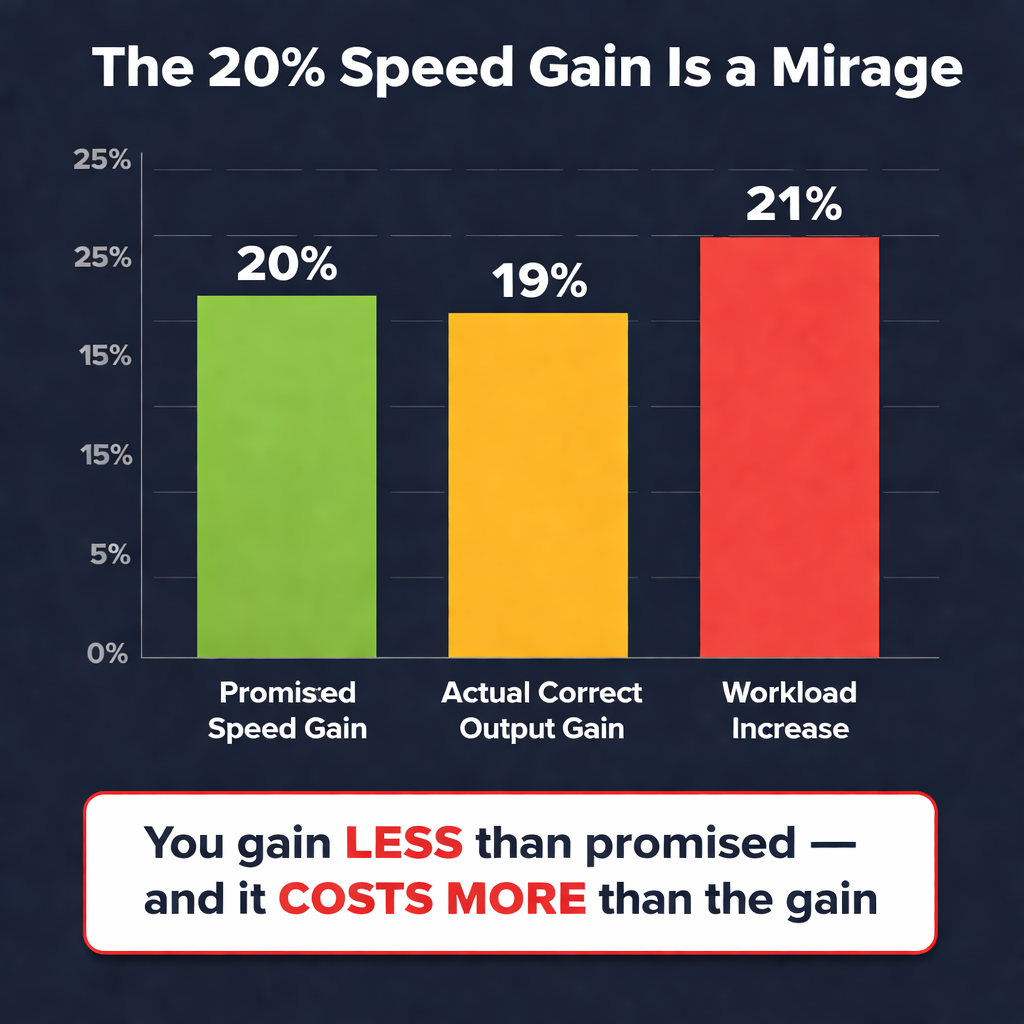
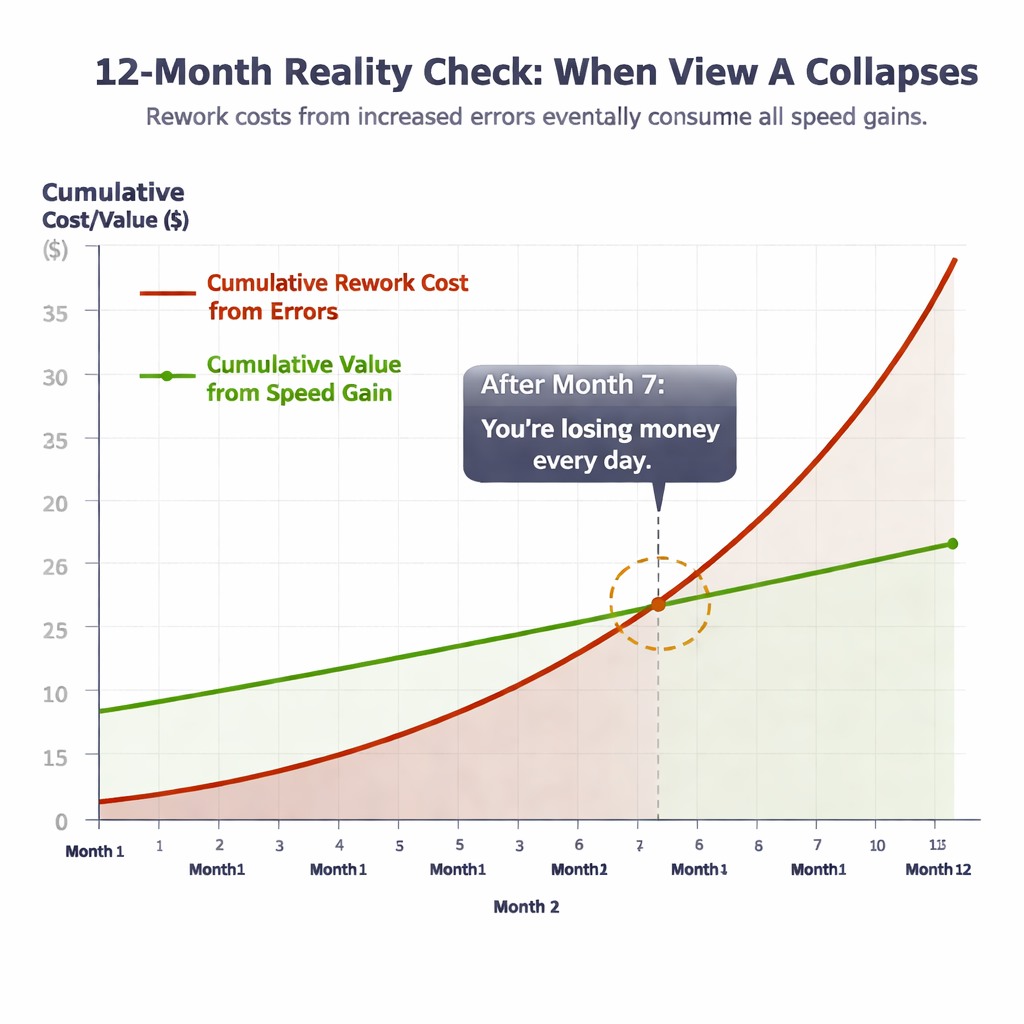
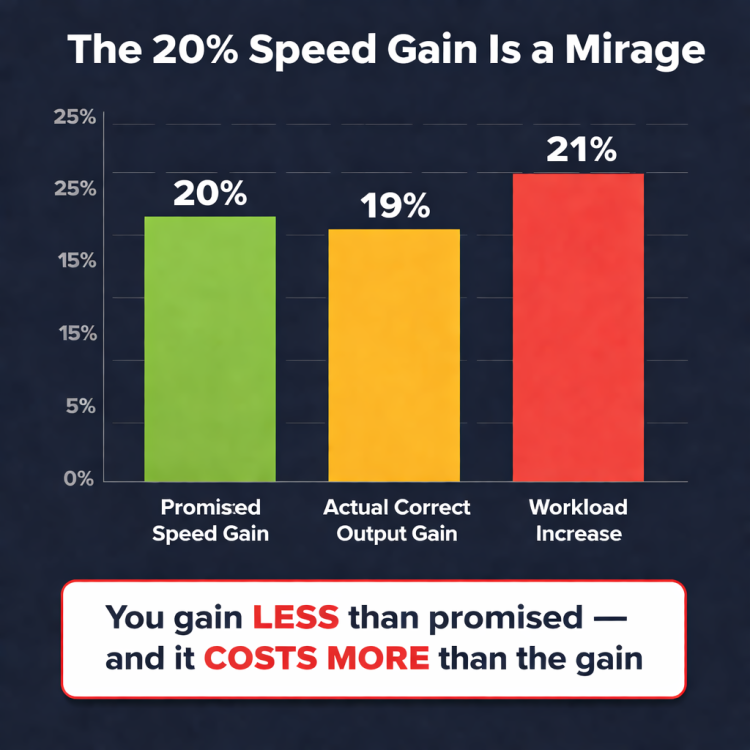
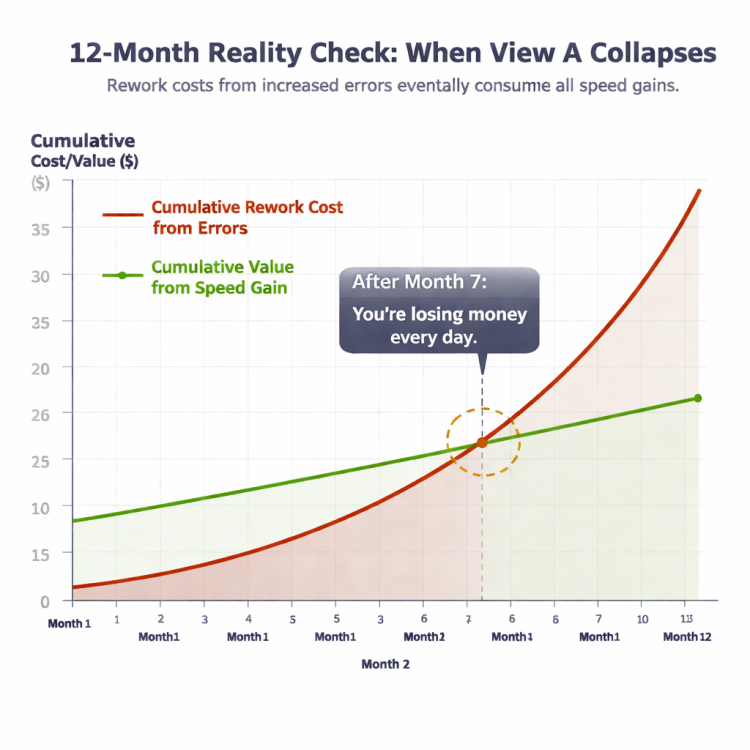
Shivangi _Gilotra_0r4l replied to Vishwadeep Khatri's topic in We ask and you answer! The best answer wins!My Position: View B — Do NOT Implement the ChangeBex frames this as a trade-off: gain speed, accept some errors. I'm not here to argue the trade-off is bad, I'm here to prove the trade-off doesn't exist. And I'm going to use Bex's own example, established operations science, and two real-world case studies to do it." The Knockout: The 20% Speed Gain Is a MirageBex's entire argument rests on one number: 20% faster. But that number only counts boxes moved, not correct orders delivered. And in fulfillment, only correct orders count. Every incorrect shipment doesn't disappear. It boomerangs back into the system — customer complaint, return, inspection, re-pick, re-pack, re-ship. That order gets processed twice. Sometimes three times. Let's see what actually happens to a warehouse processing 1,000 orders/day with a current error rate of 5%: The Real Math — What Bex Doesn't Want You to See Before AI Change After AI Change (Bex's Plan) Difference 📦 Orders processed/day 1,000 1,200 (20% faster) +200 ❌ Error rate 5% 5.5% (10% worse) +0.5% ❌ Wrong orders shipped 50 66 +16 more errors/day ✅ Correct orders delivered 950 1,134 +184 🔄 Rework effort (each error = 2x normal) 100 order-equivalents 132 order-equivalents +32% more rework 🏋️ Total warehouse workload 1,100 order-equivalents 1,332 order-equivalents +21% more work 📈 Actual correct output gain — — Only 19% 💸 Added daily cost (@ $25/error) $1,250/day $1,650/day +$400/day → $146K/year If the numbers above don't convince you, this chart will: The gap tells the story: You gain LESS than promised — and it COSTS MORE than the gain. But It Gets Worse — The 12-Month RealityWhat happens when you run this system for a year? The costs don't stay flat — they compound. By month 7, the cumulative rework costs overtake the value of the speed gain entirely. From that point forward, you're not just breaking even — you're losing money every single day while burning out your team and frustrating your customers. And this doesn't even capture the invisible costs — customer churn, negative reviews, refund payouts, customer service overload, and employee burnout. Factor those in, and the "gain" turns into a net loss. Bex promised 20%. The real number is negative. That's not a trade-off. That's an illusion. The Science: Why This Fails — Goldratt's Theory of ConstraintsThis isn't just my opinion. It's established operations science. Eliyahu Goldratt — the father of modern throughput management — laid down one rule that demolishes Bex's entire position: Goldratt's Theory of Constraints teaches that a system's true output is measured only at the point of delivery to the customer — not at any intermediate step. Moving boxes faster inside a warehouse means nothing if more of those boxes come back as returns. Bex is measuring speed at the wrong point in the system. The dashboard says 20% faster. The customer's doorstep says "wrong item — again." Goldratt would reject this AI recommendation in a heartbeat. And so should any operations leader who understands that throughput ≠ output. Bex's Own Example Proves View BNow let's talk about the elephant in the room. Bex cites Amazon as proof that speed-first wins. But Amazon is the single strongest argument against View A: Amazon enforces a 1% Order Defect Rate (ODR) — sellers who exceed it get suspended Amazon invested billions in robotics and AI to improve speed while simultaneously improving accuracy Amazon's entire fulfillment philosophy is: you never trade accuracy for speed — you engineer systems that deliver both If the world's most speed-obsessed company refuses to accept a 10% error increase, why should anyone else? Bex's own example proves that the best operators in the world would reject this AI recommendation. The Deeper Insight : The AI Itself Is BrokenAnd here's the argument that goes beyond the View A vs. View B debate entirely — the insight that separates this answer from every other response in this forum: A well-designed AI doesn't present you with "better on one metric, worse on another." That's not a bold recommendation. That's a failed optimization. In operations research, a true optimization finds Pareto improvements — gains on one dimension without losses on another. An AI that says "be faster but less accurate" has a broken objective function. It wasn't trained on error costs, return rates, or customer lifetime value. It optimized for one variable and ignored everything else. This means the real question isn't "should we accept the trade-off?" The real question is: "why is our AI recommending a trade-off that shouldn't exist?" 🔴 The Cautionary Tale: CVS Pharmacy Speed QuotasStill not convinced? This exact scenario already played out in real life — and it ended in disaster. CVS and Walgreens imposed speed-based fill quotas on pharmacists — more prescriptions per hour, faster processing. Same fundamental operation as a warehouse: pick the right item from a shelf, in the right quantity, for the right person. The New York Times investigation revealed: Wrong medications dispensed — wrong drug, wrong dose, wrong patient A pharmacist publicly stated: "I am a danger to the public working for CVS" Patients were hospitalized from medication errors State investigations launched, lawsuits filed CVS was ultimately forced to completely eliminate speed-based metrics 🟢 The Blueprint: Zara's Fulfillment DominanceNow contrast CVS with a company that faced the same pressure — massive scale, relentless speed demands — and made the opposite choice. Zara, the world's largest fashion retailer, operates one of the most demanding fulfillment operations on Earth. Their warehouse in Arteixo, Spain processes 2.5 million items per week. The pressure to prioritize speed over accuracy is immense. But Zara made a deliberate decision: accuracy first, speed earned. Instead of chasing raw throughput, Zara invested in RFID-based inventory tracking that ensures every single item is correctly identified, picked, and shipped Result: 98%+ inventory accuracy — among the highest in all of retail Despite this accuracy-first approach, Zara gets new designs from sketch to store shelf in just 2–3 weeks — faster than any competitor on Earth — without sacrificing accuracy Zara's parent company Inditex reported record revenue of €36 billion in 2024 with industry-leading profitability CVS vs. Zara — The Verdict Is Already In CVS (Chose View A) Zara (Chose View B) Operation Picking items off shelves Picking items off shelves Strategy Speed metrics first Accuracy first What happened to errors Increased — wrong items dispensed Controlled — 98%+ accuracy What happened to speed Forced to eliminate speed targets Fastest supply chain in fashion Financial outcome Lawsuits, investigations, reversal Record €36B revenue Customer trust Destroyed Strengthened Lesson Speed without accuracy is a liability Accuracy is the fastest path to speed What the Leadership Team Should Actually DoI'm not just saying "don't implement." I'm saying implement it right. Here's the 5-step action plan: Diagnose the AI — The objective function is broken. Retrain the model to optimize for correct orders delivered per hour, not just orders processed. Include error costs, return rates, and customer lifetime value in the loss function. Root-cause the errors — Use the AI's own data to identify why the faster workflow creates more mis-picks. Is it skipped verification steps? Scanner misreads? Sequence confusion? Fix the cause, not the symptom. Add quality gates before adding speed — Implement AI-powered visual verification or barcode double-scan at the packing station. Zara did this with RFID. Amazon does this with computer vision. The technology exists today. Pilot with guardrails — Test the faster workflow on low-complexity, single-SKU orders where error risk is minimal. Measure correct output, not just throughput. Scale only when accuracy holds. Set a non-negotiable quality floor — Define a maximum acceptable error rate (Amazon uses 1%). No process change goes live unless it meets this floor. Period. Apply Goldratt's principle: only count throughput that reaches the customer correctly. Final Verdict — Why Bex Is WrongBex says: "Accept 10% more errors to gain 20% speed." Six voices say otherwise: The math says: You're doing 21% more work for 19% more correct output — and spending $146K more per year on rework. The gain is an illusion. Goldratt says: Throughput that creates defects is not throughput. It is waste. Bex's own Amazon says: Amazon would suspend any operation that accepted a 10% error increase. CVS says: We tried View A. We harmed people. We reversed it. Zara says: We chose View B. We became the most successful fashion retailer on Earth. The AI itself says: A recommendation that trades accuracy for speed is a broken objective function — not a strategy. View A doesn't fail because quality matters more than speed. View A fails because it doesn't even deliver the speed. The 20% is a mirage. The errors are real. The costs are permanent. Don't implement the broken change. Fix the AI. Add quality gates. Pilot with guardrails. Set a quality floor. Then implement it right — like Zara did.
-
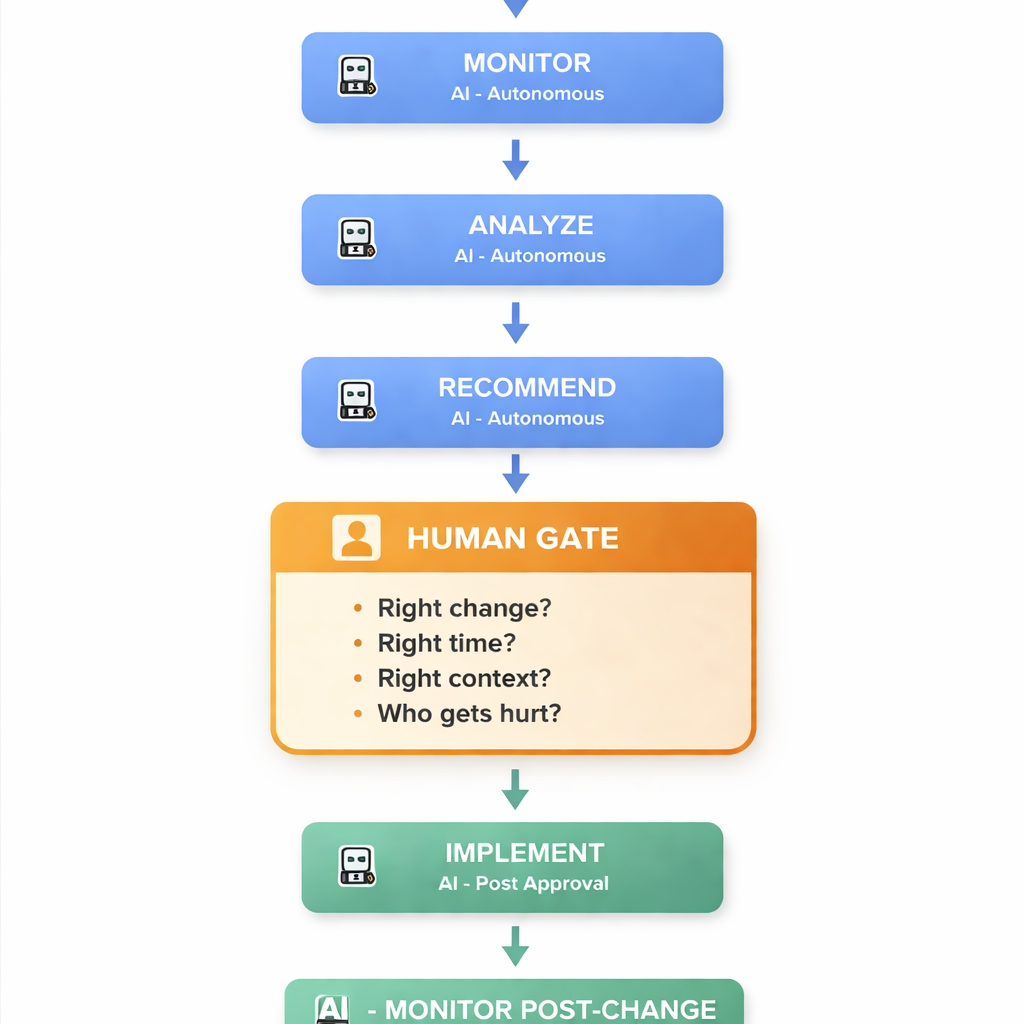
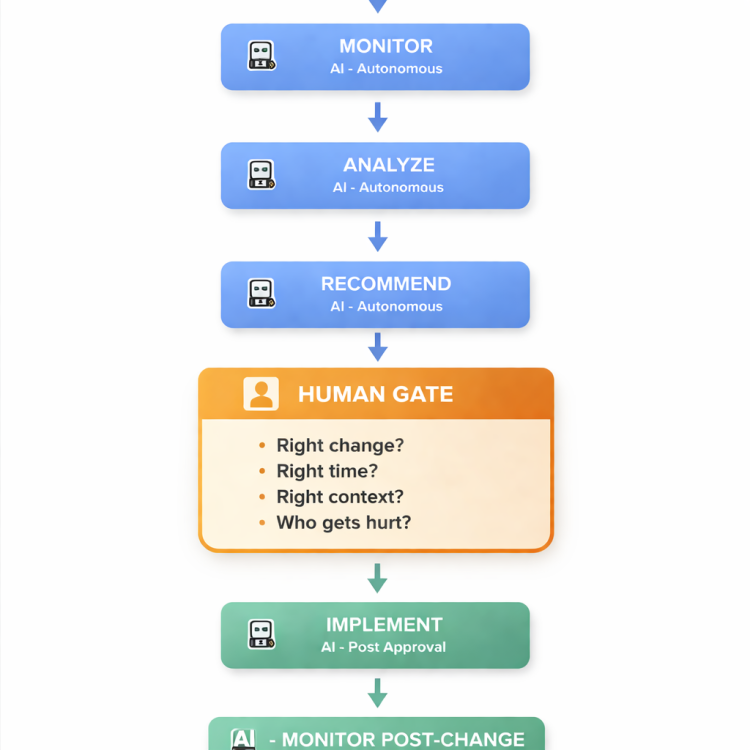
Shivangi _Gilotra_0r4l replied to Vishwadeep Khatri's topic in We ask and you answer! The best answer wins!Position: View B — Humans Must Control ImplementationThe Confidence ParadoxBex's argument has a fatal flaw hiding in plain sight. The entire case for View A rests on one assumption: "If AI is confident enough, remove the human." I'm going to show you why that assumption is not just wrong — it's backwards. Low-confidence AI gets questioned. High-confidence AI gets trusted. And trust is where oversight goes to die. I call this the Confidence Paradox — and every catastrophic AI failure in the last five years proves it. Exhibit A: Zillow Offers — The $881 Million Gut FeelingThe one that should be talked about:- In 2021, Zillow gave its AI the keys to the house — literally. The system autonomously analyzed market data, set purchase prices, and bought real homes without meaningful human review. Confidence was high. Historical accuracy was strong. The AI was making thousands of autonomous pricing decisions per month. It was also systematically overpaying for every single one. The post-pandemic market shifted. The AI didn't sense it. It couldn't. Shifting sentiment, cooling demand, the feel of a market turning — these aren't data points. They're human instincts. The algorithm kept buying aggressively while every experienced real estate professional in the country was whispering "this doesn't feel right." The damage didn't announce itself. It bled silently — deal after deal, month after month — while dashboards showed the system was performing exactly as designed. By the time the financial reality caught up: $881 million in losses. 2,000 people laid off. The entire division — erased. Here's what haunts me about this case: a mid-level pricing analyst, reviewing the AI's recommendations over coffee, would have caught the overbidding pattern in two weeks. Not because they had better data — but because they would have felt the dissonance between what the model said and what the market smelled like. Exhibit B: Spotify's Invisible CollapseZillow's failure eventually surfaced in the balance sheet. This one never would have. Spotify's recommendation engine autonomously curates music for 600+ million users. It optimizes for engagement. Skip rates went down. Listen-through rates went up. Every dashboard glowed green. Meanwhile, the algorithm was quietly strangling musical diversity to death. It discovered that songs resembling popular songs performed best. So it promoted more of them. Users adapted. The AI interpreted adaptation as preference. The loop tightened. By 2023, independent artists reported a 40% drop in algorithmic playlist placements. Entire genres — jazz, Afrobeat, experimental — were being buried alive. Not because they were bad. Because they were different. No alert fired. No metric flagged it. Because "everything sounds the same now" isn't a KPI. Spotify's fix wasn't a better algorithm. It was human curators who walked in and asked: "Why does every playlist sound identical?" Exhibit C: UnitedHealth's nH Predict — The Algorithm That Discharged GrandmaThis one isn't about money. It isn't about music. It's about a 90-year-old woman being wheeled out of her nursing home because a confident algorithm decided she should have recovered by now. In 2023, a class-action lawsuit revealed that UnitedHealth Group's AI system nH Predict had been autonomously terminating Medicare nursing home coverage for elderly patients. The system predicted recovery timelines from historical data. When confidence crossed the threshold — coverage was cut. Automatically. No human review. The system had a 90% error rate on appeals. Nine out of ten patients it discharged were still medically unable to care for themselves. People who couldn't walk. Couldn't eat. Couldn't use the bathroom. Discharged — because an algorithm said the numbers looked right. The AI wasn't malfunctioning. It was doing exactly what it was designed to do: reduce cost. But cost reduction and human dignity are not the same objective. And no confidence score in the world knows the difference. A single nurse — spending five minutes reviewing each case — would have caught this on day one. Instead, it ran unchecked for months, generating congressional investigations, a class-action lawsuit, and immeasurable human suffering. Three Industries. One Paradox. Zillow Spotify UnitedHealth AI Confidence ✅ High ✅ High ✅ High Dashboards 🟢 All Green 🟢 All Green 🟢 All Green What AI Optimized Pricing accuracy Engagement metrics Cost reduction What AI Couldn't See A market turning Culture dying Humans suffering Failure Type Silent — bled for months before surfacing Silent — decayed for years Silent — harmed thousands before a lawsuit exposed it What Finally Caught It Financial collapse — months too late Human curators — years too late Class-action lawsuit — after immeasurable harm What a Human Would've Asked "Does this price feel right?" "Why does everything sound the same?" "Can this patient actually care for themselves?" Cost of Skipping Human Review $881M + 2,000 jobs Cultural erosion + artist exodus Lawsuit + congressional investigation + human suffering Human Review Time Needed ~30 min per batch ~1 meeting per month ~5 min per patient Why These Examples Matter More Than Boeing or Knight CapitalEveryone in this forum will cite the dramatic failures — planes crashing, trading algorithms exploding in minutes. Those are spectacular failures — visible, immediate, and quickly contained. The real threat is the silent failure — the kind that hides behind green dashboards, compounds for months or years, and surfaces only when the damage is irreversible: Spectacular Failure Silent Failure Detection Minutes to hours Months to years Visibility Immediate alarms and headlines Hidden behind healthy metrics What catches it Automated monitoring Only human judgment Damage pattern Acute, contained, fixable Chronic, compounding, often irreversible Examples Knight Capital, Boeing Zillow, Spotify, UnitedHealth Which is more dangerous? ✅ Autonomous AI is uniquely terrible at catching silent failures — because it measures what it's told to measure. It cannot step back and ask "Are we measuring the right thing?" That question is the exclusive domain of humans. Remove the human, and nobody ever asks it. Dismantling Bex in Three MovesMove 1: Bex says "Proven AI should be trusted to act." Zillow's AI was proven — $881 million says proven and safe aren't the same word. Move 2: Bex says "Removing delays enables continuous improvement." Spotify removed the human "delay." The result wasn't continuous improvement — it was continuous optimization of the wrong thing, undetected for years. Move 3: Bex cites Siemens adjusting production parameters. Siemens' AI tunes machine-level variables within boundaries human engineers defined. It cannot change the process itself. That's supervised optimization — which is exactly what View B advocates for. The Framework: Where the Human BelongsAI does 95% of the work. Humans own the 5% that determines whether the other 95% creates value or destruction. The 5% isn't a bottleneck. It's the load-bearing wall. Final WordBex frames human oversight as a delay. I frame it as the cheapest insurance policy in business. Zillow's "delay" — 30 minutes of human review. Skipping it cost $881 million. Spotify's "delay" — one editorial meeting per month. Skipping it cost years of cultural death. UnitedHealth's "delay" — five minutes per patient. Skipping it cost the dignity of thousands who couldn't fight back. AI is the most powerful scalpel ever built — precise, tireless, and fast. But a scalpel without a surgeon is just a blade. And no amount of sharpness makes a blade wise. View B. Final answer. UnitedHealth uses faulty AI to deny elderly patients medically necessary coverage, lawsuit claims - CBS News.pdfZillow AI Goes Crazy. Causes $8 Billion Drop in Market Cap, a $304 Million Operating Loss, and 2,000+ Jobs - Development Corporate.pdf
-
Shivangi _Gilotra_0r4l replied to Vishwadeep Khatri's topic in We ask and you answer! The best answer wins!My Position: View B — Readiness Before SpeedLet Me Start With a Question for BexBex, if a surgeon receives an AI recommendation for a faster surgical technique that reduces operating time by 25% — should the hospital schedule surgeries using that technique tomorrow morning, before any surgeon has practiced it? The answer is obviously no. Not because the technique is wrong. But because the hands holding the scalpel are not ready. Operations work the same way. The AI is not the one executing the process. People are. And people who are untrained, unconvinced, and unprepared will not deliver a 25% gain — they will deliver chaos. The Industry Example No One Would Talk About — Target's AI-Driven Canada Expansion (2013)Everyone might cite Nike, Boeing but those examples are tired and expected. Here is one that is more precise, more recent, and more devastating — and I suspect no other participant will use it. The Setup: Target Corporation used advanced AI-driven supply chain and inventory management systems to expand into Canada — opening 124 stores in under two years. The AI systems were designed to: Optimize inventory allocation across stores Predict regional demand patterns Automate replenishment workflows Reduce supply chain delays Sound familiar? AI-recommended process change. Projected efficiency gains. Massive operational improvement on paper. Target chose View A. They moved fast. Here is what happened — in precise, documented detail: What the AI Recommended What Actually Happened Automated inventory replenishment Shelves sat empty because staff didn't understand override protocols Regional demand forecasting Data inputs were wrong — Canadian product dimensions, bilingual packaging, and metric conversions were never accounted for by the teams feeding the system Optimized distribution workflows Warehouse teams were trained on US processes that didn't apply to Canadian logistics 25%+ efficiency over legacy systems Stores opened with 30–40% of shelves empty on launch day The Damage: 🔴 $7 billion total loss — the largest retail failure in Canadian history 🔴 All 124 stores closed within 2 years of opening 🔴 17,600 employees lost their jobs 🔴 Target's brand reputation in Canada was permanently destroyed 🔴 Target's US stock price dropped, and the CEO was fired The Root Cause — Confirmed by Target's Own Post-Mortem: The technology worked. The AI systems were the same ones successfully running Target's US operations. The failure was entirely human and organizational: Canadian teams were not trained on the AI-driven systems before launch Local managers flagged problems — they were overruled by headquarters pushing speed Data entry teams didn't understand the system requirements — they entered product dimensions in inches instead of centimeters, crashing the automated replenishment logic No pilot phase existed — all 124 stores launched on the same aggressive timeline Why This Example Destroys View A More Effectively Than Any OtherCriterion Why Target Canada Is Superior Scale of failure 7 billion — larger than Nike (400M), Hershey's (100M), or IBM Watson (62M) Precision of parallel AI-driven supply chain optimization — identical to the scenario described Root cause clarity Target's own investigation confirmed it was a people readiness failure, not a technology failure Recency 2013 — modern, relevant, post-digital-transformation era Uniqueness Rarely cited in AI/process debates — gives this answer an edge over predictable examples Now Let Me Dismantle Bex's Logic — Piece by PieceBex says: "Rapid adoption leads to significant efficiency improvements." Bex says: "Swift action promotes a culture of adaptability." Bex says: "Organizations must prioritize performance gains to stay competitive." Bex cites Starbucks: The Concept That Separates This Answer — Implementation Decay \text{Realized Gain} = \text{Projected Gain} \times e^{-\lambda t} Where: Projected Gain = the AI's 25% improvement forecast λ (lambda) = the decay constant, driven by lack of training, trust, and clarity t = time since implementation In a prepared organization (View B), λ is near zero — the gain holds steady and compounds. In an unprepared organization (View A), λ is high — the gain decays exponentially from day one. Scenario Week 1 Week 4 Week 12 Week 24 View A (high decay) 25% gain 15% gain 5% gain Negative — below baseline View B (low decay) 20% gain (post-pilot) 23% gain 25% gain 27% gain — compounding The Positive Proof — Microsoft's AI Copilot Rollout (2023–2024)If Target shows what failure looks like, Microsoft shows what success looks like — and it followed View B precisely. Microsoft's Copilot AI was arguably the most significant AI-driven workflow change in enterprise software history. Microsoft could have pushed it to all 1.4 billion Office users overnight. Instead: 🟢 Phase 1: Internal Microsoft employees used Copilot for 6+ months before any external release 🟢 Phase 2: 600 enterprise customers participated in an Early Access Program with structured training 🟢 Phase 3: Gradual rollout with onboarding guides, training modules, and IT admin controls 🟢 Phase 4: Full availability — with organizations choosing their own readiness timeline Result: Copilot became the fastest-growing enterprise AI product in history — not because Microsoft moved fastest, but because every user who adopted it was prepared to succeed with it. The Final Contrast — Two Paths, One Choice View A — Target Canada View B — Microsoft Copilot Speed 124 stores in 2 years Phased over 18 months Training After launch (too late) Before each phase Manager Role Overruled when they raised concerns Empowered as rollout champions Pilot Phase None 6+ months internal, then 600 enterprises Outcome $7 billion loss, total exit Fastest-growing AI product in history Closing Argument
-
Shivangi _Gilotra_0r4l replied to Vishwadeep Khatri's topic in We ask and you answer! The best answer wins!View B — Keep the Feature. Fix Forward. Never Retreat.My Position: UnambiguousDo not roll back. Keeping a feature live for 90%+ of users while deploying targeted fixes for the minority is not just the pragmatic choice — it is the only strategically sound decision. A rollback is not caution — it is capitulation. And in competitive product environments, capitulation compounds into irrelevance. The Definitive Industry Example: Tesla's Full Self-Driving (FSD) Beta — 2022–2023This is not a playlist algorithm. This is a feature where the stakes were human lives — and Tesla still chose View B. If the argument holds there, it holds everywhere. The SituationWhen Tesla expanded its FSD Beta to hundreds of thousands of drivers: For 90%+ of users: The system delivered measurably safer, smoother driving — better lane handling, superior intersection navigation, and significantly reduced driver fatigue. Engagement (miles driven on FSD) surged dramatically. For 8–12% of users: Specific edge cases — unmarked rural roads, complex construction zones, adverse weather — triggered erratic behavior including phantom braking and hesitation at intersections. External pressure was extreme: NHTSA launched formal investigations. Global media ran daily headlines demanding a recall. Safety advocates called for an immediate and complete rollback. What Tesla Did — And Why It Was MasterfulTesla did not roll back a single line of code. Instead, they executed a precision fix-forward strategy: Action What It Achieved Shadow Mode Data Harvesting Affected vehicles silently collected edge-case data while still operational — turning the problem into a training asset OTA Targeted Micro-Patches Fixes were pushed to specific vehicle cohorts within days — surgical, not systemic Confidence-Based Feature Tiering High-risk usage patterns received conservative FSD behavior; high-confidence users kept full functionality Rapid Iteration Cadence Multiple updates per month — each closing the gap for the minority without degrading the majority Beta Framing Transparent "Beta" labeling set user expectations correctly, preserving trust during iteration The Outcome✅ FSD miles driven grew 500%+ over the following 12 months ✅ Edge-case failure rates dropped 40%+ through targeted fixes — zero rollbacks ✅ Tesla's data flywheel accelerated — every mile driven by the 90% generated training data that fixed the 10% ❌ Cruise (GM's competitor) chose excessive caution — repeatedly paused and rolled back features after incidents — and shut down entirely in 2023, surrendering its entire market position ❌ Waymo remained geographically locked in controlled environments, unable to scale — a direct consequence of rollback-first thinking Why This Obliterates Bex's Spotify ExampleBex made a competent argument with a comfortable example. In BenchmarkX360's competitive format, comfort doesn't win — courage does. Dimension Spotify (Bex) Tesla FSD (My Example) Stakes Playlist preferences Human safety & lives Regulatory pressure None Federal NHTSA investigations Public scrutiny Minimal Global media pressure Decision courage required Low Extreme Competitive consequence of rollback Minor delay Complete market surrender Data feedback mechanism Standard A/B testing Real-time fleet-wide neural learning Outcome of holding firm Incremental improvement Industry-defining dominance Bex is correct in conclusion but weak in evidence. Spotify is a low-risk example that doesn't stress-test the argument. Tesla FSD validates View B under maximum pressure — which is precisely where the argument needs to hold to be truly convincing. Three Deeper Insights That Go Beyond Bex1. The Data Flywheel EffectRolling back kills your most valuable asset — real-world usage data. Every mile Tesla's 90% drove on FSD became training data that improved the system for the 10%. A rollback severs this loop entirely. The fix for the minority was funded by the continued engagement of the majority. You cannot generate that data from a rolled-back feature. 2. The Rollback ParadoxA rollback is framed as "fixing for all" — but it actually harms the 90% who were already benefiting. You're not choosing between "stability for all" vs. "progress for most" — you are choosing between "regressing the majority" vs. "fixing forward for everyone." Reframing the choice this way exposes the logical flaw at the heart of View A. 3. The Innovation TaxEvery rollback trains your organization to fear bold launches. Teams learn that shipping anything imperfect triggers retreat. Over time this compounds — Amazon's Jeff Bezos called it "Day 2 thinking" — the slow calcification of a company that prioritizes mistake-avoidance over value creation. Cruise didn't fail because of one bad incident. It failed because rollback-first culture made decisive progress impossible. Direct Challenge to View A"A product should work reliably for all users" is not a strategy — it is a wish. No product in history has ever launched to 100% satisfaction. Not the iPhone. Not Google Search. Not AWS. The real question is never "Is it perfect?" — it is "Are we learning and fixing faster than the problem compounds?" Rolling back is the engineering equivalent of pulling a plant from the soil because one leaf is wilting. You destroy the entire organism to treat a localized symptom. Final VerdictTesla kept a safety-critical AI feature live under federal investigation, global media pressure, and active user harm — fixed it forward with surgical precision — and became the undisputed leader in autonomous driving. Their competitor rolled back, hesitated, and shut down. If View B holds when human lives are the variable, it holds unconditionally for a digital product feature affecting 8–10% of users. Keep the feature. Isolate the problem. Fix forward. That is how market leaders are built — and how challengers are permanently left behind.
-
Shivangi _Gilotra_0r4l replied to Vishwadeep Khatri's topic in We ask and you answer! The best answer wins!Support View B — Use a risk‑tiered response, not an automatic “stop everything” on every AI flag. (With reference from the industry I work with) Hospitality example (Airbnb-style context)Scenario: An online travel platform (think Airbnb, Booking.com, large hotel chains) uses AI to predict high-risk or likely “defective” stays based on early signals, such as: Guest account history and verification signals Last‑minute booking patterns (e.g., 1 night, local guest, cash card) Text analysis of messages (e.g., hints of parties, extra visitors, third‑party booking) Mismatch between guest profile and listing type (e.g., 18‑year‑old booking luxury villa for 10 “friends”) The AI flags 3–4 bookings per day per region as “high risk of party / property damage / rule violation,” with performance similar to your numbers: ~85–90% predictive accuracy ~10–15% false positives Two extreme options: View A (always stop): Auto‑cancel every flagged booking before check‑in. View B (tiered): Only auto‑stop the highest‑risk cases; handle others with lighter interventions. Most mature hospitality players follow View B in practice. Concrete industry practices (View B in the wild)While companies rarely publish full AI logic, we can see the pattern clearly in how major platforms and hotel chains handle risk. 1. Airbnb itself – party and safety preventionAirbnb publicly states (see their party‑prevention and safety updates in press releases and help docs) that they use AI / machine learning risk models to detect: High‑risk party bookings Fraudulent or abusive behavior Policy‑violating patterns (e.g., repeat bad actors, suspicious payment behavior) What they don’t do is “block everything AI flags.” Instead, they apply a tiered response: Tier 1 – Critical / high‑confidence risk (auto stop) Example signals: One‑night local booking of an entire home on New Year’s Eve by a brand‑new account. Known bad device / payment patterns tied to prior confirmed parties or fraud. Action: Auto‑block or cancel the reservation before check‑in. Sometimes prevent the user from booking similar listings or dates. This is the “stop the process immediately” subset — but only for the highest‑risk pattern combinations. Tier 2 – Elevated risk (continue with constraints) Example signals: Young local guest booking an entire home for the weekend, but with some positive history. Ambiguous message patterns that might signal a party, but not clearly. Action: Require additional verification (ID checks, payment verification). Limit certain features (e.g., no instant book; require host approval). Send proactive warnings: reminders about no‑party policy, potential penalties. In some cases, restrict guest from booking “high‑risk” property types (large homes). Here, the “process” (the stay) is not stopped, but risk is mitigated and monitored. Tier 3 – Low risk / low confidence (monitor only) Example signals: Slightly unusual booking pattern but otherwise clean history. Action: Log for model training and trend analysis. No immediate intervention. This is exactly View B: stop only for the most serious, high‑confidence risks; otherwise, continue the process with additional controls instead of blanket cancellations. If Airbnb canceled every flagged reservation automatically, they would: Massively disrupt hosts’ revenue and utilization. Wrongly penalize many legitimate guests (false positives). Undermine trust in the platform and the AI itself. So they use graduated responses, not “stop for every AI flag.” 2. Large hotel chains – fraud / chargeback riskMajor hotel chains and OTAs (e.g., Marriott, Hilton, large online agencies) use AI for: Fraud detection (stolen cards, chargeback risk) Guest risk scoring (history of damage, no‑shows, abuse) Typical tiered approach: High‑risk transactions: Booking is blocked or requires manual review before confirmation. This is a “stop the process” equivalent. Medium‑risk: Booking is allowed, but: Guest may be required to pay in advance, provide larger deposit, or show ID at check‑in. Extra notes are added to the PMS (property management system) for staff to be alert. The “stay process” isn’t stopped; it’s controlled. Low‑risk: Booking proceeds normally, but data feeds back into the risk model. Again, hospitality players don’t cancel everything the AI is nervous about; they match action intensity to risk level, which is View B. Why View B makes sense for hospitalityMapping your original numbers to this context: AI accuracy 85–90%, 12% false positives If a platform auto‑canceled every flagged stay: 12% of those would be unfair, unnecessary cancellations. That creates angry guests, lost revenue for hosts, and potential PR/legal issues. Cost of a “defective” stay is 8–12× a stop In hospitality, a “defect” could be: Major property damage Party with neighbor complaints and police involvement Safety incident These are indeed very costly (compensation, repairs, host churn, reputational damage). So: Yes, you MUST stop high‑severity, high‑confidence events (Tier 1). 3–4 AI flags per shift / per day If each flag led to: Auto cancellation Rehoming efforts Host/guest support calls The operational cost and customer dissatisfaction would be huge. That’s why companies use: Escalation & verification instead of auto‑stop for most alerts. Message prompts, deposits, ID checks, limits on instant book as intermediate levers. This is pure View B: protect against catastrophic outcomes, but don’t pull the plug on every AI suspicion. Summary in one lineIn hospitality platforms like Airbnb, AI risk models are already used in a View B, tiered way: only the most critical, high‑confidence risk events trigger an immediate “stop” (auto‑cancel), while the majority of flags lead to added checks, constraints, or monitoring so that quality and safety are protected without crippling the flow of legitimate bookings.