
ManishaB
Members
-
Joined
-
Last visited
-
Can AI Reveal Operational Assumptions We Didn’t Know We Had? Here’s a Rogers-specific, concrete, non-generic example that directly shows how an AI agent can reveal hidden operational assumptions in a real workflow. Example: Rogers Contact Centre – Retention Save Offer Workflow The Hidden Assumption -It is nowhere documented but AI still followed- When customers threatening to cancel- ALWAYS respond best to a discount-based save offer. This belief drives scripting, agent behavior, KPIs, and even what the CRM surfaces first. But nobody ever questions it. It’s a cultural default. When a customer says they want to cancel, giving them a discount is always the best way to keep them. People in the company assume this is true, so- · Scripts are written around it and agents are told to offer discounts first · Agents behave based on it, they jump to offers instead of checking the real issue · KPIs are designed for it- success is measured by how many discounts saved the customer · CRM supports it- the system shows discount options at the top, hiding other solutions How an AI Agent Exposes the Hidden Assumption Context Rogers deploys an AI Reasoning Agent that listens to live calls or chat transcripts, classifies customer intent, and then recommends next actions and save strategies like pricing offer, empathy route, plan re-match, network check, loyalty benefits, etc.. What Actually Happens Within a few weeks, the AI model starts recommending non-discounted actions more frequently for cancellation-intent calls- because it has learned from past patterns. This triggers friction- Human Agents say- · Why is the AI suggesting network diagnostics first? · Why is it prioritizing billing clarity instead of offers? · Why isn’t the AI giving the usual 15% save offer? This unexpected behavior surfaces the blind spot. When a steady and robust AI system is deployed to govern the system, it will always go deeper and actually understand the root cause of issues, here customer issues, discount may not always be the option- this is done using Customer churn prediction methodology. How Exactly the AI Surfaces these Assumptions- 1. Pattern Discovery The AI finds that in 22% of cancellation calls, customers aren't actually leaving for price- root cause is- · An unresolved outage · Repeated technician no-shows · A billing error · Equipment issues And it learns that offering a discount first increases frustration, because the customer feels unheard. AI Insight: Your assumption that price is the primary driver of churn is wrong for a significant segment. A deeper study has to be made around customer’s real problems. 2. Recommendation Anomaly AI begins recommending: · Run a network quality check before offering a discount. · Correct billing error before presenting retention bundles. · Escalate to tech support- save offer is not relevant yet. This deviates from the standard script. And dives more into the solution to actual problem. AI automatically knows through churn prediction that customers are unhappy due to other reasons and it does the best to assist them. 3. KPI Disruption When followed, AI-led calls show- · 13% higher save rate · 19% higher first-call resolution · Better CSAT compared to discount-first calls This challenges- “Our long-held discount-first assumption is not universally true.” 4. Churn Prediction The AI predicts customer actions through churn predictions. This makes Rogers quickly get back customers who are likely to leave. · Will this customer leave? · What factors typically cause cancellations? 5. Root-Cause Pattern Learning It learns what actually drives dissatisfaction - network issues, billing errors, bad experience, etc through pattern learning. It does a brief analysis on customer pattern and comes to know about root cause behind it. And then can eventually personalize the customer offers based on that data. So, it’s churn prediction + pattern recognition + AI reasoning that exposes the hidden assumptions. Churn prediction tells who might cancel. AI reasoning tells why and what to fix first. 6. Operational Uplift Reveals Another Assumption The data also exposes a second hidden belief- Agents skip diagnostics because they assume it makes the call longer. Human agents often avoid doing basic checks like network tests or account diagnostics because they think it will make the call longer. But AI shows- · Quick pre-screening checks are not increasing call duration · They often avoid long escalations or repeat calls So now two hidden assumptions collapse thanks to AI- 1. Price is the main reason customers cancel 2. Diagnostics make calls longer In Simple Terms - What AI Revealed AI help execute the process far better. It forced the organization to confront what it believed. · AI changed the offer order → humans questioned why- AI changed the order of steps, so people asked, “Why is it doing that?” · Humans realized their mental models didn’t match real customer behavior- They realized their old thinking didn’t actually match what customers wanted. · Data validated the new pattern → workflows changed- Once the data proved the AI was right, the company had to change how the work is done. Summary AI doesn’t just optimize operations- sometimes it quietly exposes the assumptions we didn’t know were driving them.
-
Can AI Truly Be Creative — or Does It Just Remix Human Ideas? When people say AI is creative, they usually imagine art or writing. But creativity in Rogers looks different - it’s about solving customer pain, designing better service flows and anticipating issues before humans notice. Creative Task- Designing a New Customer Outage-Communication Experience like Proactive Messages + Channel Strategy + Tone This is a genuinely creative job that normally mixes: · Behavioural psychology- to understand deeply what customers want, their habits, their thinking patterns. When an AI model is trained on neural networks, the AI can- o Detect patterns in how humans behave o Learn what phrases calm customers o Predict what actions a person might take o Generate responses that look psychologically intelligent · Service design- to design the services according to what customers behaviours are. This pattern of designing generates a smooth, easy, and happy experience for customer from start to finish. For example- Service design shapes the full customer experience for things like- o How a customer buys a new Ignite plan o How they install the modem o How outages are communicated o How billing and refunds work o How tech support chats flow o Every step is designed so the customer feels- o Understood o Supported o not confused o not frustrated · Network-ops understanding- to thoroughly map the networks operations so that system would work better. This also holds true when there is heavy traffic observed, so the network parameters have to be intact to comply heavy/ peak hours. · Customer-empathy tone- to get more customers, AI has to make customers love it. A proper tone is what sets the customers happy and turn back. · Channel orchestration like SMS, app, IVR, email- these channels have to function together so that AI would be reaching to customers very easily. Where AI Actually Shows a Hint of Creativity- Imagine giving AI the full context- Design an outage communication experience for a customer who- · Uses Ignite TV + Internet · Works from home · Has a meeting in the next 30 minutes · Prefers WhatsApp · Normally panics when service drops · Has a history of churn risk AI begins reasoning, simulating scenarios, and proposing novel combinations. All of this is important artistry to win our customers and get their full support to become no. one brand in Canada. A real example of emergent creativity- 1. Predictive Warning Message (before outage occurs): Hi Manisha, network stability in your node is fluctuating. It may interrupt your 2 PM call. Tap here for a temporary backup hotspot code generated just for you. This backup hotspot code generated just for you is a novel service concept by Rogers AI using reasoning across different domains like loyalty → network → billing → app features. Creates a deep customer connect + seeing this kind of response no customer would ever feel disheartened. It works on psychology so much that customers would still love Rogers, even in outage scenario. 2. Multi-channel behaviour-adaptive response- AI designs- · A calming WhatsApp flow for example- “Here are 3 things still working…” · A 15-sec Ignite TV screen overlay · A personalized app card that detects when the customer opens the app This orchestration is not copied from data, because no dataset contains this full sequence. This is all artistry which when blended with process the outcome is customer friendly + creative. 3. Micro-journey improvement idea- AI proposes- “Automatically pause Ignite TV billing for hours exceeding 90 min downtime.” AI synthesized it from principles- fairness + retention + customer sentiment. Which is about customer loving Rogers back. How? – AI says Rogers should automatically stop charging you for that time - without you having to call customer care. Why it’s a “micro-journey improvement”- It’s not a big change to the whole service. Just a small fix in one part of the customer journey like outage → billing → customer frustration. But this small fix makes customers much happier. So Is AI Creative Here? AI is creative in the human emotional sense, too. It does show functional creativity - the ability to generate new combinations, new service ideas, and new experiences that do not literally exist in the training data. AI can infer gaps. It can propose solutions that humans haven't articulated yet. But its creativity is always bounded by the patterns, rules, and constraints it has absorbed. Final Position AI in the Rogers domain is- Creative when combining network patterns + customer behaviours + product features to propose new experience designs that don’t exist yet. Human creativity = emotional, value-driven, intuition-based. AI creativity = recombination + reasoning → novel outputs useful in practice. In other words, AI creates possibilities humans never thought to try.
-
How AI-to-AI Collaboration & Competition Will Reshape Telecom Markets? When telecom AIs begin interacting - for negotiations, network coordination, roaming, supply chain, fraud detection, or customer experience - the entire competitive landscape will shift from human-driven decisions to algorithmic ecosystems. So that each interaction is aligned in strategic landscape. Org- Rogers Communications Project- Build and design a robust, scalable Data Governance Framework to manage enterprise data Telecom Networks will Become AI-Negotiated Ecosystems Where AIs will interact across companies Roaming charges negotiated AI-to-AI. When customers will compare other major telecom service providers like Bell, Cox and Telus; negotiations are bound to happen. Spectrum sharing and congestion relief negotiated in real-time. Example- Network in Rogers is suddenly crowded - too many people using it in the same area. So the AI in Rogers asks the AI in another operator- Hey, my network is full. Can I borrow a tiny piece of your 5G network (2%) for just 6 minutes? And the other AI can reply- Sure, you can use it. AI networks help each other in real-time so customers don’t face slow internet. Why it matters: o Fewer call drops o Faster speeds even during crowds (stadiums, concerts, malls) o More efficient use of 5G o Automatically handled by AI - no human needed. Everything done by AI- very quick and dynamic Inter-carrier routing optimized automatically. When a call is to be connected to another user there are certain ways through which it can connect. When this process of inter-carrier routing will shift completely to AI it will become fastest, cheapest and least congested. For example- a Rogers user is calling someone on Bell subscription. There may be multiple paths the call can take to reach Bell’s network. The AI checks- o Which path is fastest right now? o Which path has less congestion? o Which path costs least for Rogers? Then it picks the best one automatically within milliseconds. Vendor pricing like devices, towers, cloud, fibre negotiated between procurement AIs. Like how we rented network, we can rent devices, towers, cloud, fibre etc for better functioning of complete system, all done automatically via AI. What Rogers get out of this- o Cheaper towers, fibre, devices, cloud o Faster procurement o Fewer errors o Better forecasting o Stronger negotiating power What customers get out of this- o Better network quality o Lower costs may eventually reduce bill prices o Faster rollout of new technology This shifts markets from static pricing to dynamic, algorithm-driven competition. How AI-to-AI Interactions Change Rules of Competition Real-time AI-driven tariffs- Which leads to dynamic pricing AI could set roaming, data, and enterprise plan pricing minute-by-minute based on- · Network load- Re-routing network load to first another server and then to different domain server · Competitor’s offers- Rogers AI would check what are the offers by other competitors and then set its price. This will have a chance to boost sales by 30% · Customer churn predictions- Rogers runs churn prediction models twice a week. These models use customer demographics and behavior patterns to tell Rogers- o Which customers are likely to leave, o Why they might leave, o Which customers may come back and buy a Rogers plan again. This helps Rogers understand what customers expect and how to retain them with better offers or services. When all of this is fully AI controlled, performance increase by 2x of the entire system. · Usage spikes - when many people use the network at the same time, causing congestion. When this is fully AI controlled these challenges become very easy to address. For example- o Stadiums- During a cricket match or football match, 50,000 people are all trying to use their phones at once, network becomes crowded. o Concerts- Everyone is recording, uploading, sharing, messaging, too much load on the network. This eliminates human-set price plans and introduces algorithmic competition all done by AI. Results- Extremely fast, dynamic, process oriented but all by AI AI-driven value creation- Network-as-a-Market Networks begin switching following resources with each other autonomously- · Bandwidth · Edge compute · Tower capacity · Energy during peak times · API-based services for identity verification and sometimes fraud signals Rogers can sell micro-slices of network capacity automatically to partners like banks, hospitals, IoT companies to better manage switching of resources automatically. This unlocks new revenue where- Networks trade resources directly with other networks Value is created machine-to-machine- very dynamic, robust and energy efficient. B2B Market Coordination AI-to-AI collaboration with- · Banks → fraud detection. Rogers’ AI and a bank’s AI talk to each other to catch fraud faster. Example- If someone steals your SIM card or hacks your phone and tries to make a strange payment- o Bank AI notices a suspicious transaction o Rogers AI checks if your phone activity looks unusual (new device, new location, weird usage) o Both AIs share signals instantly o They block the fraud before money is lost It’s like two security guards talking to each other to catch a thief faster. · Retailers → personalized shopping experiences. Retail store AI (like Amazon, Walmart, etc.) and Rogers AI share insights to give customers better, more relevant offers. Example- o Customer browse sports shoes on an app. o Retailer AI sees their interest o Rogers AI checks customer’s data plan usage, patterns (NOT personal messages - only allowed metadata) o Both AIs work together and say- o She likes fitness items. o Send her a special discount. o Customer instantly get a personalized offer. · Transport → connected vehicle optimization, Cars, buses, and traffic systems use AIs that talk to Rogers’ AI to make travel safer and smoother. Example- Your smart car needs- o Better navigation o Real-time traffic updates o Accident alerts o Smooth connectivity The car’s AI asks Rogers’ AI- o Which route has strong network? Where is traffic heavy? Any accident ahead? Rogers’ AI replies instantly: o Take the left route. Better network and less traffic. o Cars, traffic lights, and maps all stay in sync. It’s like your car and the network planning your route together to avoid jams. This creates cross-industry ecosystems where Rogers’ AI becomes a market participant. And sets a market score in industry so that it attracts more markets to do business. When every business taken care by AI it gives magnificent results. Advantages Rogers Can Gain Faster decisions Optimized decision by AI- · Outages- AI can watch thousands of network signals every second. It can spot a failure early and take action before customers even complain. · Network load shifts- when huge consumption is observed AI can shift the load to other nearby towers. · Supply chain forecasting- predict which items Rogers need before they run out. For example- AI can predict- o How many devices to order o Which towers need parts o When inventory will run out · Fraud detection- AI instantly knows when something looks fishy and raises an alert. For example- AI can quickly spot unusual patterns that look like fraud- o Strange SIM activations o Suspicious logins o Payment patterns o Abuse of promotions or plans · Customer retention- predict who may switch to another provider, so that Rogers can come up with better plans for those Ultra-efficient operations Predictive maintenance + optimal inventory + zero human negotiation delays- AI can predict what is needed then makes sure Rogers have it and finally AI negotiates with vendors for the things needed. All instantly. Micro-personalized customer experiences AI talks to retailer AIs, banking AIs, IoT AIs → creates- · Real-time offers · Context-aware services · Dynamic bundles New revenue streams via AI APIs Rogers could sell following AI services directly to other market AIs- · Identity verification AI · Fraud detection · Geolocation intelligence · IoT orchestration All these AIs are Rogers personal AI systems which when sell to other markets, can boost Rogers market score further and can bring more business and more revenue. Governance for Rogers- Capstone 2- AI Machine Contract Engine AI machine contract engine= Rules Engine + Reasoning Engine + RAG + CAG perfectly fits here. Designed to hold AI-to-AI negotiation rules like- o Allowed price ranges o What AI can share and cannot share o Fairness rules o Anti-collusion rules o Negotiation boundaries o Security constraints o Vendor rules o Telecom inter-operator rules How? - 1. AI-to-AI Contract Layer which sets the Machine SLAs It defines- · Max/min price ranges- example when negotiating with other telecom giants like Bell for renting their 5G tower for 10 min. We can pre set the Max and min prices so that it becomes easy for AI to negotiate · Negotiation rules- Checks if the negotiation makes sense and follows the rules. Examples- o It must compare at least 3 vendors o Cannot reduce price more than 20% o Must finish negotiation within 30 seconds · Fairness constraints- Ensures AI acts fair and not greedy. Example- o Must treat all vendors equally o Cannot favour one partner secretly o Must follow competition laws · Data boundaries- RAG system- Pulls correct policies. CAG system- Checks if the AI is following privacy rules. Example- o You can share network load data, but you cannot share customer identity. Machine-readable rules applied before any AI-to-AI negotiation. This Machine rules engine has a well defined guideline on the basis of which it functions. 2. Real-Time Audit Trails Every AI decision is logged in a log table- · Why did the AI negotiate this price? · What data did it use? · Which model was involved? This helps compliance teams investigate. Answers to these questions are logged in our log table which streamlines the use of best approach and policy- here policy is not defining data governance terms but is based on market conditions. 3. Human-in-the-Loop for Critical Market This is required for those decisions which are too big, risky, or sensitive to leave fully to machines. · Major price changes- for example- AI may suggest- Increase data plan price by 10%. But AI cannot change prices on its own. A human must check- o Will customers be angry? o Is it legal? o Is it the right timing? So, human gives final YES/NO. · Changing roaming agreements for example- AI may recommend- Let’s change roaming rates or switch roaming partner. But roaming affects- o Revenue o International partners o Customer experience So a human must approve before AI makes that change. · Vendor contract shifts- for example- AI may say- Switch tower vendor from Nokia to Ericsson. But that affects- o Billions of dollars o Technical stability o Long-term contracts So humans must confirm the change. · Cross-industry data sharing- for example- AI may suggest- Share some network load data with banks or transport systems. But sharing data involves- o Privacy o Legal boundaries o Customer safety So a human checks if sharing is allowed before AI sends anything. Summary- AI-to-AI collaboration will turn telecom markets into autonomous ecosystems where- · Price negotiation · Network resource sharing · Customer experience optimization · Supply chain decision · are all handled algorithmically. With governance, SLAs, guardrails, audits, and human oversight, Rogers can use AI-to-AI interactions as a competitive advantage. Attaching my Capstone project 2 here- AI_Machine_Contract.vf
-
Can AI Systems from Different Companies Collaborate Effectively? Org- Rogers Communications Project- Build a robust, scalable, fault tolerant AI Governance ecosystem to manage enterprise data. Goal- AI-to-AI Collaboration in Rogers Ecosystem As organizations adopt autonomous decision-making systems, a major frontier is inter-company AI collaboration- where systems across organizational boundaries coordinate, negotiate, or exchange governed data. In Rogers context- digital supply chains, customer experience ecosystems, and compliance reporting already involve multiple external partners. However Rogers can further make an AI-to-AI Collaboration for Fraud & Identity Verification. This would involve Rogers AI and Banks AI working together for following scenario- Scenario Rogers uses AI models to detect fraud during SIM activation. Banks also run fraud-detection to protect customers account data and transaction details. So when Rogers AI is integrating with Bank AI both sides can catch fraud together. Each AI might see something the other doesn’t, and when they work as a team, customers stay safer and the process becomes faster. For example- Rogers’ Fraud Detection AI sends a governed request to the bank’s Fraud AI- “Does this applicant’s pattern match known fraud signatures?” The bank’s AI returns a risk score, not raw data, in real time. This risk score then is compared with the Rogers AI risk score. Which if matched then we categorize the applicant as ‘safe’ otherwise ‘unsafe’ Both AIs autonomously refine risk assessment and trigger workflows- e.g., step-up authentication and authorization, block loop to execute the process, validate scanned identity cards-> generate a score report What will Rogers achieve when both AI systems are integrated together? - 1. Stronger Fraud Prevention Joint AI intelligence creates a network effect: more patterns = higher accuracy. When we give our model more data patterns it eventually learns from the enormous data and becomes better and better with each iteration. Prevents SIM swap attacks, subscription fraud, account takeovers. This highly trained model can easily overcome potential risk causing data leakage. 2. Faster Customer Experience with Less Manual Verification Real-time AI-to-AI validation reduces onboarding delays- Instead of waiting for a human agent to check ID or review risk flags, the AI returns a real-time risk score - allowing the process to continue faster. Customers complete activation with fewer document checks. As everything now is handled by AI, this AI further communicates with bank AI and it avoids manual involvement, which smoothens the process with fewer documents checks. 3. Cost Reduction and Efficiency Automated decisions reduce heavy reliance on manual fraud operations teams- Operational efficiency will reduced by 30% when Rogers Governance AI is integrated with bank’s fraud AI. This will improve the accuracy of the systems greatly. How can we achieve 30% reduction in opex? - o When manual fraud verification will reduce o Effort spent on reviewing flagged will go down o AI handles repetitive decisions o Operators will handle only the exceptions o Supervisors spend less time checking logs o Rework, escalations, and customer calls will reduce Partners avoid redundant checks. When everything taken care by AI, manual monitoring, routine maintenance tasks, support and troubleshoot activities will also reduced. 4. Shared Compliance Intelligence Bank AI systems will help Rogers align with banking-level risk standards. Banking AI systems are robust enough to protect accounts data, when Rogers Governance AI will integrate with banking AI systems it will promise that level of trust and commitment to protect sensitive data of customers. Improved audit trails for identity assurance. Rogers have bi-monthly audit trails to ensure processes have well followed, and all code is kept in version-controlled repositories; when rogers AI systems integrate with banks AI system this process for assuring identity gets a whole new dimension, it gets smoother, it improves and gets streamlined with stronger evidence for compliance and fraud investigations. Practical Governance & Trust-Building Mechanisms 1. Data Minimization & Tokenization Share only risk scores, not raw customer identifiers- Every system makes sure to protect its core data for example customers in Rogers case and accounts in bank’s case. This is extremely important to only share what is important for the AI system to integrate and work together, while protecting sensitive information. Use one-time hashed tokens for requests- One-time hashed tokens are unique, temporary identifiers generated for each request. They mask the personal and sensitive data of customers and replace it with a dynamic making policy, so the partner AI systems never see the actual customer details. This prevents exposure of sensitive information and ensures that even if the token is caught, it cannot be used to reconstruct the original data. · In addition, Rogers uses in-transit protection mechanisms (such as HTTPS/TLS) to secure data while it travels between systems on the fly. Net effect- o Sensitive data never leaves Rogers in raw form o Partner systems operate only on safe tokens o Data stays protected both at rest and in transit 2. Federated AI Collaboration Partners train models locally and exchange insights like gradients, risk indicators - No raw data ever moves across companies- Rogers will train its fraud detection AI using Governance patterns. Bank trains its AI using financial transaction patterns. They don’t exchange customer data. Instead, they exchange only the model updates. For example the final output of model will be-this pattern is high-risk. Both systems become smarter together, without compromising privacy. 3. API Governance Contracts (AI-to-AI SLAs) Clear agreements specifying: What each AI can request- this works as input token to the other model while integrating. For example- Rogers’ AI asking the Bank’s AI- o Is this person’s ID genuine? o Have you seen any fraud patterns linked to this customer? o Is this transaction and behavior high-risk? o Purpose- To help Rogers confirm the identity and detect fraud during SIM activation. Bank’s AI asking Rogers’ AI- o Is this phone number recently involved in suspicious activity? o Has this device attempted multiple SIM activations? o Purpose- To help the bank detect fraud on their side. Decision boundaries and confidence thresholds- these set the parameters as threshold to the model when we are collaborating Rogers AI with bank’s AI. These should be pre communicated and a formal agreement is important to made. Logging and auditability- we need a clear insight for logging the data. What data can we log and what we cannot is important so that each system is respecting other’s integrity. Error-handling, fallback rules- how well both the AI systems can handle error is important. An agreement specifying the rules forms another contract. 4. Shared Ontology & Risk Schema Standard vocabulary for “risk score”, “fraud probability”, “identity confidence”- so that both the organizations will be on one page for both the outcomes- success or failure Prevents model miscommunication- if a pre communicated set of parameters, risk schema is shared before the start of project, it prevents lots of surprises in the end, or during the course of project. It also takes care of ROI for this particular AI collaboration type of project. 5. Third-Party Audits & Model Certifications Independent validation of AI fairness, bias, and security- we have a neutral third party to check that both AI systems work fairly and are appropriate. For example- AI should not be biased, it should not think- People from this postal code are more suspicious · Mandatory for high-risk decision systems- what are high-risk decision systems?- these are AI systems that make important decisions which can affect life of individuals. For example- Approving or blocking SIM activation o If AI wrongly blocks someone, they lose access to their phone- major impact. Identity verification and fraud detection o If AI makes a mistake, a fraudster may steal someone’s number or identity. Credit checks on Bank side o If AI incorrectly flags someone as risky, they might get rejected for a loan. 6. Human-in-the-Loop for Critical Decisions AI collaboration flags the case - humans take final action- for critical decisions human in loop is important which includes following cases- o Blocking a SIM Activation If the AI thinks the person might be a fraudster, a human must review before completely stopping the activation plan for that person. Because blocking the wrong customer means they lose phone service- a big impact. o Suspected Identity Theft Cases If AIs see unusual patterns and think someone is pretending to be a customer, a human needs to verify. o High-Value Transactions or Device Purchases If someone is buying an expensive device with the installment plans and AI flags a risk, a human must confirm the decision. o Conflicting Signals Between AIs If Rogers’ AI says “safe” but the bank’s AI says “high risk,” a human resolves the conflict. Conclusion Inter-company AI collaboration is both possible and powerful, especially in a telecom ecosystem like Rogers. The potential benefits this integration gives us is- stronger security, smoother customer experience, and substantial operational efficiency.
-
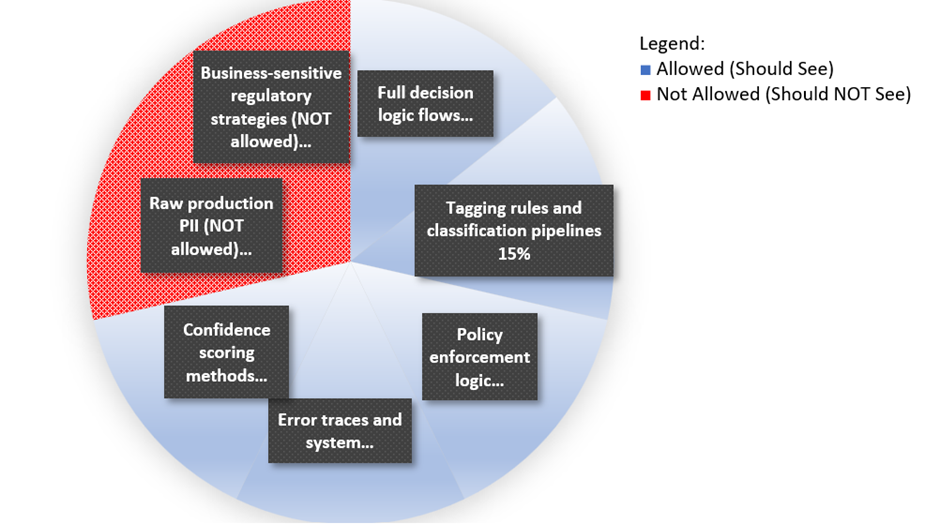
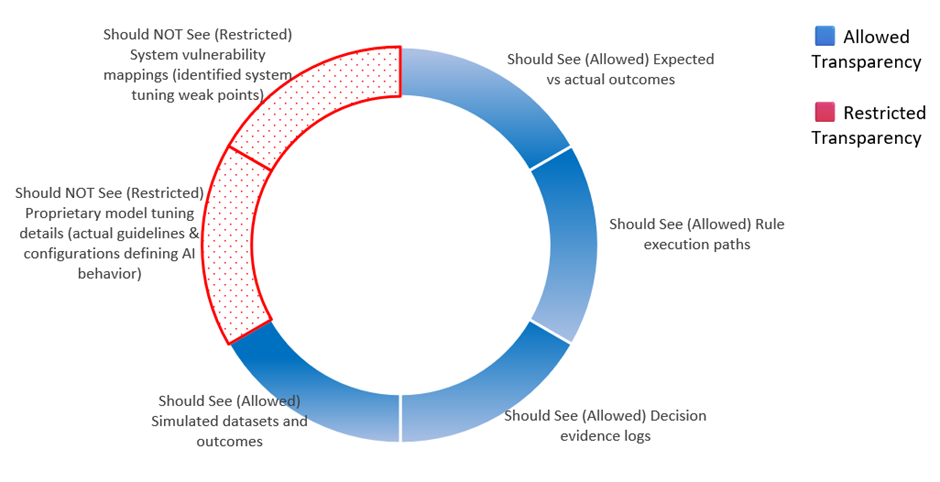
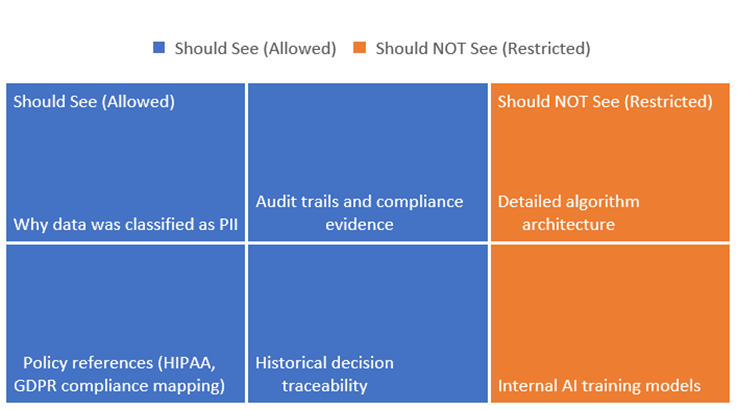
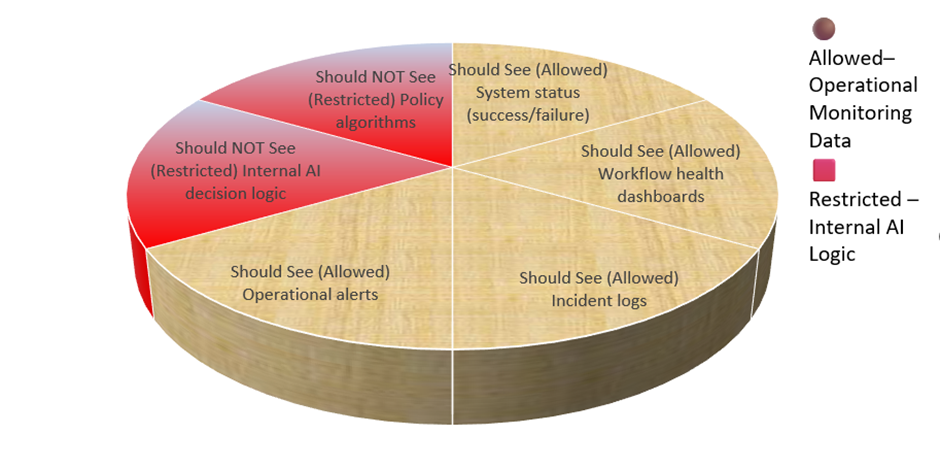
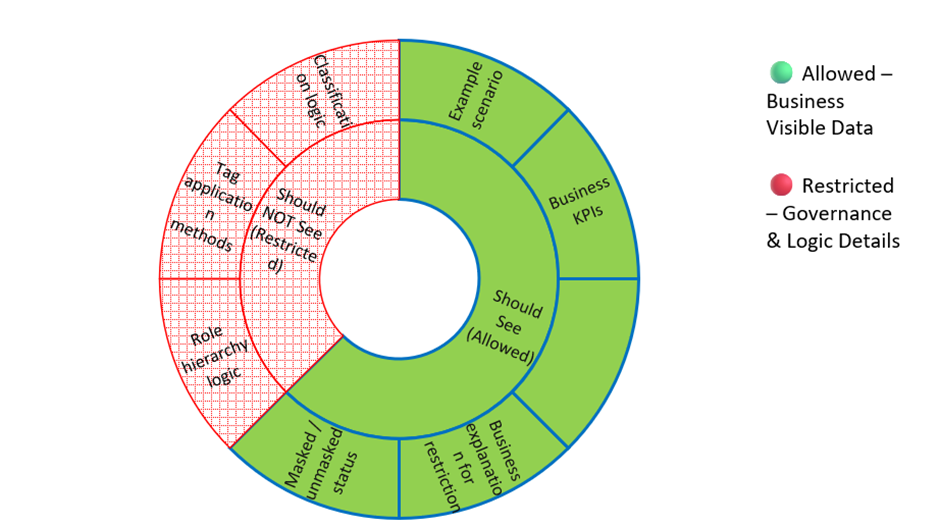
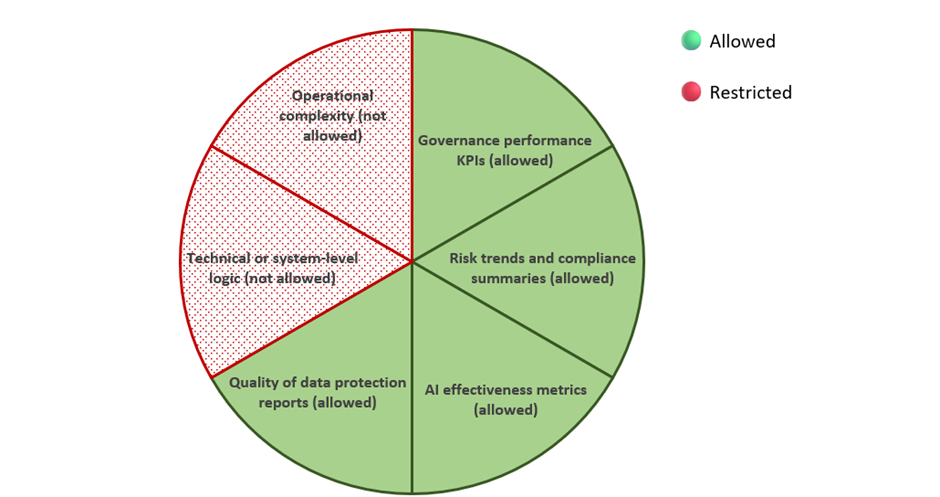
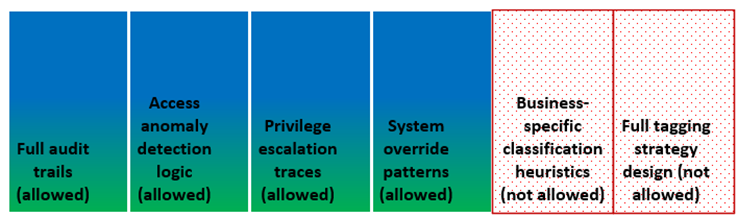
How Transparent Should AI Be Across an Entire Ecosystem? Org- Rogers Communications Project- Build a robust, scalable, fault tolerant Governance ecosystem to protect enterprise data. The Rogers Governance AI Ecosystem In the Rogers Data Governance ecosystem, multiple AI-enabled systems interact across organizations and platforms to enforce data classification and protection. These include- Collibra AI – Determines data sensitivity based on metadata and business rules. The data is classified and PII sensitivity is applied to raw data by Collibra AI. Snowflake AI-driven governance layer – Applies tags and dynamic masking policies. We have robust and dynamic stored procedures written in Snowpark to apply tags and policies to the data. This is done by Snowflake AI driven governance layer. Departmental AI systems (AWS teams) – Consume governed data and optimize operational use. Snowflake when hosted on AWS streamlines the governance data for AWS and applies decentralized masking policies to it. This is as per the business requirement. Security & Compliance AI – Monitors anomalies and policy violations to make sure data is well protected and sensitive data has adhere to defined compliance policies as per the governance rules for all. Each system makes autonomous decisions, yet their outputs influence one another. This creates a need for controlled transparency to ensure coordinated governance. Human Ecosystem roles: · Engineers · QA Team · Compliance Team · Operations Team · Business Users · Stakeholders / Leadership · Security Teams Each entity has different objectives, risk exposure, and authority, meaning transparency must be calibrated rather than universal. Based on business need, the processes should be either fully transparent, limited to specific users, not transparent at all. This approach balances: · Trust & accountability- to generate trust and business ethics, when business users know their data is handled by trustworthy teams · Data privacy & security- to ensure data follows compliance policies and regulations · Competitive advantage- this is very important when there is tough market competition outside users are influenced by- o what better Rogers do o what great services we offer and o how are we different · Operational efficiency- to reduce operational efficiency is the new norm today which is based on- o How well we make use of systems o How we integrate AI The Transparency Spectrum Level of Transparency What is Shared Example Outcome Transparency Final decision + rationale to easy communicate the results Column masked due to PII=TRUE (based on Collibra Classification) – Business users Process Transparency High-level logic rules which justify this happened because of a certain flow PII tag applied based on Collibra family group mapping – Business users Full Model Transparency Complete logic & algorithms/ architecture which are set of actual rules and framework we designed Restricted to internal governance team Role-Based Transparency Architecture 1. Engineers Role- Build, maintain, optimize governance AI systems that is robust, scalable and fault tolerant so as to secure enterprise data. Transparency Level: Full Technical Transparency to automate workflows further, to build robust ecosystems and system architectures, but are subjected to see raw production data and business strategies 2. QA Team Role- Validate system accuracy and consistency to do quality checks so that system is streamlined with the expected outcome and results. Transparency Level: Process + Outcome Transparency to validate the data sets but shed the internal configurations and security process for weak data sets. Since QA is an important step before the features are launched into Production it is critical to test and validate processes and the results. 3. Compliance Team Role- Ensure alignment with privacy regulations and governance policies so that data is within compliance standard and follows all the rules prescribed in the compliance journal. Transparency Level: Outcome + Policy Justification- compliance team has the authority to see how well the data has adhered to laws and regulations as this is the team that sets in those laws and regulations. 4. Operations Team Role- Monitor daily functioning of governance workflows so that environments – dev, test, prod are up to date. Any anomalies if observed are well taken care of. Transparency Level: Operational Transparency- since operations team has to make sure the environments are always up and functioning. They do a routine check to make sure- · System is up and running · Health of all dashboards · Incident logs · Operational alerts 5. Business Users Role- Consume data for reporting and decision-making so that production data is well tested and understood the why behind it. This gives engineers a direction to how the system should work, why engineers here because when business users do a check on data, engineers help understand the business need and business functionality expected. Transparency Level: Outcome-Only (Business Friendly)- which focuses on- · The final data- business explanations for the same · Sensitivity levels applied · Access roles in place · Business KPIs 6. Stakeholders / Leadership Role- Strategic oversight and risk governance to make sure system is scaling and does the project creates an impact. How far vision is achieved and how to streamline new business Transparency Level: Strategic Transparency 7. Security Teams Role- Protect the ecosystem from misuse or breaches so that system becomes secure and data is always complaint. Transparency Level: High Security-Centric Transparency AI-to-AI Transparency in the Ecosystem This ensures smooth and easy workflow from one environment to another. Collibra AI → Snowflake AI Share: · Classification outcomes- when custom API calls are made from Snowflake to Collibra we ingest the classification outcomes based on column level data. · Sensitivity tags- this is also captured so as to apply tagging logic to this data · High-level justification- to ensure the data quality and ethical use Do NOT share: · Ontology traversal algorithms- this is internal to Collibra which classifies the Collibra metadata and is used by Data Stewards to govern Collibra data · Proprietary classification logic- again Snowflake never captures this, as this information is handled by Data Stewards. Snowflake Governance AI → AWS Departmental AI Share: · Applied tags and policy types- since we have secure sharing platform within Snowflake we do share tags and policy types across AWS. AWS follows decentralized governance practice. Tags are assigned on database level to each individual database. For example- o Tags are assigned as {DB_NAME}.CLASSIFICATION · Data accessibility outcomes- for making insights out of the data so as to view and share the data across AWS. Snowflake further applies the entire tagging and dynamic policy logic to data residing in AWS for AWS users. Do NOT share: · Detailed masking logic- which is internal to Snowflake. The policy mechanisms need not be shared, only the outcome of this mechanism is important to tag and further classify AWS data. · Role hierarchy structures- which Snowflake uses in the hierarchy table to give and hide access to and from users. This forms the integral part of data sharing based on roles and actors. We have 2 categories in AWS for data sharing, the structure how we defined in Snowflake need not be shared. Security AI → All Systems Share- · Compliance alerts- so that everyone knows how and when the system needs any assistance based on alerts shown on Security dashboard. This also helps in smooth know how of our systems- how well our systems are performing and whether they need any assistance. · Risk indicators- to act upon them as quickly as they are first seen so as to make sure there is no potential harm within the system and with the data. Do NOT share- · Threat detection models- these should be prevented because transparency here increases predictability which reduces security. In order to maintain security to monitor system behaviour they need not be transparent. · Vulnerability scanning methods- these identify security gaps and classify severity which ensures system reliability. How internal threats are detected not everyone needs to know, so these mechanisms should be internal to the system they are operating in. Layered Governance Model 1- Core Reasoning Engineers- these teams need to know entire design of the framework as they will automate it further and optimize when needed. Security Teams- to secure the data and to make sure no vulnerabilities are observed while data sharing and that- the sensitive data is totally secure. 2- Policy & Validation Compliance Teams- to streamline policy structure of the framework. This enables in proper handling of data, ensures compliance standards are well met and the data follows regulations- GDPR, HIPAA etc QA- to validate all the features so that system passes quality checks. 3- Outcome Explanation Business Users, Operations- to make sure they know the why behind every tag and policy applied. This is important step as this further justifies the framework and ensures trust with every success. 4- Strategic Insight Stakeholders, Leadership- so as to know the entire structure and automate it. Why automate? Because at strategic level we need better refinement for a better product. More enhanced technology ultimately means better and robust culture. This will further bring new business to the leadership umbrella Example Customer Phone Number is Masked Role What They See Engineer Masked: PII Tag triggered via Collibra rule #27 QA Expected Masking Applied – PASS Compliance Masked per PIPEDA data privacy compliance Business User Field restricted due to data sensitivity Stakeholder Governance compliance maintained Security Masking override attempt detected Boundaries That Must Be Protected Data Privacy · Raw PII data- this data has personal information of Rogers users and is sensitive, so it must be protected · Identity mapping metadata- this contains further key value pairs to the data set which is again harmful to share across as posses identity and personal information if key value pairs are encrypted. Competitive Advantage · Classification strategies- this differentiates data based on classification logic applied in Collibra which is as per business rules, so it must be protected and can be risky if shared. · Tagging-policy frameworks- this has all the Python coded governance framework and datasets which defines and designs our policies and tagging framework which should be kept within engineering team jurisdiction. Security · System vulnerability details- this has potential weak points which categorize data and is extremely sensitive. This if exposed posses severe risk as security breach. · Override mechanisms- these have bypass logic for critical databases and business tables which need to be protected so as to prevent and secure our data standard. Final Position In the Rogers Data Governance AI ecosystem, transparency is not equal - it is intelligent, structured, and role-based, that is what we are committed to do- to secure sensitive data. AI systems must be transparent enough to ensure accountability and trust, while remaining opaque enough to protect system integrity, data privacy, and competitive advantage. This ensures a governance ecosystem that is- Trustworthy Secure Compliant Efficient Strategically controlled

-
Can AI Build Genuine Customer Relationships? Yes - in a format which is more human like- safe, secure and trusted AI is increasingly used to personalize responses, predict customer needs, and automate service. It can resolve issues faster, remember preferences, and operate 24/7 which makes it unbeatable efficient machine. But relationships are not built on speed alone. They grow through trust, empathy, clarity, and consistency. As AI becomes the “voice” of organizations, the real question comes: Does the customer feel understood, respected, and safe? - or merely processed? Capstone Project- Build a robust, scalable and user-friendly AI data governance model to process enterprise data Workflow- We have created an AI data governance model using Voiceflow which consumes live real time data from source- Google Sheets Scenario: Customer asks our AI governance assistant- “What personal data do you store about Accounts table and who can see it?” This is deeply tied to governance work - Collibra classifications, PII tags, Snowflake masking, and access control rules> all of this information present inside data source, which tells customer the data quality we maintain + the safety we implement while managing their data for user queried table Accounts How AI can strengthen the relationship 1. Adds transparency & empowerment AI translates complex governance metadata into human language- · “We store your phone number and billing address for account management.” This answer comes up when AI does backend findings- o Takes the userid of the user and queries related information in database system o Checks for masking policies and tags applied to the data for the table Accounts · “Only authorized billing teams can view your unmasked information.” o Since unmasked data has to be visible to an authorized team This makes customers feel: · In control- this creates an umbrella of safety where it indicates there is an authorized higher authority to control their data. · Informed- this creates umbrella of security where they feel Rogers correctly informing them about their data. · Respected- where they feel their queries are being heard and answered. Transparency builds trust faster and increases customer relationship with the organization. 2. Shows empathy in sensitive moments When customer asks- “How do you protect my data for table Invoices?” AI governance assistant says- “I understand privacy is important to you. Let me clearly explain how your data is protected.” · Tells about data privacy and security steps we take for the table Invoice · Ensures customer feel safe and secured 3. Predicts & prevents anxiety If a customer frequently checks privacy settings, AI proactively says- “Would you like to review your data sharing preferences or opt-out of certain uses?” This shifts AI to caring and acknowledging their safety and privacy concerns. We have designed our Governance AI model such that it always asks makes users feel valued. 4. Consistency in compliance communication AI ensures every customer gets- · The same accurate explanation · The same data rights information · The same clarity No variability in answers = consistent trust experience. This also ensures similarity in attending customers with same questions or queries. Another example User: “Is the customer table ok?” → Table = CUSTOMER → Intent = Check compliance. We have made/ designed our system that it always checks for user intent. If not clear it asks user to tell. AI Reasoning Output- Here’s what I found for CUSTOMER: • It contains 5 PII columns • Masking is missing on PHONE_NUMBER • EMAIL is marked PII but missing a tag • Governance score is 78, slightly below the threshold of 85 Recommended Action- tells user about recommended action- • Apply dynamic masking to PHONE_NUMBER • Correct the PII tag for EMAIL • After fixing these, your score should rise above 90 Finally says- Would you like me to log these as issues or guide you step-by-step on how to fix them? Balanced governance Model- AI balancing workflows and Human Trust AI handles: · Explanation- when AI knows the Why behind, it adds relevance and a complete knowledge of the systems and workflows. · Guidance- ability to guide customers through their queries is also a major factor to further define Governance framework. · Clarity- when AI explain in simple language what are PII columns, where is masking missing, what is governance score and how to go further on the data, what steps to take. · Compliance interpretation- when AI adheres to compliance policies and makes customers feel more safe, this adds a parameter of human trust. How- o There is certainly a compliance team which writes compliance policies o When workflows are made ready, they undergo a compliance check o This ensures smooth and safe data regulations across the system. · Security- we have in Snowflake- o Data sharing across the domains. When this Capstone Project is integrated with my Rogers Data Framework, it would require strong data sharing options. How- - Rogers operate in 2 major domains in Canada- East and West. - A new framework has now come up to make data access secure across both the domains. - So we follow secure data access across the domain through a very powerful Snowflake functionality- Data Share. - This adds safety to the data while sharing across the domains. Final Insight AI strengthens a genuine customer relationship when it is designed as a trusted guide. In our governance ecosystem, AI always says to the customers- “Your data is protected, and here’s exactly how we ensure your privacy - and if you ever feel unsure, I’m here to help.” That is where efficiency becomes a trusted and secure relationship.
-
How Is AI Changing the Way Leaders Make Decisions? Org- Rogers Communications Project- Build a robust, scalable data Governance Framework to mask all the sensitive data organization possess. Leaders made following decisions- · Data classification (PII / non-PII) · Masking policy application · Exceptions and access approvals · Resource allocation for data governance · Prioritizing high-risk domains · Monitoring governance maturity across departments AI deeply influences all of these. How? - Faster Risk Detection AI analyzes metadata patterns from Collibra and Snowflake and tells- · Columns likely misclassified. This gets caught up in error log table · Sudden spikes in PII onboarding. This comes up in monitoring Collibra metadata · Accounts that have inconsistent masking. Once tags and policies have been applied model also tells us the summary of what it did as of today’s run · Roles accessing sensitive data unusually What Leaders do- Decisions move from reactive firefighting to proactive risk management. Where any sudden unusual change in any of these factors results in immediate action by organization leaders. AI Simulates Outcome and does and Scenario Planning AI further simulates our what-if scenarios: · What happens if we delay masking implementation for a domain? This generally arises when engineering team is working on an ongoing feature development and suddenly a new requirement comes up from stakeholders. · Which tables will become non-compliant if a classification backlog grows? · How will risk score change if we give PII access to a new marketing role? Again this goes into security aspects where a role emerges and security has to be build around it. What Leaders do- Leaders can see second-order consequences before committing. Projects stories are already created in backlog and a new important requirement comes up so proper leadership planning is very essential. AI recommends patter-based objectives- AI recommends- · Which business units need stricter governance, depending on business context. Could be region specific · Which actors should lose PII access due to low usage- o Security around features is as important. o However Snowflake does provides us easy and Secure role based access control to limit the access specifications for particular users · Which Snowflake accounts are most non-compliant- o This is a periodic workflow to find out least used accounts o Which also is a part of clean-up activities · Where to invest automation resources next. This serves lot of importance and our next move purely depends on this- o Business upon careful considerations decides this o Which builds up our next technology move o Which further decides budget constraints of the project for ongoing activities + the new commers What Leaders do- Leaders spend less time digging through dashboards and more time acting and deciding. Doing what-if-analysis on ROI, cost savings, revenue uplift, resource retention etc AI gives data + logic. Leaders brings judgment + empathy + trust. Leaders wisdom is highly critical in following aspects- · Deciding whether a team needs temporary access to PII for a high-stakes business launch- o This comes up when engineering team wants cross applications access to study more about data patterns. o For example engineers want to access Collibra- a data governance tool which mostly is accessed by data stewards to analyze metadata before ingesting this metadata into Snowflake · Understanding why a domain repeatedly misclassifies data (maybe they lack training, not intent) o Occurs when even after applying all the business logic into processes some databases still misclassify tagging o However the same logic works flawless for other databases o What to do in such scenarios?- Leaders advise is highly critical here. Leaders along with business users have a meet up and decide on next approach · Managing conflicts between central governance and domain autonomy- o For example when we were in earlier phases of release, compliance team wanted immediate roll out but engineering team wanted more time to automate couple of features. o Leaders then decided we will be rolling out an initial release which will have so-and-so features and in later releases we will cover next automations · Evaluating how strict masking policies impact developer productivity · Deciding exceptions where AI’s risk score might be too strict. This also needs a human authority approach where when the system is too systematic and process oriented. AI can inform. Leaders interpret, contextualize and streamline the process and workflow. New Habits and Mindsets Leaders adopted in Rogers 1. Always Asked “Where did this insight come from?” AI may give us: · Risk score when framework completely scanned all databases · Column misclassification if any column is showing a different tag than what it should actually show · PII access irregularity- o When proper rule based algorithm has not run o Security is at risk for a particular table Leaders ask: · What data was used?- o Whether we used most recent data? o Was Collibra metadata periodically refreshed? · Are there missing tables? o Did the framework ran properly? o We are having 200 databases, so did all databases got scanned? o How many tables got scanned in today’s run? · When was last classification sync? · Any anomalies in JSON_TABLE? o Since Json_table is the place where raw data resides from Collibra, it is very essential that this should bring us exact metadata from Collibra This protects data against blind trust. 2. Combine AI Alerts with Human Root-Cause Analysis If AI flags: “PII_ACCESS_DETAILS_AWS is non-compliant for 6 roles” A leader then: · Talks to the domain team- o We have a team meeting with individual teams to figure out the root cause o Once the point which broke is understood then we discuss how to fix that particular area. o For example- our daily job ran today and it partially updated the data o For some business tables the tags and policies were missing o Upon discussion with teams we found out Collibra’s repository was not available to Snowflake on today's run o Reason was the repository name was changed in Collibra, but in Snowflake while making custom API calls we did not changed the repository name · Understand context o Once this context was understood, engineering team immediately corrected repository name and jobs were run · Identifies training or process gaps · Validates with multiple data points AI brings signal Leader brings meaning and action based on signal. 3. Keep a “Human Override” Principle in business-critical databases We allowed below for critical databases: · Manual approvals · Temporary access · Masking policy exceptions · Classification overrides This keeps flexibility in business-critical databases practically doable. This approach is very practical for business critical databases as it takes care of important business databases and makes masking intact. 4. Teach Teams to Challenge AI If my engineers say: “I think the model flagged a false positive. Here's why.” When they know the why behind it, it maintains trust and improves system accuracy. When engineers know what their model is doing and the why behind it, it shows engineers- · Know what they made · Know how the model function · Understand the model behavior, which makes system more trustable 5. Ethics & Privacy Lens Stakeholders ask this to engineers about the model’s behavior- · Is the AI unfairly profiling users? · Are we giving too much power to automation? · Are employees aware when their access behavior is monitored? Rogers is a highly regulated industry - trust is key. When stakeholders know their data is safe with us they want to explore more business opportunities with Capgemini. This creates a hybrid governance model where: AI is an Intelligent advisor A leader would decide the approach and finalize and freeze the next steps.
-
Yes. AI changes- · How employees make decisions. Better AI, better technology, better product and better decisions · What AI behaviors are rewarded. Once AI starts evolving in org its behaviors are accepted and becomes the new norm · How transparent the organization becomes. Better automation, better use of AI which results in transparency in data · How people trust the processes & how secure they feel their data is. AI becomes part of the culture that shapes how people behave. How AI Influences Culture- Org- Rogers Communications Project- Design a Data Governance Framework for better handling sensitive Data across Organization We are using AI to automate- · Data classification · Tagging · Masking policies · Compliance flows · Metadata ingestion from Collibra · Monitoring & feedback This creates four major cultural shifts- 1. AI promotes a culture of trust & security so that business users feel their data is safe Rogers AI model automatically: · Identifies PII · Applies the right masking policy · Ensures customer data stays protected Cultural Impact project has- Employees feel they are in a safe, compliant environment. It builds security-first thinking across Rogers. 2. AI promotes a culture of accountability & data ownership which strengthens processes When AI tags data correctly: · Data stewards get alerts through log tables · Governance teams verify decisions to better map AI results · Business teams take ownership of their data to cross verify data security Cultural Impact AI has- People take responsibility because the AI highlights their decisions and actions. 3. AI promotes a culture of speed & agility by continuous improvement and deployment Our Snowflake pipeline ingests Collibra metadata daily and applies masking automatically. Cultural Impact by following Agile process: Teams don’t wait weeks for approvals, since everything is streamlined They see AI governance as fast, automated, and supportive tool not a blocker. This makes Rogers move more like a tech company than a traditional telecom. 4. AI promotes a culture of transparency and security by masking and tagging sensitive data Rogers AI governance model: · Follows every rule for applying tags and masking policies · Logs every tagged column and table in a log table · Record AI governance audits for Capgemini’s internal policy structure Cultural Impact: People across Rogers know who has access to which data and why. This reduces manual work. It builds a culture of fairness, clarity, and consistent rules. But If unmanaged, AI can also change culture Examples: · Every AI move should be explainable. If AI decisions are not explained - people lose trust · Developing too many AI solutions may seems technically correct. But if AI automates too much - employees feel controlled or replaced · Logs are always recorded in a log table to review the errors. If errors are not reviewed - culture becomes sloppy, no development, no progress · Creating streamlined governance policies are necessary. But if governance is too strict - innovation slows down This is why leaders must guide how AI fits into culture. What Leaders Should Do to Ensure AI Strengthens Culture- 1. Encourage Engineers-in-the-Loop Governance for end-to-end AI workflow and aftermaths explainable Even though AI applies tags & policies: · Engineers verify whether applied tags and policies are correct or not · Engineers approve exceptions whenever logs are telling about the same · Engineers retrain models so that consistent model performance is achieved · Engineers tells leaders about entire process flow to seek further advise This builds a culture of collaboration between AI and leaders where AI redirects and leaders decide 2. Promote AI Transparency for better results and output We always ensured: · AI directions are explainable and only finalized them once they have proper proofs · Predicted tags & masking rules have reasons and are matching with Collibra metadata · Dashboards show AI matrix scores after proper validation from each group- data stewards, engineers, compliance, security teams This builds trust, prevents fear, and strengthens data literacy. 3. Train Teams on Responsible AI- how to develop model first and then how to maintain/ retrain in long run For Rogers: · We train data stewards for better metadata quality · Compliance teams to come up with new enhanced policies · Security teams to handle cross environment access. Since we operate on AWS and Azure both, and data has to be shared across both environments. · Cloud engineering teams to brainstorm creative ideas to create AI models So everyone understands: · How AI makes decisions, which is purely process oriented. AI model ingests metadata from Collibra to Snowflake and later applies tagging and masking logic in Snowflake · How to escalate errors, when- o Inconsistent metadata is found between Collibra and Snowflake o Stale data resides in Collibra. When metadata is not refreshed/ new data is not classified in Collibra o Credentials are not updated in Collibra. As a results when constant API calls are made to Collibra from Snowflake we only observe delays in passing through Collibra and API latency rate drops · How to correct classification issues when inconsistency is observed between Collibra and Snowflake This creates a culture of ownership, not dependency. 4. Build Feedback Loops into the Governance Model for better productivity of model Rogers AI already does: · Policy success/failure monitoring through policy matrix created and creating a checklist out of it. · Exception learning, so as to better decide what to do if any exception is caught in middle of the process · Continuous updates for self-correcting, self-learning, retraining and continuous improvement mode so that, the enhanced AI model remains relevant throughout the lifecycle of business (if possible) Leadership further formalizes this by: · Weekly review boards in sprint retrospective, planning meetings as we follow Agile. · Issue triage meetings, this generally happens when blockers are not removed in sprint daily standup calls. So if this issue needs a business justification/ or a business understanding it goes for a triage call · Transparent error reporting in production, so that our stakeholders are well aware about any error caught which may cause business data delays Culture becomes continuous improvement with everybody’s effort. 5. Celebrate Responsible Use Cases We highlighted: · Successful automation of 1000+ PII columns for success stories of all the teams · Avoided data breaches to maintain security intact · Reduced manual work by automating and making efficient use of AI · Compliance improvements so as to get more trust by our stakeholders. This creates a culture that embraces innovation, improving technology, acquiring more trust by stakeholders. 6. Ensure AI Supports Rogers Cultural Values AI governance model is positioned around Rogers’ cultural pillars- · Customer First - Protecting customer data · Integrity - Ensuring compliance · Accountability and Innovation - Making teams more effective · Teamwork - Connecting business & technical groups
-
In this ever changing and dynamic world it is very important to keep AI solutions up to date. The more relevant the data the more precise the results. When AI model’s accuracy, compliance alignment, or cost-effectiveness consistently deteriorate - or when newer, smarter automation approaches can deliver better governance value, we should sunset the AI model. Project- Rogers Communication Goal- Classify the sensitive data, assign tags and masking policies to it, dyanmically Tools and Technology- Collibra for data governance, Snowflake for integrating python with SQL to achieve the results Approach- We designed and built data governance framework which was an AI-based governance model that continuously learns from Collibra metadata and applies data classification and masking policies to sensitive classified data assets dynamically. How? - Once the metadata is ingested and standardized: The AI model analyzes the patterns in column names, data types, and Collibra classifications. It predicts appropriate tags (e.g., PII, Confidential, Sensitive). Based on classification, it dynamically applies Snowflake masking policies - without manual intervention. The AI model works in a self-correcting feedback loop: It monitors policy success/failure, Learns from exceptions, And adjusts tagging accuracy over time. This model ensures that any new column added in Collibra automatically reflects in Snowflake - eliminating the need for traditional rule-based programming. When any of the following conditions start to appear, we retired and decommissioned our AI model- 1. Decline in Model Accuracy- a. Our data governance model started misclassifying sensitive data and was failing to detect new classifications correctly which caused us decline in quality of the model b. Example: Masking policy was not correctly applied to newly added columns and incorrectly applied to non-sensitive ones c. What triggered us to change the Model: After 2–3 continuous monitoring cycles we observed accuracy dropped below a defined threshold (95%) 2. Business Logic Drift or change in Policy- a. New regulatory requirements (revised GDPR, HIPAA updates) or internal policy frameworks was evolving faster than our older model could learn, which significantly reduced the output accuracy b. What triggered us to change the Model: Model went inefficient to adapt to change in new schema or new policy structure that broke the model’s functionality. 3. System or Architecture changes- a. The underlying platform (e.g., Snowflake version, Collibra API schema, or data pipeline architecture) was changing but the model was not able to adapt to new changes b. Our existing AI model no longer integrated smoothly and efficiently with new systems c. What triggered us to change the Model: Model dependencies were deprecated and performance was degrading due to infrastructure changes 4. Model Maintenance Overhead exceeds Business Value a. The cost of retraining, monitoring, and maintaining our older AI system started exceeding the savings and efficiency it provided which causes cost overhead to us to maintain such a model b. What triggered us to change the Model: Frequent manual interventions, debugging, or re-deployments were required which caused more operational overheads 5. Security and Compliance standards- a. Our model’s design or learning data introduced risk of exposure or non-compliance with governance standards, which causes failure in adhering to compliance standards by our older model b. Example: Audit logs show us the inconsistent masking on classified columns which lead to poor function c. What triggered us to change the Model: Compliance violations when detected during internal/external audits. 6. Better Alternative Emerges- a. Newer models (e.g., LLM-driven policy orchestration engines or AutoML-based governance tools) went outperforming the current approach in scalability and interpretability which made the new model very much fit and necessary b. What triggered us to change the older Model: ROI analysis or pilot comparison showed us > 50% performance improvement on newer retained model, so the older model has to sunset AI Model Lifecycle Best Practices- To manage this proactively we established a Model Lifecycle Governance Framework- 1. Monitoring phase- Here we monitored continuous drift, accuracy, and track the performance. 2. Review phase- We continuously checked for quarterly, semi-annual performance & compliance audit. 3. Retraining phase- We periodically retrain the model using new metadata for better adapting and sync. 4. Versioning phase- Here we maintained the version history of AI models and data sets used for understanding model efficiency and adaptability for future use cases. Sunset Plan- Here we defined success criteria and process for decommissioning or upgrading at the very start of creating AI models so that we are releasing new and added features to our product in a phased manner making efficient use of AI models and sunsetting the older versions which no longer serves the business.