Dominic
Members
-
Joined
-
Last visited
Everything posted by Dominic
-
Catch the Risks Before They Catch You: A Smarter Way to Stay Compliant Healthcare claims management moves fast, and even the most careful teams can let risky language slip—especially under pressure. A well-designed, discreet, intelligent assistant working behind the scenes would help teams spot these issues early while keeping workflows efficient. Here’s how a smart review tool could help my team avoid costly mistakes while keeping workflows smooth: Common Compliance Risks (and How to Catch Them): PHI Leaks in Plain Sight: The Risk: Accidentally including unredacted patient details (ex: MRNs, DOBs etc) in an email or chat. The Fix: The tool scans for patterns like SSN or full names, then suggests masking them-without interrupting the flow. Inaccurate Claim Coding: The Risk: Misusing a CPT code or unintentionally upcoding, triggering audits. The Fix: The tool cross-references codes against the latest CMS rules and flags mismatches with a simple, "Check this code-does it match the documentation?". Promises Those May Backfire: The Risk: Phrases like “guaranteed approval” or “we’ll expedite this” creating liability under the False Claims Act. The Fix: The tool highlights high-risk wording and offers cleaner and neutral alternatives (ex: “We’ll process this per standard timelines”). Contract Misstatements: The Risk: Misquoting payer-specific policies and guidelines (ex: confusing Medicare and Medicaid rules). The Fix: The AI matches language against a built-in KB of payor contracts as you type and nudges you with: "Medicare Advantage Plan A requires prior auth; please confirm if this applies?". Too-Casual Data Handling: The Risk: The approach of "I'll delete this after", which violates record retention law. The Fix: The AI flags premature data destruction language and reminds: "Records must be retained for 7 years as per HIPAA". How It Works (Without Slowing You Down) Quiet: NO annoying pop-ups or blocks; just a subtle highlight (🟢 for ALL GOOD, 🟡 for CAUTION, and 🔴 for STOP NOW risks) in your email or messaging tools. Teach: Instead of a scolding "This is wrong", it explains like "Rewording this may avoid misrepresentation and a compliance risk - Here's why". When linked to policy excerpts, it becomes actionable. User in Control: In scenarios where you need to proceed without changing despite a flag, a quick note can be added for the audit trail (ex: Reviewed with Mr B from Legal team". For Big Risks: Only severe issues like a potential fraudulent incident trigger a hard pause. Why It Works Fits Real Workflows: No extra steps are needed, just a smarter safety net is laid upon the communication system and other claim management tools. Builds Confidence: Teams learn compliance nuances over time, reducing future errors. Scales With Rules: Updates automatically as payer policies or regulations change. The Bottom Line In a field where details matter, this kind of support helps maintain compliance without adding friction. The goal isn't to create more hurdles—it's to prevent problems teams didn't realize they were creating.
-
Opportunity Statement: In large organizations, valuable insights often remain hidden in plain sight — buried within departmental silos. HR, Finance, Operations, and Tech Support may each report issues independently, but the real opportunity lies in connecting the dots across these functions. A Prompt + Flow-based AI Solution offers a novel way to surface these hidden patterns, enabling leadership to act on systemic inefficiencies before they escalate. A summary curated by the AI solution including weekly digests, visual dashboards and actionable recommendations would work as insights for leadership to act on. Here's how it would work: Inputs needed: The approach begins by ingesting short summaries or observations from each department. These summaries may include but not limited to: Incident reports, Escalation notes, Recurring complaints. These inputs should be enriched by metadata, like: Timestamps Security levels/Priority Categories/Tags Department name Now, Prompt + Flow-based orchestration: Stage 1: Ingestion: AI ingests summaries from all departments, in real-time or batches. Stage 2: Prompted Categorization: Prompts guide the LLM to cluster issues by theme Example Prompt: "Group the following summaries into clusters based on similar themes, such as delays, system issues, or staffing problems. Label each cluster clearly." Prompts extract root causes, impacted processes and frequency. Example Prompt: "For each summary, identify the likely root cause. If multiple summaries share a root cause, group them together and explain the shared issue." Stage-3: Cross-Departmental Linking: Prompts ask the AI to identify overlaps. Example Prompt: "Analyze the summaries from different departments. Are there any recurring issues that appear across multiple teams? Highlight those and explain the common thread." AI flags patterns to map the impacts within departments. Example Prompt: "For each issue, identify which business processes or departments are impacted. Create a list of issues that affect more than one function." AI detects trends over time. Example Prompt: "Given summaries from the past 4 weeks, identify any trends or recurring issues. Are certain problems becoming more frequent? Flag those with timestamps." Next, Presentation of the Insights: AI would generate a report as per pre-defined interval which would include: Weekly Digest in a natural-language summary. Visual Dashboards, which will include the following (but not limited to): Heatmaps of recurring themes, Timelines showing issue spikes, Network graphs by linking departments by shared issue types. Actionable recommendations, enabling the leadership to prompt, more informed, proactive problem solving through Kaizen-bursts or other problem-solving methodologies. Why This Stands Out: Uncovers hidden dependencies that siloed teams might miss. Reduces duplication of effort by surfacing shared root causes. Empowers leadership with a unified view of operational health. No retraining needed - just smart prompt design and flow logic. Conclusion: What makes this solution powerful is its ability to transform fragmented operational noise into coherent, actionable insight. By orchestrating prompts and flows, organizations can move from reactive firefighting to proactive problem-solving. It’s not just about automation — it’s about enabling leadership to see the bigger picture, faster.
-
In Healthcare insurance domain, the most unexpected and unorthodox way of creating an AI model using Prompt and Flow-based AI designing would be Automated Provider Credentialling Clarification Assistant. The Rationale: Use Case: In Provider Data Management division of a Healthcare insurance organization, one of the most time-consuming and error-prone process is Credentialling. Credentialling process involves verifying a provider's qualifications, licenses, affiliations, practice details etc. Providers or their billing offices submit forms and documents to the insurance with required info to get them credentialled. Almost every time, credentialling team must go back and forth with providers to clarify missing or inconsistent information in submitted documents or forms, the FTR rate typically are in between 12 - 20%. The process is mostly manual, slow and prone to delays, which affects provider onboarding and claim processing timelines. How to use Flow+Prompt-based AI design to solve this problem: Trigger: When a provider submits a credentialling request, the system should check for missing, inconsistent, or ambiguous data. The triggers will be detected using: Rule-based checks, Data validation scripts, Simple ML classifiers, flagging inconsistent entries based on historical patterns Prompt Engine: A prompt-based AI agent will be triggered. This agent will: Generate a NL (natural language) clarification request designed for the specific issue, and Ask follow-up questions (if needed). It will use template-based prompts with dynamic slot filling. In case of ambiguous answers, AI will follow-up with a more specific question. In case of multiple issues, AI will prioritize and address them one at a time. Flow Logic: If the provider responds with valid data, the system will update the record and move on to the next step. In case of unclear or incorrect answers, AI will follow-up with a more refined prompt. If no response received within a set-time, the case will be sent to a human reviewer. Steps: Detect Issue -> Trigger AI Send Prompt -> Wait for provider to respond Evaluate response Valid -> Update System -> Mark as Issue Resolved Unclear -> Send follow-up prompt No response in pre-defined timeframe -> Escalate to human reviewer Loop until all issues are either resolved or the case is escalated. Embed the solution within existing credentialling platforms. Constantly review and update the KB to ensure the model learns from provider responses and improve future prompts and reduce friction. The Why: Because it's unconventional, high-value, scalable & cost-effective. Novelty: Prompt-based AI solutions in healthcare are mostly used to answer FAQs, or claims status checks. Using it for Credentialling solution, especially when embedding the solution to the existing credentialling platforms has a novelty factor. High Value: This solution will address a high-friction, yet low-visibility pain point. It will reduce onboarding time for providers. It will minimize manual back-and-forth between the business and providers. It will improve data accuracy, impacting directly to the downstream processes (ex: claims adjudication). Scalable & Cost-effective: Being a LLM based model, enhanced by flow and prompt engineering, it will save cost and add value to the business. Retraining of the models won't be needed, we can design smarter prompts and flows. Can be deployed across multiple provider types and regions with bare minimum customization.
-
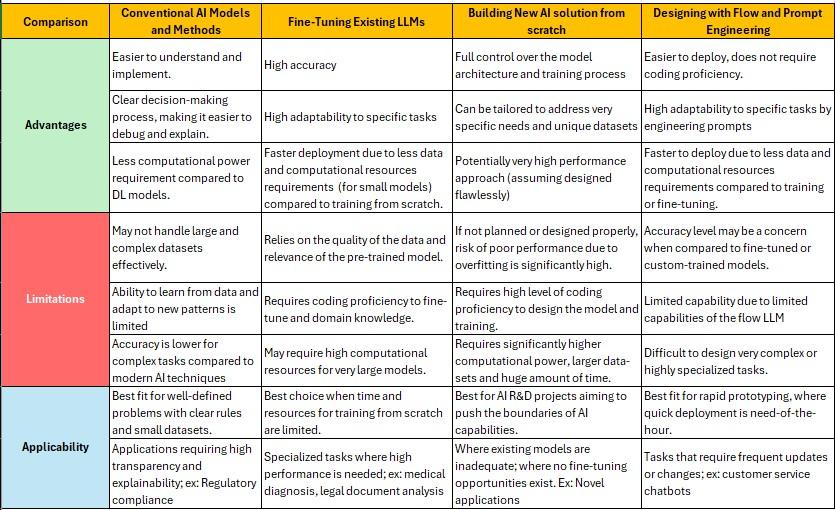
Problem Description: In a healthcare claims negotiation & arbitration process, when Out-of-network providers feel that they have been underpaid, they raise negotiation requests. In negotiation stage, claims adjustment team reviews the additional records shared by provider and based on that, they pay extra or stick to the initial payment made. They also explain why the payment amount was decided. If the provider is not happy after that, they raise an arbitration request. The arbitration team selects external arbitrators (from a wide-range of available federal govt-certified arbitrators). The arbitrators are needed to be paid a huge amount (between $500-$1500) by the arbitration team. Arbitrators' decision on the payment amount often goes in favor of the provider. Goal: The goal is to create an AI model, which will be able to suggest a claim payment amount along with an explanation behind selecting the amount in the negotiation stage itself, so that the process can save arbitration fee costs. Historical data from claims adjustment (non-negotiated claims, negotiated claims and arbitrated claims) will be used to build the model. Recommended AI Solution Building Approach: Fine-tuning an existing LLM will be the best fit. Why Fine-Tuning over other available options? Because, this can help us leverage the advanced features of MED-BERT, which is a contextualized embedding model designed for healthcare applications and can be fine-tuned to meet the requirement of the process Below are few key advantages of Fine-Tuning: Efficiency: Less data and computational resources requirement, given the complexity and volume of historical claims data. Performance: When fine-tuned for specific tasks, LLMs can achieve high accuracy and adaptability. Domain Adaptability: The model can be allowed to specialize in the domain, leveraging pre-existing knowledge, while adapting to specific negotiation and arbitration contexts. Speed: Faster to deploy than training a new model from the scratch, even with iterative feedback-based improvements. Limitations of other models: Conventional AI-models: May struggle with the complexity and variability of healthcare claims data. Often lack flexibility and adaptability needed for nuanced decision-making. Lower accuracy and capability of generating detailed explanations. Training a New AI model: Requires extensive computational resources, large datasets. Requires significantly high time and cost investment. High risk of overfitting and poor performance. Flow and Prompt-based Design: May not achieve the required level of accuracy and depth in understanding complex claims data.
-
-
My dream AI agent in healthcare BPMs will be able to handle multi-faceted deliverables with 0 system failures, sky will be the limit in terms of scalability. Key Capabilities: Personalized Customer Support - It will provide round-the-clock assistance to external (providers, patients) and internal customers (employees from all the departments) regarding product, process, technology, finance etc. Few key features will be as below: 24/7 Availability Natural Language Understanding Proactive assistance Human Interaction Empathetic communication Voice and text interaction Interactive dashboards Claims Processing - It will verify claims instantly using advanced algorithms, medical records and other available resources. It will use machine learning to flag potential fraud and abuses. It will reduce the claims processing time from days to minutes while maintaining 100% accuracy. Key features will include but not limited to: Automated Claims Verification Fraud & Abuse Detection Real-Time Updates 100% CMS compliant Policy Management - It will help customers customize their insurance plans (based on their specific needs), send renewal reminders and assist with renewal process. Key features will be as below: Customizable plans Renewal assist Benefit optimization Provider Data Management: It will automate provider data management using machine learning through historical data and usage of APIs between multiple internal and external applications. It will never crash, the system will be always more scalable. Few capabilities to highlight are: Voice based provider data management platforms Super-efficient data anomaly flagging mechanism Seamless API integration capability Below is the risk area and safe guard measures I would enforce and evolve periodically: Risk: It will have access to sensitive PII & PHI, data leak will be a concern. Solutions: Robust encryption protocols Strict access controls Regular security audits Constant human monitoring of data and system logs. This ideal AI agent will be a game changer, causing millions of dollars in annual cost savings and a very happy customer base.
-
Multi-object decision models can be defined, where architects integrate metrics balancing customer satisfaction, employee well-being and compliance. They use weights to assign priority of situations. Urgent cases might trigger customer satisfaction, while routine scenarios prioritize fairness. A robust mechanism for transparency and escalation can be designed. While AI documents it's decisions with reasoning, an escalation pathway is available to ensure human reviewers can intervene wherever AI's decision seems unfair. Ethical Design safeguards play an important role too. Architects can integrate monitoring tools to prevent employees from being overloaded. The AI model should be adaptive enough, which allows it to deviate from template answers when customer trust is at stake. The designer or management should ensure that conflicting situations, where ethical trade-offs with cultural or emotional factors are involved, should be the line which AI must not cross. Those situations must remain under human supervision.
-
This can work in multiple domains. In Healthcare, we can create such team of AI agents who will do the following: Patient Interaction Agent: Which will interact with patients initially. This should be enough to answer basic queries and collect basic info. Document Verification Agent: This will verify patients' documents. Record Update Agent: It will update hospital's EHR, ensuring data accuracy and storage. Communication can be a challenge, which can be eradicated by implementing a centralized communication protocol using APIs or message queues. Maintaining data accuracy and consistency can be another challenge. Using a shared database and implementing validation checks in each step should be sufficient.
-
It's safe to say that AI can't be inherently accountable, as it's a tool which is making decisions based on parameters set by humans. AI Designer/Developer can be largely responsible. The AI may have been trained improperly, using biased data or necessary safeguards were lacking, the designer should hold accountability. If the organization has human oversight mechanisms in place, however the reviewer misses to catch the error, the reviewer bears responsibility. If the leadership did not create a thorough BRD, prioritized automation speed over accuracy or failed to properly audit the AI, responsibility should be extended to them. To ensure the design has enough transparency and traceability, I would implement the following safeguards: Explainability Features, Human-In-The-Loop Mechanisms, Maintain detailed logs of interactions, decisions and rationales, so that errors can be traced and accountability can be assigned. Update training data regularly, which will help in reduction of biases and errors that accumulate over time. Real-life scenario: Dutch Childcare Benefits Scandal Dutch government, in 2013, used an AI driven algorithm to detect potential fraud in childcare benefits. The system flagged thousands of families (mostly with dual nationality or lower incomes) as fraudulent claimants. As a result, many faced debts (few exceeding 100,000 Euros) and more than 1000 kids were placed in foster care as a result of financial distress. The scandal was exposed in 2019, which led to resignation of the then Dutch government in 2021. The AI accountability in this case was a concern, considering the following: Bias in Decision-Making: The AI model disproportionately targeted minority groups, which was a systemic discrimination. Lack of Human-oversight: The AI's decisions were not properly reviewed, which allowed the errors in decision making to escalate. Human life disruption: These wrongful accusations shattered families due to financial issues and emotional distress. A new algorithm regulator was proposed (after the scandal was exposed) ensuring AI systems were transparent and fair. This algorithm regulator established various aspects, I would mention few of them below: Algorithm Register: Government introduced a public register which documented the details of govt-used algorithms. Bias & Risk Auditing/Assessments: Regular audit mechanisms were implemented in AI models (specially for the ones used for public services) to detect biases and ensure compliance with fairness standards. Human oversight requirements: Human review mechanisms were introduced to all AI driven decisions affecting financial or legal matters. Explainability Standards: Government was liable to provide clear explanations for AI decisions.
-
Let's say the AI agent supports the customer service team for an airline company and helps customers with reservations, flight schedules, refunds etc. Situation: A VIP customer contacts the AI to modify a flight reservation due to a family emergency. The AI agent must rely on standard scripts to ensure minimum response time for other customers waiting in queue, without risking appearing impersonal or lacking empathy. Task: The Agent must minimize wait time and response time, follow process/organizational policies, and ensure customer satisfaction beyond expectancy (delighting the customer). Action: As an AI solutions architect, I would guide the AI with the below: Design the agent with an ability to process multiple queries simultaneously through Session Management and scalability. Design a response strategy for the agent based on priority hierarchy using ability to analyze urgency, sentiment and customer status. If the situation is flagged as critical, customer satisfaction would take priority over rapid resolution. To do this, the agent would switch from standard verbiages to an empathetic approach. It would also prioritize actions that address the root concern. Design predictivity and offer solutions based on historical data. The agent would be aware of overall queue length and adjust responses dynamically. If wait time spikes, it would be able to optimize by blending personalization with rapid resolution techniques. The AI would be able to evaluate feedback loops to refine decision making. Logic - The AI would be designed to work like below in real time: Signals: Customer sentiment and urgency level. Queue length and current wait time Rules: Assign higher priority to satisfaction for critical cases. Assign higher priority to response time for non-critical cases. Result: Below is the dialogue that followed after the customer explained his situation to the agent. Agent: I'm so sorry to hear that, Sourav. Let me help you right away. I see you have an active reservation, ID ABCD1234. Please confirm if you want to modify this reservation itself. <Provides option, a) Yes, that is it. b) No, I have another ID. Sourav: Yes. Agent: Thank you for confirming the details, Sourav. Please confirm your preference. <Provides option, a) Cancel the reservation, b) Prepone/Postpone it> Sourav: Cancel the reservation. Agent: I will get to it right away. Just wanted to let you know that our regular cancellation fee is usually 50%. However, as you have a valid VIP subscription with us, the cancellation fee is reduced to 40%. Please confirm if you agree with the cancellation fee and want me to proceed further with the cancellation. <Provides option, a) I agree, please cancel my reservation b) Hold on, tell me more about the cancellation fee. Sourav: I agree, please cancel my reservation Agent: Thank you for confirming, Sourav. I have successfully cancelled your reservation; your cancellation confirmation ID is CANABCD1234. The amount will be credited to your bank account within next 2 business days. You can download the cancellation receipt from the website by logging into your account, or I can share it with you now. <Provides options, a) I want the cancellation receipt now, b) That's okay, I will visit my account later, thank you.> Sourav: I will visit my account later, thank you. Agent: You are very welcome. Keeping your present situation in mind, I have added a one-time 10% discount coupon in your account which you can use to book your next flight. You can access this coupon by logging into your account -> My coupons. Is there anything else I can assist you today, Sourav? Sourav: Thank you so much. You’ve been a big help. Agent: You’re very welcome! I hope everything goes smoothly for you and your family. If you need further assistance, don’t hesitate to reach out. Safe travels.