


Suyash Ketankumar Wani
Members
-
Joined
-
Last visited
Everything posted by Suyash Ketankumar Wani
-
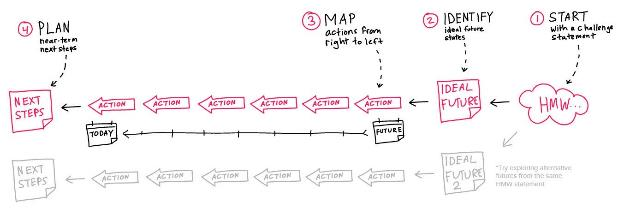
Suyash Ketankumar Wani replied to Vishwadeep Khatri's topic in We ask and you answer! The best answer wins!BACKCASTING Backcasting and Forecasting, both this technique help us in estimating the future but the way both approaches work is altogether very different. In Backcasting, we try to minimize the risk associated with our future estimation. Forecasting: In this technique, we visualize the past trend and analyze the available data and compare it with the present conditions and then begin with plotting the future values. In Forecasting, we follow the below steps: 1. Collect past data and present data 2. Estimate the future possibilities/ events 3. Do extrapolation/ estimation for future Backcasting: We move almost opposite to forecasting. In this technique we start with the future point where we want to reach and then try to adjust everything in the present according to the future target we want to achieve. Below are the steps done in Backcasting: 1. Define and establish the future targets 2. Collect past data and present condition/ events 3. Analyze the data collected that will assist us in finalizing the changes required to the present conditions so the changes comes inline with the vision envisioned 4. Establish a policy and strategy to implement the changes required Example of Backcasting A Government Agency decides to understand the road traffic growth so they look at the data for the growth in road traffic. The decision makers will then analyze this growth rate and then reach the conclusion to predict a future increase of for example 50% over the next 10 years. This conclusion will then lead to the decision to build more capacity for the road network, to meet the demand predicted based on the current road traffic. In contrast to this, backcasting will help in solving the above problem by the Government Agency setting a goal of for example reducing the road traffic by 15% and use this goal to shape the Road Traffic policies and decisions. Backcasting is a creative way of shaping the future. It starts with beginning the desired end firmly in mind. It helps us in deciding what we want the future to look like, and then implement the plans, decisions and actions that are designed to bring that future. It is about shaping the future beforehand, rather than simply waiting for the future to happen to us.
-
Suyash Ketankumar Wani replied to Vishwadeep Khatri's topic in We ask and you answer! The best answer wins!It is very important to think as a Project Manager what future events may impact our projects. These events may be positive or negative, so understanding them allows us to prepare, and plan accordingly to deal with them. But how can we forecast the future with any degree of certainty? This is where Delphi Technique can be useful. The Delphi Technique helps in estimating the likelihood and outcome of future events. This technique is conducted with a Facilitator asking a group of experts where they exchange their views, and each independently provides with their estimates and assumptions to a facilitator who then reviews the data, prepares and issues a summary report. The group member’s then conducts round of discussion among themselves for reviewing the summary report and again provide their updated forecasts to the facilitator, who will then again review the Submitted responses and prepares the second report and issues the same to the Experts. This process continues until all participants reaches a consensus. The experts at each round are aware of a full record of what forecasts other experts have made, but they are unaware who made which forecast. This technique is an iterative process, and helps in having a range of opinions from the group of experts. The purpose is to clarify and expand the issues, identify the areas of agreement or disagreement and reach consensus among the Experts. History of Delphi Method The Delphi method was first developed at Rand Corporation by Olaf Helmer and Norman Dalkey and was given the name “Oracle of Delphi”. This method helped experts to conduct the questionnaires in series and collect feedback with other rounds. Steps of Delphi Method Step 1: Choose a Facilitator The first step in performing Delphi Technique is to choose the facilitator. This role can be carried out by ourselves, or we decide to find a neutral person within our organization. It is very useful to have someone that is familiar with research and data collection. Step 2: Identify Your Experts This technique relies on a panel of experts. An expert can be any individual from within our organization or industry or can even be our Customer or our Project team with relevant knowledge and experience of a particular topic. Step 3: Define the Problem What is the problem or issue we are seeking to understand? The experts should be aware of what problem they are commenting on, to ensure that they provide a precise and comprehensive solution. Step 4: Round One Questions We should start with asking general questions to the Experts to gain a broad understanding of their views on future events. Questionnaire or survey can be used for asking Questions. Once, the feedback is received, we should collate and summarize the responses, removing any feedback which is irrelevant and look only for common viewpoints. Step 5: Round Two Questions Based on the responses received to the first question, the next questions should further delve deeper into the topic to get clarity on the specific issues. Questionnaire or survey can again be used for asking Questions. Once again the responses received are collated and results are summarized, removing any irrelevant material and looking for the common ground. The only purpose is to get on the Consensus among the Experts. Step 6: Round Three Questions The final questionnaire helps to focus on supporting decision making. What is it the experts are all agreed upon the area of Agreement? Further, we may wish to have more than three rounds of questioning to reach a closer consensus. Step 7: Act on Our Findings After many round of questions, it is believed that experts must have reached a consensus and they will have a view of future events. Then we must analyze the findings and put plans in place to deal with future risks and opportunities to our project. When would Delphi Technique preferred over Nominal Group Technique? The Delphi technique is preferred over nominal group technique as it helps in isolated generation of ideas, considers all the opinions of each group member, Proactive search behavior for solutions, Problem complexity is Addressed in the process. Large number of people can participate in the Discussion.



-
Suyash Ketankumar Wani replied to Vishwadeep Khatri's topic in We ask and you answer! The best answer wins!ECRS method for Process Improvement ECRS stands for Eliminate, Combine, Rearrange, and Simplify. This is a Lean technique used for removing wasteful steps in manufacturing processes or even office procedures. This can be better put together with a value stream map as well to identify necessary and complex steps within production lines. While first implementing ECRS, complex and time-consuming tasks are reviewed with the goal of successfully applying any one or all of the ECRS Strategies acronym. The end result is always aimed to streamline any process for workers and create a more efficient business as a whole. The four methods are: Eliminate – Identify the steps in a process that can be eliminated without decreasing production value. Ask questions such as: Can we eliminate the root cause? What is the problem with this situation currently? Do we need a new process? Combine – If nothing can be eliminated, see if any steps can be combined. Ask questions such as: Can the same person do both steps? Can we merge this step with another? Rearrange – Rearranging steps may help in making the process work faster, easier, or safer. Ask questions such as: Is this the best sequence of progression? Can we rearrange the process steps, process flow, or training? Simplify – Simplifying steps can make complicated tasks much easier to understand. For example, by providing visual aid or better equipment, process can be simplified. Simplifying a process helps in improving completion times and improve accuracy. Ask questions such as: Why do we need this detail? What is the objective of the process? How do others do it? The ECRS Lean technique helps in faster implementing application of new ideas after conducting brainstorming meetings for potential improvement opportunities with those who perform the task. This happens most of the time, newly designed or newly processes set don’t require money to be spent, it just requires restructuring and making improvements upon old procedures. The major advantage of ECRS is implementation, if something is not working in a planned manner it can be changed without overspending of money and resources on an unproven solution. When to use ECRS Technique o When we need Immediate Improvements o To produce quick practical ideas to make the process lean Variations o Supports PDCA (Plan-Do-Check-Act) o Can be done in templated form way, combining with 5W, 1H o Easiest way for Process Map Analysis How to do ECRS · Do it with the "doers" , it’s a lean technique · Draw the process map and write the every process steps · the steps should be mentioned in detail till the end - lower level ( should be "go to the printer" "get print out" and NOT just print) · Write any known information/data on the process steps Example, o no of errors o Amount of time to the activity o Show hand offs o Elapsed time : Difference between the amount of time elapsed between hand over and take over o mark rework loops o An optional or Alternate step should also be mentioned After the above steps, we should start asking questions · Eliminate - what if we don't do this step in an intended manner, does this step add any value . Example, instead of mentioning the printing and scanning step, can we directly turn it to PDF · Combine - which steps can be combined to be identified · Rearrange – which way the work to be performed in the best sequence · Simplify - why do we need this detail, is this best way to do it Example, can we create a macro , a calculator , can we automate this · Once we are done with the above exercise mentioned – we should go out on the floor and start implementing it


-
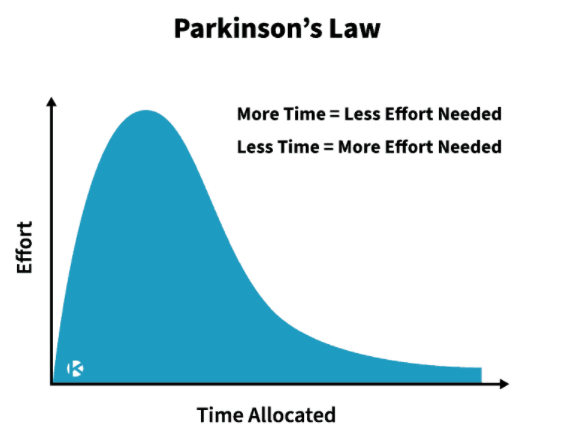
Suyash Ketankumar Wani replied to Vishwadeep Khatri's topic in We ask and you answer! The best answer wins!Parkinson’s Law: Its Impact on Time Management In 1955, appearing as the opening line for the first time in an article for The Economist and later in Parkinson’s book, Parkinson’s Law: The Pursuit of Progress - Cyril Northcote Parkinson made the remark - Work stretches to fill the time that is available for its completion. That statement defines Parkinson’s Law. The statement can easily be applicable to most of our regular duties. The principle states that the more time allocated to a task, the longer it takes to finish. He was qualified to make such a statement, as having already worked in the British Civil Service and going through the firsthand experience of how bureaucracy exists. Bureaucracy if defined, itself is a by-product of our culture, credit goes to the belief that working harder is better than working smarter and faster. Example, we have an assignment to be due in one week, but we wait until the last two days to finish it. Technically, this task took one week because that is what we gave it. Seeing as we completed the paper in two days, it means that we should have defined the time of two days duration for that task. Most of us are already familiar with this law; but we just don’t know it how to use it effectively. If employees are able to analyze their past activities, they can pinpoint instances when Parkinson’s Principle was at work. How Parkinson’s Law Affects Productivity The biggest impact of Parkinson’s Principle is the Procrastination. When we set aside too much time for a particular task, we waste precious time that could be used in other areas. Even if we don’t acknowledge it, we all are procrastinators. We all wait till the last minute to tackle a task in the guise of ‘working well under pressure?’ This is also a kind of procrastination. This happens when we believe that we have more than sufficient time to complete an activity, even if the said activity is supposed to just take one hour to complete, but we give it three hours, that is how long it will last. According to Parkinson’s Law concept, the task will increase in complexity to fill that apportioned time. The extra time that we spend doesn’t necessarily reflect in the output. This is because majority of people will fret, tense and stress about the job before they get around to doing it. The productivity of the workforce is very critical, when running any kind of business. We want the employees to meet their responsibilities in the most efficient ways possible. Spending the crucial time only on checklists boosts productivity. How to Improve Time Management So, now we know what Parkinson’s Law is. The main Question arises, how do we use that lesson to change how the way we do things? In order to avoid wastage of time, Effective time management is essential. The initial step is to start by cutting deadlines, while creating a to-do list or while planning for a project, we must ensure that we allocate the necessary time and to eliminate any opportunity of procrastinating. Short deadlines forces workers to focus on the important tasks and fundamentals, by doing this, we will be able to maximize the available time as much as possible to ensure that the job is complete. However, deadlines must be kept reasonable. The task should be thoroughly evaluated so that we can set aside enough time for it to complete. How can we perform more tasks in less time? A simple way to combat Parkinson’s Law is to change our mindset by not thinking for finishing a task we must use all our allotted time. Productivity and time-management techniques can really help when trying to optimize your time. Productivity and Time Management Techniques Time-Blocking This technique is about assigning specific intervals or blocks of time to each task. GTD (Getting Things Done): 2 Minute Rule This is a simple principle which states that any task which can be performed in less than two minutes must be completed immediately, rather than adding it to the scheduled or added to a to-do list. Pareto principle This principle is also known as the 80/20 rule, it states that 80% of results comes from just 20% of the effort. It means majority of work has less impact on the final result. Pomodoro Technique This technique is a 25-minute focused work sprints followed by a short break of 5 minutes to help in reducing mental fatigue and sustain concentration. Eliminating time wastage and enhancing productivity Efficient and proper planning of resources or manpower helps in eliminating time wastage and enhancing productivity. For one, getting and selecting the right people for particular and appropriate roles. Supervisors, Workers, Foremen with the right and appropriate skills for the assigned tasks knows where to start so task management is the key step. They will not spend their time trying to find out how to approach a task. Plan the appropriate resources required for the job. If a project is required to need a new equipment, it should be got beforehand. By doing this, team members won’t have to spend their crucial time trying to find what they need. If we are to meet tight deadlines, knowing that accountability is key thing. Whether a worker is alone or part of a team, a degree of accountability and responsibility helps a great deal. If a project gets stuck due to any kind of issue, there should be an effective and practical way to deal with it. Knowing who to hold responsible when the deliverables are not met. Parkinson’s Law states that the more time we spend for a particular task, the longer it takes to be completed. Individuals and businesses must learn how to manage time efficiently and in an appropriate manner. Tools like the 80-20 rule, GTD (Getting things done), Pomodoro technique and checklists can help with time management on all levels.

-
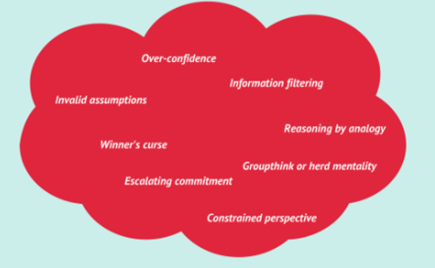
Suyash Ketankumar Wani replied to Vishwadeep Khatri's topic in We ask and you answer! The best answer wins!Blindspot Analysis What is a Blindspot Analysis? The Blindspot Analysis is a means that uncovers dangerous, incomplete, incorrect and outdated assumptions that can impact decision making within an organization. This was first used by American economist Michael Porter, he argued that in business, outdated ideas or strategies had the potential to affect modern ideas and prevent them from succeeding in the longer run. In Addition to this, decisions that business thought were made with care caused projects to fail because major factors had not been duly considered. Understanding a Blindspot Analysis The Blindspot Analysis begins with a question asking: how can a business identify those factors if they are, by all accounts, hidden? Blind spots typically manifest in 8 ways: 1. Invalid assumptions – corporate taboos, corporate myths, or other unchallenged assumptions. 2. Winner’s curse – or a belief that investment will always equal value. 3. Escalating commitment – when a company doubles down on a particular plan to its detriment. 4. Constrained perspective – where gains and losses are assessed individually, and not as part of a larger picture. 5. Over-confidence – encompassing confirmation bias, an illusion of control, or a belief that past performance is a prediction of future success. 6. Information filtering – where failure is not seen as a learning experience and it also occurs when a diverse range of opinions is available but not considered while making decisions. 7. Reasoning by analogy – or decisions based on a limited sample set or anecdotal evidence. 8. Groupthink or herd mentality – an effect where a group makes a safe and conservative decision that is sub-optimal. How do blind spots occur in business? Blind spots can only occur in business in one of three ways, with management themselves playing a key role in each: 1. Ignorant of strategically important issues. 2. Aware of strategically important issues but does not interpret them correctly. 3. Aware of the problem and how to address it correctly, but it is discovered too late. Any action taken, no matter how significant, it is too late and ineffective. Performing a Blindspot Analysis Many businesses just simply run through the list of above eight primary causes before making decisions. Psychologist and philosopher Benjamin Gilad developed a simple three step method for those who want a more methodical approach Step 1 Look at a previous strategic decisions taken from the organizational perspective. Which factors played a primary role? How was the solution argued? What was the context of the decision? Is the company overlooking one or more important aspects? Businesses can use Porter’s 5 Force Analysis to identify change drivers that have a structural effect on the five competitive forces. Step 2 By doing research with the publicly available information look at an organization from the outside (preferably in a similar market or industry). This competitive intelligence information can be found in interviews, speeches, public appearances, shareholder communications, and industry meetings. What conclusions or inferences or assumptions do executives from these organizations make? Step 3 In the third and final step, we will compare results. A blindspot is occurred when the analysis of Step 1 is contradicted by the results of Step 2. Application of the Blindspot Analysis The Blindspot analysis is primarily a solution for making strategic decisions that impacts the entire organization and is spread over a longer time period. This leads to approach that includes other groups and colleagues to see whether or not important factors in the decision process are overlooked. This way, many different perspectives are used in making decisions and top management can question whether they have applied a thorough risk analysis to all options. As many options as possible should be considered to make a decision. As soon as a single one is excluded, this leads to a blind spot.

-
Suyash Ketankumar Wani replied to Vishwadeep Khatri's topic in We ask and you answer! The best answer wins!LIFO AND FIFO FOR INVENTORY MANAGEMENT FIFO and LIFO are the methods used in Inventory Management. FIFO stands for “First-In, First-Out” method and it is assumed that the oldest products in a company’s inventory are sold first. The LIFO stands for “Last-In, First-Out” method and it is assumed that the most recent produced products in a company’s inventory are sold first. What’s the Difference in Methods? The first difference is that they are opposite in the way the flow of inventory takes place, and how they’re carried out. The difference depends on the kind of Business we run and accordingly the method will work best for us. For example, if we sell computers/ laptops, then the FIFO method would work best, as we don’t want the old stock to sit there and fall into obsolescence. While if we sell fresh cakes, the LIFO method would work better. As we want that fresh produce to go to market before it goes bad. Otherwise, depending on our product, we can figure out if the FIFO or LIFO method is best for us. Choosing the right method will help us to maximize profit. As the methods go off inventory totals, it is always assumed that stock is being sold as intended orders. This helps us in calculating the cost of goods sold (COGS). Which Method Is Better FIFO or LIFO? FIFO is considered to be the best, transparent and most trusted method of COGS, over LIFO. The reasons are:- FIFO method is very easy to understand and implement. In real environment, Businesses often try to offload oldest products first since older inventory might become obsolete as time passes and lose value. FIFO is just following the normal flow of inventory, it means we have less chance of mistakes when it comes to Accounting. LIFO method allows a business to use the most recent inventory costs first. These costs are higher than what it had cost previously to produce goods. As such, profits are always lower. This means company will have to pay lesser Tax under LIFO, it can also be thought of that stated profits with FIFO are much more accurate because older inventory reflects the actual costs of that inventory. The problem which is most commonly seen with a company switching to the LIFO method is that the older inventory will stay on the books forever, and will not reflect current market values if older inventory is not perishable or obsolete. It will be understated. Lastly, with LIFO method, it is very easy to manipulate financial statements. It is always considered a best practice to go with FIFO. How Do we Calculate FIFO and LIFO? To calculate COGS (Cost of Goods Sold) using the FIFO method, we determine the cost of our oldest inventory and then multiply that cost by the amount of inventory sold. To calculate COGS (Cost of Goods Sold) using the LIFO method, we determine the cost of our most recent inventory and then multiply that cost by the amount of inventory sold. The prices that a Company pays for its inventory often fluctuate and these fluctuating costs must be taken into account regardless of which method a business uses. FIFO and LIFO Examples To better understand this Concepts, we will have say Company ABC which has Business of Selling TV’s in Mumbai, let us use this as an example to demonstrate calculating the COGS with both FIFO and LIFO methods. This is what the Company’s inventory costs looks like: Month No. of Units Amount per Unit (₹) January 10 20000 February 10 20000 March 10 20500 April 10 20500 May 10 20500 June 10 21000 July 10 21000 August 15 21500 September 15 21500 October 15 22000 November 15 22000 December 15 22000 Total 145 As we can see from the table above, the unit price of televisions steadily increased. Assuming the Company kept his sales prices the same (which they did, in order to stay competitive), this means there was less profit for the Company by the end of the year. For the year, the number of TV’s sold was 110. Let’s calculate COGS using the: FIFO method Going by the FIFO method, ABC needs to use the older costs of acquiring his inventory. So ABC COGS calculation is as follows: No. of Units Cost per Unit (₹) Price Paid (₹) 20 20000 400000 30 20500 615000 20 21000 420000 30 21500 645000 10 22000 220000 ABC cost of goods sold (COGS) is ₹ 2300000 LIFO method Going by the LIFO method, the company ABC needs to go by there most recent inventory costs first and work backwards from there. No. of Units Cost per Unit (₹) Price Paid (₹) 45 22000 990000 30 21500 645000 20 21000 420000 15 20500 307500 ABC cost of goods sold (COGS) is ₹ 2362500 As we can clearly see from above examples, the LIFO method looks more attractive than FIFO. This is because the LIFO number reflects a higher inventory cost, means less profit and less taxes to pay. The LIFO reserve in this example is ₹62,500. This reserve is the amount by which a company’s taxable income is deferred, as compared to the FIFO method. The remaining unsold 35 TV’s will be accounted for in “inventory”.
-
Suyash Ketankumar Wani replied to Vishwadeep Khatri's topic in We ask and you answer! The best answer wins!Cynefin framework Cynefin framework is a Leader’s framework for Decision making. It can be thought of as a “sense making device” created by Dave Snowden in 1999 while he was working with IBM Global services. Cynefin framework is used in a variety of situations to categorize a decision and respond accordingly. Mostly, it is useful in marketing, organizational strategy and for product development. It helps make better decisions in a crisis or emergency. The framework which is defined by cause-and-effect relationships outlines five situational domains. They are: · Obvious. · Complicated. · Complex. · Chaotic. · Disorder. Each of these domains has a decision-making approach that helps in making better sense of the situation, and choose the appropriate way forward. The Five Domains Obvious Contexts - considered as The Domain of Best Practice In "obvious" contexts, options are very clear and the relationships are apparent to everyone involved. For example, problems which occur at help desks or call centers are often predictable in nature, and there are processes set in place to handle most of them. Snowden argues that in such situation, it is advised to follow the "Sense – Categorize – Respond" Approach to obvious decisions. In such situation, we should assess the situation, categorize its type, and then base our responses on best practice. There is often one "correct" answer, based on an existing process or procedure set in place. However, there is always danger that contexts may be oversimplified. This happens when leaders, or an entire organization, experience success and then become relaxed. To avoid such kind of mistake, we should make sure that there are clear communication channels in place, so that team members can report any situations that don't fit with any established category. Another challenge faced often is that leaders may not listen to new ideas because of past experiences and success. For example, sometime it might happen people automatically start assuming that previous solutions will work again. To overcome this, we should be always open to new ideas and be willing to look for innovative suggestions. Complicated Contexts – considered as The Domain of Experts "Complicated" problems often have several "correct" solutions and there is a relationship which is clearly available between cause and effect, but not visible to everyone, because of problem which is complicated in nature. For example, we might be able to see symptoms of a problem but have no idea of how to fix it. Here the approach is to "Sense – Analyze – Respond." Here, we need to assess the situation needs to be assessed, analyzed with the help of experts, and decision is required to be taken on the best response, using good practice. Leaders often heavily are dependent on experts in complicated situations, while ignoring or not listening to creative solutions from other people. To overcome this, gather a team of people from a variety of backgrounds to ensure that everyone's views are listen. Complex Contexts – considered as The Domain of Emergence It might be difficult to identify one "correct" solution out of many solutions available, or spot an exact cause-and-effect relationships, in "complex" situations. According to the study done by Snowden and Boone, many business situations fall into this category. This kind of Complex contexts are often unpredictable, and the best approach in such kind of situation is to "Probe – Sense – Respond." Instead of trying to control the situation or focusing on a plan of action, it's often best to be patient, look for any patterns if available, and encourage a solution to emerge. It is often helpful to conduct Experiments in such situations, and accept failure and move on as part of the learning process. Make sure that the relevant processes are always kept in place to guide your team's thinking – even a simple set of rules can help us in getting better solutions. Communication is the best solution available here. Conduct a Discussion where diverse group of people come up with innovative, creative solutions to complex problems. Brainstorming tools such as Random Input or Provocation can be used to generate new ideas, and encourage your team to debate the possibilities. Chaotic Contexts – considered as The Domain of Rapid Response In "chaotic" situations, there is no relationship which exists between cause and effect, in such situations, the primary goal is to establish order and stability. Crisis and emergency kind of situations often fall in this Category. The decision-making approach used in such scenarios is to "Act – Sense – Respond." We should act decisively to address the most pressing issues, sense where there is stability and where there isn't any stability, then respond to move the situation from chaos to complexity. To navigate chaotic situations successfully, conduct a Risk Analysis to identify possible risks, prioritize them with a Risk Impact/ Priority Chart and make sure that we have a comprehensive Crisis plan Available in place. It is not possible to prepare for every situation, but planning in advance for identifiable risks is helpful. Reliable information is often critical in uncertain and chaotic situations, so we need to make sure that how to communicate in a crisis. Disorder It can be very difficult to identify when we are in a "disorder" situation. In such situations, it is not clear which of the other four domains is more dominant, and in such situation, we should generally rely on decision-making techniques that are known and comfortable to us. The primary goal in such kind of situation is to gather more information, so that we can move into a known domain and then take the appropriate action. Example A team has recently launched an innovative new Tablet. However, it is observed that it has developed an issue, and no one is aware on what's causing it. Customers dissatisfied with the products have started returning the product and the company's Brand Image has also taken a hit. Mr. X is managing a number of issues and has to help his team to check the cause of the problem so it can be fixed, he's working with marketing team for the compensation related issues as well as he's answering questions from the media about the Tablet’s issue. He has started using Cynefin framework for better understanding of the situation, and he has categorized it as "complicated," which means he is required to take a Sense – Analyze – Respond approach. So, he brings in experts from R&D team, IT team and manufacturing team to help him diagnose the problem. These experts then started listing down the quality concerns and then started focusing on each one individually to find the root cause of the problem. After several days of analysis, everyone agreed that the problem is caused by the loose IC. Working together, the consultants and A team members came up with a concise plan to address the issue and ensure that no more faulty Tablets are shipped.

-
Suyash Ketankumar Wani replied to Vishwadeep Khatri's topic in We ask and you answer! The best answer wins!Supermarket in Lean Six Sigma The term Supermarket in lean six sigma refers to a location where a predetermined standard inventory is kept to supply downstream processes (storage/inventory). Necessary "supplies" for a work area are carried or monitored by Supermarket. When there is a Requirement from customer (internal/external), they can retrieve the item from the supermarket. Based on the Demand pattern, Supermarket restocks the Supplies. This prevents from Overstocking of materials and helps in Lowering Inventory levels The Supermarket is located near the Supplying process so the Customer Requirements and usage can be clearly visible. Toyota was the first Organization to install Supermarket in 1953 in its main plant machine shop in Toyota City. Taiichi Ohno, an Executive working with Toyota had this Idea from American Supermarkets photos having goods kept on Shelves at a pre decided location for the usage by Customers. Characteristics of SUPERMARKET Items are kept at specific location in a supermarket so the material handler can withdraw products in the required amounts needed by a downstream process. As soon as an item is removed, a visual communication or a signal is alerted to make more (eg. a kanban card or an empty bin) is taken by the material handler to the supplying process. Supermarkets commonly follow FIFO method for Inventory Valuation Retail Supermarket is the best Example for Understanding Lean Six Sigma Supermarket
-
Suyash Ketankumar Wani replied to Vishwadeep Khatri's topic in We ask and you answer! The best answer wins!Obeya Room An Obeya Room is a Setup created where all the Employees are asked to gather at a Central Location where they can meet, discuss and solve the Problems. This was first created by Toyota in the 1990s during production of the Prius. Since then, organizations across many industries have put the concept into action. Obeya, which means “large room” in Japanese, involves bringing together departmental leaders to focus on big picture issues involved with a single project or initiative. Employees working in a team or on a Particular project are asked to Collaborate on the Work, communicate face to face and post Information on the Walls about the work done for everyone else to see. Obeya room is considered a Component of Lean Manufacturing. The Obeya Room is Necessary for Large cross functional projects as - 1. It Aligns Employees to speed the process of solving problem 2. Helps down working in Silos 3. Used as a Command Center 4. Managing new Business Strategy, new Product Development 5. Allows the Leaders a Crystal Clear Picture of what everyone is doing, how everyone is working on and why they are working on a particular Task 6. Helps for Resource planning and Alignment too
-
Suyash Ketankumar Wani replied to Vishwadeep Khatri's topic in We ask and you answer! The best answer wins!Parameter Lean Six Sigma Sponsor Lean Six Sigma Champion Definition Sponsor is a Leader who sponsors a Lean Six Sigma Project Champion is a Team member who is Responsible for the Success of Project within the Timelines Who can Act Senior Business Leader Middle or Senior Level Executive Role Overall Six Sigma Initiative within the Organization Aligned For Specific Six Sigma Project Responsibility Allocate Resources for Training and Completing Projects Mentoring Project Teams Remove Roadblocks that arises during Six Sigma Project Resolving Cross Functional Issues Example Managing Director (MD) or CEO or CIO or COO in an Organization Business Vertical Head in Service Sector or General Manager in Manufacturing Sector