


Amit Kr Singh
Members
-
Joined
-
Last visited
Everything posted by Amit Kr Singh
-
Deductive Reasoning: Deductive Reasoning is the reasoning of one or more general/logical statements or hypothesis statements to get one final logical conclusion. Deductive reasoning is also called Top Down reasoning. A simple example of deductive reasoning is: If X=Y And Y=2 Then X=2 Or All the participants of Six Sigma Black Belt course are Six Sigma Green Belt certified. Aman and Akash are participating in Six Sigma Black Belt course. Therefore, Aman and Akash are Six Sigma Green Belt certified. Inductive Reasoning: Inductive Reasoning is the reasoning of combining observations and information drown from the experience or a set of data to get a generalize conclusion. A simple example of Inductive Reasoning is: Every time when it rains, wind blows from the East. Today wind is blowing from East. Therefore, it will rain today. Deductive Reasoning vs. Inductive Reasoning: The basic difference between deductive reasoning and inductive reasoning is that deductive reasoning starts with a general statement and finds the possibility of reaching to a logical conclusion while inductive reasoning, in place of finding logical conclusion, makes broad generalization from the specific observations. We can say that deductive reasoning generates specific conclusion from the general statements while inductive reasoning generates generalize conclusion from the specific statements. Use in Lean Six Sigma: The deductive reasoning moves towards the hypothesis testing and used to analyze theories that are already exist. Deductive reasoning can make analysis simpler, faster and more reliable. Deductive reasoning can also be used in problem solving, better team work and effective customer services by analysing the facts or the information and finding the real problem and logical reasons for that to get effective solutions. While inductive reasoning can be used to make the data collection plan and analyze the collected data to establish any pattern or the relation.

-
Backcasting is a planning method that starts with defining a desirable future or the outcome and then works in the backward direction to identify the policies and procedures to achieve the future outcome. Instead of extrapolating the current trends to predict the future, Backcasting is a way to plan big changes by starting from the outcome we desire in future, back to the current state and define the roadmap for it. Backcasting can be applied for problem solving in following manner: Define the Ideal Scenario: The first step is to visualizing the perfect scenario and to define and establish the targets or the desired future state. Try to picture this situation as vividly as possible. Work to way back: Analyze what is needed to make the ideal situation come true. It can be in the form of asking questions like - What is required to make this situation possible. What is required for that? Keep asking and analyzing the response until we get to your current situation. With the answers of these questions we can now sketched the roadmap with all the important to achieve the ideal target state. Plan for each step: Each step should be planned for what needs to be done to reach that particular sub goal or the desired outcome of those particular steps. What needs to be done to make it happen? Implementation: Establish the policy and strategy to implement the changes required.

-
Delphi Technique: The Delphi Technique of problem solving is a structured group communication processes which is based on the principle that decision or forecast from a group are generally more accurate than those from individuals or the unstructured groups. In Delphi Technique, the group of the experts answers questionnaires in two or more rounds. After each round, the facilitator collects the questionnaires, summarizes the comments including the reasons of the judgements and publish the summarize information. Multiple rounds facilitate/encourage the experts to revise their earlier answers with view of other members of the expert group. This complete process narrow downs the range of answers and which leads to correct answer. A key feature of the Delphi technique is that the participating experts remain anonymous at all times so that the decisions of experts are not influenced by the status of other expert members of the group. Nominal Group Techniques are generally used for less consequential decisions. These can be performed quickly and relies on the knowledge of participant. On the other hand the Delphi technique may require weeks of going back and forth between experts and decision-makers. This technique is perfect for addressing high-stakes issues which require a thorough examination of options and expertise. The Delphi Technique is preferred over nominal group techniques when we do not have any true or knowable answers such as decision-making, policy, or long-range forecasting. It is widely used in Business Forecasting. It is also preferred over nominal group techniques in the field of rapid changes.
-
Parkinson's Law: Parkinson's Law states that "work expands so as to fill the time available for its completion". Parkinson’s Law refers to the tendency among people to finish their tasks/work only just in time for the deadline even though they are capable of completing it earlier. Parkinson’s Law can be used to improve the productivity of the team by: Set realistic and appropriate deadline: It’s important to find the balance while setting deadline for the project. The deadline for the project or the work should be realistic and appropriate as too tight deadline leads to stressed team but too relaxed deadline brings inefficiency within the team. Identify milestones within the project: Projects should have defined milestones and work within these milestones can be considered as small projects with deadline. These deadlines keep the team focused and on track with the milestone deadline in mind rather than seeing the whole task and getting overwhelmed. Review the project at milestones: Milestone review helps in maintaining the momentum of the project and in avoiding work to get pending towards the deadline for the project. Evaluate the Schedule regularly: If at any point, it is observed that some task can be completed quickly and does not need larger deadline, schedule time to complete the task can be redefined.
-
“Blindspot Analysis” is a method of uncovering obsolete, incomplete, or incorrect assumptions in a decision making in an organization. Michael Porter used the term "blind spots" for old-fashioned wisdoms and assumptions within organizations that still guides business strategy and prevent new ideas. Benjamin Gilad described 3-step method to identifying blind spots in an organisation: Step 1: Look at the previous strategic decisions from a historical organisational perspective. What were the arguments for these decisions, what were the factors played a part and what was the context of that decision? Step 2: Look at the organisation from an external perspective using information publically available. Sources for this information may include annual reports of the organization, public communication to shareholders, public interviews, speech or appearances and autobiographies Step 3: Compare the results of step 2 with those of step 1. Every contradiction with the results from step 1 is a potential blind spot. Typically, Blind Spots can be categorized in following eight categories: Invalid Assumptions: The assumptions which are unquestioned and unchallenged or the Myths can be included in this. For example it is an invalid assumption or a common myth that company culture and company performance are not linked. Winner's curse: It is a belief that investment will always equal value. For example If a company paid too much in an auction, or won a contract by offering prices that were too low, the company could end up being the loser, even though in theory it’s a winner. Escalating commitment: It covers the condition when a company doubles down on a particular plan to its detriment. For example, an investor might hold onto a stock too long because she made the initial decision to buy. Constrained Perspective/Limited Frame of Reference: Looking at particular gain and loss decision as stand alone, not part of larger picture. For example an organization is eliminating experienced and high skilled but high cost resources for immediate gain on cost cutting but ignoring the confidence of client on the organization due to high quality output by the experienced and skilled resources. Overconfidence: Overconfidence is being unaware of what one does not know. It may lead to underestimating of risks. For example Individual’s faith in ability to control situations by own competence which may supported by selective information may result in big losses.
-
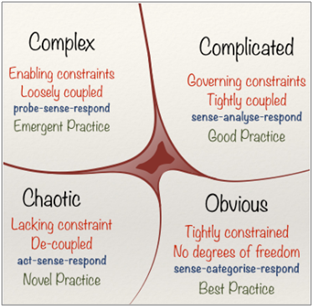
Cynefin Framework: “Cynefin” is a Welsh word that translates as "place" or "habitat". The Cynefin framework is a conceptual framework used for decision-making. It is a problem-solving tool that helps to put situations into five "domains" defined by cause-and-effect relationships. This helps to assess the situations or the problems more accurately and respond appropriately. As mentioned earlier, Cynefin offers five decision-making domains - a "sense of place" from which to analyse behaviour or the problem and make decisions accordingly. These five domains are: Obvious; Complicated; Complex; Chaotic; and Disorder. Obvious: It is also known as simple or clear and represents the “known known”. This is the domain where rules in place sometimes as best practices, the situation is stable, and the relationship between cause and effect is obvious and clear enough. These generally include repetitive patterns or consistent events. In such a situations it was advised by Snowden to "sense–categorize–respond" i.e., establish the facts ("sense"), categorize these and then respond by following the existing rules or applying best practices. For example, problems encountered at help desks or call canters are often predictable, and there are processes in place and best practices are available to handle most of them. Complicated: The complicated domain consists of the "known unknowns". The relationship between cause and effect is clear in this domain also, but it may not be visible to everyone, because the problem is complicated. This relationship requires analysis or expertise. This domain has a range of right answers. The framework recommends "sense–analyze–respond" i.e., assess the facts, analyze these often with experts, and apply the appropriate good operating practice. Because of the dependency on experts it is called domain of experts also. One example of this domain may be building civil structures at different geographical conditions. In this case, team may have built these structures multiple times but these may require the analysis of the conditions by an expert and provide expert advice to overcome the geography based problems. Complex: This domain represents the "unknown unknowns". Cause and effect can only be perceived in retrospect but not in advance, and there are no correct solutions. This framework recommends "probe–sense–respond" process. In such situations, instead of coming with plan of action, it is better to be patient, look for patterns and wait for a solution to emerge. Many times when human opinions and decisions are involved in any process like hard insurance cases where a lot of subjectivity involves, we could be working in this area because human opinions and decisions are different and may be complex also in certain conditions. Chaotic: In the chaotic domain, cause and effect are unclear and events in this domain are too confusing to wait for a knowledge-based response. This domain involves "Act – Sense – Respond" process i.e., act to establish order, sense where stability lies and respond to turn the chaotic into the complex domain. This domain is best for innovations. Covid in early 2020 can be categorized in chaotic domain. Disorder: The dark disorder domain in the centre represents the situations where there is no clarity about which of the other domains applies. On the other hand it is also difficult to identify when you're in a "disorder" situation. The only recommendation in this situation is to gather more information to move into a known domain and then take the appropriate action.
-
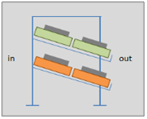
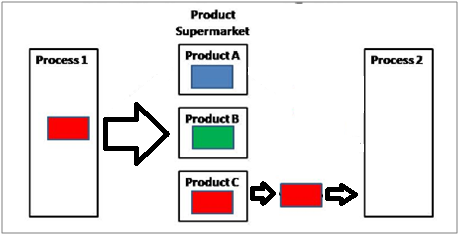
Supermarket: In general sense, Supermarket is a self service place offering a wide variety of items stored and organized into sections. Similarly in Lean, Supermarket is the location where a predefined and standard inventory items are kept to supply downstream processes. It is a method of managing inventory in which items are kept without knowing in what order these will be taken from the inventory and the material handler withdraws items in the precise amounts needed by a downstream process. Characteristics of a good supermarket: A supermarket should be located in front of the customer so that customer can order whenever there is a need. A good supermarket has material flow splits up in to different directions. A good supermarket is generally associated with a pull system. So when quantity of material reaches a low level, replenishment request can be generated to the supplier of the material to maintain the desirable level. A good supermarket has specific location for different items. This help in easy availability of the items and also easy to visualize the flow of the material towards the system. A good supermarket, generally, have items organized in shelves, which are filled by supplier on one side and picked from the other side. This creates FIFO process in a way and also state of items makes visible to supplier and customer both. The selves or the boxes containing items on the shelves are tagged to show what items are placed on the shelves or in the boxes. A good supermarket is the one available between two processes of very different cycle times. A supermarket is required most in case of high demands on flexibility.


-
OBEYA ROOM: Obeya means “LARGE ROOM” or “WAR ROOM” in Japanese. This originally involves bringing together departmental leaders in a large common room to focus on big picture issues involved with a single project or initiative. An Obeya is a room set up to get employees out of their isolated work places like cubicles or cabins to a central location where they can meet, discuss the issues and information, and solve pressing problems. Obeya rooms are primarily designed to reduce isolated work culture within the organizations and improve inter-departmental communication. An obeya room gives leaders a clear view of work environment like what and how everyone is working on and at the same time it gives the idea how their own department's efforts support or hinder their colleagues and other departments. Here are few reasons why having an Obeya Room is necessary to for large cross functional projects: Cross functional large project needs high level of communication and coordination between different departments of the organization. Obeya Room is the best for this purpose. Obeya room encourage team building and team work which is the first and important requirement for any successful large project. Obeya provides the opportunity to removes silos within the organization which is key factor for any successful cross functional project.Obeya make goals and problems visible so these can be discussed openly. This generally provides creative, innovative and quick solutions for the critical problems.


-
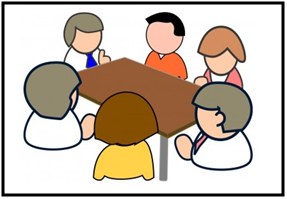
Quality Circle A Quality Circle is group of people doing similar work in the industry and meet regularly for the problems in routine job. This group identify the problem, analyze them and come up with a solution and solve the problem. Quality circle generally consists of three to twelve members and can be led by supervisor or immediate manager. Quality circle has a certain drawbacks: Management commitment: In the current organization culture, top management is not committed towards quality circle. Practical implementation of quality circle can be difficult because of this. Lack of Training: The workers may not be equipped with enough knowledge and also lack of leadership may further make it difficult. Lack of appreciation/implementation: Due to absence of proper leadership and management commitment, the solution suggested by this group may not always be implemented and appreciated. Lack of Support: There may be lack of support towards quality circle by workers or supervisor/managers. Because of these drawbacks, quality circle may not be very much popular in current industry environments but if these drawbacks can be managed successfully, the quality circle if very powerful tool to resolve small but significant shop floor problems in less time and very little investment. This concept is still relevant in the organizations practicing Lean Six Sigma as: It produces good solutions to critical organizational problems. A quality circle always has the potential of making an important contribution to organizational performance. KAIZEN and continuous improvement activates can be very easily driven from quality circles. In summary, Quality Circles may have few drawbacks but if successfully implemented, is a most obvious problem solving tool. It provides an opportunity to the workers to be active part of improvement activities with their creativity, experience and knowledge.

-
MoSCoW method: MoSCoW method is used to prioritize the requirements or the projects. This prioritization can be done on following categories: · Must Have; · Should Have; · Could Have; and · Won’t Have (this time) These categories can be explained as: Must Have: The Minimum and Mandatory requirements come under this category. If these requirements are not fulfilling in the project, project will be considered as failure. For example if we are manufacturing an Optical Storage Media, Writing and Reading of the optical media is the Must Have requirement. If any project in manufacturing process is not able to ensure to fulfil this requirement, the project can never be considered as successful. Should Have: The requirements, which are important but not necessary requirements, can be categorized as Should Have. These are the requirements, if not included; the project will still considered as complete but if included; can increase the value significantly. These requirements can be fulfilled after the delivery time. For example, the information secure facility is a critical requirement for a service delivery work but these requirements can be put on hold for some time in current pandemic time. Could Have: The requirements which are not critical but desirable can be considered as Could Have requirements. These are the requirements which can improve the customer satisfaction but not necessary customer requirements. For example, Hard Coating is used for the protection of Optical Storage Media. This hard coating protects the media from scratches, increases the life of media and so the customer satisfaction also. But this hard coating is generally not a necessary requirement by the customer and can be easily avoided. Won’t Have: The requirements which are least important or least critical for the project can be categorized as Won’t Have. These requirements can be excluded from the project scope with agreement of the stockholders and can be recorded for future consideration. For example a manufacturing company has planned to move all the non critical power requirements to the Solar Power but decides not to implement immediately due to budget constraints and investing the available funds to important and critical necessities.