


Shaily10
Members
-
Joined
-
Last visited
-
Stratified sampling is a common sampling methodology where the data is divided into strata so as to draw eligible conclusions from the different sub-groups or strata. Ideally the sub groups should be different and should not overlap. The researcher should use simple probability sampling while using stratified sampling. The various sun groups the data can be divided into are:-age, gender, nationality, job profile, educational qualifications etc. The idea here is to understand the relationship between two different sub-groups. There are 2 different types of stratified sampling techniques:- Proportionate stratified random sampling and disproportionate stratified random sampling . The only difference between the two is the sampling fraction in the disproportionate stratified random sampling. Also, its often seen that if the researchers lie too much emphasis on one subgroup it can lead to skewed results. Some of the common and effective uses of stratified sampling are:- -Population size:-This method allows the researchers to obtain a sample population that best represent the overall population size by dividing the overall data into homogeneous group called strata for example determining the GPA of the college students across the US and along with it can also look at the Demographics of college students With the above the researchers would have a proportionate stratified random sample of college students which better represents students college majors in US. This can help the researchers in highlighting various studies of US college graduates and observe the various grade point averages.
-
Definition based on PMBOK guide sixth edition of Fast tracking is : A scheduled compression technique-in which activities and phases normally done in sequence are performed in parallel. for atleast a portion of their duration. Definition based on PMBOK guide sixth edition of Crashing is : This is a technique used to shorten the schedule duration for the least incremental cost by adding resources. Example of Fast Tracking:- Changing the relationship between Paint room and Install carpets by adding lead time to install carpets in the Project schedule network diagram:- Before the change rooms should be painted before carpets are installed After the change with the added lead time the carpets can be installed just before the rooms are to be painted. Though the above saves time but more so often would also lead to -Rework, -Increasing the project cost and risk. Also, it -Overlaps the phases of the work,-phase 2 could start before phase one ends. Thus to avoid the above issues: -Interdependencies between phases should be managed properly to avoid rework and risk -Use the already planned resources -Judiciousness in utilizing resources in such a way so that they are not in aligned to successive phases which might lead to burnout Crashing:- Crashing might save and reduce project schedule duration, but it always results in increased costs due to increase in number of resources.It might include resources like weekend work, overtime to meet the project deliverables resulting in burnout thus increasing the risk leading to pulling resources from non critical path activities leading to these activities to go silently critical. During crashing its important to constantly review CPI ( Cost performance index) and SPI (Schedule performance index) as crashing of projects lead to decreased duration but increase in cost.
-
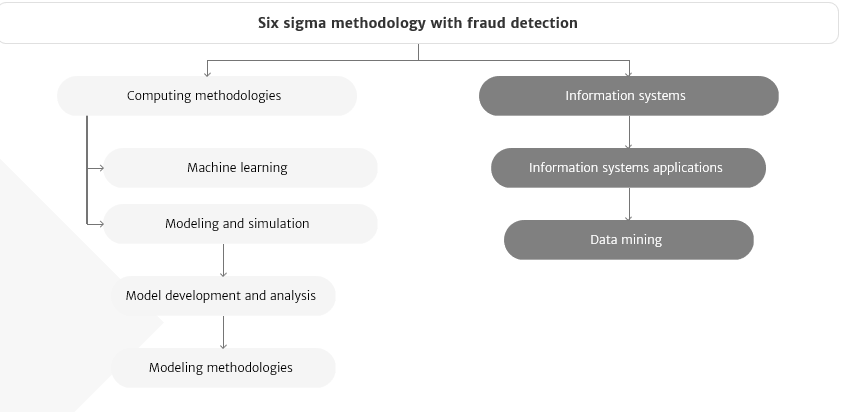
What is Fraud Detection? The detection is a business analysis tool focused on identifying cases before they occur and prevent them from happening in future. The Fraud detection tool functions by predicting the frequency of numbers in a naturally occurring data-set. If a certain number appears where it shouldn't, it's called a anomaly. When viewed next to the probability distribution of each digit, the anomalies are the first one to appear. Once the suspicious data set has been identified it helps in shedding light on similar type of data sets/anomalies, leading back to the source of the problem. It will then highlight the extent of the issue at hand. Like any Six sigma issue the more one knows about issue the more you are prepared to handle it. Using root cause analysis, DMAIC will get us to the root of the issue in conjunction with the below mentioned tools for fraud detection. Some of the examples of tools used for detection and prevention are as follows:- 1) Fraud Propensity Model-In an Insurance domain, in order to improve the claim process, being familiar with the claims lifecycle and data is important to build the hypothesis that the text entries captured during various parts of the process could reveal scripted patterns indicative of suspicious fraudulent activities, all these are not visible during manual activities and hence will not be flagged. By building a text mining algorithm and generating a fraud propensity score that combined the business rule classification with the authenticity of textual entries some of the suspicious text entries patterns through the model indicated collaboration between various entities involved in the claim process which the field unit investigated further to prevent the fraudulent entries leading to an outcome of increased savings. 2) Data mining approach to build credit scoring model-The purpose of creating credit scoring model was to predict default clients and reduce credit risk by applying data mining algorithm in order to find patterns of recognition of default clients and thus support decisions making process for credit approval. Data mining algorithms and methods can be used in detecting behavior that might indicate fraud. Analytical methods can used to indicate deviations from the norm, highlighting records that are abnormal and worthy of further investigation. 3) For identifying high or low grants applications following approaches of fraud detection can be used:-anomaly detection and an modelling approach, together. The control proposal as seen below shows location of fraud detection in the control phase of DMAIC/six sigma methodology. With Six sigma one can built a company culture of identifying and eliminating any possible threats of potential fraud.

-
Stopping the line or Jidoka is a philosophy taken from lean manufacturing in which the assembly line would halt production to resolve the issue even at the smallest of error. This practice holds everyone at the assembly line accountable for consistently delivering a high quality product. Stop the line forces every person in the organization to swarm to resolve the issue and take the following steps:- Detect and Stop the abnormality Understand the root cause Create a countermeasure Prioritize the actions that need to be taken. In order for the above to be successful organizations should plan the following:- 1) Setting up clear guidelines on when to stop or not stop the line so that every person feels comfortable in escalating the issue immediately. 2) Empowering employees to raise the flag, ask the question at the right time without the fear of not being heard or action taken upon. 3) Organizations should not be scared to dedicate some of the most talented people to do the systematic root cause analysis. They will be able to identify and fix the problem faster and more effectively since they have the skills, experience and they are empowered to do so 4) Technique of Continuous Integration allows the assembly line to run as it was build to run, just like a continuous running assembly line, fresh codes go in one end and after a series of assembly steps a build that's ready for human to test comes out the other. Thus by adding Continuous Integration process with Stop the line, things can be taken to the next level. 5) Use the metrics wisely of these significant incidents which should be seen as opportunities for improvement. Its imperative that we use these metrics carefully because the last thing anyone wants is to discourage employees from stopping the line when its necessary Its everyone responsibility to create the environment where employees feel safe to Stop the Line.
-
Brainstorming was conceptualized by Alex F. Osborne in 1948 in his book called "Your Creative power" which embodies 4 fundamental pillars:- Quantity over Quality, Withhold criticism, Wild ideas should be welcome and Combine and improve on Ideas. Groupthink can be avoided if we work on the above fundamentals cautiously. Due to the combative force of the power of brainstorming a lot of folks tend to go with the group's decision hence while there is quantity over quality, the fear of criticism, bringing out of box ideas to the forefront and combining and improving on the new ideas tend to take a back seat thus instead of the outcome of the brainstorming meeting being 1+1=3 , it becomes a groupthink outcome of 1+1=2. Some of the steps to avoid Groupthink that can be deployed are:- 1) Brainwriting-The team members are asked to write their ideas on a piece of paper in private and they rotate it through the group for the other group members to add on to the idea, till this stage the ideas are still not public. Once its come a full circle the ideas are opened up for brainstorming. 2)Assemble a diverse team-Build a team which has individuals from different background, age, experience. Some who are SMEs and some who are not. This will ensure that you would get ideas which are truly diverse and creative in their approach and these individuals would not be slighted by the force of consensus and will bring in a more collaborative thoughts and ideas. 3) Passionate Champions-The team should also comprise of these champions who are passionate of the ideas and the drive behind them, once the brainstorming session ends, the session could open up for Individual champions to provide their inputs on the ideas which might have developed in one direction. They have the potential to look at the issue very differently and can pick up ideas not advocated by the group. their ideas contribute to 20-30% of the ideas that make their way to final vetting. Hence encouraging collaboration through brainstorming using the above ideas is possible and we can effectively avoid groupthink by deploying these steps effectively.