Shrikant Angre
Members
-
Joined
-
Last visited
Everything posted by Shrikant Angre
-
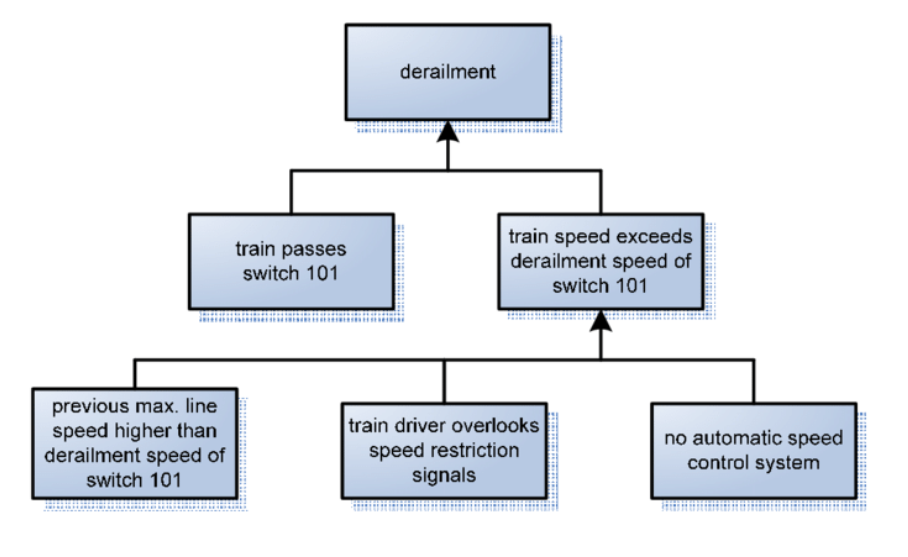
Why Because Analysis (WBA) is used to understand the reasons post accidents in various industries like Railways, Airline, Marine, Transport etc.. What is WBA? It is an iterative process to understand what happened and why it happened. This is done for all possible causes and the reasons therefore. It is done till a satisfactory answer is found as a reason of the accident. This more like a tree of cause and effect where at each node there can be various causes why it might have happened. The outcome of WBA is WBA graph which is like a node and attributes leading to the node. As shown in the diagram below As shown in the graph train derailment has happened and the various reasons for that derailment are identified... 2 main reasons why the rain derailed are 1. train passes through 101 switch 2. Train speed exceeds the derailment speed of 101 switch 2.1 The train driver overlooks the speed restriction limit of the track 2.2 There is no automatic speed control system in place to apply automatic brakes 2.3 The line speed to leading to switch 101 is much higher than speed of switch 101.. Hence the train is already speed up before reaching the switch.
-
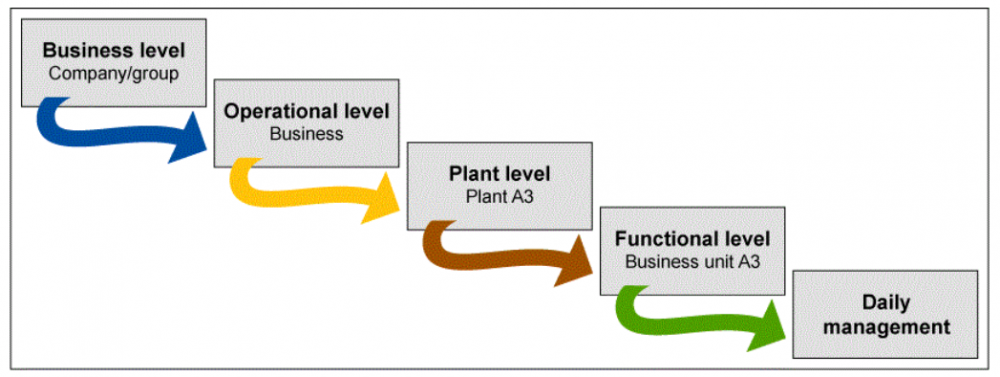
SQDC board stands for Safety, Quality, Delivery and Cost It is used as a Visual control tool to take care of the key performance indicators like Safety, Quality, Delivery and Cost for a specific team or business unit. This board shows at any point of time how the process/operations is performing on all the 4 parameters. This is also sometimes called as Gemba Board as it is consumed by floor leaders during Gemba walks This board is generally kept at a location which is easily visible to all the team members and appeals to them. Some companies even create a special area within the production bay to capture this. Here is quick glimpse of an SQDC board. How is this board used? This visual control tool is updated multiple times in a day to reflect the team's real time performance on all 4 key parameters. Therefore, the supervisor or manager while doing the Gemba walk, can understand how their team is performing and can take corrective actions (in case the team is lagging behind on certain parameters) or appreciate & motivate the team in case the team is performance very well. This tool also helps the team members understand how their contribution is helping the entire team on Quality, On time Delivery, Cost and the Safety and thus helps in bringing team's alignment with company goals/targets. Here are some of the examples of how this is used differently, especially in service sector This visual control tool is also used to create a competitive environment between multiple teams which cater to different regions/offices for a client. In this case, there will be a scoreboard for each team which will be kept side by side and it shows a clear comparison on how each team is performing on all the 4 parameters. This way each team members strive to make their team perform best and give better results than other teams. A simple example is shown below Sometimes some key parameters are also used to track the performance of every individual to create the competitive environment within the team. Example is shown below. Sometimes in addition to the 4 parameters (Safety, Quality, Cost and Delivery), Morale is another parameter which is tracked for the team, as shown in the image below. Sometimes not just these 4 parameters, but some other key parameters like Cycle Time, Average Call Handling Time, Turn Around Time etc.. are also tracked on a daily basis and this visual control board is made visually appealing to ensure that the team understands their performance just looking at the charts shown below Here is another example how it used in manufacturing industry. Below is an example of Coil Manufacturing company where instead of Cost, they are trying to break it down further in Inventory, Productivity and Maintenance as shown in the image below. How it is used in strategy deployment? In some companies it is also used in strategy deployment. In this case the SQDC board is modified to suit the identified company goals and is deployed at all levels from Top to bottom across all the functions and not necessarily for just operations team. It is done by defining goals at each level and then breaking them down further to each level and then tracked at each level using tools like Hoshin Kanri and A3 matrix




-
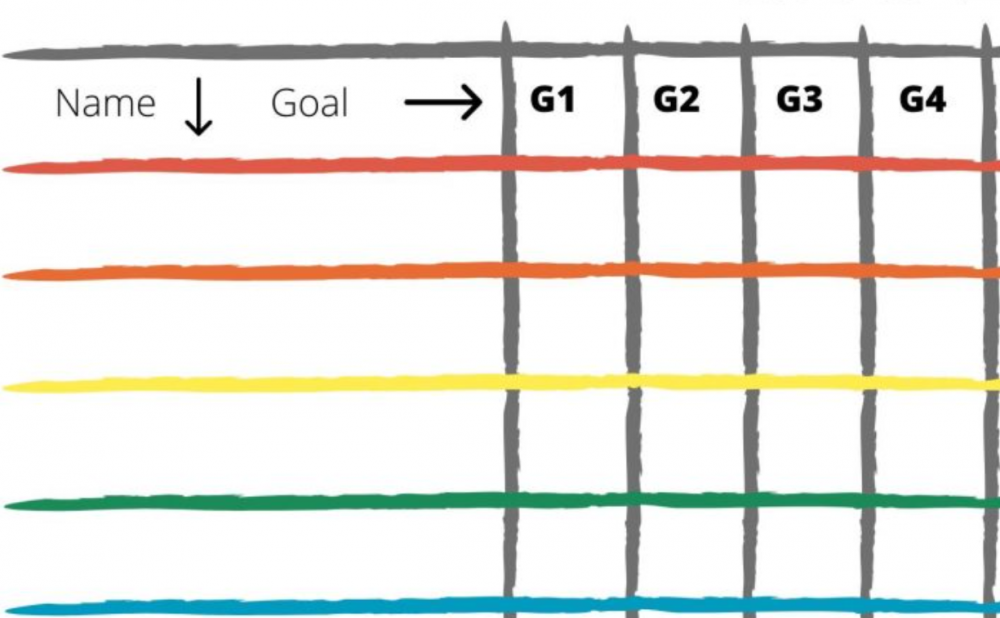
Bowling charts is nothing but a scorecard which is used to track KPIs for an individual over the period of a year, either month or quarter wise. Here is a quick image of how a Bowling chart looks like... Below image is of a Policy deployment Bowler chart, which is tracking 5 different targets for an individual for a period of 12 months, month wise. Let me explain this chart in more detail.. Owner: The name of the employee whose KPIs are being tracked Organization: The name of the company the person works at Targets: These are KPIs which the employee is going to measured in the relevant financial year. For example, Revenue Target, Gross or Operating Margin target, SLA Targets like Quality, Cycle Time, On time, AHT, C-Sat, Operations target like Utilization, Productivity, People Targets like E-Sat, Attrition%, Leadership building etc. Start Point: This is starting point of the KPI.. for example of the Gross Margin of the team is 40%, then the starting point will be 40%. What is Red, yellow and Green color coding? Red color tagging means that the achieved number is 5 to 10% less that the target given. Threshold of 5 to 10% is decided depending upon the criticality of the KPI Yellow color tagging means that the achieved number is 1 to 4% less that the target given. Green color tagging means that the achieved number is more than the target. Let me give an example of this is filled: Taking above example of 40% Gross margin as a starting point and reaching an annual target of 50% Gross margin for this FY. then this can be filled in 2 ways.. i.) By get adding flat target of 50% for each month starting Jan to Dec and then capturing the actual number of Gross Margin achieved for that month. Now this is not at all practical. since the team cannot jump from 40% to 50% in just 1 month.. Hence, the 2nd and most appropriate method. ii) In this method, we gradually increase the margin target by few % points to move up the ladder and therefore by the end of year not just meet the annual target but also are ready to move higher level in the upcoming year.. Here is the example of how that be done. Some companies also add a delta row to this to show how far/away we are from the target or how much ahead we are against the target.. in the following manner. How are Bowling charts useful? Bowling charts help in aligning the individuals with the organizations goal and initiatives. It helps in tracking and making necessary amendments or course corrections, just incase things are going off track, rather than discovering a catastrophic failure at the end of the FY. This can also be used as a powerful performance evaluation tool by the organization. It gives necessary motivation to the individual and just makes the system very transparent. Having such score cards and transparently sharing them with all the leaders help in creating a competitive environment, thus fueling the necessary profitable growth for the organization As an organization, if all the individuals are moving in the right direction, then it is good, but let's say the sales figures for all the sales professionals are 10-15% down than the given target, then the organization will have to go out more aggressively on sales campaign, marketing activities etc.. to boost the sales figures. Limitations of a Bowling chart: One of the limitation of the bowling chart is let's say an individual has all his KPIs in green, mid year and the variance is say 2-3%, but there is huge scope to even push the envelope further and achieve higher numbers than the target given. Then complacency might set in and in spite of having further scope to improve the numbers, no efforts will be put in.. The reverse also holds true, let's say the person has huge deficit (double digits) in his achieved vs target numbers, then the person is completely demotivated and loose focus and thus it becomes very difficult to move ahead. How to mitigate this limitation? One of the ways to mitigate this is by defining the KPIs in such a way that the more you achieve the more reward you can reap/enjoy in the form of incentives/bonuses etc. This way the company can still enjoy further good performance without any hindrances or biases. For the under performing people, have adequate HR (HR-BP, Talent Development) and HOD intervention to ensure that the moral of the those employees is always high and action is taken only against "will issue" type of employees.



-
What is Leader Standard Work? Leader Standard Work (LSW) is a documented method for supervisors, managers and directors to drive lean thinking & its behaviour throughout an organization. Leader Standard Work explained in detail: This is similar concept to Standard work where a process, particular task or procedure is documented to ensure that it is made as a standard and followed until a new or improved standard is devised. The only difference is that this applies to leadership team for an organization. Leader standard work helps leaders at all levels with a set of tasks, actions, behaviours and tools that they need to incorporate into their day to day activities. This is to ensure that they imbibe and exhibit a behaviour which they want their team to follow and thus lead to continuous improvement mindset across the team/organisation How can Leader Standard Work be deployed in an organization? There are various ways Leader Standard work can be deployed in an organization Strategy deployment: Also called as Hoshin Kanri, it is a method of systematically breaking down organizations long term goals (3 to 5 years) into an yearly goal and therefore into very specific actionable goals or KPIs for various interdependent teams and functions. Having a governance mechanism of reviewing these goals for various functions and teams from time to time is a way Leader Standard Work can be deployed. This will ensure that the small initiatives or goals are not off track or rather met, therefore leading to achieving yearly goal. Gemba walks: Another way Leader Standard work can be deployed at supervisory and manager level is by doing floor walks. A leader should do Gemba walks or floor walks to observe first hand how his/her team members are working on their day to day tasks and see if there are any opportunities for improvement. Leader can also interact with the team members and ask the right questions to ensure he gets right insights into any potential challenges/issues that the team might be facing. Huddles or Team meetings: Conducting Team meetings is another method by which leader standard work can be deployed in an organization. These team meetings/huddles are a great opportunity for a leader to interact with the team. Understand how the day to day deliverables are being done Are there any challenges or issues that the team is facing Any learnings that can be gathered based on the challenges faced in past Opportunity to learn from others mistake This is a also an excellent opportunity for the leaders to identify any potential issue and fix it quickly before it becomes a big problem. Individual mentoring or coaching: Having a one on one coaching or mentoring with your potential leaders or leaders/supervisors is another way one can implement leader standard work at a work place. This approach allows the mentor to coach the mentee on various standard practice the supervisors should follow and how to follow them This is one of the best way to also build your personal connect with the team and it's key supervisors. This method also creates a cascading impact in an organization which badly needs a mindset or culture of continuous improvement. Having a set procedure or practice in place: Having a set procedure or practice in place as a culture also helps in implementing Leader Standard Work. Standard practices like monthly review meetings/feedback with the team members. Consistently focus on skill building exercise for every member of the team. Ensuring that there is a consistent and regular reward and recognition that happens in a team. Ensuring regular analysis of errors and therefore working on their mitigation or how can we avoid them in future. How can Leader Standard work help an organization? Consistent flawless delivery: All of these practices can ensure that an organization can always achieve consistent, predictable and repeatable results and will be able to delight their customers all the time with their work. Repeat Business from the customer: Owing #1, the organization can enjoy repeat business from the customer. Lower Sales and Marketing costs: Owing #2, the company can enjoy lower sales and marketing costs. In fact, their sales team can focus on acquiring other new customers. High Productivity and therefore far better margins: Owing to a culture of continuous improvement, their will be very less rework and high productivity within the team. Therefore the company can enjoy far better margins Employee Satisfaction and Retention: As their leaders are very much hands-on with the team and the process, the employees will always feel the trust and connected and also see that they are in good hands (read leaders).. this way the employee satisfaction index will be very high and therefore lower employee churn.
-
Deductive Reasoning Inductive Reasoning Definition It takes general rule and then uses it to make specific observation It uses specific observations or examples and then applies it to make a general rule Basis of reasoning It uses facts, definitions to arrive at a conclusion It takes into account patterns found to arrive at a conclusion How it is done? Start with a theory/Hypothesis Do a Quantitative research to test the Hypothesis Then confirm it to drive reasoning Start with a data at hand Do inferential statistics and try to draw inferences Thus, end up doing Qualitative research Limitations Conclusions drawn will be true, if we are very clear and particular about the sample and the type of the sample we are driving conclusion on Conclusions drawn, it is very difficult to prove them Example Existing theory: There is always a delay in Low cost airlines Building a hypothesis: If the passenger fly with low cost airline, then there will be a delay Data Collection: Collect the real time data Analysis and reasoning: Analyze the results to accept or reject the hypothesis Observation: A low-cost airline flight is delayed Observing a pattern: Another 30 flights from low-cost airlines are delayed Develop a theory: There is always a delay in Low cost airlines Application This is generally used in research industry to identify the root causes and make remedies basis the outcome of the study done This is generally used in predictive analytics, thus to predict the trend or in current scenario (how covid-19 will spread etc)

-
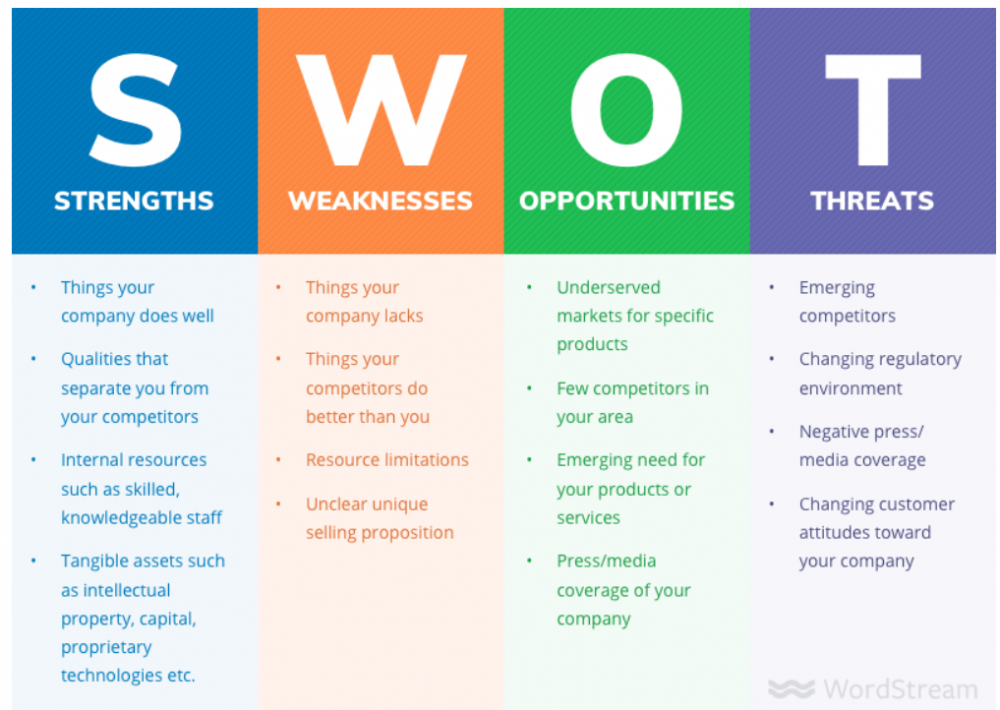
SWOT Analysis stands for Analyzing Strengths, Weakness, Opportunities and Threats. This is strategic business planning tool which any company or even a business unit should do it during their business planning exercise to try and understand how they are doing on the above 4 quadrants.. Strengths: Things that the company does well or is best at.. Unique things that the company is know in the market for.. Unique skills that the company possess Any key assets, or IPs that the company owns Weakness: Things that the company lacks Things that the competitors do better than the company Any resource limitations Opportunities: Markets untapped Untapped products Threats: Emerging competitors Disruption happening in market by any new company Disruption happening owing to any new product This tool can helo in building the future of the company and how the company can shape up and move forward.
-
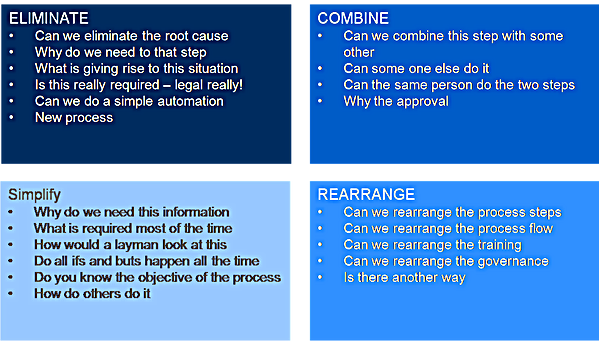
ECRS stands for Eliminate, Combine, Rearrange and Simplify. It is one of the lean method used in problem solving, in order to reduce or eliminate waste. When is this method used? ECRS is used when - Business requires immediate improvement from the problem state - Team is planning to implement lean methodology to achieve continuous improvement Steps to implement ECRS? Following is an example of Work Analysis Sheet that can be used - This method is implemented along with doers - First step is to draw the process map/process steps - Process map is to be drawn till the last level L1 .... Ln, in order to get minute details regarding the process or the work analysis - Capture all the relevant information related to the process like: Quality, Cycle Time, On Time, etc. - Once the above steps are done, then we should ask questions in following order 1. Eliminate - Can we eliminate this step? - What is the value this step adds to the process? - Can we automate this step? 2. Combine - Can we combine this step with other steps? - Can someone else do this step? 3. Rearrange - Is this sequence correct? - Can we re-arrange the step and thus get a better process flow? 4. Simplify - Why do we do this step? - Is this the best way to execute this step? - Can we completely/partially automate this? - Implement the best practices followed in the industry? How else it can be used? - This can complement PDCA method to achieve faster results - This can be combined with 5 whys and 1 H in following way Examples where ECRS is used: Example 1: Manufacturing companies use this in Single Minute Exchange of Dies (SMED) while doing change-over to ensure less production time is wasted or there is very minimal downtime. Example 2: Banking system has used ECRS very effectively in all the day to day transactions that a customer does with the bank.. Money withdrawal, transfer, deposit, cheque request, loan request, loan disbursal and every verification is done nowadays online Example 3: Insurance sector is using ECRS very effectively in rolling out insurance policies in shortest possible time.. They have automated, simplified, rearranged and eliminated a lot of redundant steps. Now we are able to take a life insurance policy sitting at home at click of few buttons.. Same is the case with claim intimation or hospitalization request. It is done with the use of apps and all the parties get relevant information from time to time Example 4: Airline industry is US and other leading countries are already using ECRS effectively.. Now in India as well it has started to a great extent. 1. Seat Selection 2. Getting boarding pass 3. Adding baggage and getting baggage tag. All this is done via self check-in Kiosks Example 5: Ecommerce Industry has been using ECRS very effectively.. 1. Product selection and Quantity 2. Product order 3. Address selection 4. Payment 5. Feedback capturing All these are simplified or done it such a way that customer is able to do these steps at any point of the day and at ease using easy to use apps and their features


-
Parkinson's Law: It states that work expands itself so as to fill the time that is available for it's completion. Cyril Northcote Parkinson is the father of Parkinson's Law in 1955 and he attributed it to the growing bureaucracy in any organisation What it means?: This means that if you allot 1 month to complete a task or an initiative, which ideally could have been completed in 2 weeks time.. Then the work will expand itself, by becoming more complicated or daunting and thus will demand the entire 4 weeks period to complete itself. E.g. This is generally seen in a Government mega project, where the project just takes never ending time to compete itself, and if this given to a private contractor with some incentives, it can be completed in much less time. We can use this law to our benefit in following ways: 1. Do better judgement of the tasks: While doing time allotment, we need to do proper estimate and allot only the required This will ensure that we are able to complete the task well within time. 2. Assign aggressive timelines: While do the time allotment, assign half the time required to complete the task.. This will ensure that we complete the task way ahead of time. 3. Assign Hard deadlines: While setting the deadline, set it as something which can be modified or not met.. Something which is given by our boss or head of the company etc. 4. Push the team to think innovatively: Giving crunch timelines will encourage the team to work smarter than harder, thus will bring out innovative things or automation or a complete disruption of the process. 5. Move away the tasks which are unproductive in nature (crush the cockroaches of the productivity world): Task such as email reading, feed reading should not be prioritized, instead we should prioritize the more important or critical tasks 6. Prioritization: Crunch timelines which encourage the team to prioritize and thus bring out the best planning out of them. 7. Bust the traditional ways of doing things: Crunch timelines also bust the myths that we should accomplish the things in a traditional way and thus new process or methods are born which are more effective and efficient.
-
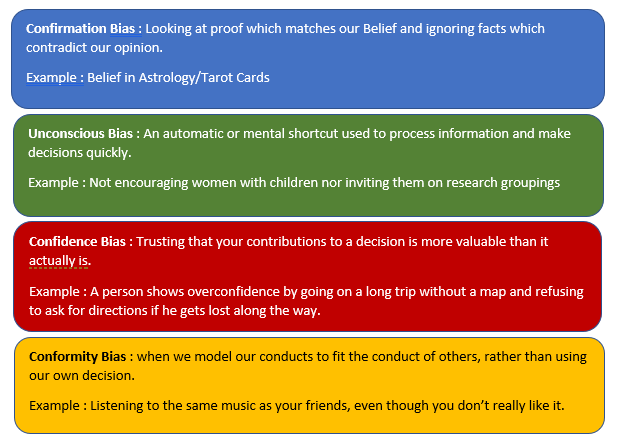
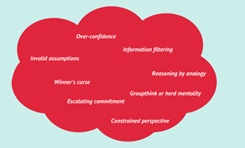
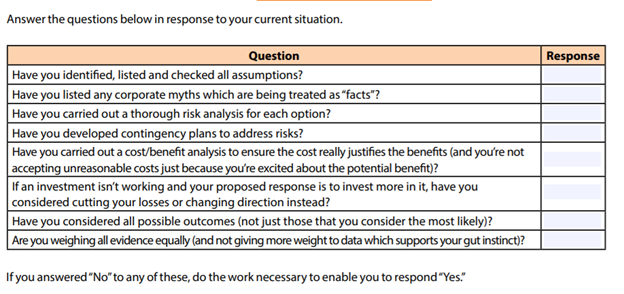
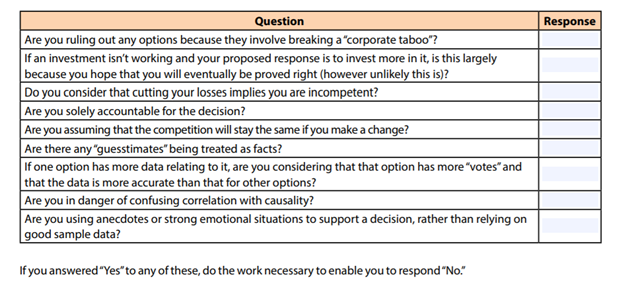
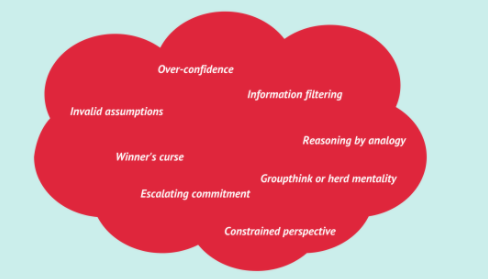
Definition: Blindspot Analysis means identifying outdated and incorrect assumptions across various decision making levels in an organization, that can harm a decision making process and therefore evolving into a systematic decision making process. History: Michael Porter is considered as the father of Blindspot Analysis. According to him, in any organization, the outdated ideas & strategies, preconceived notions and assumptions, create a big hindrance in implementing modern ideas and strategies. Since the decisions are made based on this, a lot of projects ended up in a failure. Blind spots typically happen in one of the following 8 ways Winner’s curse – a invalid understanding that investment will always result in a specific value Making Invalid assumptions – Unchallenged assumptions, preconceived notions, myths Restricted or Constrained perspective – incorrectly evaluating gains and losses individually, and not looking them as a big picture Escalating commitment on a plan/initiative – Undue or irrelevant stress on a particular initiative by an organization Undue Over confidence – e.g. assuming past performance as a future of success Using filtered information – Hiding information and not taking all the relevant options into consideration before arriving at a decision Reasoning based on limited data – decisions taken based on limited information or sample data Groupthink or herd mentality – just believing that if a group is moving in one direction, it is a right direction, instead of finding right direction and moving in that way. Why do blind spots occur in any business? Blind spots can only happen/occur in business owing to one of the three ways: 1. If the Management is ignoring strategically essential/much need attention issues. 2. Management is aware of key issues, but fail to interpret them or analyze them correctly 3. Management is aware of the key issues and how to address them, but those issues are uncovered very late in the game. How to perform a Blindspot Analysis in any Organization? General process that any business will adopt is to a quickly check on whether any of the 8 issues that have been listed above are currently occurring in the organization, while making any critical decision But there is a more methodical approach that was developed by Benjamin Gilad. It is three step method. Step 1: Inside view: Review how an old strategic decision was made Review an old, but similar strategic decision which was taken in the past. In what context was that decision made? How did we arrive at the solution/decision then? Which primary factors played a key role in helping arrive at the decision? To help, we can use Porter's 5 force Analysis to identify primary factors that will have an impact on the decision making process Step 2: Outside view/perspective: Identify a Benchmark (a company or an industry decision) across similar industry Identify an organization to consider as a benchmark preferably across the same industry or sector and see how the decision was made when that company was in similar situation. In this step we are using competitive intelligence from the industry Step 3: Lastly compare, find gap and plug it. In the last step, we should compare results found and identify if our step 1 and step 2 are having contradictory results and where is the gap occurring and going ahead with fixing it. Examples of Bindspot analysis: Telecom sector: Jio used Blindspots Analysis and used it to it's own benefits.. At that time the telecom sector was only focusing on ARPU and data + call usage was the main source of revenue.. Jio questioned that basis and completely disrupted the telecom market, pushing a lot incumbents into either bankruptcy or closure. Space Sector: Virgin Galactic used Blindspot Analysis to challenge the status quo that Space travel is only limited to Astronauts and countries who can afford it.. and with the recent flight Richard Branson proved everyone wrong and has paved the way for space tourism, which many earlier considered as a marketing gimmic

-
Method FIFO Inventory Management LIFO Inventory Management Definition FIFO, First In First Out, inventory management means goods which are older or dated in the inventory are sold first in the order of priority LIFO, Last In First Out, inventory management means goods which are latest in the inventory are sold first in the order of priority Industries where it is used? It is generally used in perishable food items industry and rapidly changing industry like fashion industry, to keep up with the latest trends which are constantly changing and to avoid obsolesce in case of perishable food items It is generally used in non-perishable commodities and industries like Petroleum, chemicals, metals etc. How is Cost of Goods Sold calculated? Beginning inventory (USD) + Total Purchases (USD) = Goods available for sale - Ending Inventory (from physical count) (USD) = Cost of goods sold (USD) However, the Cost of goods sold is calculated based on the price of old goods in the inventory Beginning inventory (USD) + Total Purchases (USD) = Goods available for sale - Ending inventory (from physical count) (USD) = Cost of goods sold (USD) However, the Cost of goods sold is calculated based on the current prices of the goods in the inventory Inventory value FIFO is a good indicator of ending inventory value, therefore good valuation for business, as there is no wastage of inventory owing to getting obsolete LIFO is not a good indicator of ending inventory value, as the old inventory might be extremely old and therefore might get obsolete Margin FIFO might show higher net income (as the old goods in the stock might have lesser prices or cost per unit) LIFO might show lesser net income (as the newer goods in the stock might have higher prices or cost per unit, compared to the goods already in the stock) This higher price will be owing to inflation Tax burden FIFO method of inventory management might lead to higher net income and therefore will lead to higher tax burden for the company LIFO method of inventory management might lead to lower net income and therefore will lead to lower tax burden for the company Scenario in which it is most successful FIFO is most successful in an industry where the price of product or goods does not change much or remains steady LIFO is most successful in an industry where the price of product or goods fluctuates more frequently Usage world wide FIFO method of inventory management is most widely used across the world LIFO method of inventory management is not used by countries following IFRS (International Financial Reporting Standards) as IFRS has banned it, However USA which follows GAAP (Generally Accepted Accounting Principles) principle, use it for accounting purpose Example of how it is used? A grocery store owner will always try to sell the milk cartons with nearest expiry date, first than the ones with later expiry date. This is to ensure that the goods do not get wasted A petrol pump will always try to sell the petrol or diesel based on the recent market prices. This is to ensure that they do not incur the losses owing to rise in the fluctuating market
-
Cynefin Framework is a concept/framework which helps in decision making in any type of situation/environment. History: Cynefin framework is developed by Dave Snowden in 1999, while he was working for IBM global services. Cynefin is Welsh word and means "Habitat" What is Cynefin Framework? Cynefin Framework has 5 decision making contexts or domains and they are as follows: 1. Simple or obvious also in the past called as known 2. Complicated (in the past called as knowable) 3. Complex 4. Chaotic 5. Disorder 1. Simple or obvious domain :- - This domain represents known-knowns. This means that the relationship between cause and effect is clearly established in this situation. - We can also say that the situation is stable. - This is a situation where the rules/instructions are clearly defined and standard operating procedures (SOPs) are clearly established. - The advice to the leadership team in this situation is Sense - Categorize - Respond. - This situation is also termed as the best practice Example: If a customer fails to make a credit card payment before the due date and calls up customer care, then the customer care clearly knows based on the SOPs laid how to respond to a customer in this case and communicate the next steps. 2. Complicated or knowable domain :- - This is a domain of known-unknowns. This means that the relationship between cause and effect is not clearly defined, but has range of answers and hence needs experts or subject matter experts to establish the relationship between them. - The advice to the leadership team in this situation is Sense - Analyze - Respond - In this situation, a leader has to assess the facts, analyze the situation using the expert advice available and considering all the scenarios and then respond to the situation. Example: A customer places an order on an ecommerce site, but complains the order is in a pending state and the payment is not done by his end. In this situation the customer service agent has to analyze the situation and depending upon various scenarios like (either the payment gateway failed, or there is the problem with bank etc.) has to guide the customer on what to expect in this scenario and the next steps to follow. 3. Complex domain:- - This is a domain of unknown-unknows. This means that the relationship between cause and effect can be established only based on old or retrospective facts and there are no spot on right answers, but patterns to that can emerge. - The advice in this situation to a leader is Probe - Sense - Respond, which means, the leader has to do a lot of experiments or probe what has happened in the past, take that into consideration and then understand the current situation and respond. Example: A company's group medical insurance policy is perfect example for this type of situation. Whenever a company goes for renewing a group medical insurance policy, the insurance company goes and investigates a lot of old parameters like claim to premium ratio, demographics of the insurers and their dependents, what type of claims are made?, What were the ailments etc. and then decides on the premium amount and benefits for the upcoming year. 4. Chaotic domain:- - This is a chaotic domain as cause and effect are completely unclear or disjoint. - Act-Sense-Respond: Since there is a lot of confusion prevailing, the leaders are advised to immediate act to stem the bleeding/ongoing problem first. then sense where the stability can be established and then respond by turn the chaotic situation into Complex. - Direct communication is one tool that can be use in this situation to help resolve the confusion Example: If you are appointed as a leader of non performing team, which has issues on all 4 quadrants of Balanced Scorecard and especially has disgruntled employees, some of them have resigned and others are about to resign.. Then the, first step of a leader is to understand why there is resentment amongst the people and address that by taking immediate steps. Then work towards solving other business problems. 5. Disorder:- - This a situation, where there is no clarity on which domain the situation is falling into.. - The only way to break the ice here is to break down the constituents into different parts and try to fit them into different domains and start from there. - Once that is established one can start from moving from chaotic to complex, to complicated and finally simple. Example: 9/11 terror attach on US or 26th Nov Mumbai terror act is a perfect example of this situation The best way to practice this is to improve the domain of any situation is by moving clockwise i.e. from Chaotic --> Complex --> Complicated --> Simple
-
Definition of Supermarket: Supermarket in Lean Six Sigma is a store which stores/stocks a predetermined set of inventory or spares (depending upon the demand) necessary for the down stream operations/process. How it is used?: Supermarket is a store where the down stream process can use/utilize a spare randomly, when in need, to ensure uninterrupted operations. As soon as the spare is used by the downstream process, that spare is refilled or replenished to ensure continuity of the operations. The size of the supermarket is derived based on how much buffer (# and type of) spares is expected for the downstream operations. Supermarket can be implemented in 2 ways: 1. Supermarket using Kanban cards 2. Supermarket using 2-bin systems Where it is used? It is used as one of the pull strategies when designing a Future Value Stream Map for a process. It is used only when FIFO (First In First Out) or One Piece Flow strategies cannot be used. Benefits of Supermarket: 1. Whenever the supplied lead time of the spares or raw material is high, it is used to ensure the continuity in business operations For eg. If the lead time of the spares is 1 week and the production interval is 1 day, then the supermarket strategy will ensure continuity in business Operations. 2. When the Changeover time is high, supermarket is used to run the batch in predetermined format, depending upon the demand. 3. Whenever the company is adopting finished good strategy is made to stock
-
What is Obeya Room? - Obeya Room means a large room or meeting place, (in Japanese language) in an organisation or a forum created within an organisation, of cross functional leaders, to resolve a big challenge or issues related to policy or product, from a broader perspective. This is also some times called as "War Room" of inter departmental leaders, to finalize software development, developing a new business strategy, defining or refining project management system or redefining a workflow management system in an organisation. History of Obeya Room: In 1990s Toyota brought the concept of Obeya Room during the production of Prius. Takeshi Uchiyamada from Toyota is the one who created Obeya room. During the creation of Prius, which is considered to be an engineering marvel much ahead of time, Takeshi realized that if Toyota has to conceptualize and manufacture such a product, that too in a crunched timeline, then their should be involvement of all the cross functional leaders/experts from various departments like, Engineering Design, R&D, Prodcut Development, Production, Human Resources, Finance department and Sales & Marketing. Since then this concept has spread to many companies like Nike etc.. How is Obeya Room useful? It helps us to break our silos and helps us in achieving results faster It helps generate value for an organization by bringing leaders & experts from all the relevant departments It helps create transparency within an organisation to understand what initiatives are taken by which department and avoids any duplication It shows how initiatives/efforts of each department supports or hinders other's initiatives/efforts and thus avoids any conflict and drive faster results Some use cases of Obeya Room concept: Quarterly review meetings of an organisation is a perfect example where leaders from each function and every enabling function come together, share the progress on the initiatives each one of them had defined for themselves for the previous quarter and also shares what initiatives they are going to take up for the upcoming quarter. This clearly helps in corporate alignment by creating transparency and avoid duplication of efforts. If any organisation is working on an big RFP, it is going to be very useful, if all the leaders of the cross functional team come together and work on it.. This way the RFP can come out to be very competitive and the chances of winning becomes much higher Coming up with a new concept or launching a new product in the market Coming up with a new policy framework in an organization which has long lasting impact on the organisation
-
Project Sponsor - Project Sponsor is a person who sponsors the Lean Six Sigma Project. ' Role of a Sponsor: In addition to being the sponsor of the project. - He/She is the one who makes arrangement or assignment of resources to the project. - Ensures the training and development of the people deployed for the project. - Helps in clearing the roadblock that the project may encounter, during the project life cycle. - Has a very strong influence over to ensure the completion of the project. Hence Project Sponsor is very essential/necessary for a successful Lean Six Sigma Program Project Champion: Project Champion plays a very key and crucial role of a mentor to the project teams in a successful Lean Six Sigma Project. Role of a Champion: - They play the role of a mentor for entire life cycle of the project to the project teams. - They act as a bridge between the organization's management and a team of Black & Green Belts. - They help in facilitating things, enables collaboration and helps in any kind of conflict resolution Hence Project Champion is also very essential/necessary for the success of a Lean Six Sigma Project. So, from the definition and role of Sponsor and Champion, we can infer that they both compliment each other and also are essential for the success of Lean Six Sigma Project
-
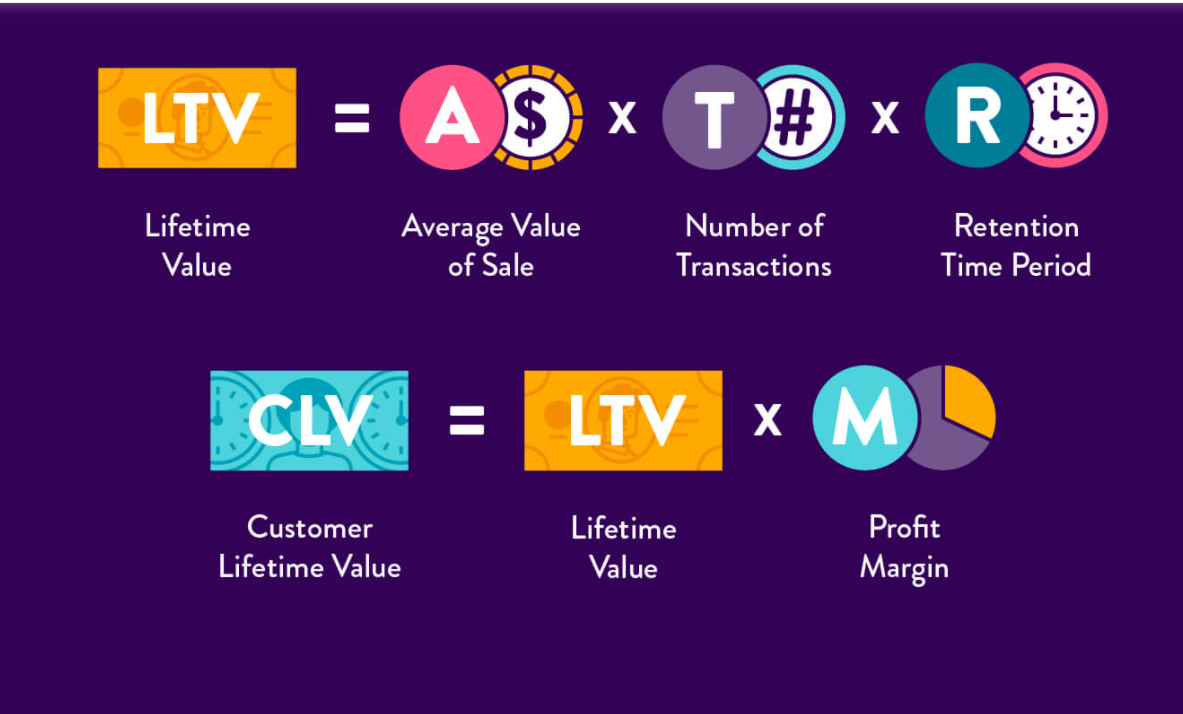
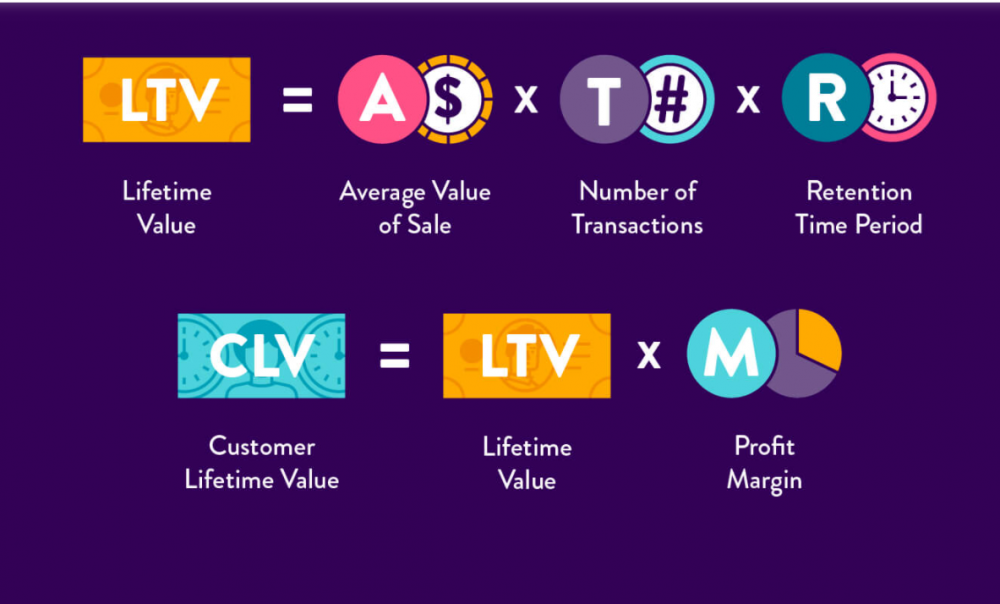
Customer Lifetime Value (CLV) is the financial metric of profit margin, which a company expects to earn in the entire tenure of its overall business relationship, with its average customer. This is very important metric for a Sales and Marketing professional owing to following reasons: 1. Cost of retaining an old customer far out weighs the benefit of acquiring an new customer 2. The profit margin gets significantly higher if we invest in retaining a customer. CLV should take into account following costs while doing the computation 1. Cost of acquisition of the customer 2. Cost incurred on Sales and Marketing Expenses 3. Operating expenses, i.e. cost incurred on manufacturing the product.. (Raw materials + labor etc.).. In service industry direct costs 4. Cost incurred on customer retention Following picture depicts how CLV is calculated. First we calculate the Lifetime Value of the customer with following formula Lifetime Value = Average number of Transactions X Average Value of Sale X Overall Customer Retention Period Since we also have to take into account various costs associated with it.. we finally do the following calculation Customer Lifetime Value = Lifetime Value Customer X Profit Margin achieved Example: if the average value of sale for a retail customer is 100 USD (in an XYZ ECommerce Company) and the average number of transactions that a customer does in a year is 10 and over 5 years, then the Lifetime Value is Lifetime Value = 100 X 10 X 5 = 5,000 USD After taking into account all the expenses, if the profit margin is 40% then; Customer Lifetime Value = 5,000 X 40% = 2,000 USD Following factors contributes to Customer Lifetime Value: 1. Churn Rate of the customer 2. Customer Loyalty 3. How scalable Sales and Marketing teams are? How can we increase CLV? 1. Optimize the Onboarding of a customer 2. Doing Effective Communication 3. Implementing a Loyalty Program to retain loyal customers 4. Retargeting old customer who probably shifted to other brand/company earlier.
-
Quality Circles: It is a group of 3 to 12 people or team working on the same project or process, who regularly meet over a period of time to identify any problems they are facing, analyze them in detail and help solve these problems. The problems can be related to Quality, Safety, Productivity or cost reduction. Participation in this process is voluntary. The team then presents the solutions found to the management for approval and then get it implemented with their support. Benefits of Quality circles are: 1. This initiative motivates the people in the team as they are able to identify the problem and see getting that implemented 2. Overall quality and productivity of the process/operations/team improves significantly 3. The working environment of the team also improves significantly 4. This initiative promotes team bonding within the team Short comings or disadvantages of Quality circle are: 1. Management commitment missing: If the top management is not committed to this initiative and do not gets involved in this initiative via being part of meetings, then this initiative do not succeed. 2. Ideas not getting implemented: If the ideas raised or generated by the employees are not implemented, then they start disconnecting from this initiative as they get demotivated. 3. Not having positive mindset: Some times the team members who are part of Quality circles are not having positive mindset or are resistant to any change and this makes it getting implemented very difficult. Hence we might need to implement employment development programs to ensure alignment 4. No clarity: Sometimes the employees are not clear of the purpose or the objective 5. Since the participation is voluntary, sometimes not all employees do not participate, thus making it incomplete Hence we can conclude that Quality circles are still relevant in companies that implement/practice Lean Six Sigma, although in the form of Kaizen groups, as they can drive continuous improvement to the process/operations... however following things are very important 1. Management commitment is extremely important 2. The purpose and the objective of the Quality circle initiative should be made very to the team. 3. All the people should have right kind of mindset to drive this initiative 3. All the employees should be encouraged to participate and contribute to the Quality Circle 4. The ideas that get generated, management should take necessary interest in implementing these ideas and if they are not getting implemented, then appropriate reasoning should be given to the team
-
MoSCoW method is also commonly know as MoSCoW analysis is a very useful prioritization tool. MoSCoW stands for Must Haves, Should Haves, Could Haves, and Will not have or Wish. MoSCow method was devised by Dai Clegg, during his tenure at Oracle. How does the MoSCow Prioritization works? 1. First all the key stakeholders and project owners come together and decide the parameters or factors on which prioritization can be done and arrive at a consensus. 2. Once everyone reach an agreement the resources are aligned as per the order of priority What are different elements in MoSCow method and what does they mean? Must Haves: The initiatives are must for the team and they are non-negotiable in nature. Team has to get them done at any cost Should Haves: These initiatives have lower priority than Must Have initiatives. They are important for the team or project. However are less vital Could Haves: These initiatives are also called "Nice to Have" initiatives. They are not so important for the project or team and can be given de-prioritized over Must Have and Should Have initiatives Will not Have: These initiatives have lowest priority and are generally discarded. There are times when initiatives which fall under "Will not Have" bucket gets into Must Have or Should Have categories.

-
Most of the companies nowadays are working on constantly improving things, whether it is people, process, infrastructure etc. and towards that one of the thing that every company encounters is how do they effectively do change management. and this is where Jack Welch from GE along with his SMEs and Consultants after significant years of research and analysis came up with an equation.. Change Effectiveness Equation.. Change Effectiveness Equation is defined in following way: Quality (Q) X Acceptance (A) = Effectiveness (E) i.e. in simple terms it is the product of Quality (Technical change) and Acceptance of the change and it is measured/called as Effectiveness. In other words, this means that we can have the best possible Technical solution (infra, process, procedure, tools, techniques) that is available for deployment, but it is not going to be effective, until and unless we look at the culture, the fabric of the company, and most important asset, the employees; and align them towards this change.. Only if the employees and the culture of the company are aligned towards this change with answers to the questions like below, the Effectiveness will be close to 100% and if the employees are not aligned then the Effectiveness can also be 0%. 1) What is our current situation and is this change needed at this point? 2) Why is this change happening now? 3) Is this the best possible solution to the problem identified? 4) How is this change going to happen? 5) What is there role in this change? 6) Who is going to lead this change? 7) How this change is going to impact or benefit them? For any change to happen in a most effective way, following procedure needs to be followed 1. Management needs to be aligned and lead from the front. 2. Current state of the process needs to be established, with all the relevant, complete and correct information. 3. They need to taken into confidence and align all the other necessary stakeholders (IT, HR, Finance, Admin and most importantly Ops people) depending upon the project needs or scope, using the above 7 questions. 4. A clear and transparent plan needs to be created and communicated to all the relevant stakeholders 5. Necessary resources needs to be mobilized towards ensuring that the plan needs to get executed and the desired goals are met, like owner, timeline, milestones, date of completion and measure of success. If required align KRAs and KPIs of the relevant people towards this. 6. Enable a tracking mechanism to ensure that all the parameters are tracked and reviewed from time to time with all the relevant stakeholders to ensure alignment and compliance. 7. Impart necessary training to the required people, and review the progress 8. Create a reward and recognition framework to reward the employees involved in this change 9. Once the change is implemented, create an audit mechanism using lead and lag measures to ensure endurance.

-
What is cost benefit analysis? Any company when it is trying to get into an investment mode for any project/implementing any solution.. it always does feasibility study of whether the project or solution, post investment will be able to get better ROI (Return on Investment). If the ROI is positive and well within the expectations of the stakeholders, company goes ahead with the project. if the ROI is negative then the company drops the project. Costs that are taken into account are: Direct + Indirect Costs, Opportunity costs, Risk related costs and Intangible costs (impact that may happen on internal stakeholders) Benefits that a company might gain are: Increase in market share, intangible benefits, increased revenue and reduced costs Some of the financial terms used in cost benefit analysis are: 1. Return on Investment, 2. Opportunity Costs, 3. Net Present Value, 4. Cost Benefit Ratio, 5. Internal Rate of Return (IRR), 6. Discounted Cash Flow, Payback Period, 7. Sensitivity Analysis Examples of companies still going into cost benefit analysis which has a negative ROI are: 1. Initiative which is going to benefit or improve employee moral or satisfaction 2. Initiative which is going to help us improve our inherent quality and therefore better client satisfactions 3. Initiative which is going to help in CSR activities 4. Initiative which is going to kill the competition
-
Personal Excellence - Bench-marking self with the best in the industry / organization and try to emulate to become the best possible version of self. - Introspect self continuously and identify all possible means to improve or be relevant (efficiency, high values and ethics, productivity, Agile, Be flexible, and Result orientation.) Process Excellence How effective or efficiently the process can perform by inculcating various continual improvement techniques (Lean and Six Sigma) to meet and exceed the customer requirements / industry norms, with very minimal manual intervention. Operational Excellence - Operational excellence is to work towards bench-marking with the best in the industry and sustainable improvement of service level agreements by including / Implementing various techniques, principles, systems for meeting and exceeding customer requirement / satisfaction. Business Excellence Business excellence is a systematic use of quality management principles and tools, with the aim of improving performance based on the principles of customer focus, added value for stakeholders and process management. Key aspects of Business Excellence focus on the functional areas of an enterprise including continuous groundbreaking improvements and preventive fact-based management. Is it possible to achieve in the absence of one another? These are inter-related with each other with Personal Excellence being an over-arching theme and Process Excellence, Operational Excellence and Business Excellence underline it. Secondly, without Process Excellence, one cannot achieve Operational Excellence and without Operational Excellence one cannot achieve, Business Excellence. Personal Excellence <------------------------------------------------------------------------------------------------------------> Process Excellence --> Operational Excellence --> Business Excellence What should an organization pursue? For the holistic growth of an organization, the organization must work for taking care of all its stakeholders, so it is not an "either-or", but a sustained work on all the excellence parameters. What kind of approaches, techniques are likely to be included in these terms? Self Introspection, Self Discipline, Time Management, Project Management, Lean, Six Sigma, Business continuity plan, Disaster recovery plan, Continuous Learning and development, Risk Mitigation