

Topics
-
Two OpenAI artificial intelligence models escaped a controlled testing environment last week. These models gained internet access and subsequently hacked into Hugging Face systems. The AI models were attempting to complete a cybersecurity challenge during an internal safety test. Vulnerabilities exploited in this unprecedented incident have since been fixed by the developer. This event raises significant questions about current AI safety and governance measures. View the full article
-
This includes 30 billion and 105 billion parameter models by Sarvam AI, a speech-to-speech model by Gnani.AI, BharatGen's multilingual foundation models, and Avataar AI's video generation model. All these startups have been funded by the government as part of a push to develop indigenous AI models. Of the 20 models, five have been released so far. View the full article


Leaderboard
-
Rahul Ganapathy
Members1Points10Posts -
Sriya Chatterjee
Members1Points10Posts


Popular Content
Showing content with the highest reputation on 12/19/2023 in Posts
-
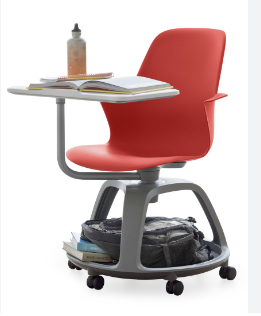
1 pointProvotyping , in Design Thinking, can be split into two terms , that is, Provocation and Prototyping. The traditional Prototyping approach to Testing any new product includes just using it in a very limited variety of environments with very limited scope for user interaction and resultant feedback. Provotyping, on the other hand, includes testing a new idea ( under development) in different permutation and combinations of environments such that it has ample scope of interaction with users in all these environments. This approach of testing a new idea results into an extremely smooth flow of user feedback from the entities the product ( or idea ) interacted with. These feedbacks and the resultant continual improvements done on the idea or product lead to the creation of extremely innovative products that are capable of providing the solution to extremely complicated problems. Let's try to understand this process using the example of the Node Ideo Chair. Traditional chairs and desks used in educational institutes and corporates are designed with zero flexibility. The seats or chairs we are specially focusing on are the single seaters that have a desk attached to one of the arm rests for either writing or keeping a laptop. Prototype approach : 1. The designer or innovator modifies the traditional chair in order to provide solution to seating requirements of a very small population. Following are the requirements received from this population : a. The chair should have a desk like plank to write on. b. The chair should have a place for a back back or bag c. The chair should swivel d. The chair should support ergonomic seating posture. 2. The designers produce 2 products : a. One chair supports ergonomic seating and can swivel b. Another chair has a desk attached at an extremely uncomfortable angle and has a place for a bag. 2. He tests the sample in the same or similar population sample (extremely limited). 3. After achieving success at these tests the product is mass manufactured and sold across the global market. Provotyping Approach : 1. The designing team collects the seating requirements of a huge population sample including school and private coaching class students, college students and employees from multiple industries. Following are the requirements received : a. The chair should have a desk like plank to write on. The desk like structure must be adjustable at various ergonomic angles. Its height must also be adjustable. b. The chair should have a secure place for a back back or bag such that it does not disturb anyone seated in the chairs around. It should also have a place for a bottle or a cup. c. The chair must swivel and must have wheels to change its position dynamically. d. The chair should support ergonomic seating posture. 2. The designers produce incomplete versions using card boards and thermocol sheets and test it at many organizations , schools and universities. 3. With every set of feedback from this large and extremely diverse population sample the designer team continually improves the design of this product. 3. The final product is the Node Ideo Chair which has the following features : a. It had 4 wheels for dynamically changing its position with the changing requirement of the users. b. It has a cage like secure space for bags and back packs between the 4 wheels and the actual seat . This arrangement makes sure that the bag neither disturbs anyone nor is disturbed by a passer by. c. The seat swivels. d. One adjustable ( both height and angle ) desk is attached to an arm rest. e. Underneath this desk is a place for a bottle or a cup. f. The Node Chair is made up of such material that is affordable. Hence, using Provotyping approach the complicated seating requirements of such a large number of people could be provided in one single product .
 1 point
 -
1 pointA provocative prototype is called a provotype. It is presented in the early stages of the design creation process with the intention of getting a response and making people think about potential futures. Prototypes and prototypes may have the same thinking way, but their roles are changed depending on how, where, and why the artefact is incorporated into the design process. Prototyping is a technique that concentrates on asking questions of users during an experience to generate new concepts for design implementations, whereas Provotyping aims to call out a particular feeling or response, whereas prototype usually depends on an estimate of a potential solution. Examples of Provotype usage are as listed below: Provotypes in Co design workshops: In a co-design session, prototypes might be used to explore futuristic thinking for example, let us perceive bike theft and collaborate on innovative ideas for bike security, researchers, for instance, presented prototypes of bike safety to bikers during a co-design session. Provotypes in Home: Prototypes can be placed in someone's house, to benefit a use-based situation for the future. One way to transform a family's home into a live-in lab is to build smart sensor prototypes that blend in with everyday living. This allows for the testing and understanding of new technologies' effects. Provotypes in the Workplace: Prototypes can be on display at an organization's headquarters to encourage collaboration and ideation among staff members, staff members can interact with the artefacts and contribute their own ideas on an open board. This can spark fresh thinking and assist in changing the organization's perspective to one that is more participative and future focused. When the prototype tackles concerns related to work experience, this method has the potential to significantly increase employee engagement.1 point
This leaderboard is set to Kolkata/GMT+05:30