

Topics
-
The latest setback has fueled worries that Google was losing momentum just as OpenAI and Anthropic and a host of Chinese rivals have accelerated the pace of model releases. On the call on Wednesday, Pichai struck an unusually defensive tone as analysts pressed him on the state of Google's frontier models and whether they could still compete at the cutting edge of AI development. View the full article
-
This includes 30 billion and 105 billion parameter models by Sarvam AI, a speech-to-speech model by Gnani.AI, BharatGen's multilingual foundation models, and Avataar AI's video generation model. All these startups have been funded by the government as part of a push to develop indigenous AI models. Of the 20 models, five have been released so far. View the full article



Leaderboard
-
D. Nandakumar
Lean Six Sigma Black Belt1Points11Posts

Popular Content
Showing content with the highest reputation on 10/13/2023 in Posts
-
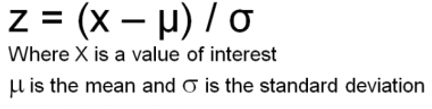
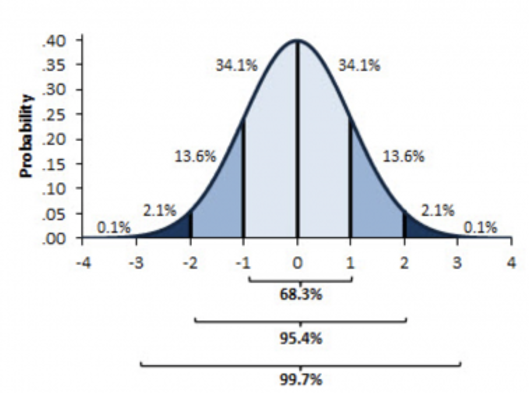
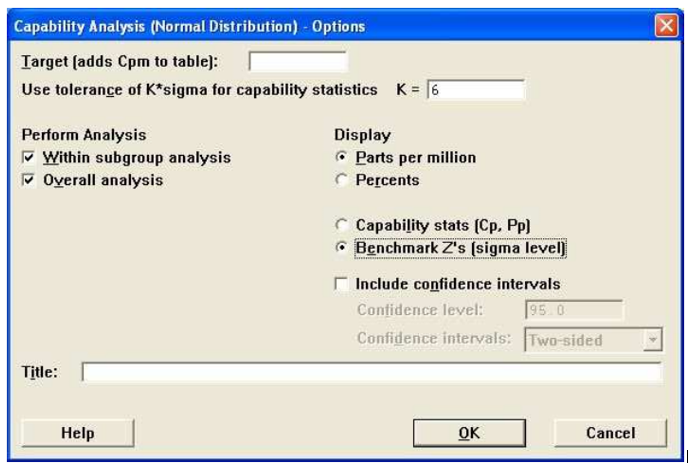
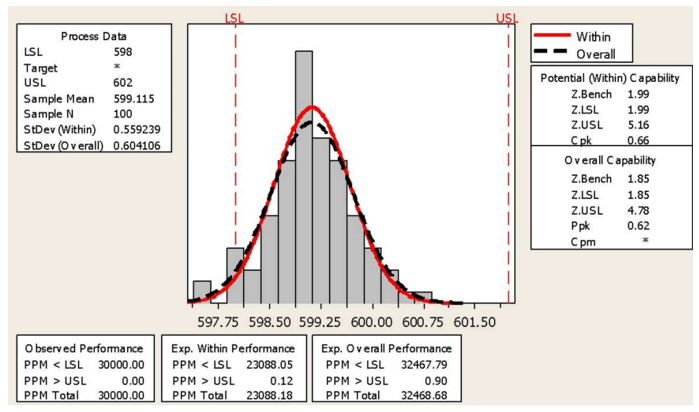
1 pointBefore we go into an explanation of Z.overall, Z.within and Z.bench, We need to first understand what is meant by the letter Z. “Z” is the number of standard deviations between the mean and the specification limit. In process capability calculation it is the mean distance from USL and LSL measured in Standard deviation. The formula for calculation Z. score is The graph below indicates the probabilities associated with the normal distribution and Z values. For example: our customer lead time is 240 minutes. Historically, lead time average is 150 minutes and a standard deviation of 55 minutes. Assuming a normal distribution, Z score is, = (240 – 150) / 55 = 1.63 i.e., 1.63 Standard deviations above the mean. The Z score is very useful because it can convert any continuous measurement into a generic value, allowing comparisons between different process is easier. Z.bench can be used as measure of process of capability. Various Z.bench calculation are Zwithin or ZST and Zoverall or ZLT Minitab has a selection to calculate Benchmark Z’s or Sigma levels along with the Cp and Pp statistics. By selecting the option in minitab, these graph as shown below will be displayed. Difference between ZOverall and Zwithin: Sl. No Zoverall or ZLT Zwithin or ZST 1 It is an indices used as an alternate to Pp It is an indices used as an alternate to Cp 2 Zoverall indicate the actual long-term capability of the process Zwithin indicate the potential short-term capability of the process 3 Z is calculated using the overall standard deviation Z is calculated using the within standard deviation 4 Represents long term variation of the process Represents the potential variation of the process 4 Also known as Short term Z.Bench Also known as Long term Z.Bench Benefits of Z bench Ø Z bench converts continuous data into a number of standard deviations, which can be used as Generic value of measurement between the process. Ø It serves as a tool for comparison between different process. If the Process “X” has a higher Z bench than process “Y”, Process “X” is better in meeting specs than process “Y”. It doesn’t matter what the process type, the comparison is relative measure of capability. Ø Process “X” is Better when compared to Process “Y” Zwithin is important in DMAIC project for determining the baseline performance because it is essentially a prediction of the ability of a process to meet a specification. However, Zoverall also important because it indicates how the actual process performed over a period of time.

 1 point
This leaderboard is set to Kolkata/GMT+05:30