

Topics
-
Jeff Bezos is pushing Prime Video's overhaul to highlight Amazon's AI. The project, known as Lighthouse, aims to showcase AI for millions of users. This initiative seeks to elevate Amazon's standing in the competitive AI landscape. New features will improve content recommendations and respond to spoken requests. Bezos' personal involvement underscores the strategic importance of this AI integration. View the full article
-
Advanced Micro Devices is launching new artificial intelligence hardware on Thursday. This new hardware aims to compete directly with Nvidia's offerings. AMD is targeting the growing data center inference computing market. The company also announced significant deals with AI labs Anthropic and OpenAI. These agreements position AMD for substantial future revenue in the chip sector. View the full article


Leaderboard
-
Sai Kotari
Lean Six Sigma Black Belt1Points11Posts -
RahulGarg
Members1Points28Posts


Popular Content
Showing content with the highest reputation on 07/16/2021 in Posts
-
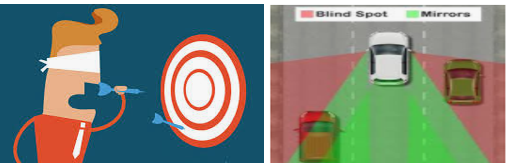
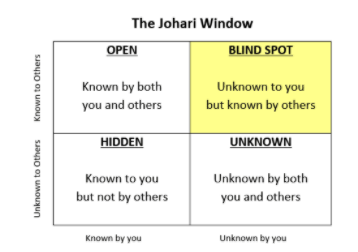
1 pointBlindspots analysis is a method to surface out the old, partial, or wrong assumptions in a decision maker’s mental scheme of the environment. Michael Porter used the term "blind spots" for referring the conventional wisdom which no longer holds true, but which still guides the business strategy. This concept / technique was further explored and popularized by Barbara Tuchman, in her book The March of Folly (1984), to describe political decisions and strategies which were clearly wrong in their assumptions. How to uncover the Blind Spots ? Despite the fact that organizations do careful research before making any decisions, it can still go wrong. Often, something important is missed or alternative options are not considered and, as a result, wrong / not best decisions are made. In many cases, so called 'blind spots' are not taken into account while making the decisions. Ben Gilad proposed 3 step "Gilad method" to identify the blind spots in his book named Business Blindspots. Step 1 : Conduct a Porter’s Industry Structure i.e. 5 force analysis on a given industry or market, augmented with identification of possible change drivers, which are defined as trends with the potential to have considerable effect on the balance of power among the five Porter forces. Step 2 : Collect competitive intelligence on the target company’s top executives assumptions regarding the same industry structure as in Step 1. Sources of the information may include annual reports, letters to shareholders, autobiographies, interviews in the press, public appearances and speeches, industry meetings, conference calls with security analysts etc. and all other statements regarding vision. Step 3 : Compare the results of Step 2 with the analysis in Step 1. Any contradiction with the analysis in Step 1 may be a potential blindspot. Also, Johari Window concept also touches upon these blind spots as depicted below and describes the blind spot as an area which is unknown to you but known to others. Why blind spots occurs and examples ? I. Top leaders are completely ignorant of strategically important issues. E.g. Yahoo Search Engine vs Google Search Engine, IBM Failure to capture Personal Computer Market. II. Top management may be aware about the strategically important issues, but they do not interpret them correctly. E.g. Ebay merger with Skype, Blackberry Phones failed to capture touch screen market, Macy’s failure to move to digital selling space, Failure of Polaroid Cameras to move from Print to Digital Photography, Motorola failed to sense the 3G movement / upgradations required in their phone softwares. III. Leaders are aware of problems being caused by outdated assumptions and interpretations but discovers these problems too late and as a result of it they also acts too late. E.g. Kodak, Nokia, Xerox etc. failed to sense the changes in market trend at earlier stages and which caused huge loss to their businesses. Companies who understood the Blind Spots quite early and build upon it to gain the huge success : Underlying assumptions: Blindspots Analysis is an assumption about biases of decision making at top of the organizations (business, government etc.) exceeding views / thoughts of their subordinates or outsiders. While the top executives in business and government organizations are smart, intelligent, and capable people, they are also vulnerable to several decision biases that come with powerful positions, including cognitive dissonance, overconfidence, and sometimes ego-involvement. The impaired ability of leaders to see reality for what it is, and the more objective analysis of analysts and mid-level planners means that Step 3 of the Blindspots Analysis can be very effective and powerful method for pointing to potential blind spot. What are the sources of Blindspot ? i) Invalid assumptions – such as corporate myths or other unchallenged assumptions E.g. If my cost is low, I will get the more business. (Quality is not important) ii) Winner’s curse – or a belief that investment will always be valuable. E.g. If I buy a new property in a particular area, prices will always go up. iii) Escalating commitment – when a company doubles down on a particular plan to its detriment. E.g. Company doubles the manpower thinking it will yield more profit and ignoring the other angles say skills, machines, efficiency etc. iv) Constrained perspective – Where gains and losses are assessed individually, and not as part of a larger picture. E.g. If I take up the new job, I will get these many benefits and If I don’t take I will loss this much money but ignoring the future growth and evolution points. v) Over-confidence – encompassing confirmation bias, an illusion of control, or a belief that past performance is a predictor of future success. E.g. If I work for 9 hrs, I will get the good rating but same may not be true in new normal and you may need to work more and learn new things too. vi) Information filtering – where failure is not seen as a learning experience. This also occurs when a diverse range of opinions is not considered when making decisions. E.g. You started a project late in past and that’s why you were not able to deliver the same to your customer ontime and again this time you are repeating the same mistake. vii) Reasoning by analogy – or decisions based on a limited sample set or anecdotal evidence. E.g. You are predicting the performance of a QA with 2-3 samples out of 100 samples which may not be true replica of his / her performance. Sample size may needs to be increased. viii) Groupthink or herd mentality – an effect where a group makes a safe and conservative decision that is sub-optimal. E.g. As a group, sometime we decide not to change and stick to old way of driving the things say Appraisal ratings on excel with limited criterion which may not work in environment / workforce dynamics changing at a faster pace.



 1 point
 -
1 pointBlind spot analysis is means to identify and deal with incorrect and outdated assumptions that could potentially influence decision making. The term “blind spot analysis” was first coined by Michael Porter, well known for his research on competitive strategy and Porter’s Five Forces. He believed that in business, outdated ideas or strategies had the potential to stifle modern ideas and prevent from success. A blind spot is also known as conventional wisdom is an area in the range of vision that one is unable to see or unable to understand. A common example for drivers is the area that one cannot see while looking at rear view. One has to turn his/her head to see if there is a vehicle, now we have better solutions: split rear facing mirrors, sensors etc. Other example is psychological – This blind spot occurs when we allow our emotions and thoughts, mostly unconscious to influence our behaviours. We are wired to make cognitive shortcuts based on experience and assume outcome. This mostly sets us on autopilot. Blind spots manifests in several ways due to following cognitive biases: Anchoring bias – Rely on pre-existing information no matter how reliable that information is. For ex. For ex. We check out a handbag for 4000, and then look at one that costs 800. Prone to see the 2nd one as cheap. Availability Heuristic bias – Assumptions based on information, news stories. These days social media is mis-educating people on many choices that they can make Bandwagon effect – Following the rest of the world. Common example – Stock market investment, Business meetings – If most people agree on an idea then most likely one would be quiet if he/she does not agree Choice Supportive Bias – Usually leaders defend own choice, ignore downside of their own bad decision, Confirmation Bias – Choice made based on confirmation that we already believe, or we already know. Ostrich Bias – Subconscious bias to ignore negative information. For ex. Looking at amount of work left, instead procrastinate hoping it will go away Outcome Bias – Evaluating performance only on outcome even if it was mere luck Overconfidence – Based on opinion or gut, mainly people make this mistake in stock market Placebo bias – Belief that it will help recover Survivors Bias – judging based on surviving information, for ex. Building in old city have strong foundation, but what we don’t see is how many buildings collapsed. We only see what’s still standing, (a few) Selective Perception – Perceive message owing to frame of reference Blind Spot Bias – One believes he/she is less bias than others Common examples at organisations that affects decision making process: 1) Organisational blind spots – Usually resulted out of defence to unrealistic strategy or problems resulting from policy, goals, expectations. Organisational blind spots arise when leadership and/or management is unable to acknowledge outcome of unworkable strategies leading to splitting, blame and idealisation. This results in distorted organisation overview with many many blind spots. A few factors to consider are: · Employees/managers bringing best version to the bosses, hiding the gaps/skills that they lack · Telling boss only what they want to hear instead of what needs to be said · Problems not brought up to leadership immediately, managers afraid of appearing to not be in control · Measures do not represent reality, and leaders making decision out of data and not feedback 2) Leadership Blind Spot - Leadership blind spots are the specific areas that a leader lacks attention to or does not acknowledge gap (this could be skill). Leaders can be successful in certain areas but could have a weakness that gets offset and never acknowledged. A progressive and good leader would self-analyses and take this as an opportunity to grow. Common blind spots we see in leaders: · Doing it alone – not involving honest feedback or discussions · Being unaware of the behavior exhibited · “I Know” attitude · More and more data driven and time spent in meetings instead of meeting real people and talking · Actively avoid uncomfortable conversations · Blaming and playing victim – commonly blaming predecessors · Surrounded by Inner circle – Lacks diverse thinkers · Impulsive triggers – decisions made of experience or perception 3) Competitive blind spots - This is critical as failure to analyse competition leads to wrong strategic decisions, slow response to competition, weakening in its ability to seize the opportunity and many more. A simplified framework for competitive blind spot below: Industry Misjudging industry boundaries and trends, critical technologies Customers Misjudging customer’s changing needs, customer segmentation and buyer behaviour Competitors Poor identification of competition & their strengths, not analysing competitors’ strategy, Advertising, branding, expansion, pricing Organisation Weak organisational culture and structure, lack of skills, brand positioning, failure to capitalise own strength Performing blind spot analysis: Common approach used by many organisations is to check the various ways that unconscious bias could manifest. Benjamin Gilad, Psychologist and philosopher developed a systematic 3-step method: Step 1: Refer to the previous strategic decisions, its context of the decision, various factors involved and system of solution agreed. Conduct Michael Porter’s 5 Force analysis to identify change drivers and if organization overlooked any important aspects. Step 2: Collect competitive intelligence on the target company. Sources may include annual reports, letters to shareholders, interview in the press, public appearances, industry meetings etc. Step 3: Compare result of Step 2 with analysis of Step 1, Any contradiction with the analysis on Step 1 is a potential blind spot. Top executives/leaders are smart, capable people yet exposed to several decision biases that comes with situation they are in. Objective analysis of blind spots could greatly help leaders in identify the potential blind spots and treat them. A few ways to overcome blind spots is by cultivating · Diverse networks – Embrace diversity and inclusion for diverse opinions, grow inner circle to include others · Building deeper connection in the organisation with the employees and not get blinded with results · Feedback loop – encourage telling truth versus what’s more convenient Self reflection helps identify where are our blind spots and then accordingly manage them.1 point
This leaderboard is set to Kolkata/GMT+05:30