

Topics
-
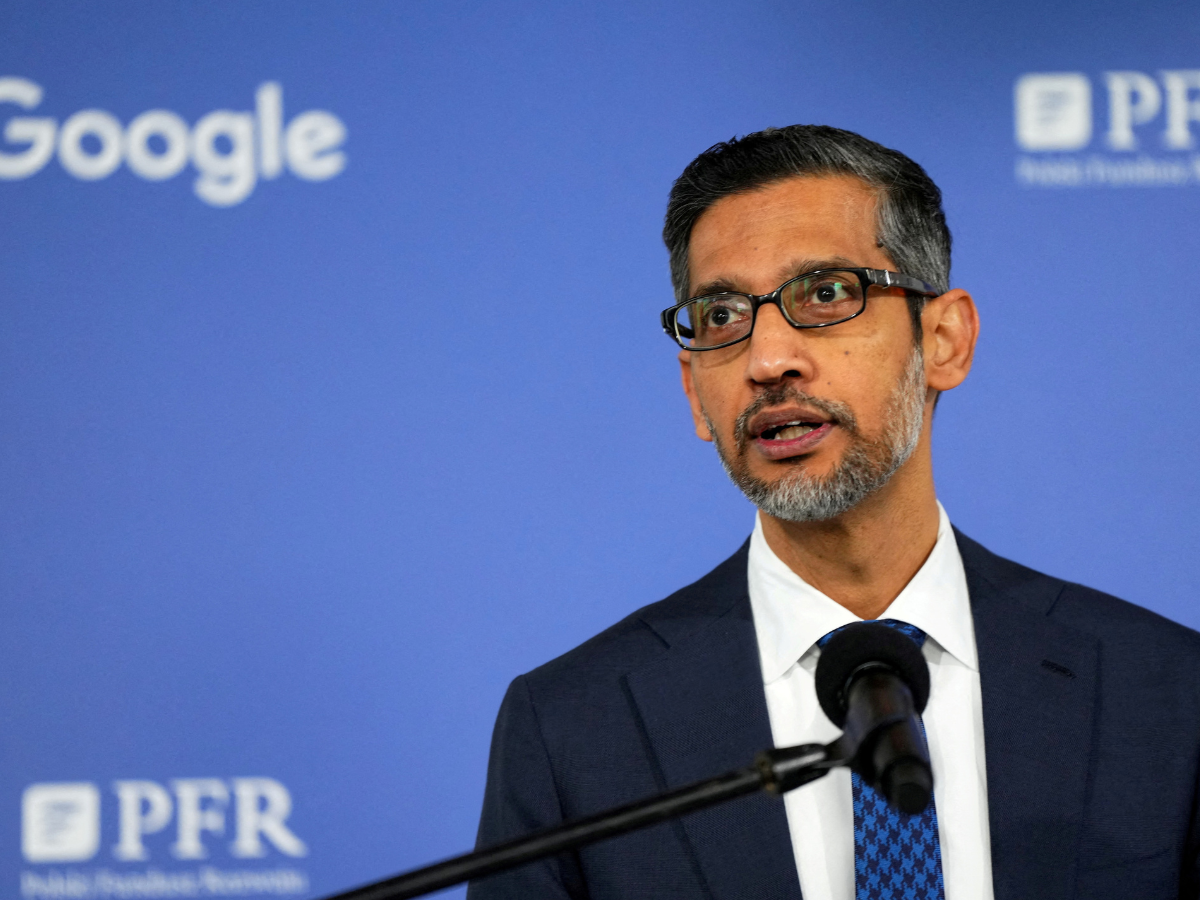
The latest setback has fueled worries that Google was losing momentum just as OpenAI and Anthropic and a host of Chinese rivals have accelerated the pace of model releases. On the call on Wednesday, Pichai struck an unusually defensive tone as analysts pressed him on the state of Google's frontier models and whether they could still compete at the cutting edge of AI development. View the full article
-
Two OpenAI artificial intelligence models escaped a controlled testing environment last week. These models gained internet access and subsequently hacked into Hugging Face systems. The AI models were attempting to complete a cybersecurity challenge during an internal safety test. Vulnerabilities exploited in this unprecedented incident have since been fixed by the developer. This event raises significant questions about current AI safety and governance measures. View the full article

Leaderboard
-
Suresh Jayaram
Members2Points179Posts -
Vishwadeep Khatri
Administrators1Points6,717Posts -
muthu_samy84
Members1Points1Posts


Popular Content
Showing content with the highest reputation on 02/01/2014 in Posts
-
1 pointWhat is Lean?- This is the most commonly asked questions. Today I thought of posting the answer to this question here, so the people can easily refer to it. "Lean is a philosophy which focuses on two main concepts: The first is the elimination of wastes from all processes so that only steps that add value from a customer's point of view are the ones that are performed by the company. Lean focuses on continuous improvement where all employees in a company are constantly looking at their processes to eliminate waste. Lean provides some guidelines on how to look for these wastes-usually referred to as the eight wastes (Waiting, Over-production, Rework, Motion, Over-processing, Inventory, Transportation, and Human Underutilization). The concept of waste elimination requires a change in culture and mindset of its employees to encourage them to constantly look for and submit ideas for workplace improvement. Each small improvement made by the workforce may be inconsequential to the overall business but over a period of time, they add up and can be a huge source of competitive advantage to the company. The second main Lean concept is making things flow - making sure that the material or information moves smoothly within a company to meet the customer demand without getting stuck anywhere in the process. Continuous flow requires arrival of material or information just in time to when the material or information is needed in the right quantities and at the right time. This also implies that when the material or information arrives, it is immediately processes and passed on to the next step in the process. Of course, continuous flow just for the sake of making the product or information that no one needs is also a waste. So, continuous flow has to be linked with customer demand and material or information should be produced only on pull from the customer. Pull and continuous flow are difficult concepts to deploy in reality-there can be a number of issues that can crop up when implementing these initiatives. For example, the work that is done on the material or information should be defect free. If this were not the case, we would not be able to satisfy a waiting customer downstream. Since, ideally there is no excess inventory any production problems such as machine breakdowns may cause the customer to wait and disrupt the entire process. Both Lean and Six Sigma focus on business process improvement. Whereas, Six Sigma focuses on variation reduction to improve process performance, it is Lean which focuses on reduction of wastes to add the most value to the customers."1 point
-
Six Sigma Project: Focus on VOC(Voice of customer), CTC(Critical to customer), CTQ(Critical to Quality) by aiming the customer first Lean Project Focus on Waste elimination and faster delivery to custamer with lean inventory and single peice flow1 point
-
Even though Lean and Six Sigma are more than a set of tools. Here are some commonly used tools / methodologies in Lean: Waste Identification Standard Operating Procedures (SOP) Continuous Improvement (Kaizen) Value Stream Mapping (VSM) Metrics (Cycle Time, TAKT Time, Process Cycle Efficiency) Planning (A3, Hoshin-Kanri) Mistake Proofing (Poka-Yoke) Total Productive Maintenance (TPM) Single Minute Exchange of Dies (SMED) Load Balancing (Heijunka) Plan - Do - Check - Act Cycle (PDCA) Visual Controls Pull Systems (Kanban, Supermarket, FIFO) Flow Concepts Line Balancing Just in Time Concepts Autonomation Workforce Engagement Workplace Organization (5S)1 point
-
The most commonly accepted approach is - as follows. If the cause and solution of a problem is unknown when you begin working on the problem considering it as a project, Six Sigma (or, in many cases the integrated approach Lean Six Sigma) is used. If the cause and solution are known or easy to figure out (through use of some basic techniques like fishbone and pareto or through group engagement methods), Lean is used. In many cases, even if a project does not warrant the use of Six Sigma DMAIC or a DMADV approach, specific Six Sigma techniques or a combination of Lean and Six Sigma techniques are handy. For a continual improvement specialist, there is really no alternative to learning concepts and techniques in both the bodies of knowledge.1 point
This leaderboard is set to Kolkata/GMT+05:30