Skip to content
View in the app

A better way to browse. Learn more.

Benchmark Six Sigma Forum

A full-screen app on your home screen with push notifications, badges and more.

To install this app on iOS and iPadOS
  1. Tap the Share icon in Safari
  2. Scroll the menu and tap Add to Home Screen.
  3. Tap Add in the top-right corner.
To install this app on Android
  1. Tap the 3-dot menu (⋮) in the top-right corner of the browser.
  2. Tap Add to Home screen or Install app.
  3. Confirm by tapping Install.

Articles

Manage articles
There is nothing which compares to the effectiveness of Six Sigma when it comes to improving a company/organization’s operational efficiency, raising its productivity, and lowering its costs. Six Sigma improves design processes, gets products to market faster with fewer defects, and builds customer loyalty.
 
Perhaps the biggest but most unheralded benefit of Six Sigma is its capacity to develop a cadre of great leaders.
 
We need to understand the fact that Six Sigma is one of the great management innovation happened during the last 30 years and an extremely powerful way to boost a company’s competitiveness. Yet, Six Sigma causes a lot of anxiety and confusion. If it is done right, it is energizing and incredibly rewarding. It can even be a fun, because a lot of creativity is also involved.
 
You just have to understand—what Six Sigma really is. Six Sigma is about a lot of statistics, but—it is very much more. We need to know what Six Sigma is all about and why it matters so much.
 
“Six Sigma is a quality program that, when all is said and done, improves your customer’s experience, lowers your costs, and builds better leaders”—Jack Welch
 
Six Sigma establishes that by reducing waste and inefficiency and by developing a company’s products and internal processes so that customers get what they want, when they want it, and when you promised it. We all know that making your customers to stick with your company, you need to meet or exceed their expectations, which is exactly what Six Sigma helps you do.
 
One thing that is sure to kill stickiness is inconsistency in service or products.
 
Consider the following hypothetical example. Suppose you are a manufacturer of spare-parts and you promise your customer of 10 days delivery.
 
You start with making a record of say, three deliveries and you find that your customers receive their parts on day 5, 10, and 15. Your average delivery time is 10 days.
 
Then you record the next 3 deliveries to your customers and your find that they receive their parts on day 2, 7, and 12. This time your average delivery time is 7 days. You would state that there is a big improvement in the customer experience. This is not the reality—you might have done some internal process or cost improvement. What would your customers experience?
 
Nothing, but inconsistency! If you use Six Sigma, your customers would receive all three deliveries on day 10, or in the worst case, on day 9, and day 11.
 
In other words, Six Sigma is not about averages. It is about ‘variation’ and removing it from your customer’s interface with you.
 
To remove variation, Six Sigma requires companies to unpick their entire supply and distribution chains and the design of their products. The objective is to wash out anything that might cause waste, inefficiency, or a customer to get annoyed with your unpredictability.
 
So, that’s Six Sigma—the elimination of unpleasant surprises and broken promises.
 
From 30,000-feets, Six Sigma has two primary applications. First, it can be used to remove the variation in routine, relatively simple, repetitive tasks—activities that happen over and over again. And second, it can be used to make sure large, complex projects go right the very first time.
 
Examples of the first kind of application are a large number of Call Centers in India or other parts of the world. They use Six Sigma to make sure the phone is answered after the same number of rings for each incoming inquiry. Credit Card processing facilities use it to make sure people receive accurate bills on the same day every month.
 
The second application of Six Sigma is the territory of engineers and scientists involved in multipart endeavors that sometimes take years to complete. If you are spending hundreds of millions of dollars on a new jet-engine or a gas turbine, you cannot afford to figure out process or design inconsistencies late in the game. Six Sigma is incredibly effective in discovering them on the drawing board, i.e., the computer screen.
Obviously, the amount of Six Sigma training and education required depends upon where and how you intend to apply it.
 
Yet, Remember: Six Sigma is not for every corner of a company. Jamming it into creative processes, such as Ad-copy writing, new marketing initiatives, or one-off transactions like investment banking, make little sense with Six Sigma. When deploying Six Sigma, it’s important not to stifle creativity for the sake of operational efficiencies. For example, successful Research and development (R&D) involves a good deal of original creative thinking. Research may actually suffer from too much rigor and focus on error prevention. Cutting-edge research is necessarily trial and error and requires a high tolerance for failure. The chaos of exploring new ideas is not something to be managed out of the system; it is expected and encouraged. To the extent that it involves process design and product testing, including the concept of manufacturability, Six Sigma will certainly make a contribution to the development part of R&D.
The objective is to selectively apply Six Sigma to those areas where it provides benefit.
 
Six Sigma is meant for and has its most meaningful impact on repetitive internal processes and complex new product designs.
 
You better not look for statisticians or experts for marching your company on the path of Six Sigma. They might be great, but for relatively straight-forward projects, you just need everyone in your company to understand Six Sigma. You don’t see Six Sigma as the purview of experts, you see Six Sigma in the blood of your company.
 
Thanks.
 
(The article is originally published at my blog at wordpress.com)
I have compiled quotes for Six Sigma beginners and my comments are in green. Feel free to change the green text and use wherever you like. However, the black text is protected by the wise men who developed them. Here you go..
 
"It's better to be prepared for an opportunity and not have one, than to have an opportunity and not be prepared" - Whitney Young Jr
*There is no better way to prepare than to learn the world best techniques in decision making
 
"It does not matter where you are coming from. All that matters is where you are going" - Brian Tracy
*Chances are - you may not be going anywhere with the old ways.
 
"The right place and the right time is here and now" - Michelle Ustaszeski
*Absolutely!
 
"The more you seek security, the less of it you have, but the more you seek opportunity, the more likely it is that you will achieve the security you desire" - Brian Tracy
*Taking this further - when you succeed with one opportunity, you get loads of them.
 
"It is not necessary to change. Survival is not mandatory" - W. Edwards Deming
*Bow.
 
"The greater the difficulty the more glory in surmounting it. Skilful pilots gain their reputation from storms and tempests." - Epictetus
*The BHAG is what you need. The big hairy audacious goals. Do not set unless you are prepared well to tackle them.
 
"Big jobs go to the men who prove their ability to outgrow small ones." - Ralph Waldo Emerson
*Undoubtedly
 
"Your life changes the moment you make a new, congruent, and committed decision." - Robbins, Anthony
*Make it now
 
"Without a sense of urgency, desire loses its value." - Jim Rohn
*Do it now
 
"If you are not willing to risk the unusual, you will have to settle for the ordinary"- Jim Rohn
 
"You must take personal responsibility. You cannot change the circumstances, the seasons, or the wind, but you can change yourself. That is something you have charge of." - Jim Rohn
*Rohn says same thing in so many ways
 
"We can't solve problems by using the same kind of thinking we used when we created them." - Albert Einstein
*Change the thought process. Welcome to the Six Sigma world.
 
"The larger the island of knowledge, the longer the shoreline of wonder." - Ralph W. Sockman
*After so many years with these techniques the wonders have not ended for me yet
 
"Intellectuals solve problems; geniuses prevent them." - Albert Einstein
*I can only take a bow on this.
 
"First they ignore you, then they laugh at you, then they fight you, then you win." - Mahatma Gandhi
*You need to ensure that the first three stages do not get extended too much
 
"One that desires to excel should endeavor in those things that are in themselves most excellent." - Epictetus
*Get all the ammunition that is excellent in itself. Even if you miss a few goals, it will not matter. As the jackpots you hit shall reap great rewards for you.
Let us assume the talent pool available in the market is same for company A and company B. Company A decides to to use Six Sigma for improving their results from recruitment process while company B does not do this.
 
Now we would like to understand how company A can get better results with Six Sigma.
 
Let us assume that Company A goes through DMAIC in the following way.
Define - Using appropriate Six Sigma tools, it defines the problem as inability to meet SLA for recruitment. This problem is converted into a charter document and discussed in a senior management meeting. The objective of the discussion in the meeting is to finalize whether this improvement project meets the criteria for approval as a Six Sigma project. As senior management gets convinced about the opportunity for improvement and sees the possibility of good return on investment through this project, the project gets approved with a leader assigned. A team is identified to work on the project with clear objective and a time frame of 4 months is provided to the team. These 4 months shall be used to select the right Six Sigma techniques on the issue, with right people working on the project and senior management support assured with resources (time, meeting places, communication support). Company B continues in a haphazard manner fire fighting as always. You might have noticed that well begun is half done for company A.  
Measure phase - Team at company A prepares a detailed process map of the current process, finalises the CTQ with an operational definition (bringing absolute clarity about when do we consider SLA as met and when is it considered as not met). It also checks and fixes the measurement system and brings visibility and accuracy (Company B does not know at a point in time how many people are on rolls, how many recruitment requests are pending and for what reasons). Company A now measures and documents its current process performance to be at sigma level = 2.3 and fixes a target of improvement at 3.0  
Analyze phase - Using appropriate six sigma techniques, team at company A now identifies that various factors that influence the recruitment success. These are listed as - i. Understanding of hiring needs from departments properly.
 
ii. Identifying the right approach for recruitment drive
iii. Selecting the message (including introduction to company and career prospects)
iv. Selecting the right media for recruitment.
v. The short-listing mechanism.
vi. Making the offer with terms and conditions
vii. On-boarding and induction process.
Analyze phase part II - Team at company A now identifies the factors that are critical to recruitment success. For this it carries out a survey on good (selected people or people who got an offer) people who did not join in a recent drive. Team uses certain techniques like FMEA, graphical techniques like box plot, hypothesis tests like the t-test to finalize on validate few critical factors that influence selection success. Company B meanwhile knows that there are several factors that influence the efficiency of recruitment process, but has no idea where to focus for improvement.  
Improve phase - Team at company A identifies solution alternatives using techniques like creative thinking, benchmarking. The team then selects the best solution using the appropriate technique out of pugh matrix, multi-voting, delphi technique etc. Before implementing the solution, the team finds that they can carry out a DOE to optimize the solution further. The new alternate process (improved process map) is documented, piloted, validated and implemented. The team records the benefits with the next recruitment drive. Company B continues as before. It has no mechanism to learn from its own mistakes or to learn from mistakes of others (and no data driven approach to reach conclusions, no management support to approve good recommendations when they arrive)  
Control phase - Team at company A puts in the right controls in the improved process so that the benefits can be sustained over a period of time. It carries out mistake proofing at few places, and creates a control plan with audit check-lists to ensure that desired behaviour changes does actually happen.  
Finally with a better process in place and removal of gaps, delays, errors, and ineffective communication (at the right places), Company A starts attracting the best talent more effectively. To put in in brief Six Sigma philosophy is about using a systematic, scientific, data driven approach that leads to the best possible process (the best does not remain best for long so there is a need for continual improvement and more improvement projects periodically)
 
 
Six Sigma methodology provides us with world best tried and tested techniques and we select and use the appropriate ones for a specific improvement project.
 
Benchmark Six Sigma Green Belt and Black Belt training gears you up with not just the right techniques but also provides the wisdom about when to select which one. Do let me know if you have more questions.
One of my friends is a Sales Wiz with wonderful selling skills with little Six Sigma knowledge. In his previous job, he was leading Sales in an IT company. His job profile rotated mainly around closing deals initiated by junior Sales Executives.
 
He spent a lot of time in resolving quotation related issues with clients. Issues arose almost everyday because Clients used to call different Sales persons in the company and used to get different pricing or discount offers. These different quotes for the same models to clients were within the discount authority available to Salespersons. Even after lot of counselling sessions, these issues continued and were accepted as a way of life.
 
My friend as a Sales Head, had a challenging job of reaching each disilllusioned client (some of them feigned it to get an advantage) >>>explaining why the difference in quotations arose>>>>doing some numbers jugglary and >>>finally getting the Order. He used to get most Orders as he was too good with his Sales pitch and relation building abilities and the product was quite good. This sequence of tasks also provided him a feeling that he was doing a really worthwhile job resolving some big issues and an achievement feeling almost every day. He was made to feel special by juniors who honestly respected and admired him for his special abilities that succeeded in bringing them out of troubles so many times.
 
He recently joined a process driven (Six Sigma implementing) company where some good Six Sigma projects had been done. One Six Sigma project had ensured that there was absolutely no possibility of different quotes landing up with a clients for the same model, even if different Sales persons are reached by the client.
 
He found the new job boring as the entire fascination in his previous job was due to troubleshooting and firefighting which was a daily affair. Here the scope was little as he found the working to be quite streamlined. There were no quotation disputes, no erroneous invoices, no delayed invoicing, lesser delays in shipments, rare mismatches between order and delivery to name some of the areas. (All this was achieved through persistent Six Sigma afforts project by project)
 
After some time with this new company, this person realized that the only way he could use his creative energies was by working on some futuristic tasks. This led him to work and succeed with some big deals which were reached with collaborative efforts with associate companies. He had to spend very little time here with juniors. And whatever time he spent went into discussions about strategic clients and deals. He realized that this was impossible in his previous job as his creativity was being utilized in firefighting issues (those issues did need a lot of creativity as each case had to be managed in a unique fashion).
 
This brings us to some important questions -
Are their ways by which we can spend more of our time in futuristic tasks that can bring success and laurels for self/ company/ nation? Are we using our creative energies in furturistic tasks (like worthwhile projects and improvement activities)? or are we losing ourselves in repetitive work?  
Coming back to my friend's example, it is not difficult to visualize the benefits he and his company could have realized if they had utilized the power behind Six Sigma early?
 
(To share with you, the company he left still continues to provide the same job profile to Sales leaders and they derive the same kind of daily appreciation from juniors for doing great troubleshooting. Sales folks at that place still think that there is no better way of working.)
Human Resource Development provides wonderful opportunities for Six Sigma implementation. In HR, the following types of projects are commonly carried out. The list only shows examples and is by no means exhaustive.
Reduce the time required to hire an employee Improve employee on-boarding and orientation processes Reduce expenditures for Recruitment Improve timeliness and the value of employee performance reviews Reduce absenteeism Improve training efficiency Improve employee satisfaction Identify and correct retention issues Reduce Incentive Compensation errors Eliminate Overpayments to Terminated Salaried Employees Improving grievance handling process. Consolidation of employee information databases Integration of multiple payroll systems for remote locations Increase job posting hit rate Design of job posting templates for recruiters Increase retention using exit interview information  
Comments welcome!
Many people think Six Sigma works for repetitive processes and has no application for project situations. When I say project situations, I mean industries that work primarily with projects. Project situations are common in companies and functions that carry out construction, commissioning and installations, software development, plant and machinery development and manufacture, research & development etc. Although these sectors have significant differences in challenges that they face, the common element is that they carry out projects frequently and by definition, each project is quite unique in itself.
 
To understand the applications of Six Sigma in companies that carry out projects, let us take example of construction industry (as most people have some familiarity with this sector)
 
In the construction industry, Six Sigma usage can be understood with following points.
 
Recurring problems exist at each stage of construction. When I say recurring, it means recurring for the company (maybe -not for individual projects) If you study a construction project, it comprises of a large number of individual processes ranging from soil testing to landscaping to structural designs to foundations, superstructure, interiors and exteriors. There are a whole lot of purchase and logistic processes as well. A good number of these processes are common to all projects. If processes were robust many of the individual problems would not occur at the first place. The remaining can be reduced. The idea in Six Sigma is about making the processes robust ( so that the results are right the first time, every time) Not all processes are equally important. Processes that matter are those that relate closely to pain areas (for customers/ management). These processes need improvement. In each project, individual project managers, site engineers face a whole lot of problems that they solve. These problems do get solved in the project (after they have caused a delay or cost in the specific project). Normally there is no mechanism to aggregate learning from the experiences of these managers and use it for process improvement. Also, companies do not have structured mechanism to use tried and tested techniques to eliminate or reduce such issues in future projects. To be able to study and improve management systems one needs a structured approach that should include- Identifying individual problem areas (or focus areas) and prioritizing them. Next, we need techniques to identify the root cause of the problem. Once we identify the root cause, we need to generate solution alternatives, compare them and select the best. We then need to implement the best solution and see how it works. If successful, we wish to institutionalize the solution.  
Six Sigma provides tried and tested techniques for five bulleted steps in a team-based approach which converts each problem area into an individual "improvement project"
 
When processes improve, there is a reduction in problems and defects.
 
Primary defects in the construction industry (and most of the project driven industries) are DELAY, REWORK and COST OVERRUNS and Six Sigma can be used to reduce any of these defects.
 
This is not all. In addition to usage in improvements in existing processes (as explained above), Six Sigma is also used to design new processes (or redesign existing processes that contribute to project success (with a better predictability that ever before). Comments welcome.
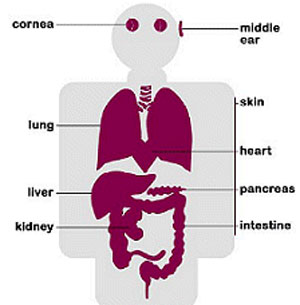
From 1995 till 2007 - About 50,000 US citizens died due to want of a suitable organ donor.
 
An interesting statistic - Only 28% Americans have chosen to donate their organs while 99.9% of French citizens are potential donors.
 
What is the reason for this striking difference? Let us explore one by one.
Awareness? - This cannot be the reason as large number of campaigns have been carried out in USA. Moral development? - Do Americans believe that Doctors may not work as hard to save life of patients who have agreed to donate organs? This cannot be the reason. Evidence - Germans and Austrians share the same language, culture and are neighbors but have huge difference on this issue - 12% Germans are donors while 99.9% of Austrians are donors.  
Something more important is at work behind all this - something more important than deliberate reasoning, national thought processes, or individual preferences.
 
If you want to make your best guess, stop here and think. Scroll down to know the real reason.
 
 
Hold your breath - Read on!
 
 
The reason is - In the US, Great Britain and Germany, the legal default is that nobody is a donor without registering to be one. While in France, Austria, Hungary, everyone is a potential donor unless they opt out. This means the DEFAULT RULE works in different parts of the world on this important subject. This is the same as Opt-In versus Opt-Out rule in a software program.
 
As you see a single rule like this can have serious long standing repercussions. Have you tried working with the default rule in organisational processes? If you think hard, the rule does work in many processes. Please feel free to comment and share this article.

Member Statistics

  • 57,289 Total Members
  • 1,305 Most Online
  • John _Paul A_dp0u Newest Member ·

Account

Navigation

Search

Search

Configure browser push notifications

Chrome (Android)
  1. Tap the lock icon next to the address bar.
  2. Tap Permissions → Notifications.
  3. Adjust your preference.
Chrome (Desktop)
  1. Click the padlock icon in the address bar.
  2. Select Site settings.
  3. Find Notifications and adjust your preference.