View A — Deploy the AI. The case's own numbers price an escape at 20–40× its break-even. Buy the error you can still fix.I support View A — deploy the AI vision system as the primary inspection gate, at its high-detection operating point, starting now. Without qualification on the case as stated. The decisive cut, in one sentence a manager can repeat: a false reject is a reversible, $40, in-plant event you can count on Friday and engineer down next quarter; an escaped defect on a brake subassembly is an irreversible commitment whose final price is set later — by physics, by lawyers, and by your OEM. When one error is recoverable and the other is not, on a safety characteristic you always buy the recoverable error. The arithmetic, from the prompt's own parameters: the AI adds 7,840 wrongly scrapped good units/month × 12 × $40 = $3.76M/year of certain cost (the scenario's $3.8M, reproduced from first principles), and removes 212 escapes/month × 12 = 2,544 escapes/year. Divide: each avoided escape needs to be worth only ~$1,480 all-in for the AI to pay for itself. The scenario's own tail pricing — 1 in 50 escapes carrying a $1.5M–$3M exposure — values an escape at $30,000–$60,000 if every flagged exposure matured, and still $3,000–$6,000 if only one in ten ever does (labeled assumption). The deployment clears break-even by 20–40× at face value and by roughly 2–4× even after a 90% haircut on the scenario's own tail estimate. For View B to be right, more than ~95% of the scenario's own flagged incidents must silently never happen, and every secondary cost — OEM sorting, chargebacks, controlled shipping, scorecard damage, liability above the band, and the explicitly unpriced OEM-relationship term — must be exactly zero. The fix in two lines: AI as the hard gate at 99.3% today; rejects triaged — safety-class flags scrapped, cosmetic and low-confidence flags re-checked by an orthogonal method to recover good units. Daily seeded golden samples measure your escape rate before the customer does; in parallel, attack the 2% incoming rate — the real patient. (Every dollar figure above conservatively assumes zero recovery.) The Decisive CutBoth views argue as if "94%/1.5%" and "99.3%/5.5%" were fixed properties of two technologies. They are not the same kind of number. The human pair is essentially a fixed point — and one that drifts worse within a shift (sustained human visual inspection has long been measured in the 80–90% band in the inspection-research literature — Colin Drury's classic inspection studies; vigilance decay goes back to Mackworth, 1948). The AI pair is one operating point on a tunable receiver-operating curve: threshold, retraining, and defect-class logic move it. View B proposes to discard an entire curve because it dislikes one point on it. That is confusing an operating point with a technology. And note who measures what. Under View B, your miss rate is measured by your customer's assembly line — the system grades its own homework only when the customer mails it back. Under View A, your dominant error mode sits in your own scrap cage, countable by Friday and auditable by defect class. Choose the system whose dominant error you can inspect. What the Numbers SayAll figures below derive from the prompt (200,000 units/month; 2% true defect rate; stated detection and false-reject rates): Monthly Human AI Δ (AI − Human) Defects caught (of 4,000) 3,760 3,972 +212 Escapes to customer 240 28 −212 Good units wrongly scrapped (of 196,000) 2,940 10,780 +7,840 Outgoing defect rate (shipped basis) ~1,240 PPM ~150 PPM ~8× cleaner Annual incremental scrap cost @ $40 — — $3.76M Annual escapes avoided — — 2,544 Break-even inversion. $3,763,200 ÷ 2,544 = ~$1,480 per escape. That is the entire dilemma compressed into one question: is the expected all-in downstream cost of one escaped defective brake subassembly more or less than ~$1,480? Bounding the unpeggable. The one genuinely unobservable term is q — the probability that a field-exposed escape (the scenario's 1-in-50) actually matures into the $1.5M–$3M event. I will not peg it; I will bound it. Expected external cost per escape = (1/50) × q × S, with S = $1.5M–$3M from the prompt. Setting this equal to $1,480 and solving: q* = 2.5%–4.9%. So View B is expected-value-correct only if fewer than roughly 1 in 20 to 1 in 40 of the scenario's own flagged "potential incidents" ever happens — and only if the downstream-catch costs on the other 49-in-50 escapes (sorting actions, 8D burden, chargebacks, scorecard damage) are zero, and only if the severity band's floor holds, and only if the relationship term the scenario explicitly leaves unpriced is worth nothing. Each assumption is individually generous to View B; jointly, on a brake part, they are not credible. Robustness. Double the unit scrap cost to $80 (a proxy for capacity-constrained margin loss rather than material cost): break-even rises to ~$2,960/escape and q* to 5–10% — verdict holds. Halve the tail on both axes simultaneously (1-in-100 frequency and $750K severity): q* rises to ~20%, and the case finally gets close — but that combination amounts to asserting the part is not really safety-relevant, which changes the question rather than answering it. The only honest flip lives outside the stated case. The decade view. View B banks $37.6M of scrap savings over ten years. Under the human system, ten years produces 28,800 escapes → 576 flagged exposures; at even q = 5%, ~29 realized events × $1.5M–$3M = $43M–$86M, before a dollar of relationship damage. The subscription is cheaper than the cascade. Deming saw this shape forty years ago: his all-or-none kp rule (Out of the Crisis, 1986) says inspection economics are dominated by p × (downstream failure cost) — and when that product is large, you inspect 100% with the best sensor you own. At p = 2% on a brake subassembly, this line is nowhere near the margin. What Would Have to Be True for View B — and the Status Quo It DefendsView B's "protect the contract" logic points backwards. The current human system ships ~1,240 PPM defective on a safety characteristic. For scale: even the AI's ~150 PPM remains an order of magnitude looser than the PPM targets OEM supplier scorecards typically set — the human number isn't off-target, it's off-scale. "Escapes are mostly caught downstream" means the customer is finding roughly 230 of your defective brake parts every month. That is not a stable status quo; it is a controlled-shipping letter waiting to be signed. The AI takes outflow to ~150 PPM in one move — still not good enough long-term, but an order of magnitude of contract protection View B cannot offer. And here is View B's two-sided failure — the whipsaw. In calm periods it under-protects: escapes accumulate at 1,240 PPM while the tail silently loads. After the inevitable escape event, it over-pays: OEM controlled-shipping regimes (e.g., GM's CS-1/CS-2) impose third-party 100% inspection at the supplier's expense, on top of sorts, chargebacks, and new-business holds. In other words, View B does not avoid the false-reject economics — it defers them until they arrive as a consent decree, plus the event itself. A policy that errs in both directions is not conservative; it is merely late. The hybrid escape hatch, computed. View B's fallback — "run the AI in advisory/second-check mode" — sounds prudent and fails arithmetically. In the veto topology (AI rejects go to a human who can release them), escapes = 4,000 × [0.7% + 99.3% × 6%] ≈ 266/month — worse than humans alone — because the human's 6% miss is re-applied to exactly the 3,972 defects the AI had already caught. (It does buy spectacular yield — false rejects fall to ~160/month — which is precisely the seduction: it optimizes the visible number by re-opening the invisible one.) The overlay topology (humans inspect with AI hints) collides with the cry-wolf effect: high-false-alarm advisories get overridden and disused (Parasuraman & Riley, Human Factors, 1997). If the OEM ever demands near-zero, the strong option is serial both-must-pass gating — ~2 escapes/month at the cost of even more scrap. Notice the pattern: every topology on the efficient frontier contains the AI as a hard gate. View B's only unique content is deleting the plant's best sensor. The Deployment Design (the fix, in full)Incoming stream (2% defective)
│
[AI GATE @ 99.3% detection]───PASS──► ship (~150 PPM out)
│
REJECT (~14,750/mo)
│
[GRADED DISPOSITION]
├─ safety-class defect flag ──► scrap / containment (no release path)
└─ cosmetic / low-confidence ──► orthogonal re-check (functional or
dimensional, not a repeat look) ──► recover or scrap
│
Daily seeded golden samples ──► challenge-set detection KPI (the canary)
Parallel: SPC war on the 2% incoming rate (the real patient)
Three disciplines make this View A rather than wishful thinking. First, no unit the AI flags for a safety-relevant defect class is ever released by human judgment — that is the veto arithmetic above, closed by design. Second, the adjudication loop is a scrap-recovery program with a stated target (recovering even half the 10,780 false rejects cuts the incremental bill from $3.76M toward ~$1.9M — a target, not a promise; every number in this post assumes zero recovery). Third, threshold and retraining changes go through the same PPAP-style change control as any process change, gated on the canary numbers below. The AI proposes disposition; a human owns the thresholds, the retraining cadence, and the canary numbers. Why Smart Operators Hold View B AnywayThe losing view is not stupid; it is comfortable, for reasons the decision sciences have named: Force How it operates here Certainty effect / ambiguity aversion (prospect-theory lineage; Ellsberg) A certain $3.8M outweighs an ambiguous q in felt decision weight, even when the expected values say otherwise. Disaster myopia (Guttentag & Herring, 1986) Subjective tail probability decays with time since the last event; every quiet quarter under View B feels like evidence. Counterfactual asymmetry The scrap cage is photographed weekly; the recall that didn't happen has no line item, no photo, no owner. Metric ownership & horizon Scrap books to the plant P&L this month; the recall books to corporate, years later, on someone else's watch — pre-2014 GM's cost culture is the canonical exhibit (Valukas Report, 2014). This genealogy is why the call must be made on the break-even, not on felt weight: the visible cost has a lobbyist in every staff meeting; the tail does not. The Empirical RecordAnchor — GM ignition switch (2001–2015). Internal estimates surfaced in the 2014 investigations put the fix at under a dollar per unit — congressional documents cited 57 cents for the part (House Energy & Commerce hearing, April 2014), and the Valukas Report (2014) documented the cost culture around the decision. The external bill: a $900M deferred-prosecution settlement (DOJ, September 2015), 124 death claims approved by the Feinberg compensation fund (2015), and a record 84 recall campaigns in 2014 covering more than 30 million vehicles, roughly 27 million of them in the U.S. (AP, 2015). The mechanism is exactly ours: a small, certain, visible internal cost was protected, and the external tail landed at roughly a thousand times its size. It also supplies the natural experiment: after paying the tail, the same firm repriced overnight — 2014's recall sweep was View A adopted at panic speed by the actor with the best information about both costs. Honest limit, signed: GM's was a design defect compounded by concealment, not an inspection escape — it proves the cost asymmetry and the organizational bias, not vision-system performance. The portfolio (each case turns on the dilemma's own mechanism — trading a certain producer cost against a rare, catastrophic consumer-risk tail): Case Record (sourced) Mechanism proved Signed confound / limit Takata (Japan/global, 2008–17) The largest recall in automotive history — more than 40 million U.S. vehicles (NHTSA); a $1B criminal plea (DOJ, January 2017); Chapter 11 five months later (June 2017) For a Tier-1 supplier — our exact actor class — the right-hand tail of a safety escape is not $3M; it is the firm Root cause was propellant chemistry plus falsified data — systemic, not unit escapes; it bounds severity, not frequency Ford–Firestone (US, 2000–01) Firestone recalled 6.5M tires (August 2000); Ford replaced ~13M more at a $2.1B after-tax charge (Ford Form 8-K, Q2 2001); NHTSA's count reached 271 deaths (September 2001); Firestone severed the ~95-year supply relationship (May 2001) Prices the term our scenario leaves "unpriced": OEM-relationship damage equals the contract itself Root cause was contested between tire and vehicle spec — and the relationship died anyway, which is the point United Airlines Flight 232 (US, 1989) A fatigue crack growing from an undetected metallurgical defect in the stage-1 titanium fan disk was missed at United's overhaul inspection; 111 deaths (NTSB AAR-90/06); the FAA's answer was expanded penetrant-inspection coverage and airworthiness directives A single escaped detection on a safety part ends in a cornfield; mature safety industries answer escapes with more detection and accepted producer cost, never less Aerospace severity exceeds a brake subassembly's — directional, not proportional Toyota jidoka / andon (Japan, 1950s→) TPS institutionalizes stopping the line — accepting certain, visible internal cost to prevent defect outflow (Ohno, Toyota Production System, 1988) The most-imitated production system on earth is View A operationalized: internal stops are the purchase price of external quality A doctrine and culture, not a sensor decision Kobe Steel (Japan, 2017–19) Admitted shipping product with falsified conformance data; more than 600 customer firms affected across autos, aircraft, and rail (company probe disclosures, 2017–18); ¥100M criminal fine (Tokyo court, March 2019) View B's incentive gradient run to its limit: protecting output/delivery metrics by passing nonconforming product detonates across the customer base Fraud, not an honest threshold choice — it shows where yield-protection pressure points, not where View B starts Contemporary (2023→) NHTSA's initial decision (September 5, 2023) that roughly 52 million ARC- and Delphi-made inflators are defective and must be recalled, over the supplier's refusal — final decision still pending; Hyundai/Kia's "park outside" recalls of more than 3.3 million vehicles for an ABS brake-module fire risk (NHTSA consumer alert, September 27, 2023) The tail is not historical: the regulator is currently forcing consumer's-risk primacy onto a resisting Tier-1, and brake-system components specifically are generating multimillion-vehicle campaigns now ARC dispute unresolved — it evidences regulator posture, not final cost Regulatory codification — the question has already been litigated. When lawmakers met "may a producer trade consumer risk for yield on safety-critical product," they wrote the answer into law, in more than one industry: U.S. product-liability doctrine is strict as to defects (Greenman v. Yuba Power, 1963; Restatement (Second) of Torts §402A) — the escape's cost is assigned to the producer regardless of care; the TREAD Act (P.L. 106-414, enacted November 2000, born directly of Firestone) forces field-failure early-warning data into the open; IATF 16949 requires escalated control of designated safety/special characteristics, and OEM customer-specific requirements commonly mandate error-proofing or 100% verification on them; and in pharma, USP <790> codifies 100% inspection of every injectable unit — an entire industry eating enormous false-reject cost because one escaped particulate can kill. The empty cell. The case View B needs — a safety-critical manufacturer that durably prospered by running ~1,000+ PPM defective outflow to protect yield — does not appear on the record. The shelf where it would sit holds Takata, Kobe Steel, and ARC. Where Bex Is Right — and the Exhibit Her Case NeededBex lands on the correct side, and her core intuition (tail dominance on safety parts) is sound. Her exhibit is not load-bearing, twice over. First, the "Ford integrated AI into quality control → 30% reduction in defect rates" figure carries no filing, date, or public source I can verify — so it goes on the bench. Second, even if true it proves a neighboring claim: that AI detects well. That term is not contested — the 90-day pilot in the scenario already establishes it with better data than any anecdote. The contested term is whether the detection gain justifies the certain yield loss, which her example never touches. In fairness to the same actor, what is on Ford's record is the dilemma's actual mechanism: in 2001 Ford took a $2.1 billion after-tax charge to replace 13 million tires mid-crisis (Ford Form 8-K, Q2 2001) — the price of buying down a safety tail after escape rather than before. Same company, documented event, correct mechanism: prevention is the cheap side of this trade. That substitution — plus the break-even above, which turns Bex's moral claim into a number — is what her argument was missing. Where View B Is Right (Honest Limits, Derived)The concession zone falls straight out of the break-even, and I will enforce the rule there. The one-line test: price one escape all-in (downstream catch cost + tail exposure + relationship term); deploy the higher-detection gate whenever that price exceeds incremental scrap per escape avoided. View B is right wherever an escape is worth less than ~$1,480: cosmetic and non-safety characteristics, cheap field-replaceable components — Deming's kp logic licenses light inspection there, and industry practice agrees: nobody runs a 5.5% false-reject gate on door-trim clips, correctly. That is the positive control for View B's side, living inside the boundary rather than breaching it. There is also a future version of this line: drive the incoming defect rate from 2% to ~0.2%, and escapes avoided fall to ~250/year, pushing the break-even materialization rate q* above ~25–50% — at which point detuning the operating point becomes a defensible conversation. Note carefully what that exception licenses: adjusting a deployed AI's threshold along its curve. Never deleting the sensor. Today's stated case — 2% incoming, $30K–$60K face-value escape pricing against a $1,480 bar — sits outside the concession zone by a factor of 2 at the most punishing discount and 20–40 at face value. This is not a close call, and the limits section does not rescue View B; it maps the territory where a different case would. The CanaryThree second-order numbers the optimizing system will never volunteer, posted beside the scrap total every week: (1) seeded challenge-set detection rate — known-defect golden samples run through the gate daily, because production escapes are invisible by construction and the only honest escape estimate is a planted one; (2) adjudication overturn rate by model-confidence decile — the drift alarm for lighting, part revisions, and model aging; (3) OEM 0-km PPM as the external mirror. If (1) sags or (2) migrates, retrain before the customer measures it for you. Watch the loop, not just the outcome. Objections, Closed1. "Trading a certain $3.8M for a speculative tail is bad risk management." Inverted by arithmetic: the "speculation" needs only a 2.5–5% materialization rate on the scenario's own flagged incidents to break even, and the tail is not unpriced — strict liability and the TREAD Act assign it to the producer by statute. Real tail-risk management means buying the cheap hedge; ≤$3.76M/year is the premium. (Closed by: What the Numbers Say; codification.) 2. "The scrap strains capacity and delivery — that also threatens the contract." Conceded that the strain is real. But the verdict survives doubling unit cost to $80 as a capacity proxy; graded disposition targets recovery of a large share of the 10,780 (a labeled target — the base case assumes none); and the whipsaw closes it: after your next field escape, controlled shipping imposes 100% third-party inspection at your expense anyway — View B defers the false-reject economics to a penalty-rate version, plus the event. (Closed by: robustness line; deployment design; whipsaw.) 3. "Run it advisory / second-check instead." Computed above: the veto topology manufactures ~266 escapes/month — worse than humans alone — and the overlay topology dies of cry-wolf (Parasuraman & Riley, 1997). Every efficient topology contains the AI as a hard gate. (Closed by: hybrid arithmetic.) 4. "Pilot numbers won't hold — drift, lighting, part revisions." Partially conceded: vision systems drift. So do humans — and the human's drift is discovered by the customer, while the AI's is measurable daily with golden samples. Degradation risk argues for instrumentation, not abstention. (Closed by: the Canary.) Convergence and CloseFour independent lenses render the same verdict: the domain's own science (consumer's-risk primacy on safety characteristics, from acceptance-sampling doctrine to Deming's kp rule to IATF special-characteristic control); the financial computation (a ~$1,480 bar against $3,000–$60,000 pricing from the scenario's own parameters); the behavioral genealogy (View B is the comfortable error, held for nameable, well-documented reasons); and the structural asymmetry (reversible, observable, tunable error versus irreversible, invisible, customer-measured error). When the discipline's theory, its regulators, its worst catastrophes, and this case's own arithmetic all point one way, the residual disagreement is not analysis — it is the certainty effect wearing a green eyeshade. Scrap is a line item. An escape is a liability with your name on it. Buy the error that stays in the building. View A. Without qualification.


.jpeg.8d69a5e212bbd289a5e3c47ee56d200c.jpeg)

 Online GB June 2026 -3
 Online GB June 2026 -2
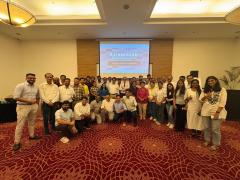 Hoshin Kanri Pernod Ricard- June 2026
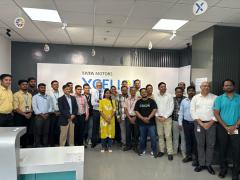 Tata Motors CAISA- June 2026
 Online GB June 2026 - 1
 Online CAISA MAY 2026- 1 (Batch 11)
 Online GB May 2026 -2
 Online GB May 2026-1
 Online BB Apr 2026-1
 Online GB Apr 2026-3
 CAISA Batch 10 Apr 2026
 Online GB Apr 2026- 2
 Online GB Apr 2026-1