All Activity
Past hour
-
Vishwadeep Khatri replied to Vishwadeep Khatri's topic in We ask and you answer! The best answer wins!1. GoutamNamata Position: View A (Tell customers it's AI) Specific Example: A generic, hypothetical "contact center that uses AI to generate customer email replies and support recommendations." No named company, no documented figures or sources. Reasoning Quality: Reasonable — The "trust is like a bank account" framing and the long-term-credibility-over-short-term-acceptance logic are coherent and clearly argued, but the entire case rests on an invented scenario rather than any real, documented instance. 2. rajan.arora2000 Position: View A (Tell customers it's AI — "without qualification") Specific Example: A dense evidentiary base — CNET/"CNET Money Staff" (Nov 2022, Futurism broke it, survived ~10 weeks); Sports Illustrated/AdVon (CEO Ross Levinsohn terminated); Koko's Oct 2022 experiment (~4,000 people, ~30,000 messages); the Associated Press/Automated Insights disclosed program (300 earnings stories/quarter in 2014 to 4,700 in Q1 2018, Zacks data, citing Blankespoor, deHaan & Zhu, Review of Accounting Studies 2018); IBM Watson Health/MD Anderson ($62M, sold to Francisco Partners for $1B Jan 2022, relaunched as Merative); plus academic theory (Arrow/Harris/Marschak 1951; Grossman 1981; Milgrom 1981; Spence 1973; Dietvorst 2015; Longoni 2019; Logg 2019). Reasoning Quality: Exceptional — Computes the break-even three independent ways, steelmans View B honestly, itemizes charges against his own side, defines falsification tripwires, and ties every example to a mechanism rather than merely citing it. 3. Savio Dsouza Position: View B (Treat AI as just another tool) Specific Example: His own workplace as an L&D professional at Stanley Lifestyles — e-learning modules and ILT content development. A first-person professional anecdote, not a named external case with documented outcomes or figures. Reasoning Quality: Competent — The "AI is the newest addition to an existing toolkit (LMS, authoring software, templates)" analogy is clear and internally consistent, and the "we don't disclose which authoring tool built a module" point is fair, but it is asserted from personal experience rather than evidenced. 4. Saurabh Sambhaji Chavan Position: View A (Transparency / disclose) Specific Example: IBM Watson Health, cited only as a company that "openly communicated its use of AI-powered solutions in healthcare" and thereby "strengthened trust" — a bare, favorable name-drop with no figures, timeline, or documented outcome (and one whose real history is contested). Reasoning Quality: Reasonable — General transparency-builds-trust argument is clearly stated and on-topic, but it is generic and the single example is unsupported by any documented detail. 5. kartik voleti Position: View A (Tell customers it's AI) Specific Example: Volkswagen Dieselgate (2015) — concealment software, initial cost savings, then over €30 billion in fines, settlements, recalls, plus leadership change and compliance overhaul; contrasted with Microsoft Copilot as a positive case (published Responsible AI standards, transparent enterprise governance, expansion across Microsoft 365). Reasoning Quality: High quality — A well-structured argument (five numbered points, business impact, counterargument, conclusion) that uses VW as a documented concealment-cost anchor and Microsoft as a disclosure-enables-adoption contrast, explicitly acknowledging VW is not an AI case but transfers structurally. 6. Ankita_Bhardwaj_gN3V Position: View A (Explicit, Upfront AI Disclosure) Specific Example: Seven named benchmarks — Airbnb (12% YoY increase in nights booked with disclosed AI review/support); H&R Block (AI Tax Assist on Azure OpenAI); Klarna (2.4M conversations in first month = ~700 FTE agents, 25% drop in repeat inquiries); Intuit ("Intuit Assist" labeled across TurboTax/QuickBooks); and on the opacity side MSN/Microsoft News, the Willy Wonka Experience Glasgow, and Sports Illustrated (CEO terminated, licensing lost). Reasoning Quality: High quality — Splits evidence cleanly into successful-disclosure vs. cost-of-opacity, adds a "Trust-by-Design" tiered framework, and rebuts View B on three fronts (detection inevitability, regulatory trap, the human-redo feedback loop). 7. anthony rebello Position: View A (Disclose — with a named human owner and a materiality threshold, before 2 Aug 2026) Specific Example: Nine documented precedents, six load-bearing — CNET/Red Ventures (Jan 2023); Sports Illustrated/Arena Group (licence termination Jan 2024); Amazon's scrapped recruiting engine (2014–2018); the Dutch childcare benefits scandal (government resigned Jan 2021); Optum/UnitedHealth care algorithm (Science, Oct 2019, ~200M people); Apple Card/Goldman Sachs (NYDFS, finding Mar 2021); Moffatt v. Air Canada (Feb 2024); Klarna as the positive control; and EU AI Act Art. 50 / California SB 942–AB 853 (operative 2 Aug 2026). Reasoning Quality: Exceptional — Reframes the decision as cost-vs-probability-weighted-loss, runs break-even and correlated-tail analysis, offers five structural analogies, weights each precedent by relevance, concedes View B's strongest point, and specifies decision rules that would reverse the recommendation. 8. Suhail_J_CaJq Position: View A (Tell customers it's AI) Specific Example: CNET's undisclosed AI articles (2022–2023) — financial explainers under the "CNET Money Staff" byline, 77 articles, Futurism's Jan 12 2023 report, editor-in-chief Connie Guglielmo confirming corrections on 41 of 77, publication paused, revised AI policy in June 2023, story spreading to CNN/Gizmodo/Washington Post. Reasoning Quality: High quality — Focused and disciplined: distinguishes "assisted" tools (spreadsheets) from autonomous decisions, argues disclosure creates quality-improving discipline, and maps the CNET case precisely onto the scenario's "if people find out later" row with named actors, counts, and dates. 9. Ajay _Wadhwa_bs1h Position: View A (Tell customers it's AI) Specific Example: A bank using AI to pre-screen mortgage applications — flagging risk, drafting approval/denial letters, and recommending terms — traced through both the concealment path (a journalist or regulator later revealing that thousands of applicants had life-altering financial decisions made by an undisclosed algorithm, triggering regulatory hearings and class-action exposure) and the disclosure-from-day-one path ("This application was reviewed with AI assistance"), with reference to financial regulators already moving toward mandatory AI disclosure in lending. Reasoning Quality: High quality — One of the sharpest analytical framings in the thread: "the cost of disclosure is fixed and shrinking; the cost of concealment is unbounded and growing," paired with a precise category distinction between tools that merely format work and tools that make autonomous decisions about people. The mortgage-underwriting scenario is developed in genuine operational detail across both outcomes rather than merely named. 10. Jaswant_Kumar_nB8z Position: View A (Tell customers it's AI) Specific Example: Air Canada chatbot (2024, BC Civil Resolution Tribunal, bereavement-fare misinformation, airline's "separate legal entity" defense rejected, $200 voucher fix rejected); Workday AI hiring-screening class action (2023–2026, disparate-impact claim, related suit against Eightfold AI under the Fair Credit Reporting Act); SEC "AI washing" enforcement (March 2024, two investment advisers, combined $400,000 penalties; Presto Automation 2025 action); and UnitedHealthcare's nH Predict (naviHealth, alleged 90% error rate, Medicare Advantage post-acute care, federal judge ordering documents back to 2017, class certification expected mid-2026). Reasoning Quality: High quality — Opens with a thorough principles framework (consent, accountability, contestability, professional duties) that could stand alone as generic, but then grounds it in four to five precisely dated, figure-bearing legal cases, each tied to the "assisted vs. automated decision" distinction. 11. Dinesh Selvarajan Position: View B (Treat AI as just another tool) Specific Example: Spotify Discover Weekly — launched July 2015 as fully AI-generated personalized playlists with no "made by AI" label; by end of its first year, 40 million+ listeners and nearly 5 billion tracks streamed, as reported by Fast Company in March 2016, with growth driven by word-of-mouth and no disclosure friction. Reasoning Quality: High quality — One of only two well-argued View B entries. Distinguishes the scenario's healthcare compliance context from voluntary trust-building, argues "transparency means standing behind your work and answering honestly when asked, not front-loading a label," and uses Spotify as documented proof that quality alone can carry adoption. 12. Prateek _Harsh_dl5h Position: View A (Transparency as an operational safeguard) Specific Example: Ten cases with figures — IBM Watson Health & Mayo Clinic (24% increase in clinician adoption); Klarna (700 FTE-equivalent, 2.3M conversations/month, resolution time 11 min → under 2 min, repeat inquiries −20%); Amazon's hiring tool ($0 ROI, gender bias); Zillow Offers ($304M inventory write-down, 25% workforce cut, unit shutdown); Octopus Energy (80% CSAT vs. 77% human); Casetext/CoCounsel (GPT-4, acquired by Thomson Reuters for $650M); Air Canada ($650 CAD, BC CRT Feb 2024); Sports Illustrated (CEO Ross Levinsohn terminated); iTutorGroup/EEOC (settled Aug 2023, $365,000); and EU AI Act Article 50. Reasoning Quality: Exceptional — The most comprehensive figure-bearing case library in the thread, split into disclosure-wins and opacity-costs, each entry stated as "The Fact / The Metric," anchoring the "calibrated trust" thesis in measurable outcomes. 13. Raja M Position: View A (Tell customers it's AI) Specific Example: Facebook–Cambridge Analytica (reputational damage driven less by the data collection itself than by users feeling they were never informed how their information was used) and the Volkswagen Emissions Scandal (a global crisis because customers and regulators believed the truth had been intentionally concealed), used to establish the principle that customers forgive mistakes more readily than a lack of transparency; supported by the 2024 Edelman Trust Barometer and IBM's Global AI Adoption Index, and by the industry pattern of Microsoft (Copilot), Google (Gemini), and Adobe (Firefly) openly signaling AI use. Reasoning Quality: High quality — A well-organized ten-section argument that separates proven quality (4.3 vs 4.2) from the real transparency issue, frames the core risk as tomorrow's trust loss rather than today's acceptance rate, and offers a concrete, well-judged disclosure wording ("generated using AI… produced under our quality standards… human review available"). The Facebook and Volkswagen cases are deployed as clear structural analogies for how perceived concealment, not the underlying error, drives the damage. 🏆 Winner: anthony rebello Among the approved answers, anthony rebello wins on all three criteria taken together. On clarity of position he is unambiguous — disclose, with a named human owner and a materiality threshold, before the 2 August 2026 deadline — and unusually, he specifies the exact metrics and thresholds that would cause him to revise or reverse that recommendation, which no one else did. On reasoning quality he does not merely assert that concealment is risky; he reframes the entire decision as a cost-versus-probability-weighted-loss problem, computes an explicit break-even, models the correlated-tail risk against the 60%-of-revenue trust base, and honestly steelmans View B before conceding its one valid point (the spellcheck/materiality boundary). On examples he is both the broadest and the most disciplined: nine documented precedents, each weighted by structural relevance, spanning written-output concealment (CNET), contractual/licence loss (Sports Illustrated), scoring-model failure that internal metrics missed (Optum), realized regulatory catastrophe (the Dutch childcare scandal), liability (Air Canada), a positive control (Klarna), and the decisive regulatory calendar entry (EU Art. 50 / California). Prateek and rajan are close rivals — Prateek offers the richest metric-laden case library and rajan the most mathematically rigorous break-even — but rebello uniquely fuses rajan's analytical rigor with Prateek's evidentiary breadth while adding the two things the others lack: relevance-weighting of his precedents and explicit falsification conditions. That combination of a crisply defensible position, board-ready quantitative reasoning, and the deepest yet most carefully prioritized evidence set is what sets him apart.
Today
-
U.S. District Judge Araceli Martinez-Olguin granted final approval of the settlement, the largest known settlement of a U.S. copyright case, rejecting arguments that it was too small. View the full article
-
From the fabled Silicon Valley VC firm Andreessen Horowitz (a16z) to Singapore’s sovereign wealth fund GIC, fund houses across the globe are using AI for sourcing deals. They are creating virtual investment committees, custom tools for internal use, and chatbots for investor relations. The trend is beginning to take root in India too. View the full article

-
The Andhra Pradesh government has allotted 200 acres to the country’s largest IT firm in Anakapalli district, where Google has already begun constructing its 1 GW hyperscale data centre, sources said. Separately, TCS has purchased an 88-acre land parcel in Bopkhel, Pune, for Rs 640.50 crore from Hemisphere Properties, the public sector enterprise responsible for liquidating VSNL (now Tata Communications) assets. The company received shareholder approval for the sale on June 30, it said in a stock exchange filing. View the full article
-
The race to build the world’s most powerful artificial intelligence models is rapidly turning into a battle over pricing. While companies such as OpenAI and Anthropic continue to command premium prices for their flagship models, rivals including Google, xAI, Meta, and Chinese AI firms are charging significantly less for both API access and subscription plans. View the full article
-
Scaling AI agents will depend on striking the right balance between machine autonomy & human decisions, GoTo CTO Olga Lagunova tells Tanya Pandey. View the full article

Yesterday
-
Why I Support View A – Tell Customers It's AI1. The Decision Is About Trust, Not TechnologyAt first glance, the numbers seem to support the opposite decision. Acceptance falls from 82% to 68%, around 15% of customers request a human review, and the organization incurs an additional $2 million per year in rework costs. If we only optimize for short-term operational metrics, not disclosing AI appears to be the logical choice. However, the scenario also states that 60% of the organization's revenue depends on customer trust. Once trust becomes a strategic business asset, the question shifts from "How do we maximize acceptance today?" to "How do we sustain customer confidence over the next decade?" 2. Quality Is Already Proven—Transparency Is the Real IssueOne important point in this scenario is that the AI is not producing lower-quality work. In blind testing, where reviewers did not know whether the work was created by AI or a human, AI actually scored 4.3/5, slightly higher than the human score of 4.2/5. This tells us something important: Customers are not rejecting poor-quality outcomes. They are reacting to the perception of AI rather than its actual performance. Therefore, disclosure is not about compensating for poor quality—it is about respecting customers' right to understand how decisions, recommendations, or content affecting them were created. 3. AI Is More Than Just Another Software ToolSome argue that AI should be treated like Microsoft Excel, spell checkers, or CRM software. I don't completely agree. Traditional software helps people perform work. Generative AI increasingly creates the work that customers directly experience—whether that is recommendations, assessments, draft documents, screening decisions, or customer responses. That makes AI fundamentally different because it has a direct influence on customer outcomes. When technology directly affects customer-facing decisions, transparency becomes part of responsible business practice rather than simply a communication preference. 4. History Shows That Transparency Builds Long-Term AdoptionMany breakthrough technologies faced skepticism before becoming widely accepted. Examples include: Online banking, where customers initially distrusted digital transactions. Self-checkout systems, which many consumers resisted before appreciating their convenience. Cloud computing, where businesses hesitated before recognizing its value. The same pattern is visible with AI today. Leading technology companies such as Microsoft (Copilot), Google (Gemini), and Adobe (Firefly) openly communicate where AI is being used. Rather than hiding the technology, they explain its purpose while maintaining accountability for the customer experience. This approach helps normalize AI instead of creating suspicion around it. 5. Research Supports TransparencyIndependent research also supports being open about AI. According to the 2024 Edelman Trust Barometer, trust remains one of the strongest drivers of customer loyalty, particularly when organizations adopt emerging technologies responsibly. Similarly, IBM's Global AI Adoption Index found that consumers are significantly more comfortable using AI-powered services when organizations clearly explain: why AI is being used, where human oversight exists, and how quality is maintained. Transparency alone does not eliminate skepticism, but it creates the conditions for trust to grow over time. 6. The Biggest Risk Is Not Today's Acceptance Rate—It's Tomorrow's Trust LossThe scenario already hints at the greatest business risk. If AI use is discovered later through: regulatory audits, AI detection tools, whistleblowers, media investigations, or future disclosure laws, customers are likely to ask a different question: At that point, the issue is no longer AI. The issue becomes honesty. Rebuilding credibility after perceived deception is significantly harder than overcoming initial hesitation. 7. Real Business ExamplesSeveral well-known companies demonstrate how trust can be damaged when customers believe information was intentionally withheld. Facebook–Cambridge AnalyticaThe controversy was not simply about data collection. Much of the reputational damage resulted from users feeling they had not been fully informed about how their information was being used. Volkswagen Emissions ScandalThe crisis became a global reputational issue because customers and regulators believed the company had intentionally concealed the truth. Although these examples are not about AI, they reinforce an important business principle: Customers often forgive mistakes more readily than they forgive a lack of transparency. 8. Transparency Doesn't Mean Creating FearI don't believe organizations should simply attach a label saying: Without context, that statement can create unnecessary uncertainty. Instead, organizations should communicate responsibly. For example: This approach provides transparency while simultaneously reinforcing accountability and customer choice. 9. How Organizations Can Retain Customers While Being TransparentDisclosure should be accompanied by actions that build confidence. Organizations should: Explain how AI improves consistency, speed, and quality. Clearly communicate where human oversight exists. Offer customers the option of human review for high-impact decisions. Publish quality metrics and customer satisfaction results. Regularly audit AI systems for fairness, accuracy, and bias. Continuously educate customers about responsible AI use. Transparency becomes much more effective when customers see evidence that the organization actively governs AI rather than simply deploying it. 10. Final ThoughtsThe reported 14% reduction in acceptance should be viewed as a short-term adoption challenge rather than a long-term business disadvantage. Customer attitudes toward new technologies consistently evolve with familiarity, education, and positive experience. For an organization where 60% of revenue depends on trust, transparency is more than an ethical responsibility—it is a strategic investment. The organizations that will succeed over the next decade will not be those that hide AI most effectively. They will be the ones that use AI confidently, explain it honestly, remain accountable for every outcome, and continuously demonstrate that technology is serving customers—not replacing their interests.
-
Prateek _Harsh_dl5h replied to Vishwadeep Khatri's topic in We ask and you answer! The best answer wins!Position: I strongly support bex position View AThe Core Thesis In modern AI architecture, transparency is an operational safeguard, not a marketing label. Treating AI as "just another tool" misdiagnoses its fundamental nature: traditional software processes deterministic rules, whereas Generative/Agentic AI operates probabilistic models that introduce non-deterministic outcomes, systemic bias, and hallucination risks. While View B focuses on a short-term friction cost ($2M/year in customer re-does), it underestimates the tail-risk cost of non-disclosure. When 60% of revenue relies on customer trust, concealing AI involvement converts technical risk into existential enterprise risk. Transparency builds "calibrated trust"—ensuring users interact with the output with the appropriate level of critical evaluation. Evidence & Case Studies: Facts, Figures, and ImpactHere are real-world instances where transparency (or the lack thereof) directly impacted enterprise value, regulatory standing, and customer trust: 1. Healthcare & Clinical Decision Support: IBM Watson Health & Mayo Clinic The Fact: IBM Watson Health faced initial skepticism due to overpromising, but its pivot toward explicit co-pilot models (labeling AI-generated treatment pathways) set the standard for clinical AI transparency. Mayo Clinic adopted transparent AI scoring systems where clinicians see the confidence score and model origin of diagnostic drafts. The Metric: Mayo Clinic’s transparent AI implementation led to a 24% increase in clinician adoption of AI-recommended diagnostic plans because physicians understood when and how the model was assisting them. 2. Financial Screening & Credit Decisions: Klarna The Fact: Klarna deployed AI assistants handling work equivalent to 700 full-time agents (over 2.3 million conversations per month). Rather than hiding the AI, Klarna explicitly informed users they were interacting with an AI assistant. The Metric: Customer satisfaction (CSAT) remained on par with human agents, resolution time dropped from 11 minutes to under 2 minutes, and repeat inquiries dropped by 20% because expectation management was aligned from second zero. 3. HR & Screening Decisions: Amazon’s AI Hiring Tool The Fact: Amazon internally built an AI screening tool for candidate resumes. The model developed a bias against women because it was trained on historic 10-year patterns. Because the project was unlabelled and undisclosed during pilot phases, its failure resulted in global reputational damage and the total discarding of the project. The Metric: $0 ROI on years of engineering, severe brand erosion, and mandatory overhaul of global talent acquisition policies. 4. Real Estate Valuation: Zillow Offers (iBuying) The Fact: Zillow used proprietary algorithms to price homes and make direct purchase offers without transparent human-in-the-loop indicators or clear algorithmic confidence disclosures to sellers. The Metric: Algorithmic drift resulted in a $304 million inventory write-down, a workforce reduction of 25%, and the permanent shutdown of the Zillow Offers business unit. 5. Customer Support & E-Commerce: Octopus Energy (Krakyn AI) The Fact: Octopus Energy introduced an AI system to draft customer email responses. They openly labeled AI emails and gave customers the choice to give feedback on the AI draft. The Metric: The AI-labeled emails achieved an 80% customer satisfaction score, compared to 77% for human customer service representatives. Transparency did not depress CSAT; it elevated user appreciation for speed and precision. 6. Enterprise Search & Legal: Casetext (CoCounsel) The Fact: Casetext built CoCounsel on GPT-4, explicitly marketing and labeling every legal citation as AI-generated with mandatory source-verifiable links. The Metric: Transparent attribution led to acquisition by Thomson Reuters for $650 million, precisely because legal enterprises required audited, transparent AI lineage rather than "black-box" outputs. 7. Air Canada’s chatbot (BC Civil Resolution Tribunal, Feb 2024) Air Canada’s bereavement-fare chatbot gave a customer wrong information; the airline argued in tribunal that the bot was a “separate legal entity” not attributable to the company — essentially refusing to own AI’s role in the interaction. The tribunal called this “remarkable” and ruled Air Canada liable, ordering a refund of roughly $650 CAD, plus damages and costs. The airline pulled the chatbot afterward. The lesson isn’t “AI chatbots are risky” — it’s that treating AI’s involvement as something the company can distance itself from, rather than something it owns and discloses, is what triggered the liability finding. 8. Sports Illustrated / The Arena Group (Nov 2023) Futurism reported that SI had published product-review articles under invented author names with AI-generated headshots, with no disclosure. The fallout: articles deleted, the staff union calling itself “horrified,” and CEO Ross Levinsohn terminated within weeks. Blind quality wasn’t the issue — nobody claimed the reviews were bad. The issue was discovery of concealment, and it cost a CEO his job. 9. iTutorGroup / EEOC (settled Aug 2023, $365,000) An AI hiring tool auto-rejected women 55+ and men 60+. It was only caught because an applicant resubmitted with a fabricated younger birthdate and got an interview. This is the mechanism View A warns about: undisclosed AI decisioning gets discovered by accident, not by design, and by the time it does, it’s litigation, not friction. 10. EU AI Act, Article 50 (binding from 2 Aug 2026) The EU has now made View A the law, not just an ethical preference: providers must ensure people are informed when interacting with an AI system, AI-generated content must carry machine-readable and visible marking, and deepfakes/AI text intended to inform the public must be disclosed unless it underwent genuine human editorial review. This isn’t fringe opinion — it’s the regulatory direction of the world’s largest consumer market. 11.California’s AI Transparency Act (SB 942, as amended by AB 853 — effective 2 Aug 2026) Covered generative-AI providers must offer visible labels and embedded (“latent”) disclosure for AI content, plus a free public detection tool, backed by civil penalties of $5,000 per violation, per day. Compare that to the scenario’s $2M/year in redo costs from disclosure — the “cost of honesty” is a rounding error next to the cost of getting caught non-compliant once the law bites. 12. Utah SB 149 (effective May 2024) the first US state AI-disclosure law, requiring disclosure when AI interacts directly with consumers in regulated fields like law, healthcare, and financial services. Two states, two years, one direction: disclosure is moving from “nice to have” to statutory floor. An organization that treats disclosure as optional today is building a system it will be forced to rebuild under enforcement deadlines later. The pattern across all above : the damage in every real case came from discovery of concealment, never from a customer’s calm reaction to an upfront label. Nobody has been fired, fined, or sued for telling people honestly that AI was involved. Countering View B directly • “You don’t disclose every tool you use — AI is no different.” A spreadsheet doesn’t make judgment calls about a person’s application, diagnosis, or eligibility. The comparison collapses precisely where it matters most: tools that decide things about people (screening, assessments, hiring) are exactly the category the EU AI Act and Utah’s law single out for disclosure — because society has already decided this is not “just a tool.” • “The label causes a measurably worse outcome, so it isn’t real transparency.” This confuses short-term acceptance with outcome quality. A 14-point dip in immediate acceptance is not the same as a worse outcome — plenty of the “redone” cases likely land at the same 4.2–4.3 quality, just slower. Meanwhile, the undisclosed path’s downside (Sports Illustrated, iTutorGroup) isn’t a dip — it’s a cliff. • “You answer honestly if asked.” This only works if customers know to ask. Disclosure-on-request assumes an informed, suspicious customer; most aren’t. It also fails the moment scale kicks in — at 50,000 outputs/month, “ask us” isn’t a policy, it’s a plausible-deniability clause. A deployable framework: 1.Label at the point of delivery, not buried in T&Cs — a simple, consistent tag (“AI-assisted” / “AI-generated, human-reviewed”) matching the EU/California modality-specific approach (visible label + machine-readable marking). 2. Pair every label with a proof point — show the blind-test score (4.3/5) alongside the disclosure, or offer a one-click “see how this compares to human output” link. This directly targets the reason for the 14-point drop: the label triggers doubt about quality, so answer the doubt in the same breath. 3. Make the human-redo option visible but not default — since only ~15% want it, a clearly offered (not pushed) opt-in keeps their trust without incurring the full $2M cost across all 50,000 outputs. 4. Phase the rollout by risk tier — start disclosure on highest-stakes categories (screening, assessments) where legal exposure and dignity interests are greatest; expand to lower-stakes categories (recommendations) as acceptance normalizes. 5. Track leading indicators monthly, not just acceptance rate: • Acceptance rate trend (expect the 82→68 gap to narrow over 2–3 quarters, as seen in other AI-adoption curves) • Redo-request rate and its cost per output • Post-disclosure retention vs. industry churn baseline • Regulatory-readiness score against EU Art. 50 / SB 942 requirements (this becomes a compliance asset, not just an ethics one) • Complaint/dispute rate mentioning AI — a leak/discovery early-warning metric Conclusion Strip away the spreadsheets for a second, and the question underneath this whole debate is simple: what kind of trust do you actually want with your customers — the kind that survives being looked at closely, or the kind that only works as long as nobody looks? View B’s case is honest about the numbers but dishonest about what those numbers mean. A 14-point dip in acceptance looks like a cost. It isn’t — it’s the price of customers getting to make an informed choice, which is the whole point of trust in the first place. Call it friction if you want, but friction that comes from honesty is not the same as friction that comes from a bad product. One fades as people get used to it. The other never does. The silence option, by contrast, isn’t actually free. It just defers its bill and lets it accrue interest — in tribunal rulings, in terminated executives, in six-figure settlements, in per-day penalties once the law catches up to what’s already happening in the EU and California. Every real case above didn’t fail because AI did a bad job. It failed because someone found out the company hadn’t said anything, and the finding-out was worse than the telling would ever have been. So the position isn’t “disclosure is nice.” It’s that disclosure is the only version of this that’s still standing in three years. An organization that labels its work today gets to spend the next few years building customer comfort with something true. An organization that hides it is betting that discovery never comes — and at 50,000 outputs a month, in a regulatory climate that’s actively closing that door, that’s not a bet worth making. Tell people. Then make the work good enough that the label stops mattering — because at 4.3 versus 4.2, you’re already most of the way there. Ultimately, choosing View A is not merely an ethical preference—it is a foundational architectural requirement for sustainable enterprise AI. View B fixates on the short-term operational friction of a 14% acceptance drop and a predictable $2M redo cost. However, it leaves the enterprise fatally exposed to the unquantifiable tail-risk of shattered customer trust, which drives 60% of the organization's revenue. Trust that relies on customer ignorance is inherently fragile; in an era of AI-detection tools and stricter regulations, obfuscation is a ticking time bomb. By acknowledging the AI, we transform disclosure from a liability into a trust-building asset. We do not hide the tool; we elevate it to demonstrate the tool's value and reliability. Short-term friction will naturally decay as societal normalization of AI increases, but a reputation built on honesty scales indefinitely. As AI Solutions Architects, our job is not to trick users into accepting outputs, but to build systems robust enough—and transparent enough—to earn their confidence in plain sight.
-
Mukul_Nagpal_oazD joined the community
-
Chris Fall has resigned as Director of the US Centre for AI Standards and Innovation. He was appointed to lead the federal AI testing institute just three months ago. A Commerce Department spokesperson confirmed his departure to Reuters news agency. Arvind Raman will temporarily assume Mr. Fall's leadership responsibilities. Mr. Raman currently oversees the AI testing institute at the Commerce Department. View the full article
-
Suraj_Patil_yHg2 joined the community
-
Researchers have copied massive quantities of publicly-available climate and environmental data from NASA onto a Swiss supercomputer to train artificial intelligence models and for safekeeping amid US funding cuts. Switzerland's Federal Institute of Technology Zurich (ETH) university announced the move late last week, saying its researchers had copied around 100 petabytes of NASA data to the Swiss National Supercomputing Centre (CSCS) in the southern city of Lugano. View the full article

-
The Alphabet-owned company expects the new chip, informally dubbed "Frozen v2," to help address an AI computing capacity crunch that has fueled internal tensions and prompted Google Cloud to decline deals with outside customers, the report said. View the full article
-
Chipmaker shares are experiencing significant price swings on Wall Street this month. Investors anticipate these companies will drive much of the S&P 500's profit growth. Recent earnings reports have shown strong results but market reactions have been mixed. Concerns about artificial intelligence demand sustainability are fueling investor reassessment of the sector. Leveraged exchange-traded funds are also contributing to the increased market volatility. View the full article

-
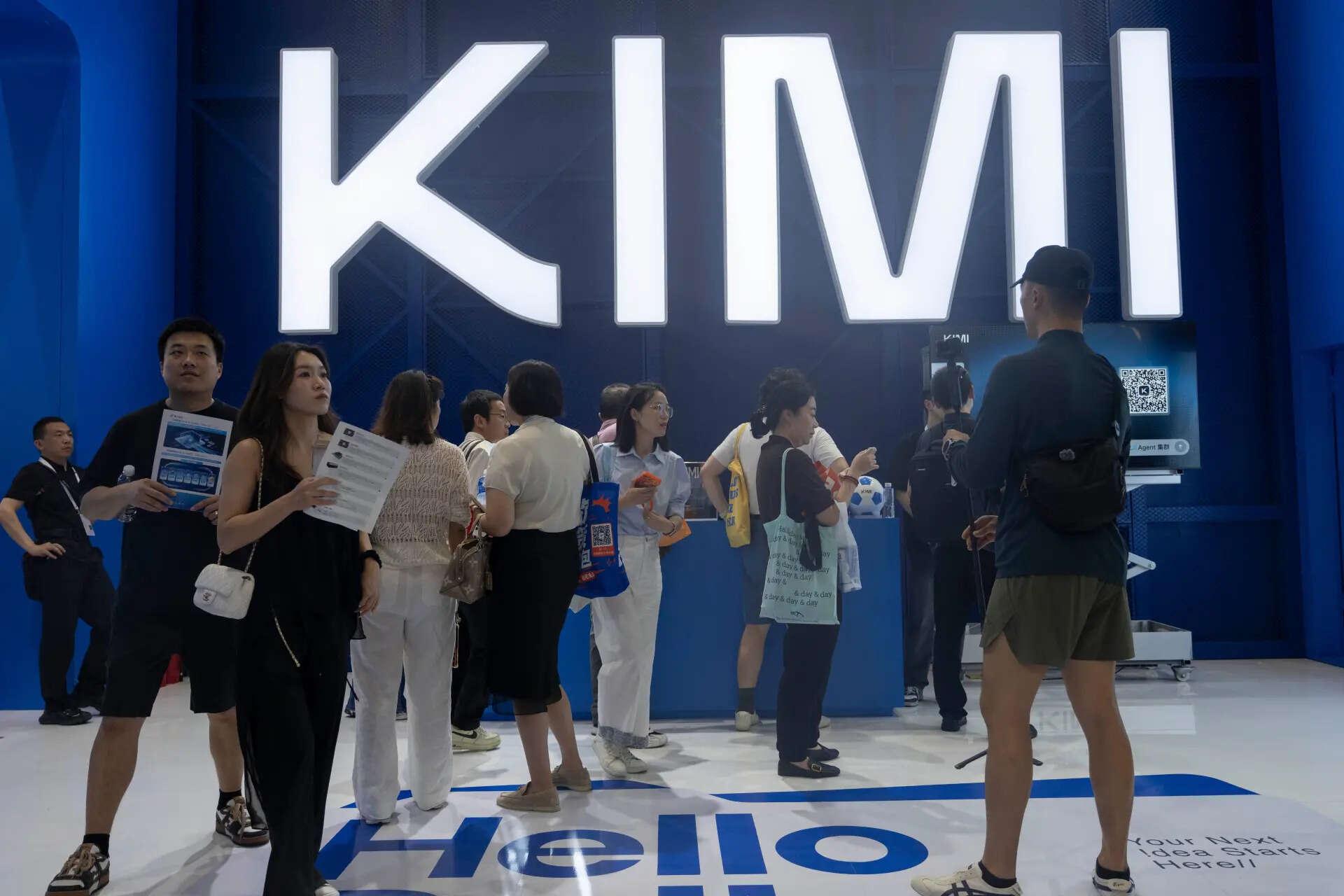
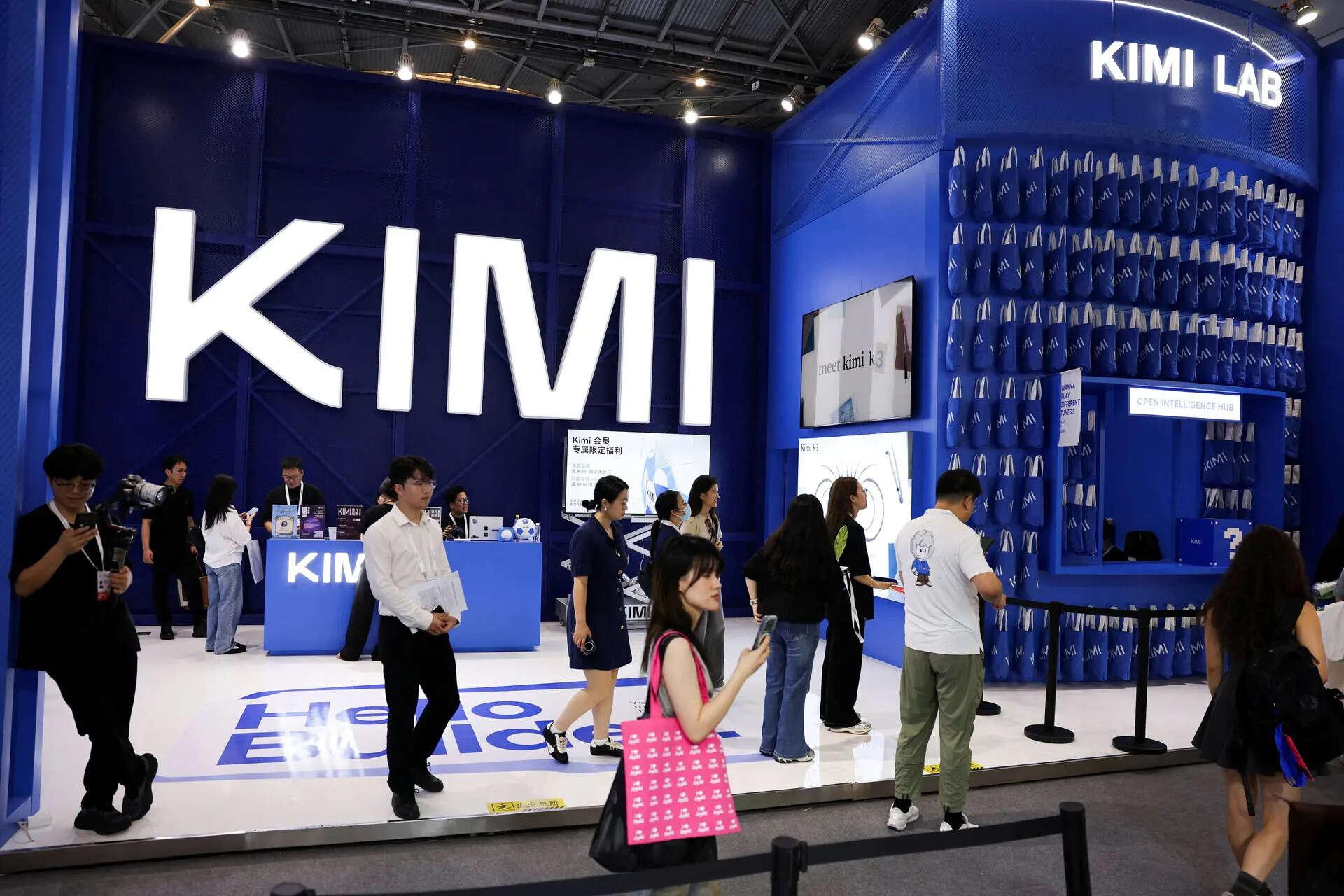
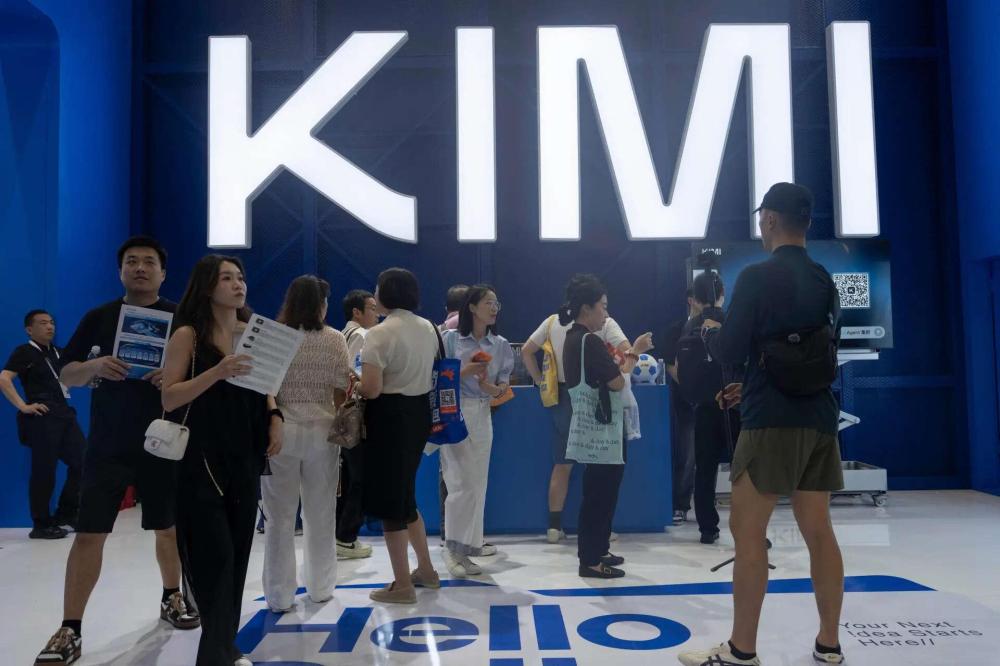
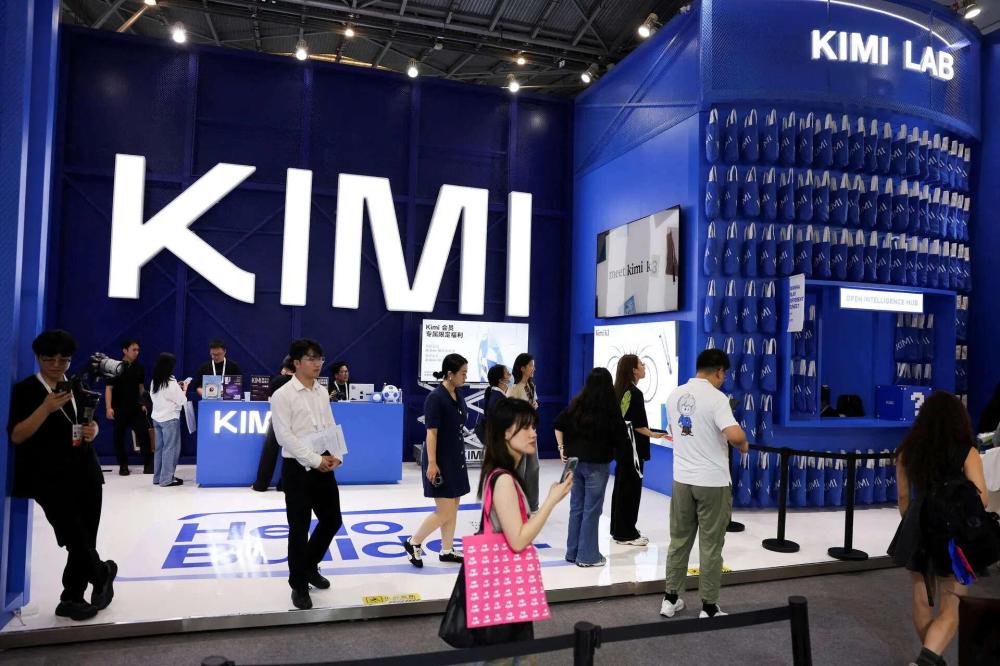
The Chinese startup unveiled Kimi K3 on Friday, a model that it says delivers performance that rivals top-tier offerings from OpenAI and Anthropic PBC at a fraction of the cost. As investors drew comparisons with last year’s “DeepSeek moment,” IG market analyst Tony Sycamore said $314 billion has been wiped from the company’s valuation estimates for the two unlisted US firms. View the full article
-
Bristol Myers Squibb is buying Nvidia's latest AI computing system. This new system will support artificial intelligence in drug discovery and development. The company expects to cycle through many more potential drug candidates faster. AI tools are already cutting drug testing times by twenty to thirty percent. This investment drives rapidly growing computing demands across their research organization. View the full article
-
British startup CuspAI secured four hundred fifty million dollars from investors. This funding will advance its mission to discover new materials for key industries. The company also launched AI Materials Foundry, a coalition of over forty-five firms. Nvidia and Meta are among the partners joining this significant collaboration. CuspAI's platform aims to accelerate progress in semiconductors and clean energy. View the full article

-
Hut 8 signed a second 15-year lease worth $9.8 billion. This agreement fully commercialises their 1-gigawatt Beacon Point campus in Texas. The deal doubles the unnamed tenant's total contracted footprint at the site. Hut 8's total contracted AI data centre capacity now stands at 949 MW. The company expects to deliver the first Phase 2 data hall in 2028. View the full article

-
SK Group Chairman Chey Tae-won warned that the global shortage of artificial intelligence memory chips could escalate into a geopolitical issue, predicting that memory demand will far outpace supply through 2027 despite aggressive capacity expansion efforts. View the full article
-
Samsung Electronics and SK hynix pushed to commercialise a new class of memory as artificial intelligence outgrew high-bandwidth memory alone, according to a news report by The Korea Herald. View the full article
-
Karnataka's Cabinet approved the Agritech Mission-2026 and the recruitment of fifteen thousand teachers. Welfare initiatives for backward classes and nomadic communities received cabinet approval. The government also sanctioned new medical infrastructure and development projects. The Cabinet ratified the Governor's suspension of the KPSC Chairman Shivashankarappa S Sahukar. Preparations are complete for the Bharat Jodo programme's inauguration on August twentieth. View the full article

-
JobKorea said Monday that entry-level hiring in South Korea's semiconductor industry surged in the first half of the year, reflecting robust demand for talent as the AI-driven chip boom continues, The Korea Herald reported. View the full article

-
Chinese AI startup Moonshot AI has stopped new subscriptions for its Kimi K3 model. This decision follows a sharp surge in user demand for the advanced AI. Additionally, Kimi K3 is attracting attention for its high-end coding performance as well as for offering this capability at a much lower cost than competitors. View the full article
-
Grishan Gopalan changed their profile photo
-
Grishan Gopalan joined the community
-
Kamlesh_butani_b367 joined the community
-
Blackstone has invested in Futronic, a South Korean supplier of high-precision actuators serving automotive and industrial robotics sectors. The deal values the company at approximately 1 trillion won ($676.04 million). Futronic's founder Jin-ho Ko will remain in his role as chairman and chief executive officer and work with Blackstone to accelerate the company's global growth and end-market expansion. View the full article

-
Shivangi Yadav changed their profile photo
-
After blowout second quarter earnings, investors and analysts are asking a once far-fetched question: could ASML become Europe's first ever trillion-dollar firm? View the full article
-
The survey of UK chief financial officers by accountancy firm Deloitte found 73% were optimistic about AI improving their businesses' performance, up from 59% at the end of last year and 39% two years ago. View the full article
-
That volatility, felt on dealing desks from Tokyo to New York, has not only wreaked havoc with portfolios - it has also dramatically distorted investors' views on fundamentals in South Korea, a market at the heart of the global AI boom. View the full article