All Activity
Today
-
KAUSHIK_ROY_yY7f changed their profile photo
-
Anthropic's chief executive Dario Amodei has lobbied Australian officials for "copyright reform" as the artificial intelligence giant seeks to make a major investment in the country, official briefing notes released Monday show. According to briefing notes released under freedom of information law, Amodei had requested the meeting to discuss barriers to AI training in Australia, "particularly copyright reform". View the full article
-
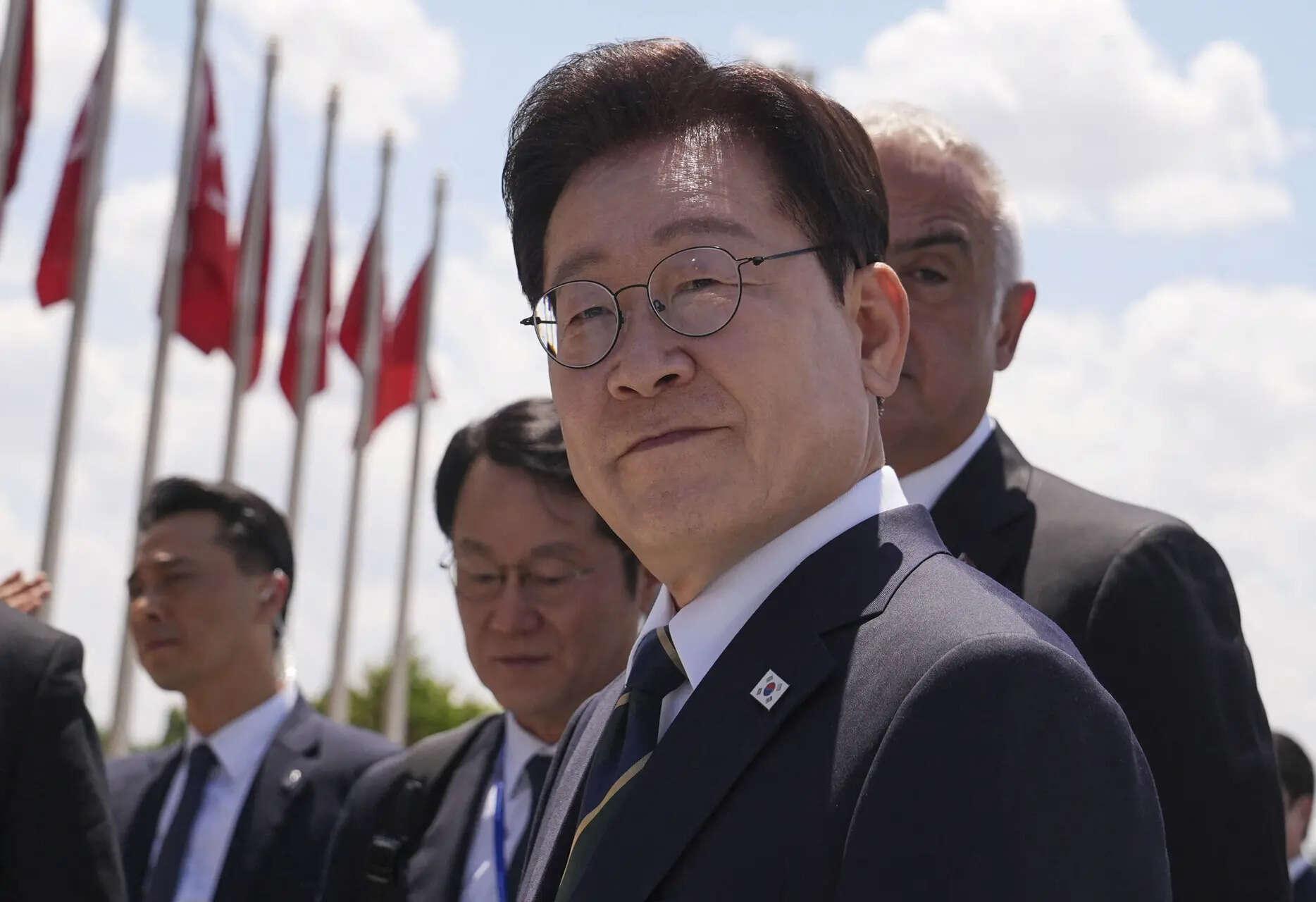
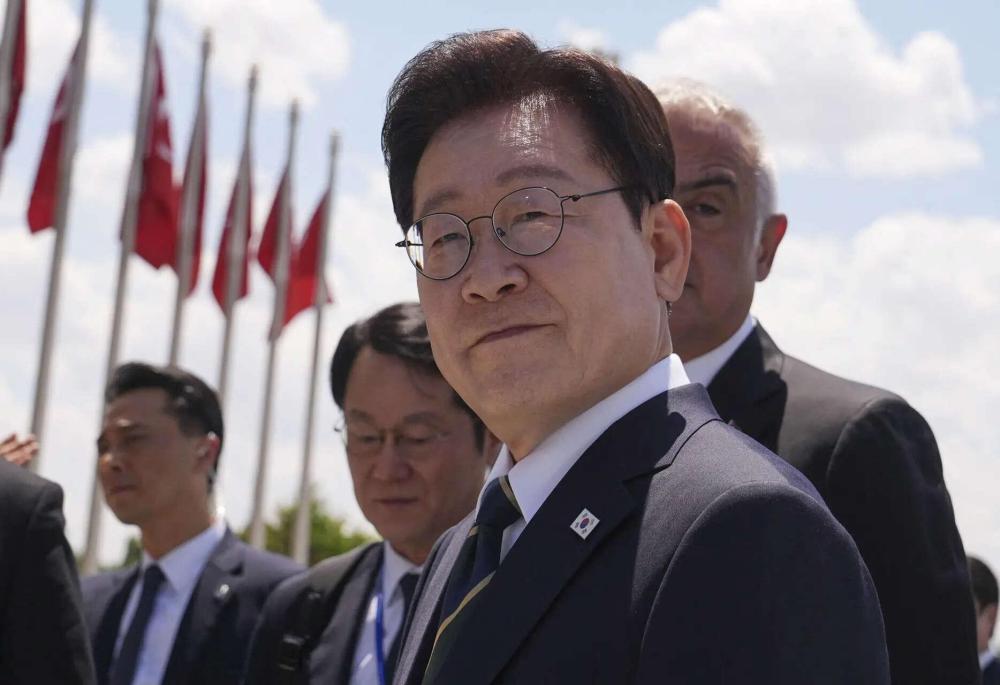
South Korea will use a tax revenue windfall from artificial intelligence chipmakers as a strategic source of investment, President Lee Jae Myung said Monday, describing a "golden window" of opportunity. "These revenues are a valuable national resource that should be invested during the golden window when the global race for AI leadership is being decided," Lee said. View the full article
-
South Korea plans record budget spending exceeding 800 trillion won for fiscal 2027. This significant spending will be supported by stronger tax revenues from the AI chip industry. The government will prioritize investments in chips, AI data centers, and physical AI technologies. Existing spending programs will undergo major restructuring to secure necessary funding capacity. A new Future Response Fund will strategically invest excess tax revenue in key areas. View the full article

-
Indian IT companies like HCL Technologies and Wipro are reporting earnings amid AI concerns. Macroeconomic uncertainty and Middle East conflict add pressure to the sector. Taiwan Semiconductor Manufacturing Company's results will offer a key reality check for the AI boom. Tech Mahindra expects margin expansion from cost-cutting and a large telecom deal. Reliance Industries' earnings were supported by retail and oil-to-chemicals business performance. View the full article

-
KarthikeyanC joined the community
-
Arjunkumar Solanki joined the community
Yesterday
-
The tech firm's data center chip, code-named "Iris," is part of a four-generation project for Meta Training and Inference Accelerators (MTIA) that it will design in-house. The plan is to use custom-built silicon to improve the AI that powers its Facebook and Instagram social media platforms. View the full article
-
In a post on X, the company said, "We're extending Claude Fable 5 access on all paid plans, as well as keeping Claude Code’s weekly rate limits 50% higher, through July 19." View the full article
-
Tata Consultancy Services is building a large team of forward-deployed engineers. The company is also actively seeking artificial intelligence acquisitions. This strategy aims to create new business opportunities rather than disrupt outsourcing. TCS believes deep client knowledge is key to integrating and deploying AI systems. The firm is investing significantly in talent development and AI accessibility. View the full article
Last week
-
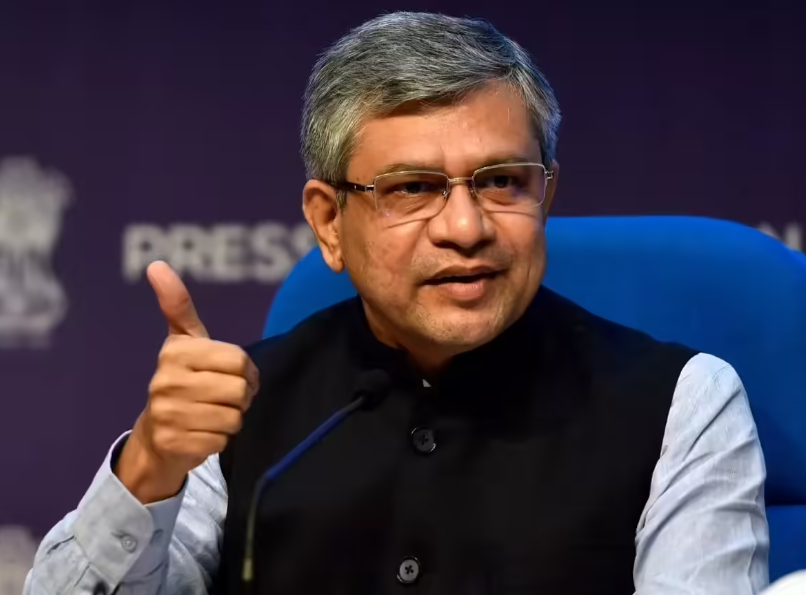
Vaishnaw said rapid advances in AI are reshaping the global technology landscape and require continuous learning and innovation. He urged the IT industry to seize the opportunity by developing next-generation technology solutions and strengthening India's position as a global technology leader. View the full article
-
Johannes Heidecke, OpenAI's head of safety systems, is leaving the company. Vice president of research and head of alignment Mia Glaese will take on an expanded role overseeing both the company's research and safety teams, while Saachi Jain has been appointed interim head of safety systems and will report to Glaese, Wired reported. View the full article
-
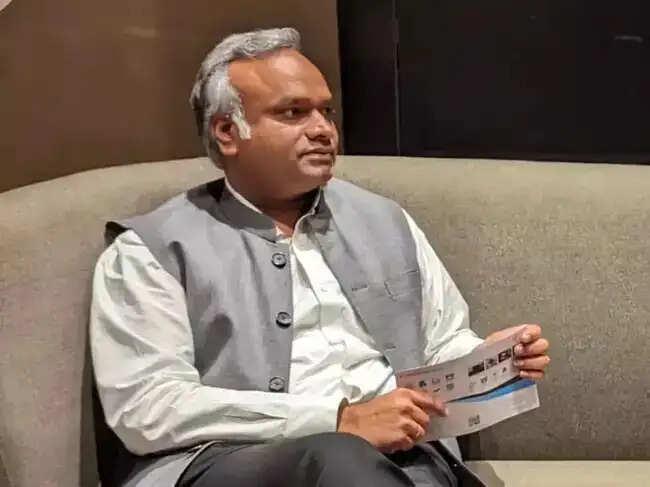
Karnataka's IT Minister met Anthropic India's MD to discuss the state's AI vision. Discussions focused on building advanced AI skillsets and forging strategic partnerships for skilling. According to a statement from the minister's office, the two sides also deliberated on establishing Centres of Excellence and incubators to strengthen AI research, innovation and entrepreneurship in the state. View the full article
-
Kailash_Gokul_KIQn joined the community
-
Chinmay Garg joined the community
-
Meta discontinued its new AI image generation feature after significant criticism. The tool allowed image creation using public Instagram accounts without explicit user consent. Actors and a Hollywood union voiced strong objections regarding privacy concerns. Meta stated the feature missed the mark and is no longer available. This reversal highlights growing user control demands for AI content usage. View the full article

-
The United States has eased export controls on the United Arab Emirates. This change allows easier access to Nvidia AI chips and military equipment. Approved UAE companies and US firms operating there will receive license-free advanced computing items. This move strengthens US-UAE relations and supports American technology companies. The decision follows decades of cooperation against Iran and its proxies. View the full article

-
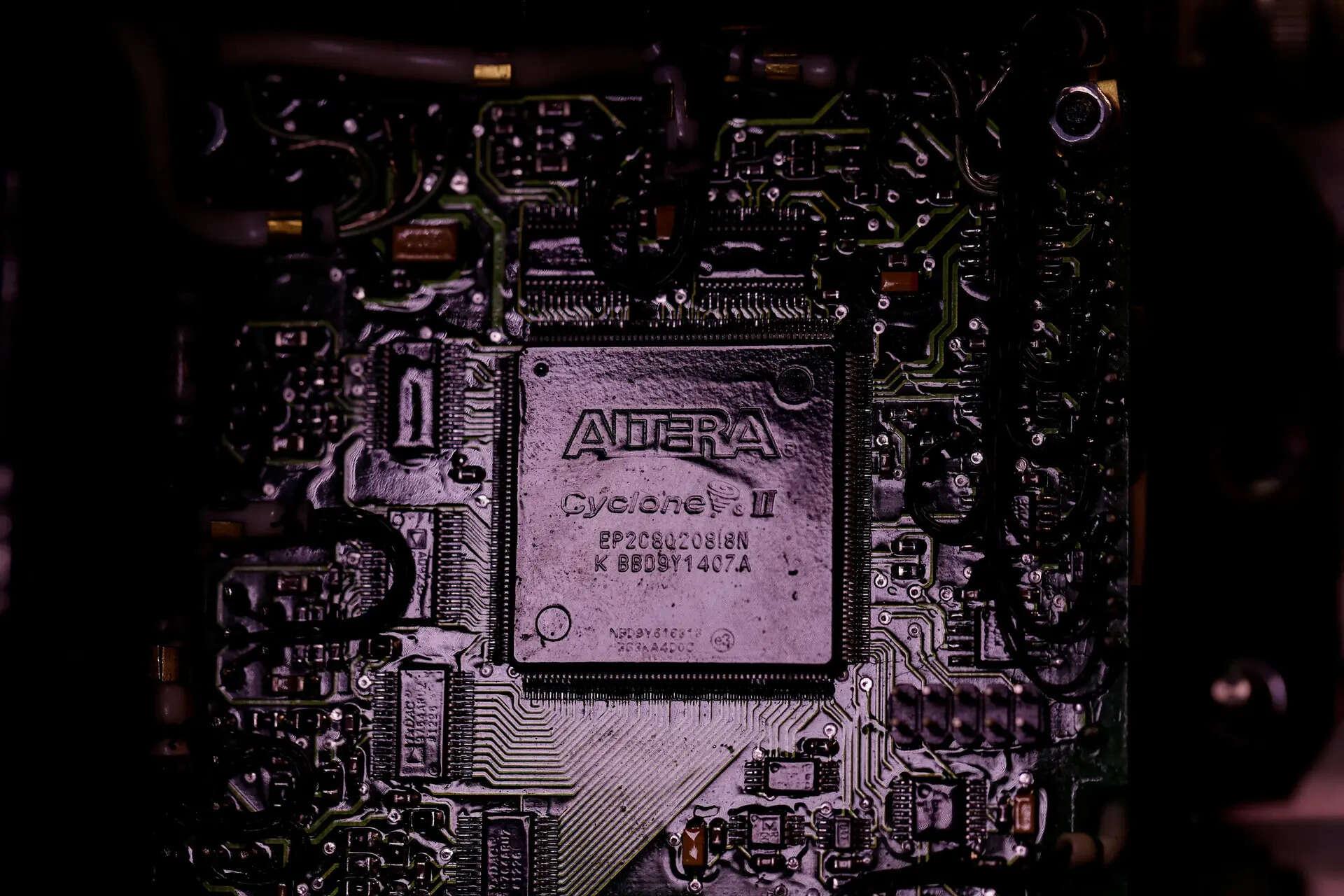
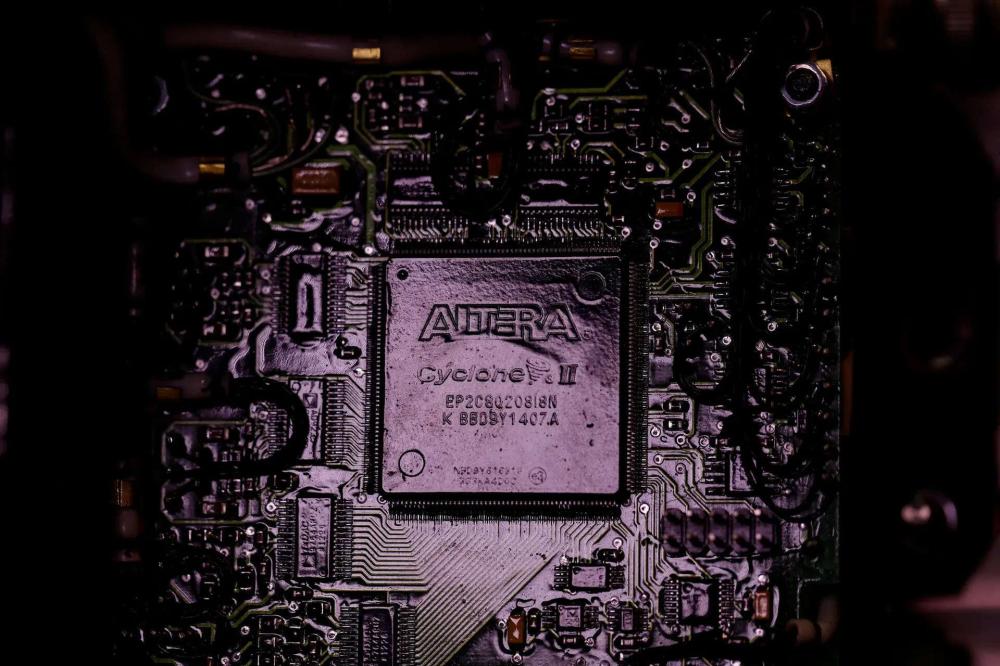
Altera, a chip maker spun from Intel, is experiencing significant annual growth. The company anticipates strong performance driven by artificial intelligence and robotics applications. Altera is also preparing for a potential public listing in the near future. They have reduced reliance on Intel and are using advanced memory technology. This strategic positioning aims to capitalize on future market opportunities. View the full article
-
Music organisations have introduced a voluntary labeling system for AI-generated content. This system aims to inform listeners about the use of artificial intelligence in music. Two labels will distinguish between fully AI-generated and AI-assisted recordings. Streaming services are closely monitoring this development for enhanced transparency. The proposed labels seek broad global adoption across various platforms. View the full article

-
Apple has accused OpenAI of stealing its trade secrets for new hardware. Two former Apple employees now working for OpenAI are named defendants. The lawsuit claims OpenAI encouraged employees to share confidential information. OpenAI stated it has no interest in other companies' trade secrets. This legal action marks a significant rift in their partnership. View the full article
-
Ricardas_Venckus_CqNS joined the community
-
Oscar-he believed the kind of movies he makes -- big-budget action films shot mostly on location -- would survive the spread of AI, a technology he says many people "disdain". The AI industry has touted the potential of the technology to replace actors, writers and camera operators -- claims that have spread panic in movie-making circles, though also plenty of scepticism. View the full article
-
In an analysis of 40 images generated using Muse Image, Reuters found the detection tool verified all of the original AI-generated images but failed to verify 55% of the same images after they were cropped to approximately one-third to one-half of their original size. View the full article
-
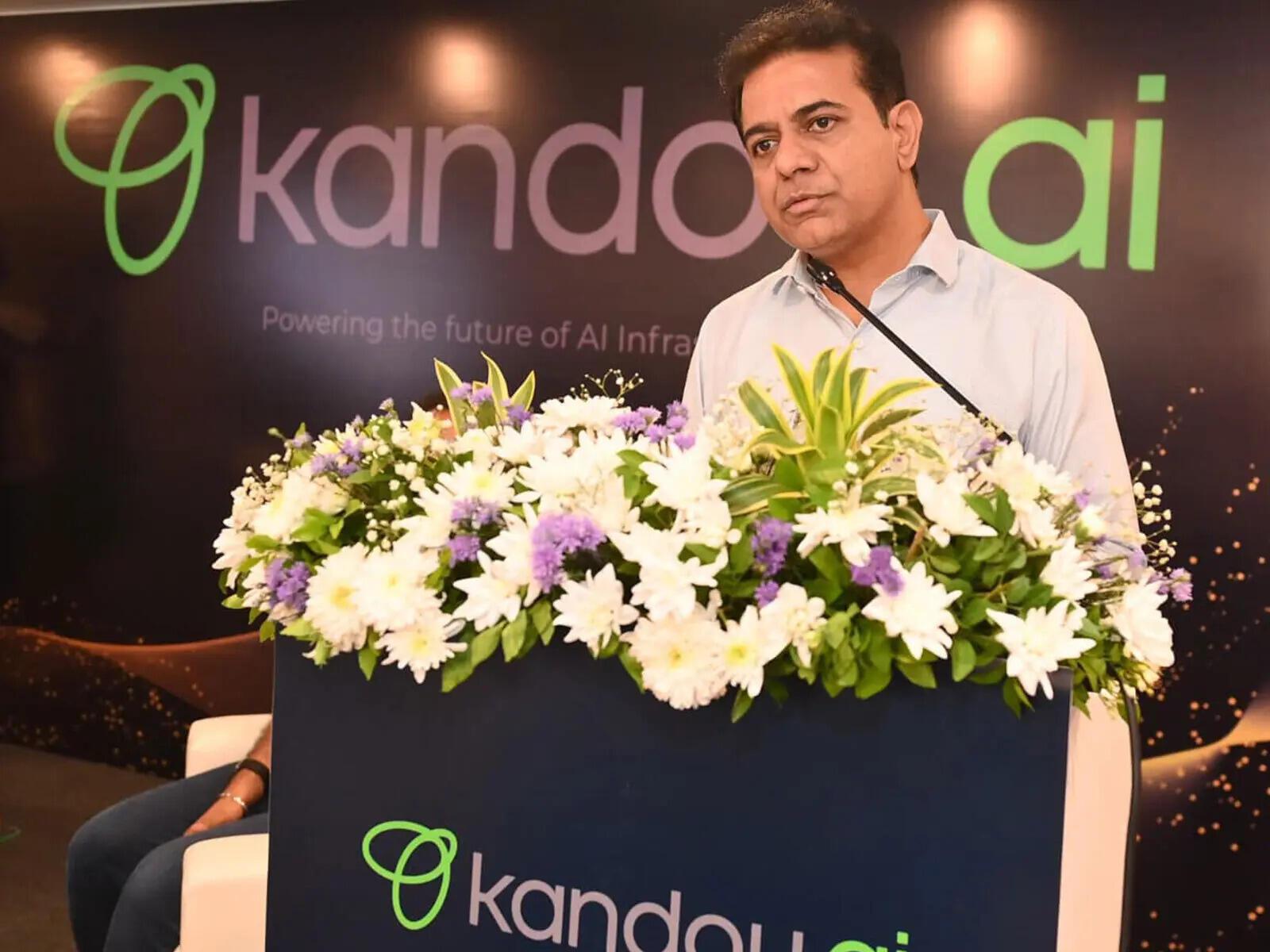
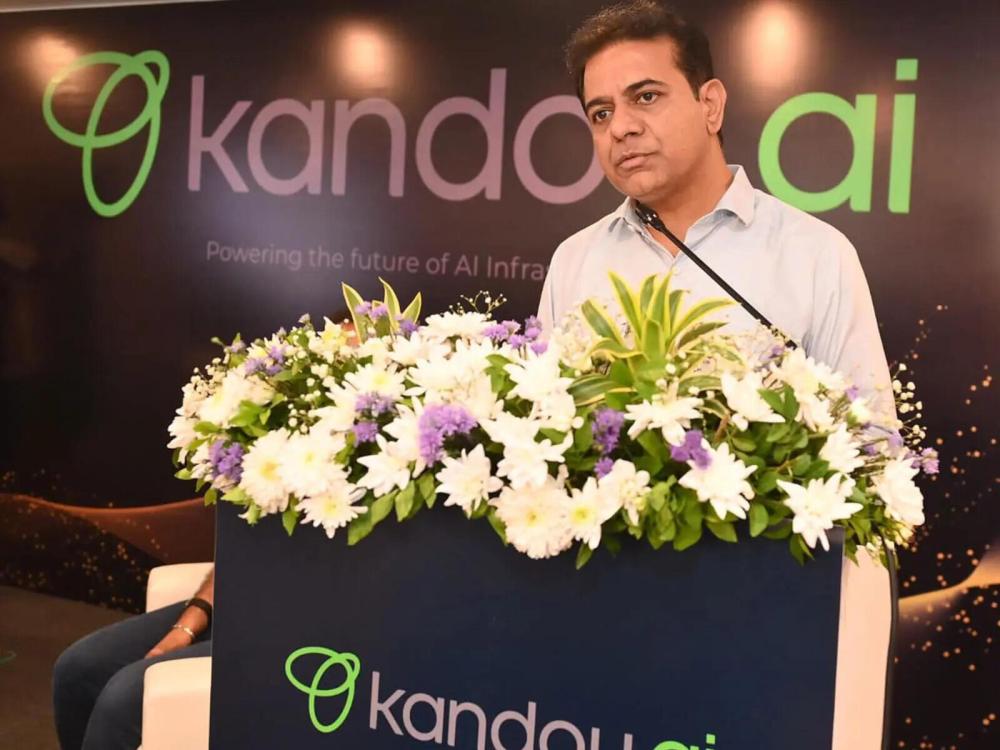
Bharat Rashtra Samithi (BRS) Working President and former Telangana IT Minister KT Rama Rao on Friday said Kandou AI's decision to establish its India Chip Design Headquarters in Hyderabad reflects the city's emergence as a globally recognised semiconductor and deep technology hub, as the company announced the opening of its new engineering facility in the city. View the full article
-
Majid Ullah_Ehsan_MYvl joined the community
-
Abdulraheem_Nur_ZDB6 joined the community
-
Infrastructure providers, particularly data centers, are poised to be among the biggest beneficiaries of the AI boom as businesses and consumers rapidly adopt the technology for applications ranging from software coding and robotics to everyday tasks such as shopping and planning. View the full article
-
Johan Doc joined the community
-
OpenAI introduced ChatGPT Work, an AI agent for professionals, on Thursday. This new tool combines chatbot and coding capabilities for document creation. It utilizes the advanced GPT-5.6 model, which debuted the same day. ChatGPT Work aims to offer a more affordable and accessible alternative to rivals. The launch signifies growing competition in the enterprise AI tools market. View the full article
-
South Korean billionaire Chey Tae-won's bold acquisition of SK Hynix has paid off significantly. The company became a major AI chip producer after betting on niche technology. SK Hynix's strategic investment in high-bandwidth memory chips proved highly successful. However, concerns about slowing AI spending and potential oversupply are now emerging. Chey's leadership is defined by this remarkable corporate success despite past controversies. View the full article
-
Poste Italiane, the postal service which pays out pensions through 12,600 post offices that are as much a feature of remote towns as the local church, is betting on its €13.5 billion ($15.4 billion) bid for Telecom Italia (TIM) to accelerate its shift into digital, telecom and cloud services. View the full article

-
Ashish J joined the community
-
Taiwanese memory chipmaker Nanya Technology plans substantial capital spending next year. This increased investment is driven by soaring demand for memory chips. The company's revenue and net income saw significant surges in the second quarter. Artificial intelligence is underpinning a stronger long-term outlook for the memory industry. Global memory makers are also ramping up investments to meet this demand. View the full article

-
SK Hynix's U.S. debut tests investor belief in the AI boom's durability. The South Korean chipmaker's offering is the second-largest share sale in the United States. This move provides direct access to the world's largest pool of investors. SK Hynix leads in high-bandwidth memory chips essential for AI. Spending on AI infrastructure is expected to grow significantly by 2027. View the full article

-
Vishwadeep Khatri replied to Vishwadeep Khatri's topic in We ask and you answer! The best answer wins!1. rajan.arora2000 Position: View A (Deploy the AI as the hard gate, "without qualification" on the stated case) Specific Example: Builds a derived break-even ($1,480 per avoided escape) from the scenario's own numbers, then stress-tests it against GM's ignition switch recall (57-cent part fix cited from House Energy & Commerce hearing testimony, $900M DOJ settlement, 124 Feinberg fund death claims, 84 recalls in 2014), Takata (40M+ vehicles, $1B DOJ plea, 2017 Chapter 11), Ford–Firestone (Ford's $2.1B after-tax charge per its own Q2 2001 Form 8-K, 271 NHTSA-counted deaths), United Airlines Flight 232 (NTSB AAR-90/06, 111 deaths), Kobe Steel (600+ affected customer firms, ¥100M fine), and 2023 NHTSA/Hyundai-Kia brake recalls, plus codified law (Greenman v. Yuba Power, the TREAD Act, IATF 16949). Reasoning Quality: Exceptional — derives an exact break-even threshold from first principles, runs sensitivity/robustness checks, computes the arithmetic of "advisory mode" hybrids to show they fail, explicitly defines the narrow zone where View B would actually be correct, and rebuts anticipated objections one by one. 2. Suhail_J_CaJq Position: View A (deploy the AI, safety dominates yield) Specific Example: None — the post restates the scenario's own given figures (240→28 escapes, $3.8M scrap cost) without citing any named company, case, or external documented event. Reasoning Quality: Competent — the logic connecting internal vs. external failure cost is coherent, but it never leaves the scenario's own numbers to ground the argument in a real-world precedent. 3. Raja M Position: View A (deploy the AI immediately, add human hybrid review afterward) Specific Example: Cites the Takata airbag recall (100+ million vehicles recalled worldwide, billions in cost, company's financial collapse) as the central precedent for rare-but-severe safety risk. Reasoning Quality: Reasonable — clearly structured (internal vs. external failure cost, risk calculation, a concrete improvement roadmap with categories and steps), but the Takata figures are stated in general terms without dates, filings, or specific dollar amounts. 4. kartik voleti Position: View A (deploy the AI immediately) Specific Example: Toyota's 2010 unintended acceleration recall (8+ million vehicles, a $1.2 billion U.S. settlement) and the Boeing 737 MAX grounding (tens of billions in costs) as cross-industry proof that safety escapes dwarf scrap costs. Reasoning Quality: Good — clear five-point argument structure, directly engages the strongest counterargument (certain cost vs. rare event) and explains why tail-risk framing changes the calculus, though less quantitatively rigorous than the top entries. 5. Vinit Dubey Position: View A (deploy AI vision as the sole, standalone inspection gate) Specific Example: Bosch's AI-driven visual inspection (claimed 40% greater defect-catch accuracy on ABS/ESP/steering boards), semiconductor fab AOI systems (false-positive rates falling from ~50% to under 10% via tuning), and the FDA's 2018 autonomous clearance of LumineticsCore (formerly IDx-DR) as precedent for regulators trusting unsupervised AI on safety-relevant decisions, alongside Toyota, Takata, and GM as cautionary cases. Reasoning Quality: High quality — presented as a formal report with a weighted decision matrix, risk matrix, and explicit rebuttal of the yield objection; the tail-risk dollar range is clearly labeled as an illustrative planning assumption rather than a measured figure. 6. Naijur Rahman Position: View A (deploy the AI; minimize escaped defects) Specific Example: An unusually deep and current set of brake-specific precedents: Continental's 2024 brake pedal/booster recall (Volkswagen's December 2023 field report, recall filings in August/October 2024), Honda's 2024–2025 brake pedal pivot pin recall (259,000 vehicles, supplier Otsuka Koki), Ford's 2025 Electronic Brake Booster recall (Bosch-supplied, May–August 2025 timeline), plus Takata, GM's ignition switch, and Boeing's 737 MAX/MCAS, and a peer-reviewed 2025 machine-learning brake-caliper defect study. Reasoning Quality: Exceptional — derives a breakeven incident-probability table, applies the 1-10-100 cost-of-quality rule and Cpk/PPAP standards, and directly fact-checks Bex's Ford example with a detailed, sourced counter-account. 7. Prateek_Harsh_dl5h Position: View A (deploy the AI vision system, on tightly reasoned grounds rather than a blanket "safety always wins" claim) Specific Example: A 2015 peer-reviewed Sandia National Laboratories study (82 nuclear-security inspectors, 140 parts, 85% detection but 35% false-reject rate), BMW's AIQX and Regensburg generative-AI inspection systems, Ford's MAIVS/AiTriz vision systems (735 stations, 150 million inspections, 400,000 flagged issues), GM's ignition switch and Takata airbag recalls with dollar figures, and a January 2026 systematic review in Sensors covering 50+ ML-inspection studies. Reasoning Quality: Exceptional — explicitly reframes the debate around reversibility rather than "safety trumps cost," runs expected-value math, and proposes a concrete two-threshold deployment architecture. 8. anthony rebello Position: View A (consumer risk dominates on a safety-relevant part) Specific Example: The 1982 Tylenol recall (31 million bottles pulled, ~$100 million cost, deaths in the Chicago area), Toyota's andon cord/jidoka philosophy, commercial aviation's redundancy doctrine, and Takata as a cautionary counter-example (30+ million vehicles, 35 deaths, $1B+ in fines, bankruptcy). Reasoning Quality: High quality — built around a memorable "smoke detector" analogy and a clear reversible/irreversible framing, though the aviation and Toyota examples are more illustrative than quantitatively detailed compared to the Tylenol and Takata cases. 9. Dinesh Selvarajan Position: View A (deploy the AI) Specific Example: The GM ignition switch case in focused detail — the defect could be fixed for under $1 per vehicle at the source, but by 2014 had resulted in 2.6 million vehicles recalled, 124 linked deaths, and $900 million in DOJ settlements. Reasoning Quality: Good — concise and tightly argued, correctly distinguishes controllable/process costs from irreversible field costs, though it relies on a single example rather than a portfolio of cases. 10. Adeniran_Ilesanmi_GYSH Position: View A (deploy the AI as the primary inspection gate) Specific Example: Industry-wide recall economics — Takata inflators (over $7.1B in repairs/settlements/legal fees, ~$24B total industry impact), GM's ignition switch (>$4.1B including victim compensation), 2016 U.S. OEM/supplier data ($11.8B in claims, $10.3B in warranty/recall accruals), and semiconductor fabs (Intel/TSMC tolerating 10–20% false-reject rates to avoid shipping defects). Reasoning Quality: Exceptional — builds a full expected-value model (frequency × severity) comparing human vs. AI exposure, ties the argument to ISO 26262/AIAG-VDA severity-weighting standards, and directly rebuts View B's proposed mitigations. 🏆 Winner: rajan.arora2000 Every approved entry took the same clear View A position, so the decision comes down to reasoning depth and evidentiary rigor. rajan.arora2000's entry stands apart because it doesn't just cite precedents — it derives an exact break-even cost per escape from the scenario's own numbers, then pressure-tests that conclusion with sensitivity analysis (doubling scrap cost, halving the tail estimate), computes why "advisory mode" hybrids mathematically backfire, and explicitly defines the narrow conditions under which View B would actually be correct — a level of intellectual honesty no other entry matches. Its example portfolio is also the broadest and most precisely sourced, reaching beyond automotive recalls (GM, Takata, Ford–Firestone, all with filing/hearing/report citations) into aviation (NTSB report number), Japanese manufacturing doctrine (Toyota jidoka, Kobe Steel), and codified law (Greenman v. Yuba Power, the TREAD Act, IATF 16949). Naijur Rahman and Prateek_Harsh_dl5h are extremely close competitors — Naijur's brake-specific 2024–2025 recalls are more narrowly on-point to this exact part category, and Prateek's Sandia and Ford MAIVS/AiTriz data are superbly specific — but neither pairs its evidence with the same combination of derived break-even math, robustness testing, and systematic rebuttal of every counterargument that rajan.arora2000 delivers, which is what ultimately sets this entry apart.