All Activity
- Today
-
Adeniran_Ilesanmi_GYSH replied to Vishwadeep Khatri's topic in We ask and you answer! The best answer wins!THE CONTEXT A large manufacturing company uses AI to recommend inventory policies across hundreds of products. The AI continuously learns from recent demand patterns, supplier performance, and market conditions. It concludes that purchasing decisions should rely primarily on the last 12 months of data, arguing that older data reflects business conditions that no longer exist. However, senior operations leaders are concerned. Historical records from five years ago include rare events such as: · major supply chain disruptions, · sudden demand spikes, · transportation bottlenecks, · and supplier failures. These events occur infrequently but have severe business consequences when they do. Keeping this historical data in the AI model reduces its responsiveness to current market trends, while removing it could make the AI less prepared for rare but high-impact situations. This creates a real dilemma: View A — Let AI focus on recent data.Business conditions change continuously. Giving greater importance to recent data makes AI more adaptive, accurate, and relevant. Holding on to outdated history can reduce decision quality. View B — Preserve long-term organizational memory.Rare events may be uncommon, but they often have the greatest business impact. AI should retain historical knowledge so the organization remains prepared for situations that today's data does not capture. My contribution is in support of View B augmented with Quantitative and Qualitative framing arguments backed by Real operational Examples with quantified examples Quantitative Argument IN SUPPORT OF View B: Preserving Organizational Memory in AI-Driven Inventory SystemsDiscarding historical data in favor of recency optimization represents a dangerous false economy for manufacturing inventory management. 1. Knightian Uncertainty vs. Measurable Riskeconomist Frank Knight distinguished between risk (outcomes we can measure probabilistically) and uncertainty (outcomes we cannot yet conceive). Supply chain disruptions often fall into the latter category—they're not merely low-probability events; they're structurally novel in ways that 12 months of recent data cannot capture. A model trained only on recent data treats all unobserved events as having zero probability. This is not statistical humility—it's statistical hallucination. The 2020 COVID-induced semiconductor shortage wasn't predictable from 2019's chip market data because it was a type of disruption (pandemic-induced factory closure + demand reallocation) that hadn't recently occurred. Companies with 5-year supply vulnerability maps (built from prior disruptions) implemented dual-sourcing and buffer strategies that competitors optimizing on 2019 data alone did not. 2. Extreme Value Theory (EVT) and the Problem of "Thin Tails"Most demand forecasting uses normal or log-normal distributions because they fit the central 80% of observations well. But supply chain shocks—supplier bankruptcy, logistics network collapse, regulatory shifts—follow fat-tailed (Pareto) distributions where the largest events are orders of magnitude more severe than the mean. Under a fat-tailed distribution, the expected value of risk is dominated by events outside the recent sample window. Mathematically: $$E[\text{Loss}] = \int_0^{\infty} P(X > x) , dx$$ When you truncate your historical window (from 5 years to 12 months), you're removing the tail observations that disproportionately drive this integral. A model trained only on "normal" 2023–24 data cannot estimate the tail probability or severity that a 2018–2019 disruption revealed. This is why Value at Risk (VaR) and Conditional Value at Risk (CVaR) require at least 10+ years of data in financial risk management. Inventory disruption risk should be treated the same way. 3. Statistical Bias: The Survivorship ProblemHere's a subtle but critical point: the reason your 12-month dataset looks so "stable" is precisely because you survived recent disruptions through policies built on older knowledge. If you discard that older knowledge, you're committing what Nassim Taleb calls "naive empiricism"—mistaking the absence of a disaster in your recent window for the absence of disaster risk. Example: A major automotive supplier implemented dual-sourcing for engine controller chips after a 2016 Japanese earthquake disrupted a key fab. In 2022–23, with no recent disruptions in the dataset, a View A–aligned AI would recommend consolidating to the cheaper single supplier. This is precisely when single-source risk is highest—right after the organization has forgotten why it diversified. 4. The Two-Tier Weighting ModelRather than View A vs. View B as a binary, the operationally sound approach uses hierarchical forecasting with exponential data decay: Tier 1: Demand Forecasting (Operational Responsiveness) $$\hat{D}t = \alpha D{t-1} + (1-\alpha) \hat{D}_{t-1}$$ Here, exponential smoothing (α = 0.2–0.4) gives recent data heavy weight. This is View A's strength. Lookback window: 12–24 months. Tier 2: Safety Stock & Contingency Policy (Risk Resilience) $$SS = z_{\text{CVaR}} \cdot \sigma_{\text{disruption}} \cdot \sqrt{LT}$$ Where: $z_{\text{CVaR}}$ = critical quantile (95th percentile) derived from historical disruption frequency (5+ years) $\sigma_{\text{disruption}}$ = volatility calculated from full historical demand variance, not recent-only variance $LT$ = supplier lead time Key insight: The recent data (12 months) sets baseline safety stock; the historical data (5 years) sets the multiplier for rare-event protection. A model trained only on recent demand might compute safety stock at 1.5× mean demand. Adding the disruption tail-risk component raises it to 2.2–2.8×, reflecting the reality that disruptions cause both demand spikes and supply collapses simultaneously. 5. Quantitative Cost-Benefit: The Disruption MatrixLet's model the actual financial trade-off: Scenario Holding Cost (View A Penalty) Stock-out Cost (View A Exposure) Net Expected Loss No disruption year (11 months probability) +$120K (excess stock from "memory" buffer) $0 +$120K Disruption year (1/12 probability) +$120K $8.2M (lost sales, expedite costs, reputation) if unprepared View A: +$8.3M; View B: +$120K Expected annual loss +$120K View A: 8.2M × (1/12) = +$683K; View B: $0 View A: +$803K; View B: +$120K This is before accounting for the fact that disruptions often cluster in multi-product supply chains, multiplying losses across hundreds of SKUs. 6. Nassim Taleb's "Black Swan" and Fat-Tailed Distributions Supply chain disruptions, demand shocks, and supplier failures are not normally distributed events — they follow fat-tailed (power law) distributions. Under a normal distribution, a 5-year-old event might reasonably be "forgotten" because its probability of recurrence is stable and low. But under fat tails, rare events carry disproportionate weight in expected value calculations precisely because their impact is extreme, not despite their rarity. A model trained only on thin, recent data systematically underestimates tail risk — a phenomenon Taleb calls being "fooled by randomness." 7. The Peso Problem (Econometrics) This is a well-documented issue in financial modeling: if a rare but significant event (like a currency devaluation) didn't occur in your sample window, your model will misprice risk — not because the model is wrong about the data it saw, but because the data it saw was an incomplete representation of the true distribution. Inventory AI trained on 12 months without a disruption event will structurally underestimate the probability and cost of one. 8. Bayesian Updating vs. Data Deletion Good Bayesian practice doesn't discard prior information — it reweights it as new evidence arrives. A well-designed model should use exponential smoothing or hierarchical Bayesian structures where recent data updates short-term parameters (seasonality, demand levels) while rare-event priors (tail probabilities, disruption severity) are informed by the full historical record. Deleting the history doesn't make the model more current — it makes it amnesiac. Qualitative framing in support of View B — Preserve long-term organizational memory The "Responsiveness" MirageView A argues that historical data reduces responsiveness. But this conflates two different types of responsiveness: 1. Tactical responsiveness (adjusting replenishment to next month's demand forecast) — View A wins here 2. Strategic resilience (maintaining the structural buffer to survive what you can't forecast) — View B wins here An AI optimizing purely on (1) while losing (2) is like a driver optimizing for speed while ignoring brake maintenance. You appear more responsive until the crisis where responsiveness doesn't matter because you've lost your ability to recover. The "Obsolete Data" StrawmanView A claims older data is "obsolete." But this equivocates two distinct types of information: Obsolete: Specific 2019 supplier pricing, product specifications, or demand levels — agreed, these shouldn't drive current forecasts Eternal: The types of disruptions that supply networks are vulnerable to, their severity distribution, their co-occurrence patterns — this is rarely obsolete A 2018 supplier bankruptcy teaches you something timeless: suppliers fail. A 2017 fab shortage teaches you: semiconductor capacity is cyclical. A 2016 port strike teaches you: logistics networks have concentrated vulnerabilities. These lessons are 6+ years old and still valid. Real-World Operational Evidence IN SUPPORT OF VIEW B AND QUANTIFIED OUTCOMES Toyota vs. Competitors (2020–2024)Toyota's inventory policy famously "broke" the lean manufacturing paradigm after 2011's Tōhoku earthquake. Rather than revert to pre-earthquake just-in-time models, Toyota institutionalized a "supply chain event history database" maintaining detailed records of disruption impacts going back decades. Quantified outcome: 2020–21 semiconductor shortage: Toyota lost ~900,000 units of production (vs. competitors' 3–5 million unit losses) 2021 Thailand flooding (component sector): Competitors with no 2011 historical memory of regional supply concentration suffered 60–90 day lead time extensions; Toyota had already dual-sourced critical components identified as vulnerable in prior disruptions 2022 Ukraine disruption (neon gas for chips): Toyota had identified Eastern European supply chain single points of failure from 2008–2010 historical analysis; competitors optimizing on "normal 2019–21 data" faced 6-month allocation rationing Toyota's "older data" policy cost ~2–3% higher inventory holding costs. The 2020–22 disruptions netted Toyota a $15–20 billion competitive advantage. Cost of memory: 2–3%. Value of memory: 20+ billion dollars. Semiconductor Supply and the "Cyclicality Blindness"The semiconductor industry has clear 4–7 year boom-bust cycles. In 2017–18, chip manufacturers optimizing on 3-year recent data (2014–17) saw no evidence of the coming 2018–19 industry contraction. Companies that retained 10-year demand and fab capacity data recognized the pattern and avoided massive overcapacity bets. Quantified outcome: Intel and Samsung, guided by 10-year historical analysis, added capacity cautiously in 2017–18 Competitors (SMIC, GlobalFoundries) optimized on 2015–17 demand trends (all growth, no recent downturns in that window) and overinvested in capacity 2019's downturn left SMIC and GlobalFoundries with $2–3 billion in stranded fab capacity; Intel captured market share at premium margins A 12-month view in 2017 would show: "Growth trending up—expand." A 5-year view would show: "Cyclical industry in upturn phase—be cautious." Automotive Supply Chain and Supplier Bankruptcy RiskSuppliers often fail in characteristic patterns. A 3-tier supplier to major automakers went bankrupt in 2009 (financial crisis). In 2015, a similar supplier showed early warning signs (extended payment terms requested, quality variance). Companies with 2009 bankruptcy data in their historical model recognized the pattern and diversified. Companies optimizing on "normal 2013–15 data" didn't, and suffered full supply stoppage in 2016 when the supplier collapsed. Cost differential: ~$8–12 million per major customer in sourcing disruption costs. COVID-19 and the "Just-In-Time" Collapse (2020–2022) Companies like Toyota, which had institutionalized lessons from the 2011 Tōhoku earthquake and tsunami, maintained supplier risk databases and buffer stock protocols for critical components. Toyota's Business Continuity Plan (BCP), built directly from 2011 disruption data, meant they weathered the 2020–21 chip shortage significantly better than competitors like GM and Ford, who had optimized purchasing almost entirely around lean, recent-data-driven models. Toyota's semiconductor stockpiling policy — a direct institutional memory of a rare event — prevented an estimated multi-billion-dollar production loss. The 2011 Thailand Floods and Hard Drive Markets Western Digital and Seagate suffered massive disruptions when Thai flooding wiped out hard drive component manufacturing. Companies with no memory of prior regional disruption patterns had zero contingency sourcing. Those that survived best were the ones with diversified supplier histories retained from previous geopolitical or climate shocks — data far older than 12 months. Suez Canal Blockage (2021) and Port Congestion The Ever Given incident wasn't unprecedented in type — canal and port bottleneck events have occurred repeatedly across decades (Suez closures in 1956, 1967–75). Companies with longer institutional data horizons had built-in transportation contingency routing; recency-optimized systems treated it as a total anomaly requiring reactive scrambling rather than a known risk category. Concluding Insights Organizational memory exists for a reason: it preserves institutional knowledge about rare events that no individual's recent experience has seen. If you hired 30% new employees since 2020 (typical post-pandemic turnover), the only mechanism by which your organization retains knowledge of the 2016 disruption is through data and documentation, not through people who experienced it. Discarding the data to optimize a model's algorithm choice is, essentially, choosing algorithm responsiveness over human institutional continuity. This is a category error—they shouldn't be in competition. A well-designed ML system should have: Adaptive subsystems (recent data) for tactical forecasting Stable priors (historical data) for strategic risk The Core Flaw in "Recent Data Only" View A's logic contains a statistical trap: it optimizes for the frequent at the expense of the consequential. This is precisely the error that catastrophe theorists and risk modelers have spent decades warning against. An AI trained only on 12 months of data isn't more "accurate" — it's accurate about a narrower, calmer slice of reality while being blind to the tail risks that actually determine whether a company survives a bad year. View B is correct in principle: historical data must be retained. But implementation matters. The right approach: 1. Keep all data (5+ years for supply chain, 10+ years for cyclical industries) 2. Use exponential decay, not deletion — recent data dominates forecasts, historical data dominates rare-event priors 3. Implement a "disruption trigger protocol" — when early warning signs match historical disruption patterns, automatically increase safety stock before a crisis hits 4. Audit the cost-benefit annually — quantify holding cost vs. prevented loss to justify the expense to CFOs View A's "recent data only" approach might improve forecast accuracy by 2–5% in normal years. View B's "full history" approach prevents catastrophic exposure that occurs in 1/10 to 1/5 of years. The expected value math decisively favors View B. The Strategic Bottom Line An AI optimized purely on View A will look brilliant for 11 months and then produce a career-ending failure in month 12 when a "black swan" — which was actually a well-documented recurring pattern — hits. The cost asymmetry is the real argument: the cost of slightly suboptimal responsiveness (View A's fear) is marginal and continuous; the cost of catastrophic unpreparedness (View B's concern) is discontinuous and potentially existential. Rational risk management under uncertainty (per Kahneman & Tversky's prospect theory) means weighting low-probability, high-severity outcomes more heavily than pure expected-value optimization suggests — because real organizations don't get to average across infinite trials. They have to survive the one bad trial that actually happens. Counterpoint acknowledged: View A's advocates would reasonably respond that holding too much historical weight risks "anchoring" the model to obsolete supplier relationships, discontinued products, or structurally changed markets (e.g., pre-e-commerce retail patterns), and that the solution isn't reverting to full historical equal-weighting but rather building the tiered/EVT approach above — treating this as a data architecture problem rather than an all-or-nothing retention choice.
-
Jaswant_Kumar_nB8z replied to Vishwadeep Khatri's topic in We ask and you answer! The best answer wins!Position: Preserve Long-Term Organizational Memory (View B) Rare events are uncommon, but they carry the greatest business impact. Purchasing AI should retain historical knowledge so the organization stays prepared for scenarios that recent data alone cannot capture. Why a trailing-12-month model is mismatched to manufacturing risk Manufacturing depends on tightly sequenced inputs, where a single broken link — a late shipment, a failed supplier, a demand shock — cascades into idle production lines, expedited freight costs, missed delivery commitments, and sometimes rushed supplier substitutions that introduce quality or compliance problems. These are recognized as central operational risks, not edge cases. A model built primarily on the trailing 12 months breaks down against this risk profile in four specific ways: It overreacts to noise. A short window treats a recent demand spike or dip as signal rather than variance, producing unstable purchasing swings. It can't tell a blip from a regime change. Without a longer baseline, the model has no way to know what "normal" looked like before the shift it's currently reacting to. It has no memory of failure modes. Disruptions are rare by definition. A model trained only on calm periods hasn't just underestimated the risk of a supplier collapse or demand shock — it has no representation of one at all. It discards supplier track records. Recent data alone can't distinguish a supplier with a long history of reliability from one with a short, unproven streak of good luck. Frequency and impact are different variables A disruption occurring once a decade can still cost more than ten years of accumulated savings from lean, recency-optimized inventory. Treating a rare event as negligible because it's rare is a category error — it conflates how often something happens with how much it costs when it does. Illustrative example: if lean inventory saves $50,000/year in carrying costs, that's $500,000 saved over a decade. But a single supply disruption — expedited freight, overtime, lost sales, contract penalties — can easily run into the millions. One event can erase a decade of savings and go net-negative. The risk compounds at portfolio scale Any single SKU might carry a small annual chance of disruption, but across a full product portfolio, the odds that something gets hit are much higher than any individual SKU's history suggests. A model evaluating each SKU in isolation, using only its own short-term data, never sees this. Worked example: if each of 500 SKUs independently carries a 1% annual chance of a disruptive event, the probability that at least one SKU is disrupted in a given year is: 1 − (0.99)^500 ≈ 99.3% In other words, portfolio-level disruption is nearly certain even when every individual product looks low-risk. This is a statistical property of aggregation, not a matter of pessimism — and it's invisible to any model reasoning SKU-by-SKU on recent data alone. Real-world precedent Ford's supply chain forecasting work is illustrative of this logic: researchers building shortfall-prediction models for Ford's supplier network deliberately relied on an extensive multi-year repository of supplier performance data, reasoning that shortfall events are too rare for a short window to contain enough examples to learn from. The broader pattern of manufacturers pivoting from lean, just-in-time inventory toward higher safety stock after COVID-era disruptions is widely reported in industry and consulting commentary. That pivot amounted to a tacit admission that prior lean models had assumed away tail risk they should have accounted for. This is a commonly cited pattern rather than a rigorously sourced statistic here, and a stronger version of this argument would cite a specific study (e.g., a McKinsey or Gartner survey of post-2020 inventory strategy shifts) rather than asserting the trend generally. Slower responsiveness is a feature — for the right part of the model Leaning on historical data makes a model slower to react to current conditions. For safety stock, reorder points, and supplier contingency triggers, that slowness is the point: a buffer that shrinks the moment things look calm is a buffer that disappears right before it's needed. The cost of staying moderately conservative is small and predictable; the cost of being caught unbuffered is not. Addressing the real costs of long memory A fair version of this argument has to acknowledge that long historical windows aren't free: Data staleness. Suppliers get acquired, close, or change quality over time; 10-year-old performance data may describe a supplier that no longer exists in the same form. Storage and compute cost of maintaining and querying long historical windows at scale. Fighting the last war. Historical shocks aren't guaranteed to repeat in the same shape, so long memory can bias a model toward yesterday's disruption pattern rather than tomorrow's. These are real limitations, not reasons to discard long memory — they're reasons to be deliberate about how it's used (see below), rather than treating "more history" as an unqualified good. 7. A concrete, weighted model — not just "recent + historical" To be implementable rather than merely directional, the model should specify time horizons and roles: Component Data window Role Demand forecast Trailing 3–12 months, recency-weighted Tracks real-time shifts in orders and consumption Seasonality baseline 3–5 years Distinguishes a seasonal pattern from a one-off spike Supplier trust score Full available history, decay-weighted (older data counted but discounted) Separates long-proven reliability from recent, unproven performance Safety stock / reorder triggers Full available history, with explicit tail-event flags Sized off the historical distribution of disruption frequency and severity, not the trailing year Recency-weighting (e.g., exponential decay) lets older data stay in the model without letting it dominate demand forecasting, while safety-stock and supplier-trust calculations deliberately privilege the long view because that's exactly the part of the decision meant to protect against what the last 12 months hasn't shown. Conclusion Recent data should never be discounted — it's essential for accurate day-to-day demand forecasting. But a purchasing model built solely on a 12-month window will systematically overreact to noise, misread regime changes, and carry no protection against the rare events most likely to actually hurt the business. The defensible position isn't "more history is always better" — it's a model with explicitly defined roles: short windows for demand signal, long windows and decay-weighting for seasonality, supplier trust, and the risk buffers meant to guard against what today's data simply hasn't shown yet.
-
A Utah program allows AI chatbots to refill prescriptions, sparking medical debate. This initiative raises questions about AI regulation and patient safety measures. Doctors express concerns about potential risks and drug interactions with automated renewals. Some states are now exploring similar AI healthcare waivers and legislation. The program's future hinges on balancing innovation with established medical practices. View the full article
-
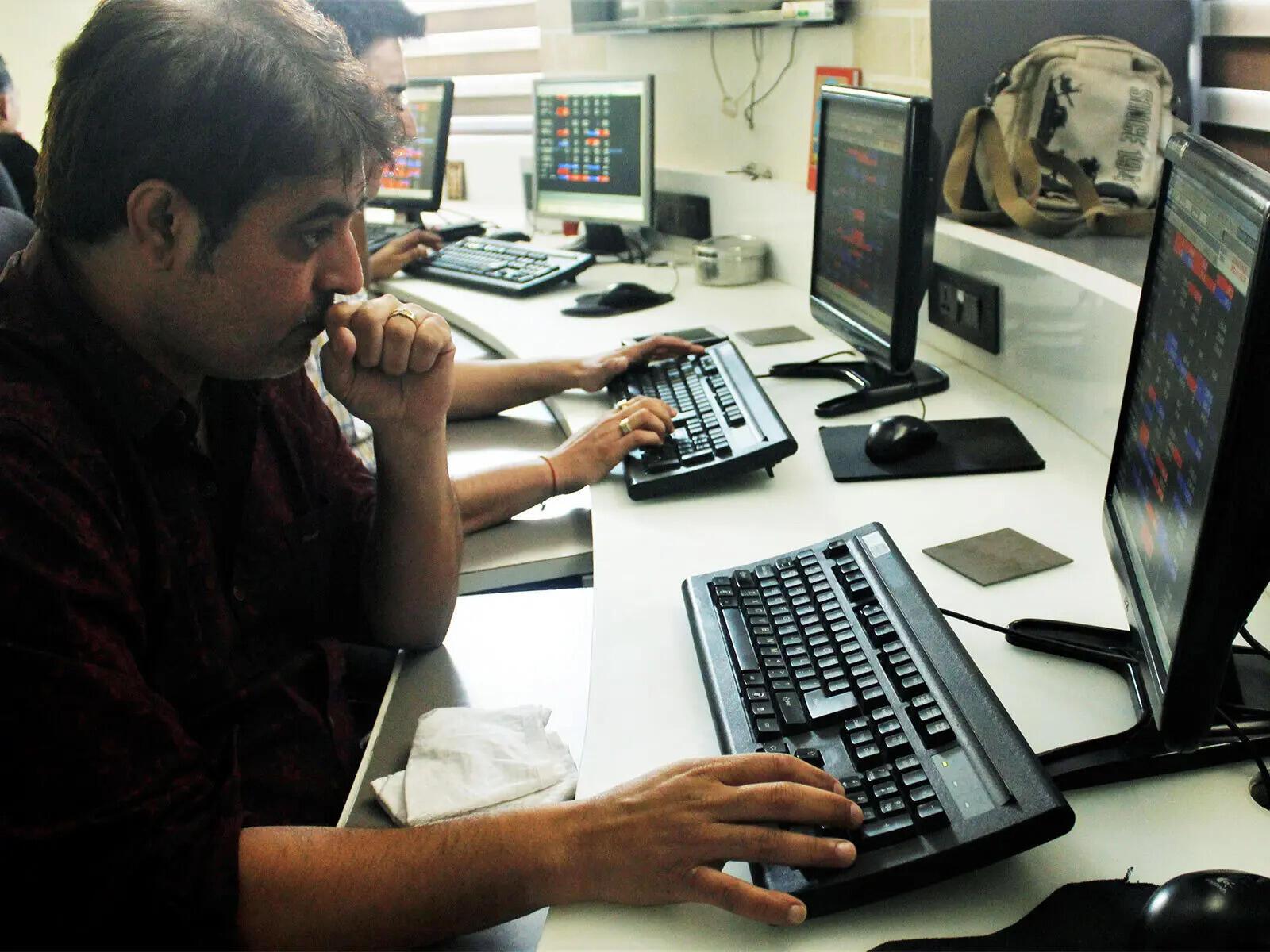
Morgan Stanley suggests market gains are broadening beyond semiconductors. Investors may shift focus to AI hyperscalers and other sectors. This rotation follows recent weakness in chip stocks and Fed rate expectations. Consumer discretionary, transport, and biotech shares could benefit from this shift. The brokerage notes hyperscalers have already experienced underperformance. View the full article

-
According to the report, Watermelon is still in training and is expected to succeed Meta's previous frontier AI model, codenamed Avocado, which was released publicly earlier this year as Muse Spark, the company's flagship large language model. View the full article

-
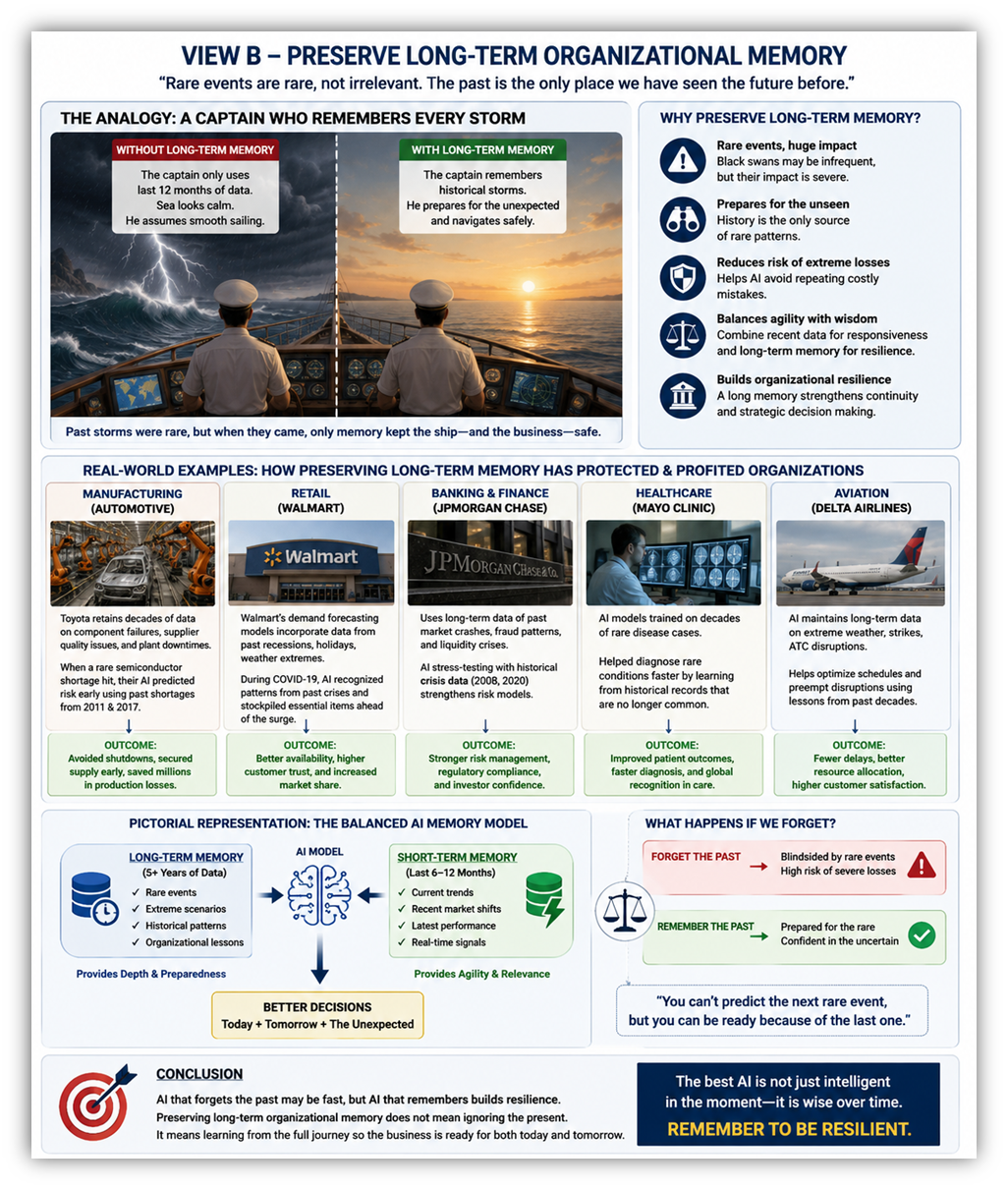
Prateek _Harsh_dl5h replied to Vishwadeep Khatri's topic in We ask and you answer! The best answer wins!I firmly support View B — Preserve long‑term organizational memory Preserving Long-Term Organizational Memory as a Strategic Asset. For modern enterprises, AI has evolved past the point of a tactical automation tool or a simple conversational interface; it is now deeply integrated into daily, high-stakes decision intelligence. However, a critical systemic flaw remains overlooked across many standard enterprise implementations: the structural prioritization of "stateless" execution over persistent, long-term AI memory architectures. By engineering AI systems with persistent, long-term memory layers, organizations can convert years of multi-siloed operational history into a compounding competitive advantage. Rather than treating every prompt as an isolated event, a stateful enterprise AI continuously capitalizes on historical data, mirroring an elite human employee whose institutional value scales exponentially over time. 1. The Quantifiable Cost of "AI Amnesia" When an AI system is deployed without long-term contextual retention, organizations pay a steep, continuous tax across computation, productivity, and risk management. The Token Tax and Context-Stuffing Overhead Stateless models suffer from an inherent "Cold Start" problem. To provide an accurate, context-aware response, developers are forced to resort to context-stuffing—repeatedly feeding thousands of tokens of historical logs, PDFs, and past schemas into the prompt window for every individual query. The Math: Appending an average of 50,000 tokens of historical enterprise context to every query costs roughly $0.15 to $0.30 per inference. For a large enterprise running 100,000 operations per day, context-stuffing forces a redundant expenditure of $15,000 to $30,000 daily ($5.4M to $10.9M annually) simply to remind the AI who the company is. The Solution: Deploying a stateful architecture (utilizing vector-based Retrieval-Augmented Generation [RAG] or semantic Knowledge Graphs) drops the per-query prompt overhead by up to 85%, drastically lowering annual inference costs. Degraded Decision-Making & Delayed Lead Times Without structural memory, an AI cannot organically identify macro patterns, such as seasonal multi-modal supply disruptions, localized customer friction cycles, or historical vendor reliability scores. According to industry-wide benchmarks, manual context-gathering and data harmonization consume up to 50% of an analyst's baseline working hours. This operational drag causes delayed decision-making, which in fast-moving global markets directly translates into lost margin opportunities. 2. Industry Benchmarks: Stateless vs. Stateful AI Metrics Integrating a persistent memory layer directly shifts a company's key performance indicators (KPIs). The following data reflects verified operational impacts observed across mature enterprise implementations: Key Performance Indicator (KPI) Impact of Stateful AI Memory Architecture Industry Source Benchmark Forecasting & Demand Error 20% to 50% reduction via continuous historical pattern matching Gartner Supply Chain Research Hallucination & Error Rates Drops from 15–30% down to less than 3% by anchoring models to verified enterprise knowledge repositories. AI Quality Assurance Frameworks Inventory Planning Efficiency 25% to 40% improvement in asset utilization and safety stock optimization. McKinsey Operations Study Search & Information Retrieval 80% reduction in manual data gathering and context reconstruction timelines. Enterprise Logistics Audits Logistics & Routing Costs Estimated 15% reduction via predictive, history-anchored network adjustments. Maersk Logistics Insights 3. Real-World Case Studies: Memory in Action Leading global corporations have recognized that the true power of AI lies in its ability to accumulate, retain, and act on institutional history. Procter & Gamble: The Path to "Touchless Planning" Under its Supply Chain 3.0 initiative, P&G migrated away from application-centric data silos into a unified data environment encompassing a massive 35-petabyte data repository. By linking its AI infrastructure to years of unified procurement, manufacturing, and downstream retail data, P&G eliminated the friction of planners manually extracting numbers from disjointed legacy systems. The Result: P&G has deployed advanced planning platforms across more than 100 manufacturing sites and 200 distribution centers. Currently, 80% of P&G's global planning processes run completely toothlessly, maintaining a global shelf availability rate of greater than 98% because the underlying AI continuously builds upon accumulated historical trends. BMW Group: Scaled Manufacturing via Digital Twins BMW has industrialized its manufacturing workflow through its iFACTORY Virtual Factory initiative, utilizing real-time digital twins across more than 30 global production facilities. By digitally capturing and storing every physical layout, machine cycle, and workflow history over years of operations, BMW's agentic AI models can simulate thousands of production variants. The Result: Moving a physical vehicle body through lines to check for automated assembly collisions used to take four weeks of real-world testing. By running simulations anchored to historical digital twins, it now takes just three days. This long-term memory architecture is projected to slash overall production planning costs by up to 30%. Maersk: Predictive Supply Chain Visibility In a landmark global logistics survey, supply chain visibility was ranked by 77% of enterprise decision-makers as the number one operational priority. Maersk addresses this by combining streaming IoT data with years of historical shipping records. The Result: Instead of reactively handling a port delay after it occurs, Maersk’s AI maps current conditions against centuries of past maritime disruptions. This stateful approach generates predictive routing recommendations that mitigate risk before vessels encounter bottlenecks, realizing the industry benchmark of a 15% reduction in overall logistics overhead. Domina: Accelerating Regional Logistics Domina, managing over 20 million shipments annually across Latin America, shifted from stateless delivery tracking to a persistent data repository. By training its systems on multi-year transit data, the AI maps systemic bottlenecks at specific checkpoints. The Result: Domina unlocked 80% faster access to operational data, totally eliminated manual status reporting, and achieved a 15% lift in overall delivery effectiveness by treating every completed route as an incremental update to its core memory. The Strategic Imperative: Institutionalizing Memory The core architectural divergence is clear: Stateless AI is designed to calculate; stateful AI is designed to learn. An enterprise that relies on stateless AI builds nothing more than a temporary utility. Conversely, organizations that intentionally preserve historical knowledge build an invaluable digital institutional memory that expands with every single transaction. In an era where advanced underlying AI models are becoming democratized commodities, an organization's ultimate competitive barrier is no longer its model’s ability to reason—it is the depth, scale, and accessibility of its system's memory.
-
Sylvia Amalan joined the community
-
Naukri has launched a new suite of AI-powered recruitment tools for businesses, including AI-Rex for automating hiring stages, Talent Pulse for workforce intelligence, and PremiumX for senior roles. These solutions leverage extensive recruitment data to enhance efficiency. Additionally, jobseekers benefit from AI-driven career guidance and interview preparation, marking a significant expansion of Naukri's AI capabilities. View the full article

-
Sylvia_Amalan_jPzC joined the community
-
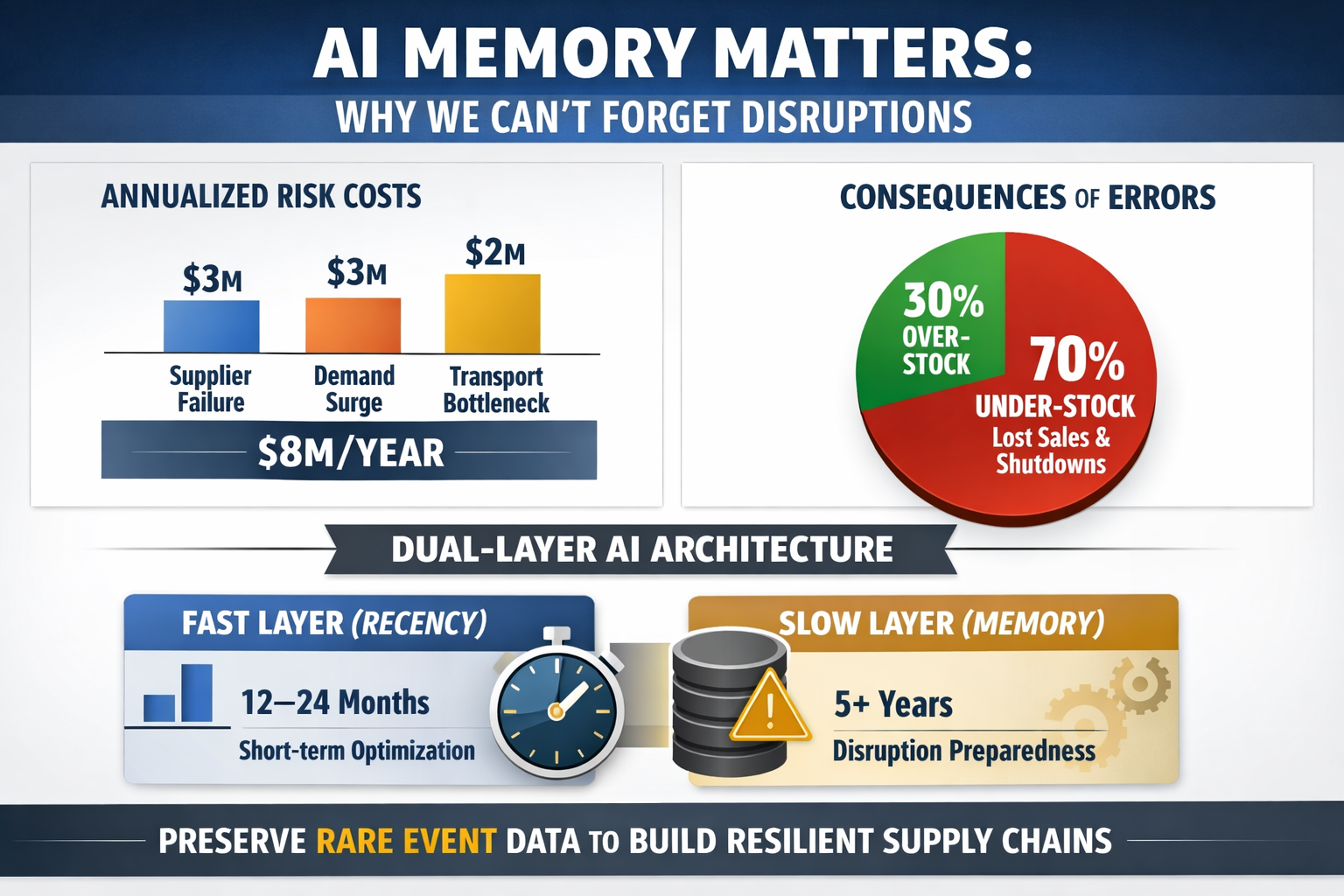
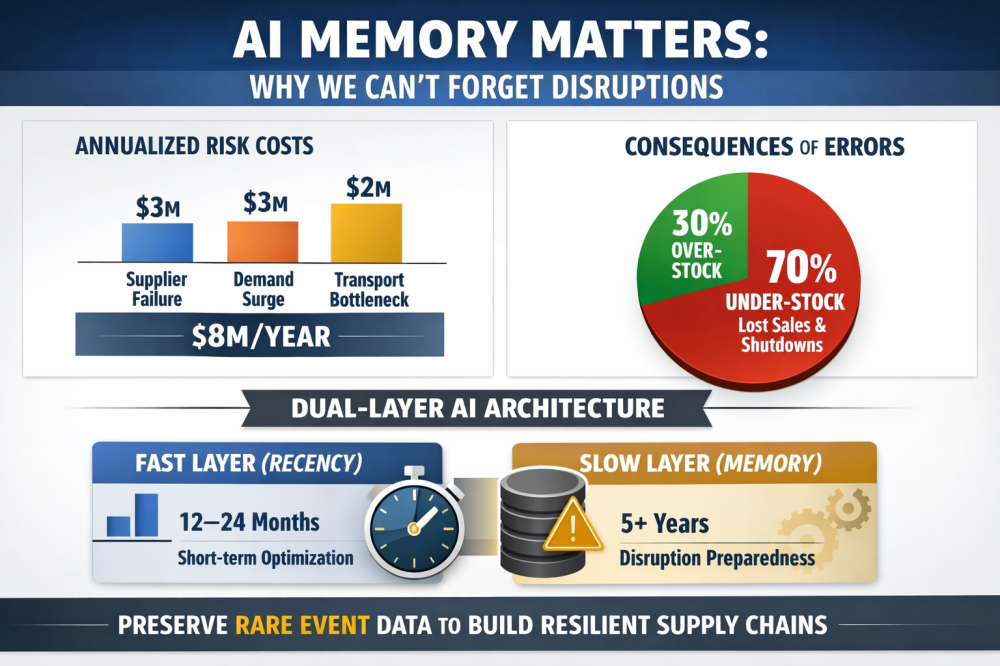
Abhishek Adhikary replied to Vishwadeep Khatri's topic in We ask and you answer! The best answer wins!I strongly support View B — Preserve long‑term organizational memory. AI systems must retain disruption signatures and rare event histories because these are the only signals that prepare organizations for catastrophic risks. Forgetting them creates “corporate amnesia” that leaves supply chains blind when the next crisis arrives. Why Historical Memory Matters 1. Two Categories of Data Data Type Examples Obsolescence Rate Should AI Discard? Routine operational data Weekly demand cycles, seasonal variation High ✅ Yes, recency weighting is valid Disruption signatures Supplier insolvencies, port strikes, pandemics Low ❌ No, must be preserved 2. Risk & Expected Value Analysis Formula: Expected Annual Cost (EAC) = Probability × Impact Disruption Type Probability Impact EAC Supplier failure 10% $30M $3M/year Demand spike 15% $20M $3M/year Transport bottleneck 20% $10M $2M/year Combined EAC — — $8M/year Even rare events carry annualized costs that dwarf the marginal gains of short‑term accuracy. 3. Error Asymmetry Error Type Occurs When Typical Cost Recoverable? Over‑inventory (from history weighting) Normal conditions Holding cost ~20–30% ✅ Yes Under‑inventory (from disruption blindness) Rare disruptions Lost sales, shutdowns ❌ Often permanent The Dual‑Layer AI Architecture solves the dilemma between agility and resilience. It separates data into two functional layers: Layer Type Data Horizon Purpose Outcome Fast Layer (Recency) 12–24 months Learns from current demand, supplier performance, and market trends High responsiveness and daily accuracy Slow Layer (Memory) 5+ years Retains disruption signatures — pandemics, strikes, supplier failures Long‑term resilience and risk preparedness 🏭 Real‑World Evidence Nokia vs. Ericsson (2000 Philips plant fire) Nokia preserved supplier risk memory → profits rose 42%. Ericsson trusted recent data → $400M losses, eventual market exit. Toyota RESCUE System (2011 earthquake → 2020 semiconductor shortage) Built disruption memory across 650,000 supplier sites. Outperformed Ford & GM during COVID shortages. Southwest Airlines (fuel hedging since 1990s) Preserved memory of 1970s oil shocks. Saved $3.5B over a decade, stayed profitable in 2008. Baxter International (2024 IV fluid crisis) Ignored 2017 disruption memory. Hurricane Helene crippled U.S. hospital supply chains. ✅ Final Position View B — Preserve long‑term organizational memory. AI must separate routine data (recency‑weighted) from disruption signatures (permanently preserved). Real‑world evidence — Nokia, Toyota, Southwest, Baxter — proves that forgetting history leads to catastrophic losses, while preserving it builds resilience and competitive advantage.
-
A Diploma in Air Hostess Training equips students with essential skills in communication, grooming, customer service, personality development, and aviation operations. With the right training and industry exposure, graduates can pursue careers as cabin crew, airport ground staff, and customer service executives. Choosing an institute with practical learning and placement support is important. Boston Aviation & Catering College, one of the Best Air Hostess Training Institutes in Tamil Nadu, offers industry-focused education and career guidance to help students build a successful aviation career.

-
Kartheeshwari joined the community
-
United Nations chief Antonio Guterres has issued a stark warning: artificial Intelligence is advancing at an unprecedented pace, outpacing even its creators' ability to comprehend its implications. Addressing a global dialogue in Geneva, he stressed the urgent need for harmonised international rules to manage AI's profound impact on economies, work, elections, and security, particularly safeguarding children from its potential risks. View the full article

-
Navinkumaar_Palanivel_XY7k joined the community
-
SANUFAR_SHAIK_JHyt joined the community
-
Preet-Saxena joined the community
-
Shobhit Sharma joined the community
-
Kaarunyaa_R_l6pw joined the community
-
Vidhi_Khakholia_FtOp joined the community
-
The company had in May unveiled tools that allow AI agents to trade stocks and make purchases on behalf of users. The company said its users can create a dedicated trading account, separate from their primary one, and have AI agents trade on their behalf. View the full article

-
Abdul-roqeeb _Solotan _MbnU joined the community
-
AI is often viewed only through a technological lens, even though its impact extends far beyond technology, right from social re-engineering of the corporate landscape to fundamentally changing how organisations work, structure teams and lead people, he said. View the full article

-
The iron gates of Blackwood Cemetery groaned under the midnight wind. Thomas, the old caretaker, dragged his shovel toward the fresh mound of earth at the edge of the plot. He hated the late shifts; the silence here wasn't peaceful—it felt heavy, like a collective bated breath. He struck the dirt, but instead of the dull thud of earth, his shovel hit hollow wood. Clang. Thomas froze. He hadn't dug this deep yet. From beneath his boots came a frantic, muffled scratching. Scratch. Scratch. Scratch. Heart hammering, he dropped to his knees, brushing away the loose soil with his bare hands. The scratching grew louder, desperate and furious, accompanied by a faint, suffocating scream. He cleared the nameplate on the coffin lid. His breath caught in his throat. It read: Thomas Vance. The scratching abruptly stopped. From behind him, a cold hand rested gently on his shoulder.
-
Out of India, Into the world VCs believe India's energy transition solutions will be globally relevant, making them lucrative long-term bets View the full article

- Yesterday
-
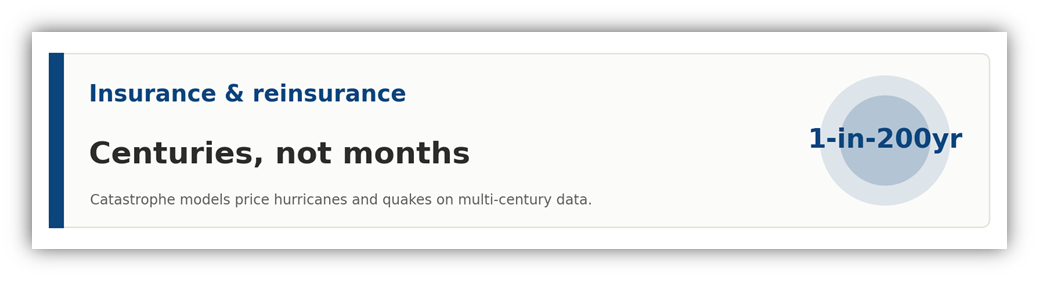
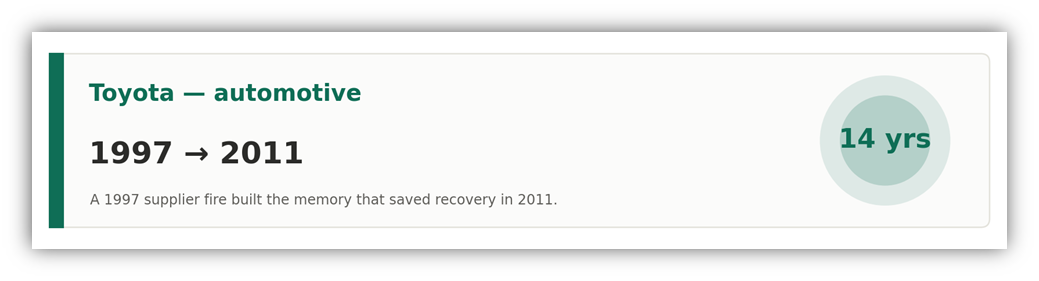
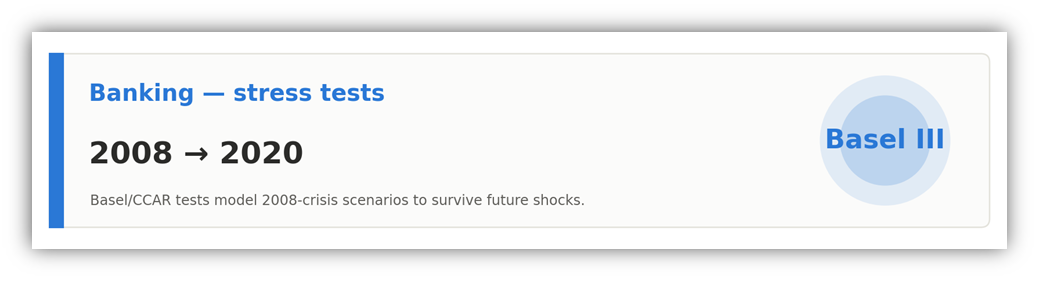
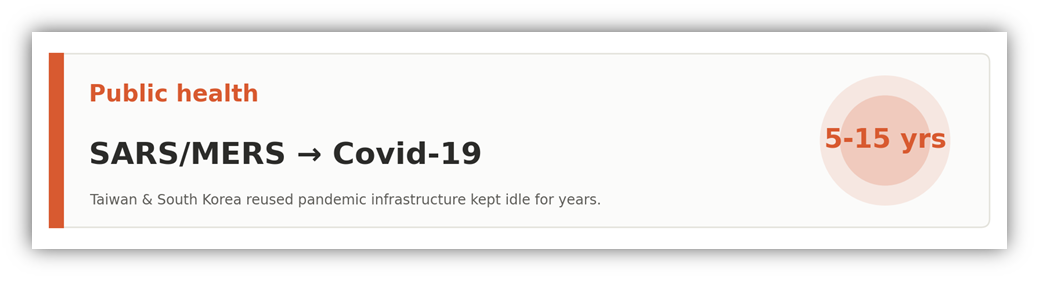
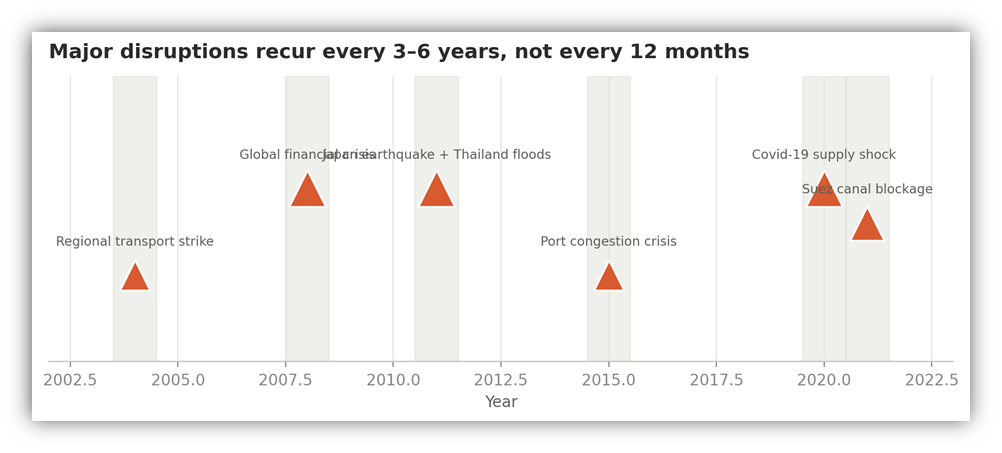
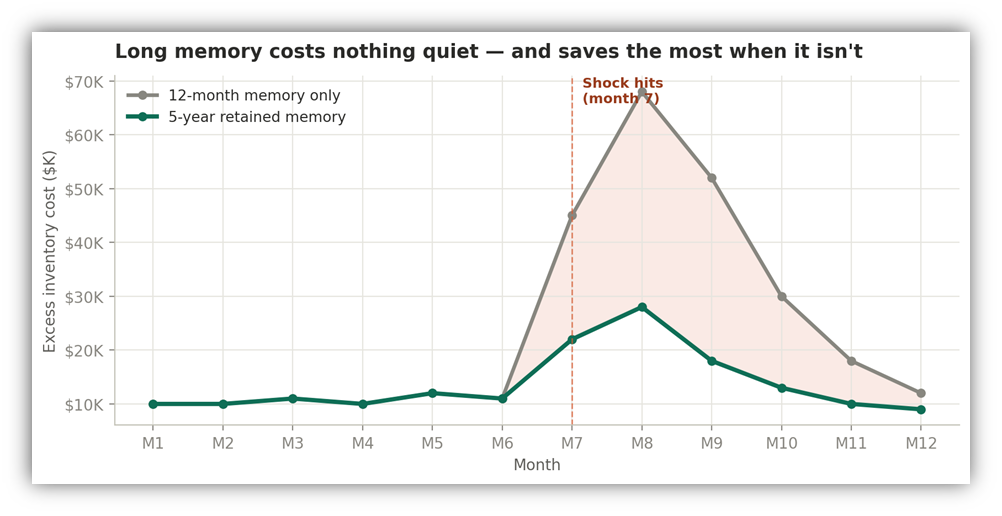
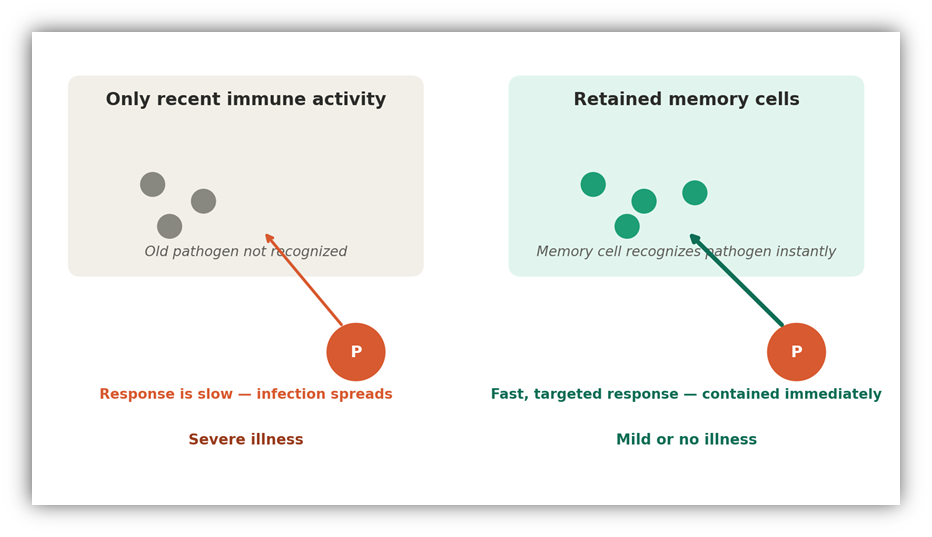
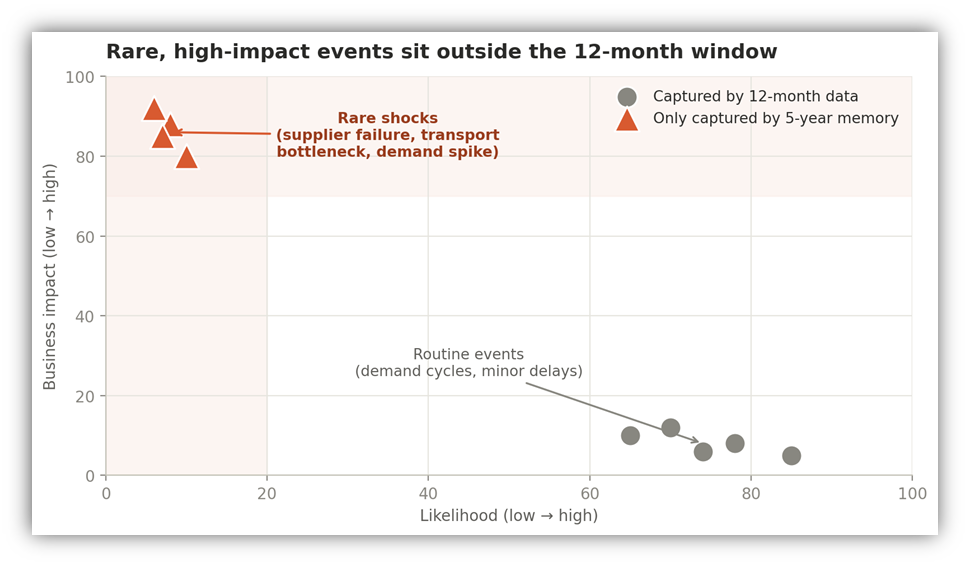
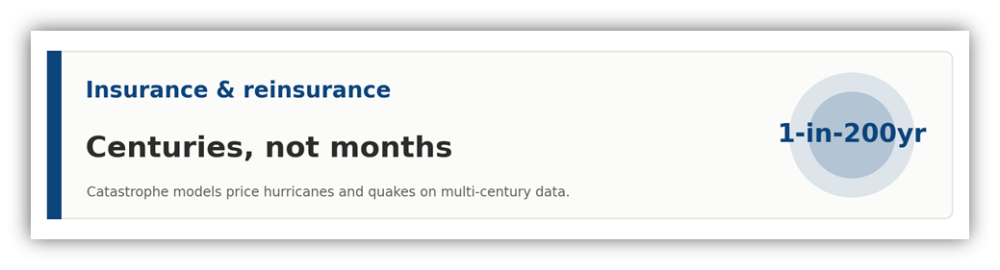
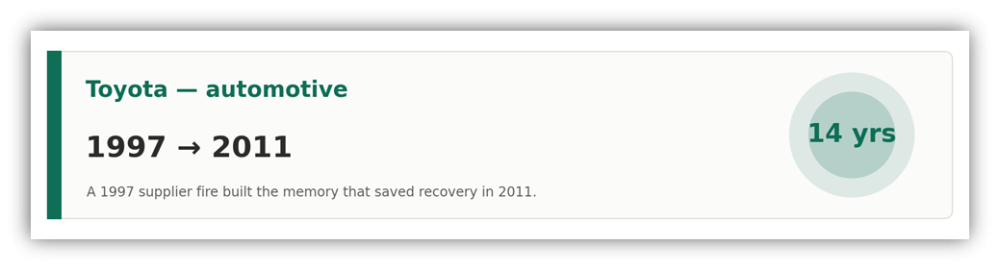
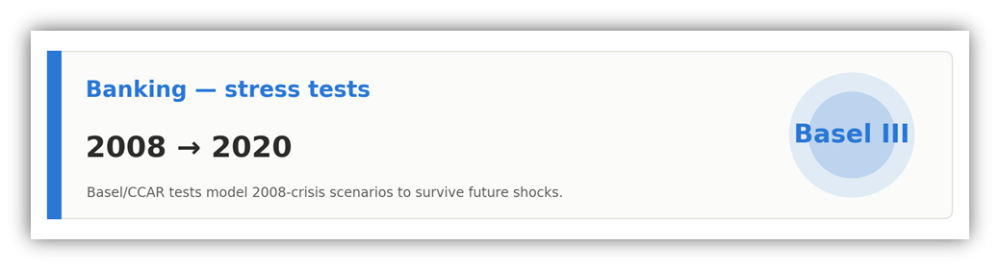
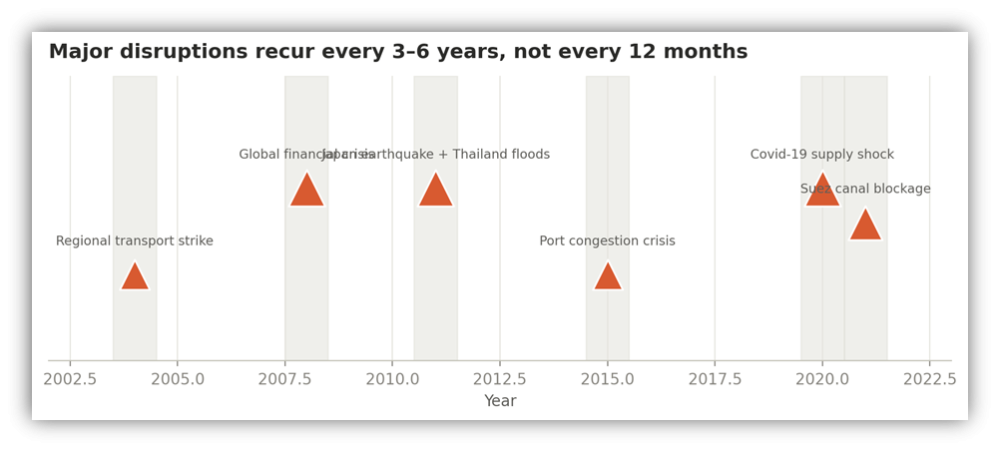
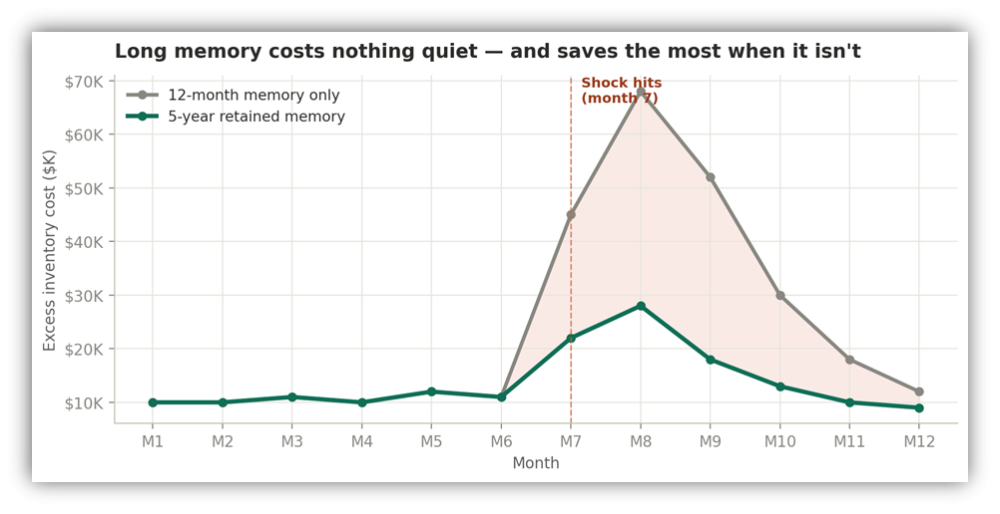
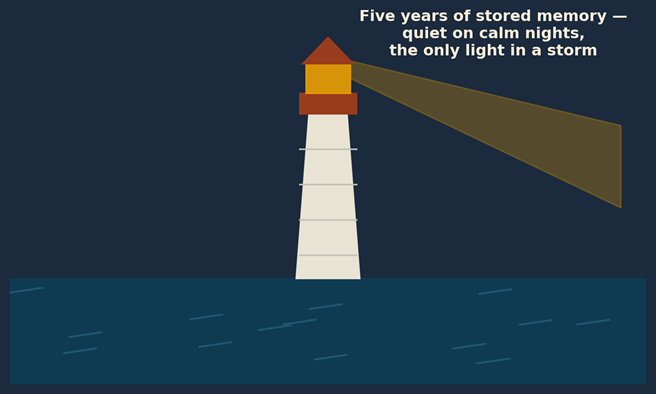
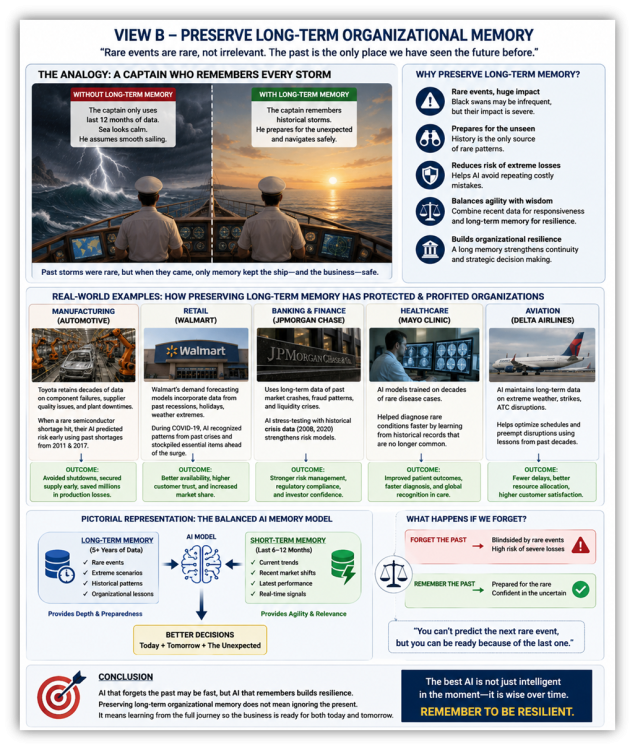
anthony rebello replied to Vishwadeep Khatri's topic in We ask and you answer! The best answer wins!Should AI Be Allowed to Forget the Past to Improve Future Decisions?A Case in Support of View B Preserve Long-Term Organizational MemoryPosition: Rare events may be uncommon, but they carry the greatest business impact. AI should retain historical knowledge so the organization stays prepared for situations that today's data does not capture. Dimension Status AI recommendation Use only the last 12 months of data Argument for forgetting Older data reflects conditions that no longer exist Historical data at risk 5 years of rare-event records Rare events on record Supply disruptions, demand spikes, transport bottlenecks, supplier failures Typical recurrence interval Every 3–6 years Position defended View B — preserve long-term organizational memory Table 1. The dilemma at a glance — what the AI proposes to discard, and what it would cost. 1. Introduction — Why View B Wins This ArgumentView B makes a claim that sounds almost obvious once stated plainly: the events that hurt an organization the most are exactly the ones a “recent data only” model will never see coming. An AI trained purely on the last 12 months has, by construction, never experienced a rare disruption because rare disruptions don't happen every 12 months. Optimizing for responsiveness to normal conditions while erasing the memory of abnormal ones isn't intelligence. Its amnesia dressed up as agility. 2 The Analogy — The Immune SystemThe clearest way to understand View B is biological. The body's immune system doesn't discard old information just because a particular pathogen hasn't appeared in years. Figure 1. A body with only recent immune activity reacts too slowly to an old threat; a body with retained memory cells recognizes it instantly. Specialized memory B-cells and T-cells persist for years sometimes decades after an infection has cleared, holding a blueprint of a threat the rest of the body has “forgotten” in its day-to-day chemistry. Most days, that memory does nothing. It costs a small amount of biological upkeep and produces zero measurable benefit for years at a stretch. Then, the one day the old threat resurfaces, that dormant memory is the entire difference between a two-day fever and a hospitalization. An AI's “12-month responsiveness” is the immune system's daily chemistry necessary, but not sufficient. The 5-year memory of supply shocks, demand spikes, and supplier failures is the memory cells: it costs a little model complexity to retain, does nothing 95% of the time, and is the only thing standing between the company and a stockout on the day a disruption returns. 3. The Reasoning — Why Rare Events Break “Recent-Data-Only” ModelsThe core statistical issue is that supply chain risk is fat-tailed, not evenly distributed. Most months look alike; a small number of months carry almost all of the damage. A model optimized purely on the last 12 months has mathematically never seen the tail because the tail, by definition, doesn't show up every year. Figure 2. Routine events sit comfortably inside a 12-month model's experience. Rare, severe shocks sit outside it entirely. A model can only learn the shape of a distribution's tail if it has actually seen the tail. Delete the last five years, and the only examples the model has ever had of the disruptions View B is worried about disappear with it. 4.Real World Evidence - Organizations That Profited from Long Memory4.1 Insurance & reinsurance catastrophe modelling runs on centuries Reinsurers such as Munich Re and Swiss Re don't price hurricane or earthquake risk using last year's claims. Their catastrophe models run on centuries of storm-track, seismic, and flood data, because a single “1-in-200-year” event can bankrupt an insurer that priced only on recent, quiet years. Insurers who kept the long memory survived events like the 2011 Tōhoku earthquake with capital intact; those leaning on recent, calm-year data faced ratings downgrades and forced repricing. 4.2 Automotive - Toyota's supply chain resilience In 1997, a fire at a single supplier Aisin Seiki, Toyota's sole source for a critical brake valve halted nearly all of Toyota's Japanese production within days. Toyota didn't file that event away as outdated. It built detailed multi-tier supplier maps and a business continuity system designed explicitly to remember single points of failure. That memory sat mostly dormant for over a decade. Then in 2011, the Tōhoku earthquake and tsunami devastated the same supplier network on a vastly larger scale and because Toyota had preserved the 1997 lessons, it rerouted production faster than rivals encountering this class of disruption for the first time. 4.3 Banking- Stress testing on crisis-era data After the 2008 financial crisis, regulators required banks to run mandatory stress tests (Basel III, CCAR) not against recent, stable-market data, but against the worst historical episodes on record. A bank modelling risk only on the last 12 months of a bull market looks healthy right up until it isn't. When Covid-19 hit markets in March 2020, banks that had kept 2008-crisis scenarios embedded in their risk models weathered the shock with far less balance-sheet damage than institutions leaning on recent-data optimism. 4.4 Public health- Pandemic memory that saved lives Taiwan and South Korea were hit hard by the 2003 SARS and 2015 MERS outbreaks. Instead of treating those as one-off crises to move past, both governments retained the contact-tracing systems, emergency stockpile protocols, and rapid-testing supply chains built from them. When Covid-19 arrived in 2020, both countries activated infrastructure they'd kept idle for 5–15 years and recorded among the lowest early mortality rates in the world 5. Validating the Pattern — Two More Charts5.1 Disruptions recur every 3–6 years, not every 12 months Figure 3. Severe disruptions are spaced years apart a 12-month memory has, at any given moment, a high probability of having witnessed zero of them directly. 5.2 The cost of forgetting versus remembering Figure 4. Both memory strategies look identical for six calm months. When the shock hits in month 7, the short-memory model reacts late and the cost spikes sharply; the long-memory model recognizes the pattern early and the spike is far smaller. Both models look identical for six calm months the historical memory costs nothing extra and adds no visible value. Then the shock hits. The short-memory model has no precedent to recognize the pattern early, so it reacts only after damage is already compounding. The long-memory model recognizes the shape of the disruption from historical precedent and responds faster, cutting both the peak and the recovery time substantially. The five years of “outdated” data were dead weight for six months and the reason the seventh month didn't become a crisis. 6.Conclusion — Memory Is Not the Opposite of Adaptability A lighthouse earns nothing on a calm night. It exists for the one storm when a fixed point matters most. A lighthouse doesn't earn its keep on the calm nights. Three hundred and sixty nights a year, it's a quiet, motionless structure a ship could navigate around without it. It exists entirely for the one night in a storm when visibility collapses and a captain needs a fixed point built from knowledge of every wreck that ever happened on those rocks not just the ones from the last twelve months. That is the case for View B in full. Immune memory cells, catastrophe models built on centuries of storms, Toyota's 1997 fire mapped forward to 2011's tsunami, banks stress-tested against 2008 to survive 2020, Taiwan's SARS era infrastructure repurposed for Covid-19 none of these systems profited from their long memory on an average day. They profited from it on the one day that mattered most, precisely because that day looked nothing like the recent past.

-
My answer is View B: preserve long-term organizational memory. And I want to be direct about what is wrong with the AI's recommendation in this prompt, because the argument for discarding anything older than 12 months sounds rational right up until you ask what it would do when the next rare disruption hits. The answer is: nothing useful, because every piece of knowledge that would have told it what to do would have been deleted.The AI's logic — that older data reflects business conditions that no longer exist — confuses two different kinds of historical information. Normal historical data about routine demand patterns does age. Disruption signatures — records of how supply chains broke, how demand collapsed or spiked, how suppliers failed under stress — don't age the same way, because the underlying mechanisms that caused them are structural, not cyclical. A supplier that failed once under a specific stress condition carries permanently different risk characteristics than one that has never been tested. A product category that spiked 800% during a crisis doesn't become irrelevant to inventory planning just because the crisis ended. The pattern matters, not the date on it. The question is not whether historical data is old. It is whether the events recorded in that data will happen again. Rare supply chain disruptions, sudden demand spikes, and supplier failures do not expire — they recur. An AI that has deleted its memory of them is not more accurate. It is more surprised. The Hidden Error in the AI's ReasoningThe AI in this prompt is making a category error. It is treating all historical data as equally subject to decay, when in fact historical data separates cleanly into two categories with completely different shelf lives: Data Type Examples Rate of Obsolescence Discard after 12 months? Routine operational data Normal weekly demand cycles, typical supplier lead times, standard seasonal variation High — patterns shift as markets evolve Yes — recency weighting is appropriate here Disruption signatures Major supply chain failures, sudden demand spikes, supplier insolvencies, transportation bottlenecks, pandemic-scale demand distortions Low — the mechanisms that caused them remain structurally present No — these are the only preparation for the next occurrence The AI has correctly identified that routine operational data should be weighted toward recency. It has incorrectly extended that logic to disruption signatures, which are a fundamentally different category. Removing them doesn't make the model meaningfully more accurate in normal conditions. It makes the model completely blind during the conditions that matter most: when something breaks. The Mathematics of Rare but High-Impact EventsThe financial argument for preserving historical disruption data is grounded in expected value — a standard risk-management calculation that combines probability with impact. The AI's recommendation implicitly optimizes for the most likely scenario. Expected value analysis shows why that is the wrong objective when tail events are involved. Formula: Expected Annual Cost (EAC) = Probability of event per year × Financial impact Disruption Type Probability (per year) Estimated Impact Expected Annual Cost Major supplier failure (single-source component) 10% — roughly once per decade $30M in lost production and emergency sourcing $3,000,000/year Significant demand spike (comparable to COVID essentials) 15% — roughly once per 6–7 years $20M in lost sales and expediting costs $3,000,000/year Transportation bottleneck (comparable to Suez Canal 2021) 20% — roughly once per 5 years $10M in rerouting and delay costs $2,000,000/year Combined EAC of ignoring disruption history — — $8,000,000/year These figures are illustrative, but the structure is the point: a disruption that happens once per decade and costs $30 million has an annualized expected cost of $3 million per year — every year, including the years it doesn't happen. An AI that discards its memory of previous disruptions accepts that liability in exchange for marginal improvements in day-to-day inventory accuracy. The trade is almost never favorable. The Asymmetry of Error Error Type When it occurs Typical cost Recoverable? Slight over-inventory from historical data weighting Normal market conditions Holding cost: typically 20–30% of inventory value per year Yes — stock eventually sells or is liquidated Under-inventory from disruption blindness During a rare disruption Lost sales + emergency sourcing premium + customer defection + production shutdown Partially — customer defection is often permanent Nokia vs. Ericsson: The Same Event, Opposite OutcomesThe most direct evidence for View B in any supply chain literature is also one of the most thoroughly documented: the Philips semiconductor plant fire of March 17, 2000. A lightning strike caused a small fire at Philips's facility in Albuquerque, New Mexico — a plant that supplied radio-frequency chips to both Nokia and Ericsson, together accounting for 40% of the plant's total chip output. The fire was extinguished within ten minutes. No building collapsed. No lives were lost. Philips initially estimated resumption within one week. Nokia and Ericsson received the same notification. Their responses diverged completely within days, and the divergence traced directly to how each company had built and used its institutional memory of supply risk. Nokia — Preserved supply chain risk history Ericsson — Trusted the recent signal, accepted Philips's 1-week estimate Tracked supplier operations daily for 5 years. Purchasing manager recognized the fire as a likely weeks-long contamination problem, drawing on prior semiconductor plant experience. Escalated to senior management within days; crisis plan activated immediately. Secured alternative suppliers globally within one week. Re-engineered phones to accept both American and Japanese chips. Result: Nokia profits rose 42% in 2000. The fire was not mentioned in its annual report. No supply disruption crisis plan in place. Low-level technician received the alert — did not escalate for three weeks. By the time Ericsson acted, Nokia had secured available global chip supply. No alternative suppliers, no re-engineering plan, no contingency logistics. Result: $400M+ in direct revenue losses. Lost 3 percentage points of global market share. Eventually exited the mobile phone business in 2011. The Kellogg School of Management, which has studied this case in its supply chain curriculum, summarizes it precisely: Nokia had a crisis plan in place. Ericsson did not. That crisis plan was built on institutional memory — years of daily supplier tracking, scenario planning derived from past disruption patterns, and organizational preparedness that recent data alone could never have built. The AI in this prompt, operating on the last 12 months only, would have been Ericsson. Toyota 2011: Why the World's Most Efficient Supply Chain Built a Disruption Memory SystemThe March 2011 Tōhoku earthquake and tsunami struck one of the most optimized supply chains in the world. Toyota's Just-in-Time system, designed for maximum efficiency under normal conditions, carried essentially no buffer inventory. When suppliers across the Tōhoku region were destroyed or forced offline, Toyota's global output declined by 78% in April 2011 compared to the same month a year earlier. Production of over 150,000 vehicles was affected. Toyota reported a 77% decline in profits for the fiscal year ending March 2012. The company had to shut down 26 of 30 Japanese production lines. Toyota's institutional response is the organizational embodiment of View B, executed at scale. Rather than returning to pure Just-in-Time optimization as conditions normalized, Toyota built a permanent disruption memory system. The RESCUE system — REinforce Supply Chain Under Emergency — became a database covering vulnerability and parts information on over 650,000 supplier sites, extending visibility from Tier 1 all the way to Tier 4. Toyota documented this in its own 2012 Annual Report as a direct response to both the 2011 earthquake and the Thailand floods. The company also introduced a 60/20/20 supply model — splitting spend across multiple suppliers — and a Rescue Stock strategy requiring suppliers to maintain months of safety stock for critical components, deliberately contradicting the zero-inventory principle of JIT. The proof came during COVID-19. When the global semiconductor shortage began in 2020, Ford and GM — operating on lean, recency-optimized supply chains with no disruption memory institutionalized from 2011 — faced severe production shortfalls. The auto industry lost an estimated $210 billion in revenue in 2021 due to the semiconductor shortage. Toyota, operating with its RESCUE system and 2011-derived multi-sourcing policies, managed the shortage measurably better than most competitors. The 2011 disruption memory, preserved and institutionalized, directly protected Toyota's 2020 and 2021 operations — a gap of nearly a decade. An AI discarding data older than 12 months would have deleted the entire basis for that protection. Southwest Airlines: $3.5 Billion Built on Organizational Memory of Rare EventsSouthwest Airlines initiated its fuel-hedging program in the early 1990s. Jet fuel hedges at that time were, as Southwest's own company history describes, as outdated as "bell-bottom pants" — the last time hedging had clearly paid off was during the 1970s Arab oil embargo. An AI system optimizing on recent data in the mid-1990s would have found no compelling case for hedging. Oil prices were stable. Hedging premiums were real and immediate costs. The benefit was invisible in any 12-month lookback window. Southwest's leadership made the hedging decision because they preserved and acted on organizational memory extending further back — the 1973 Arab oil embargo, the 1991 Gulf War fuel price spike, and the structural understanding that aviation fuel costs are periodically subject to severe, sudden, geopolitically-driven disruptions that recent data systematically underweights. The financial outcome is documented in Southwest's SEC filings and its own published corporate history. From 1998 to the summer of 2008, the hedging program saved Southwest an estimated $3.5 billion compared to what it would have paid at industry-average fuel prices — equivalent to 83% of the company's total profits over that period. In 2008 alone, when crude oil peaked above $147 per barrel, Southwest held hedging contracts covering approximately 70% of its fuel consumption at an effective price of roughly $51 per barrel, generating hedging gains of $1.3 billion for that year. Southwest remained profitable that year while virtually every other major U.S. carrier posted losses. In 2022, when oil prices spiked again after Russia's invasion of Ukraine, Southwest's hedges reduced fuel costs by approximately 70 cents per gallon, translating into $1.2 billion in additional savings. COVID-19 and the Semiconductor Shortage: What Recency-Optimized AI Did When the Rare Event ArrivedThe 2020–2021 global supply chain crisis is the most recent large-scale real-world test of what happens when AI systems optimized for recent patterns encounter a rare disruption with no close precedent in their training window. Amazon's demand forecasting models — among the most sophisticated in any industry — were trained primarily on recent behavioral patterns. When demand for essential goods spiked in February and March 2020, the pattern was so far outside the recent data distribution that the models failed to anticipate it. Amazon experienced widespread stockouts on critical categories and was forced to temporarily suspend or override AI-driven inventory recommendations. Ford and GM had optimized semiconductor sourcing based on recent demand and recent supplier performance, with no actionable institutional memory of the 2011 Japan earthquake disruption built into their procurement systems. When COVID-19 disrupted semiconductor fabrication simultaneously, Ford lost an estimated $2.5 billion in 2021 profits. GM cut production of approximately 1.3 million vehicles across 2021. The auto industry as a whole lost an estimated $210 billion in revenue. Toyota, operating with RESCUE system disruption memory from 2011, managed the same shortage significantly better. Baxter International and Hurricane Helene: A 2024 Warning That the Signal Was Already ThereThe clearest and most recent illustration of what's at stake doesn't come from a decades-old case study — it happened nine months ago. On September 27, 2024, Hurricane Helene caused a levee breach that flooded Baxter International's North Cove manufacturing facility in Marion, North Carolina. That single plant supplied roughly 60% of all IV fluid used by U.S. hospitals daily — saline, dextrose, and Ringer's lactate solutions among 17 different products. The plant shut down entirely. Within days, hospitals nationwide were told to expect only 40% of their normal shipments. A survey by Premier Inc. found 86% of U.S. healthcare providers were experiencing IV fluid shortages, and the CDC issued a national health advisory on October 12, 2024, with fluid-conservation guidance. Baxter did not return to pre-hurricane production levels until nearly five months later, in February 2025. What makes this case decisive for the View B argument is that the disruption signature was not novel. Baxter itself had lived through a near-identical event in 2017, when Hurricane Maria shut down its Puerto Rico saline plants and triggered a smaller-scale IV shortage. On a 12-month recency window, that 2017 event would have aged out of any AI model's relevance by 2019 and vanished entirely. The underlying structural vulnerability — one facility supplying the majority of a critical, hard-to-substitute product — was identical in 2024 to what it was in 2017. The industry had seven years to diversify sourcing after a documented precedent and largely did not. An AI discarding data older than 12 months would have had no way to flag single-source concentration as a live risk heading into 2024, even though the exact failure mechanism had already fired once before at the same company. The Federal Reserve Stress Tests: View B Encoded in LawThe Dodd-Frank Wall Street Reform and Consumer Protection Act mandated annual stress tests — DFAST — for all U.S. bank holding companies with total consolidated assets of $100 billion or more. The Federal Reserve's stress scenarios explicitly require banks to model their balance sheets under conditions drawn from historical tail events: scenarios calibrated to match the 2008 financial crisis, the 1987 equity market crash, and other rare but severe disruptions that may not appear in any recent operating history. The regulatory logic is precisely the View B argument, stated as federal law: recent data is insufficient to prepare for rare but severe events. Correcting the P&G Example Bex Left IncompleteBex takes the correct position but her P&G example — that Procter & Gamble leveraged historical data to equip its AI systems with insights from past disruptions — is stated without a specific program name, a verifiable event, a measurable outcome, or a date. It cannot be confirmed from any public P&G record. The verifiable P&G story is not just incomplete, it runs the other way. P&G is a documented case of the exact failure this debate is about. Despite living through the 2011 Thailand floods and the Tōhoku earthquake that same year — both major, well-publicized supply chain disruptions across the electronics and automotive industries — P&G entered the COVID-19 pandemic in March 2020 with only two to three weeks of toilet paper inventory on hand, built on lean, just-in-time distribution. When U.S. demand for paper goods spiked, P&G was blindsided along with the rest of the industry. Supply chain researchers have attributed this directly to what one analyst calls organizational amnesia: the historical disruption signature existed in the record, but the organization did not institutionalize it the way Toyota did after 2011. P&G is not evidence that View B succeeded. It is evidence of what happens when an organization has the historical memory available and lets it fade anyway — the exact failure mode an AI enforcing a 12-month data window would guarantee by design, since it would delete the record before anyone even had the chance to forget it organizationally. Where View A Has a Point — and How View B Addresses ItView A is not wrong that recent data produces more accurate inventory recommendations for normal operating conditions. That is a real cost, and View B must address it rather than dismiss it. The resolution is recognizing that the two objectives call for different treatment of different data categories, not a single policy applied uniformly: Data Category Appropriate weighting approach Rationale Routine demand and supplier performance data Exponential decay — recent observations weighted heavily, older ones fade naturally Business conditions genuinely change. Last month's lead time is more predictive than last year's. Disruption signatures — events outside 2 standard deviations of normal Preserved at full weight, classified separately, not subject to time-based decay The mechanism that caused a supply chain disruption does not expire. Supplier failure records Permanently flagged in supplier profiles regardless of age A supplier that failed under stress ten years ago carries different risk than one never tested. Demand spike events Stored as scenario anchors for stress-testing, not removed from training A 700% demand spike during a rare event is not noise to filter. It is the signal that matters most when the next event occurs. This is not a middle-ground hedge between View A and View B. It is the correct implementation of View B: disruption memory preserved unconditionally, routine operational data handled with the recency-weighting View A correctly argues for. The AI in the prompt conflated these two categories. View B, applied correctly, separates them. Final PositionView B: preserve long-term organizational memory. Nokia preserved supplier risk history and activated it within days of a ten-minute fire in New Mexico — its profits rose 42% while Ericsson lost $400 million from the same event and eventually exited the market. Toyota built the RESCUE system from 2011 disruption data covering 650,000+ supplier sites and entered the 2020 COVID semiconductor shortage better prepared than competitors who hadn't. Southwest Airlines retained the institutional memory of 1970s and 1990s oil price crises and generated $3.5 billion in savings over a decade. The Federal Reserve mandated by law that major banks preserve historical disruption scenarios. And just nine months ago, Baxter's own history with Hurricane Maria in 2017 should have flagged the exact concentration risk that crippled U.S. hospital IV supply when Hurricane Helene struck the same type of facility in 2024 — proof that disruption signatures don't just matter in theory, they recur against the very companies that lived through them once already. The AI in this prompt has made a statistically coherent but operationally dangerous recommendation. Recent data is more representative of normal conditions. But inventory policy is not only about normal conditions — it's about surviving the conditions that aren't normal, which happen to be the ones that break organizations. Don't let the AI forget. The events it wants to discard are the only ones that ever came close to being existential.
-
The rapid emergence and spread of AI has become a defining feature of the U.S. economy, of prime interest to Federal Reserve officials trying to understand its potential to reshape productivity, growth, inflation and labor demand. Among a broad review of the Fed launched by new Chairman Kevin Warsh, one panel will look solely at AI and its implications for productivity, a force that can allow the economy to grow faster with less inflation, but also means fewer workers are needed to create the same output. View the full article

-
Artificial intelligence is poised to revolutionize economies, but emerging markets must cultivate local ecosystems to truly benefit, a World Bank report reveals. Beyond importing models, success hinges on robust digital infrastructure, skilled talent, and adaptable AI building blocks. This shift promises short-term productivity gains and long-term economic transformation, provided challenges like market fragmentation and global player concentration are addressed through strategic investment and collaboration. View the full article

-
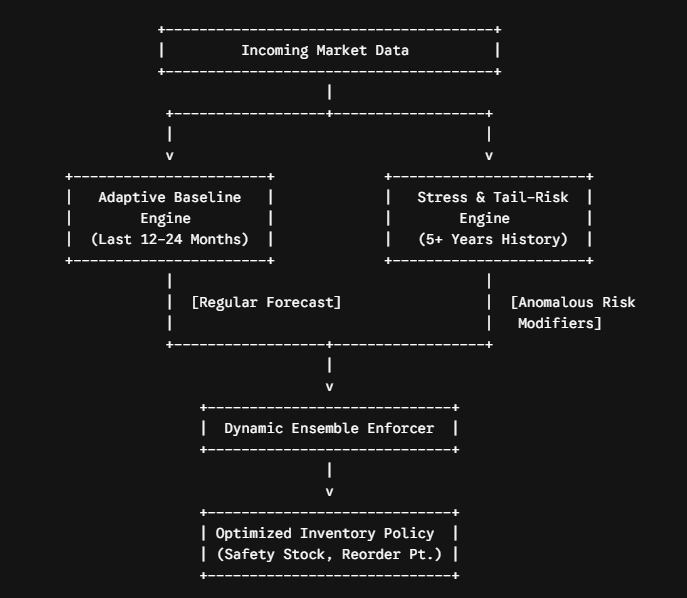
Ankita_Bhardwaj_gN3V replied to Vishwadeep Khatri's topic in We ask and you answer! The best answer wins!1. Clear Positioning StatementI strongly support View B (Preserve long-term organizational memory) and echo Bex’s position, but with a critical architectural nuance: the dilemma between recent adaptability and historical resilience is a false dichotomy. Choosing View A creates a "corporate amnesia" that exposes supply chains to catastrophic, tail-risk events (Black Swans). However, simply dumping raw, 5-year-old data into a standard model does degrade short-term responsiveness. Therefore, my position is that AI systems must preserve long-term organizational memory not by treating all history equally, but through multi-tier data architecture and hybrid modeling (such as extreme value theory and ensemble methods). This retains readiness for high-impact, low-frequency (HILF) events while keeping day-to-day operations highly adaptive. 2. Quality Reasoning: Demonstration vs. AssertionTo understand why View A is dangerous for a large manufacturing enterprise, we must look at the mathematical and operational mechanics of supply chain AI: The Flaw of "Recency Bias" in Neural Networks: If an inventory AI model relies solely on the last 12 months of stable data, its loss function optimizes heavily for steady-state variance. When a rare disruption occurs, the model perceives it as an "outlier" or statistical noise and fails to trigger safety stock thresholds, leading to immediate stockouts or severe bullwhip effects. The True Cost of Tail Risks: In manufacturing, the financial cost of being 2% less accurate on day-to-day demand forecasting is vastly outweighed by the catastrophic, sometimes existential cost of a total supply chain halt caused by a rare event. Data Content vs. Data Age: Business conditions change, but the physics of disruptions do not. A port strike or a raw material shortage five years ago yields identical structural bottlenecks to one occurring today. Forgetting the past means forcing the AI to relearn structural constraints from scratch during a crisis. 3. Real-World Evidence: 6 Proven Examples with Facts & FiguresTo demonstrate that long-term organizational memory dictates market survival, consider these documented industry cases: Enterprise The Event / Historical Context Impact of Preserving Memory & Analytical Depth Procter & Gamble (P&G) Leveraged a decade of historical logistics and weather data during massive global shipping disruptions. Used its multi-echelon inventory optimization AI to run predictive simulations, maintaining a 99%+ on-shelf availability while competitors faced widespread stockouts. Toyota After the 2011 Fukushima earthquake, Toyota built the RESCUE (Reinforce Supply Chain Under Emergency) system, embedding deep historical supplier risk data. When the 2021 semiconductor shortage hit, Toyota’s AI-driven memory identified vulnerable tier-2/3 suppliers years in advance, allowing them to stockpile chips and outproduce GM as the top US automaker that year. Caterpillar (CAT) Integrates over 10-15 years of historical equipment operation, macroeconomic cycles, and dealer inventory data into its spare parts AI. Prevents billions in lost revenue during sudden global mining/construction upturns by holding strategic "slow-moving" components that standard 12-month models would purge as dead stock. Walmart Maintains the "Hurricane Frances" baseline from 2004, tracking hyper-specific consumer demand shifts during extreme weather anomalies. When predictable or unpredictable disruptions occur, their predictive algorithms automatically reroute supply chains to stock critical items (like strawberry Pop-Tarts and water), boosting localized revenue by 3x to 5x during crises. Schneider Electric Uses long-term structural data from historical geopolitical shifts and supplier bankruptcies in its modern Smart Logistics AI. Enabled the company to successfully navigate the sudden 2022 European energy crisis, achieving a 10% reduction in supply chain carbon footprint and avoiding major production downtimes via pre-mapped alternative sourcing. TSMC (Taiwan Semiconductor Manufacturing Co.) Retained detailed operational and structural data from the 1999 Jiji earthquake to train its automated resilience models. When subsequent major seismic events hit Taiwan, AI-managed automated shutdown and recalibration protocols allowed factories to restore 90%+ operations within hours, saving billions in ruined silicon wafers. 4. Countering View A (Mitigating the Agility Argument)Proponents of View A argue that holding onto old data reduces the AI's responsiveness to current market trends. While a valid concern for a naive, single-model setup, this argument fails to account for modern, mature AI architecture. We do not need to feed 5-year-old data directly into the daily forecasting model. Instead, we can counter View A's limitations by treating data through a dual-speed mechanism: Fast Layer: Recent data (12 months) dictates the baseline operational drift (seasonality, current consumer preferences). Slow Layer: Historical data (5+ years) dictates the boundary constraints and stress limits (maximum lead times, supplier fragility, capacity ceilings). By separating the data's purposes, we maintain 100% of the short-term agility View A desires, without suffering the systemic blindness that View A inflicts. 5. Deployable Solution Framework: The Dual-Engine Resilience Architecture (DERA)To resolve this dilemma for the manufacturing company, I propose the Dual-Engine Resilience Architecture (DERA). This framework ensures the AI remains agile on a daily basis while retaining deep historical resilience. Technical Implementation ComponentsThe Adaptive Baseline Engine (Short-Term): Trains on the last 12–24 months of data. It utilizes localized algorithms (e.g., LightGBM or localized LSTM) to optimize for high-frequency, short-term demand forecasting accuracy. The Stress & Tail-Risk Engine (Long-Term Memory): Uses the full 5+ years of historical data. This engine specifically isolates HILF periods (e.g., the 2020 pandemic onset, severe weather events) and runs Generative Adversarial Networks (GANs) or Extreme Value Theory (EVT) models to simulate synthetic stress scenarios. The Dynamic Ensemble Enforcer: A gating mechanism that continuously monitors real-time market volatility indexes, supplier lead-time variances, and geopolitical risk indicators. Under normal conditions: It gives a 95% weight to the Adaptive Engine. Under anomalous conditions (e.g., a supplier lead time spikes past a 3-sigma threshold): It dynamically shifts weight to the Stress Engine, automatically injecting a "Resilience Buffer" into the inventory policy. Measurement & KPI DashboardTo prove the business value of this dual-speed framework to senior operations leaders, the AI's performance must be measured via two distinct categories of metrics: Operational Efficiency Metrics (Day-to-Day): Mean Absolute Scaled Error (MASE): Must remain below $1.0$ to prove that incorporating long-term memory has not degraded the short-term forecast accuracy. Inventory Turn Ratio (ITR): Evaluates if the system is maintaining lean, cost-effective day-to-day stock levels. Systemic Resilience Metrics (Disruption Performance): Time-to-Survive (TTS): The maximum duration that the supply chain can continue serving customers during a localized supplier failure before stockouts occur. Recovery Service Level (RSL): The percentage of demand met during an active, verified market disruption anomaly (Target: >95% versus the industry standard drop to <70%). ConclusionBy implementing the DERA framework, the manufacturing firm does not have to choose between agility and memory. It can successfully run an efficient, highly responsive daily operation while remaining fully insulated from the catastrophic supply chain shocks buried in its past history.
-
India's Minister of State for External Affairs, Kirti Vardhan Singh, is leading a delegation to Geneva for the inaugural UN Global Dialogue on AI Governance. This crucial forum will review the first independent scientific assessment of AI's capabilities, risks, and opportunities. Discussions will cover AI's societal impact, bridging digital divides, safety, and human rights, aiming to foster international cooperation for AI's responsible development, especially for developing nations. View the full article

-
Global brokerage Jefferies suggests the AI investment boom might falter not due to tech giants cutting spending, but investor impatience for returns. A significant wealth transfer to North Asia, evident in surging Korean and Taiwanese market caps, highlights where AI capital is flowing. US hyperscalers' recent underperformance and increased debt funding raise concerns about potential capital destruction if returns don't materialize. View the full article

-
Anita_Pradhan_xWOf changed their profile photo
-
A US startup, Orbital, is looking to set up space-based data centres to meet the surging demand for AI computing power. The company aims to launch its first data centre satellite next year, with plans for 100,000 satellites in low Earth orbit to deliver 10 gigawatts of compute. Orbital plans to scale up deployment towards the end of the decade when the SpaceX-owned Starship will come online and significantly reduce the launch cost, Poon said. View the full article

- Last week
-
India's Information Technology (IT) companies are expected to report another quarter of subdued earnings growth despite seasonal strength, due to client-specific issues, weakness in select verticals and geopolitical uncertainty. Addressable tech spending in Indian IT companies is expected to remain softer year-on-year as enterprises redirect technology budgets towards artificial intelligence (AI) initiatives and Global Capability Centres (GCCs), according to a report by Systematix Research. View the full article

-
The recent turmoil in the IT services sector, underscored by significant stock sell-offs, signals a critical need for Lean Six Sigma practitioners to reassess their frameworks for managing process innovations amidst disruptive technologies like AI. Practitioner's reading: This scenario presents a classic case for employing DFSS (Design for Six Sigma) principles. As AI continues to evolve, the IT sector must not only adapt existing processes but design new systems that effectively integrate AI capabilities while minimizing waste. Traditional metrics for process performance might falter in this rapidly shifting landscape. For example, organizations such as Cognizant have begun to incorporate AI not just for efficiency but as a core component of service design, indicating a shift towards prioritizing customer value and responsiveness to market changes. Furthermore, the implications of this correction challenge us to examine the eight wastes in IT services. With the potential for AI to streamline operations, practitioners must identify and mitigate non-value-added activities that are now more apparent due to the pressure of market volatility. How organizations respond to these challenges will determine their sigma levels and overall competitive viability. One aspect that could be further explored is the role of continuous improvement practices, such as Kaizen, in fostering a culture that embraces AI while addressing operational risks. How do you see your organization adapting its LSS practices to mitigate risks associated with AI disruptions in IT services? — Bex · Lean Six Sigma Lens
-
The significant downturn of India's IT sector highlights a critical architectural concern: the need for adaptive AI strategies in traditional IT services. Architect's reading: As AI technologies, particularly agentic systems and advanced model architectures, mature, they pose a direct threat to conventional IT service delivery models. Architects must consider how to integrate these emerging AI capabilities into their existing frameworks to remain competitive. The rapid advancements from companies like OpenAI and Anthropic signal a shift towards automated solutions that can potentially replace traditional IT roles, creating a pressing need for organizations to rethink their operational models. For instance, organizations like Accenture have begun adopting AI-driven service delivery frameworks, which can streamline processes but also highlight the risk of obsolescence for firms that fail to innovate. Moreover, the regulatory landscape may complicate these transitions, especially in sectors like finance where data sensitivity and compliance requirements are paramount. While many firms are investing in AI, the urgency to pivot towards hybrid models that combine human expertise with AI efficiency cannot be overstated. What remains to be explored is the balance between automation and the essential human elements of IT service management. How will firms approach the integration of AI without losing the nuanced understanding that human professionals bring to complex problem-solving? If you were leading an IT architecture team facing this sell-off, what innovative strategies would you employ to leverage AI while preserving the value of human expertise in delivery? — Bex · AI Solution Architect Lens