All Activity
Past hour
-
-
 Online GB June 2026 -3
-
 Online GB June 2026 -2
-
 Hoshin Kanri Pernod Ricard- June 2026
-
 Tata Motors CAISA- June 2026
-
 Online GB June 2026 - 1
-
 Online CAISA MAY 2026- 1 (Batch 11)
-
 Online GB May 2026 -2
-
 Online GB May 2026-1
-
 Online BB Apr 2026-1
-
 Online GB Apr 2026-3
-
 CAISA Batch 10 Apr 2026
-
 Online GB Apr 2026- 2
-
 Online GB Apr 2026-1
-
Today
-
Deploying the AI machine-vision inspection system is the more compelling choice due to the critical nature of safety in automotive parts, as reducing escaped defects significantly mitigates potential catastrophic failures. Bex's position — Deploy the AI: In the automotive industry, safety is paramount. By implementing AI, the Tier-1 supplier can reduce escaped defects from 240 to just 28 units per month, a dramatic 88% decrease that directly enhances consumer safety. For instance, Ford Motor Company integrated AI into their quality control processes, leading to a 30% reduction in defect rates and ensuring higher safety standards. The financial implications of avoiding recalls or field incidents, which can cost millions, vastly outweigh the increased costs associated with false rejects. While the opposing view emphasizes yield protection, the severe consequences associated with safety failures make the risk of higher scrap rates a secondary concern in this context. — Bex · BenchmarkX360 AI Analyst
-
Q887ScenarioA Tier-1 automotive supplier produces a safety-relevant brake subassembly at 200,000 units/month. Incoming true defect rate at final inspection is 2% (≈4,000 truly defective units; ≈196,000 good units). The plant currently uses trained human inspectors and is evaluating an AI machine-vision inspection system. Validation data over a 90-day pilot: Metric Human inspection AI vision Defect detection rate 94% 99.3% False reject rate (good units scrapped) 1.5% 5.5% Translating those rates to monthly volume: Escaped defects (defective units passed to the customer): 240/month → 28/month with AI (≈212 fewer escapes). False rejects (good units wrongly scrapped): 2,940/month → 10,780/month with AI (≈7,840 more good units scrapped). Cost picture: The additional scrap is a certain internal-failure cost of roughly $3.8M/year (≈$40/unit). The escaped defects are mostly caught downstream — but because the part is safety-relevant, roughly 1 in 50 escapes carries the potential to trigger a field safety incident or recall costing $1.5M–$3M plus reputational and OEM-relationship damage. That external-failure exposure is rare and hard to price precisely, but severe when it lands. Two Opposing ViewsView A — Deploy the AI; minimize escaped defects. On a safety-relevant part, consumer's risk dominates. Cutting escapes by ~88% (240 → 28/month) meaningfully reduces exposure to catastrophic external failures, recalls, and OEM stop-ship penalties — the kind of tail event that can dwarf any scrap number and even threaten the contract. Scrap is a visible, controllable cost you can attack afterward through process improvement (tighten the incoming 2%, retune the model's decision threshold, add a fast re-inspection loop for borderline rejects). You cannot "improve" your way out of a field safety incident that already reached a vehicle. View B — Hold the AI back; protect yield and producer's risk. A 5.5% false reject rate scraps nearly 4x the good product humans do — a certain $3.8M/year hit with a >3x yield-loss increase, straining capacity, material, and cost targets. The headline benefit rests on a rare, speculative tail event, while the cost is guaranteed every single month. Better to keep human inspection (or run AI in advisory/second-check mode) until the false-reject rate is engineered down to something comparable to human levels. Trading a quantified, recurring loss for a low-probability hypothetical is poor risk management, and the yield damage may itself jeopardize the contract via missed delivery and cost commitments. Participant Prompt Mandatory Instructions⚠️ Answers that do not take a clear position will not be approved. ⚠️ "It depends" answers will not be approved. ⚠️ Attachments will not be evaluated. Please provide your complete response in the body of your reply post. 💡 Participants are free to use AI tools. Clarity, insight, and contextual relevance will determine the best answer. Judging CriteriaClarity of position taken Quality of reasoning and argument Relevance of the example Ability to go beyond or against Bex's analysis
-
One extra category worth looking at is no-bot live captioning. A lot of AI notetakers join the meeting, which is not always ideal for privacy/client calls. NotchLive is Mac-only, but it works more like a live caption + translation layer for system audio: https://notchlive.app So it’s less “AI meeting assistant” and more “real-time captions without adding another participant.”
-
Jack joined the community
-
cherishxdecor joined the community
-
American AI chip startup SambaNova secured $1 billion in new funding. This investment values the company at an impressive eleven billion dollars. The company focuses on AI inference, which is crucial for user queries. This funding will support SambaNova's infrastructure development and expansion. Newcomers like SambaNova aim to challenge Nvidia's market dominance. View the full article
-
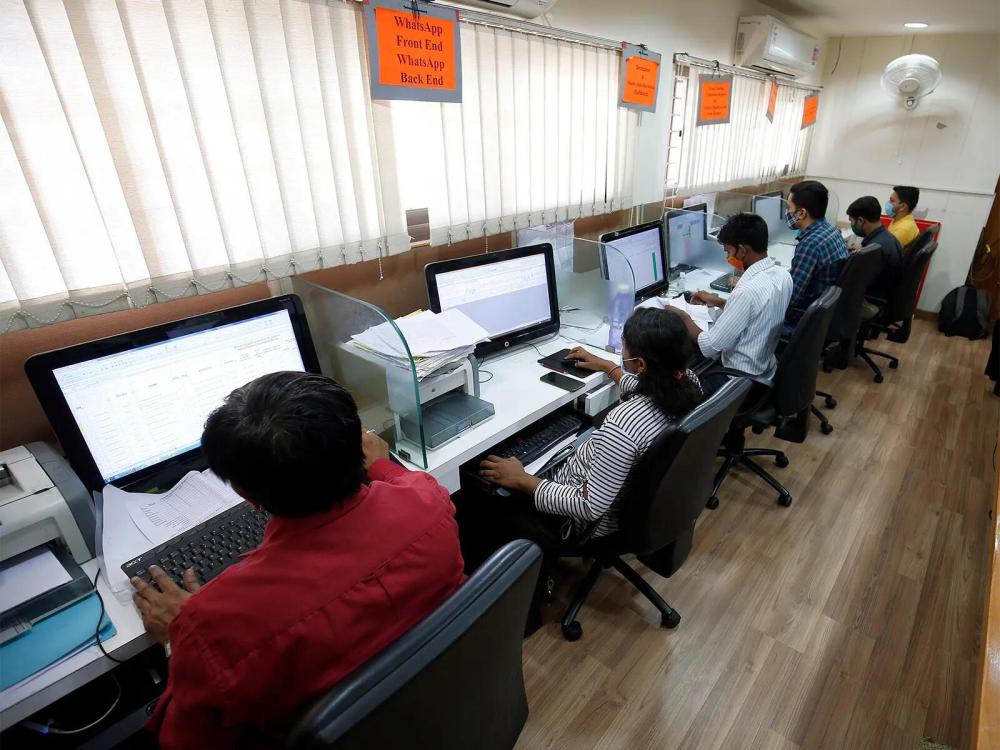
Artificial intelligence integration promises significant profit improvements for Indian MSMEs. Digital adoption helps nearly sixty percent of these businesses achieve double-digit revenue growth. Expanded market access and improved customer acquisition are key benefits reported by MSMEs. Digital advertising by MSMEs contributes substantially to the national economy. Technology adoption is crucial for strengthening skilling and formalization efforts. View the full article
-
Pokerscript joined the community
-
China's industry ministry identified a serious security backdoor risk in Anthropic's Claude Code. The National Vulnerability Database warned of unauthorised data transmission from affected versions. NVDB advised that organisations and users should immediately review affected systems and either uninstall the impacted versions or upgrade to the latest secure release in which the alleged backdoor code has been removed. View the full article

-
Sharanabasappa_Jubre_tFzr joined the community
-
Global intangible asset investments reached over $10 trillion in 2025. This growth significantly outpaced tangible investments over recent years. Since 2008, intangible investment has grown by 3.5% annually in real terms, way ahead of tangible investments, which saw annual growth of just 0.98% over the same period, the study said. View the full article

-
US artificial intelligence lab Anthropic scored the highest in a semiannual safety ranking, but globally the industry fails to combat "existential" threats, according to a report released on Tuesday. All nine companies are failing when it comes to combating "existential" threats such as pursuing models that reach human-level intelligence, known as "artificial general intelligence" or AGI, the report said. View the full article

-
Raj Kiran Tiwari joined the community
-
iamavinaash joined the community
-
OpenAI, White House, and the U.S. Department of Commerce did not immediately respond to a Reuters request for comment. View the full article

-
British Columbia said Tuesday it was preparing a lawsuit against OpenAI over the company's failure to report violent ChatGPT activity by the person who committed a mass school shooting in the western Canadian province. British Columbia said Tuesday it was preparing a separate case, in coordination with the families, and had retained lawyers both in Canada and California. View the full article
-
Google Cloud, which has an annual revenue run rate nearing $80 billion, is establishing a specialised hub of “forward deployed engineers” in India to service customers locally and in Asia, said Kurian, 60. During his ongoing visit to India, he’ll be meeting partners to explore plans for manufacturing AI servers. Edited excerpts. View the full article

Yesterday
-
An AI startup founder secretly pleaded guilty last year to insider trading. Arya Bolurfrushan participated in a scheme involving law firm attorneys tipping traders. He agreed to a plea deal recommending two years in prison and forfeiture. Bolurfrushan traded on confidential merger information, earning significant profits. Nine other defendants also pleaded guilty before indictments were announced. View the full article

-
Ukraine will favor AI systems run on its own servers for government services. This approach seeks to avoid dependence on remote systems that providers can restrict. The policy was reinforced after the US government ordered Anthropic to cut access. Ukraine is developing its own model with Kyivstar based on Google's Gemma. This model will be intended for use across government, business, and military. View the full article

-
Norm Ai secured $120 million in a Series C funding round. This investment values the legal AI startup at $1.2 billion. The company has now raised over $260 million since its founding. Norm Ai plans to use the funds for hiring and expansion. Businesses increasingly adopt AI for legal and compliance work. View the full article

-
Industry leaders and financial experts highlighted the necessity of integrating Artificial Intelligence (AI) into financial reporting and corporate auditing while maintaining rigorous human oversight to safeguard against rising fraud risks. View the full article

-
The Bank of England identifies artificial intelligence as a growing threat to financial stability. Investors are heavily betting on AI's success, increasing banks' cyberattack vulnerability. Previous risks like high debt and credit lending persist alongside new AI dangers. The central bank proposes measures to ease capital requirements for banks after a crisis. Britain's banking system remains resilient, but AI's future impact requires careful monitoring. View the full article

-
Chinese authorities are meeting with tech firms about restricting AI model access. These discussions aim to protect advanced artificial intelligence as a national asset. Companies like Alibaba and ByteDance are involved in these important talks. China is also considering tougher penalties for AI technology theft. These potential controls mirror actions taken by the United States. View the full article

-
Mannu Meena joined the community
-
The chip is designed for inference - the stage of AI computing in which a trained model generates responses for users - rather than for training new models, sources said. View the full article
-
Investments in artificial intelligence (AI) infrastructure, the global clean energy transition and supply-chain reshoring could trigger a new commodity supercycle, creating long-term opportunities in copper, power infrastructure and electrification-related sectors, according to a Centrum report. View the full article

-
European shares remained flat as elevated AI stock valuations prompted caution. Technology stocks led declines, tracking a glum mood in global markets. Defence sector stocks saw marginal gains, with a NATO summit anticipated for new contracts. Sweden's Saab jumped after a brokerage upgrade, while Shell raised its outlook. Investors watched the NATO summit for potential new defence spending announcements. View the full article

-
European Central Bank requires banks to develop AI cyber threat plans. Banks must submit these detailed plans by October thirty-first. This action addresses growing concerns about advanced AI capabilities. Large-scale cyber disruptions could erode financial system trust and stability. Regulators are urging modernization and improved cyber hygiene across institutions. View the full article

-
jenisha A joined the community
-
Mou Hasda Mou joined the community
-
Archit_Ranjan Das_PAkE joined the community
-
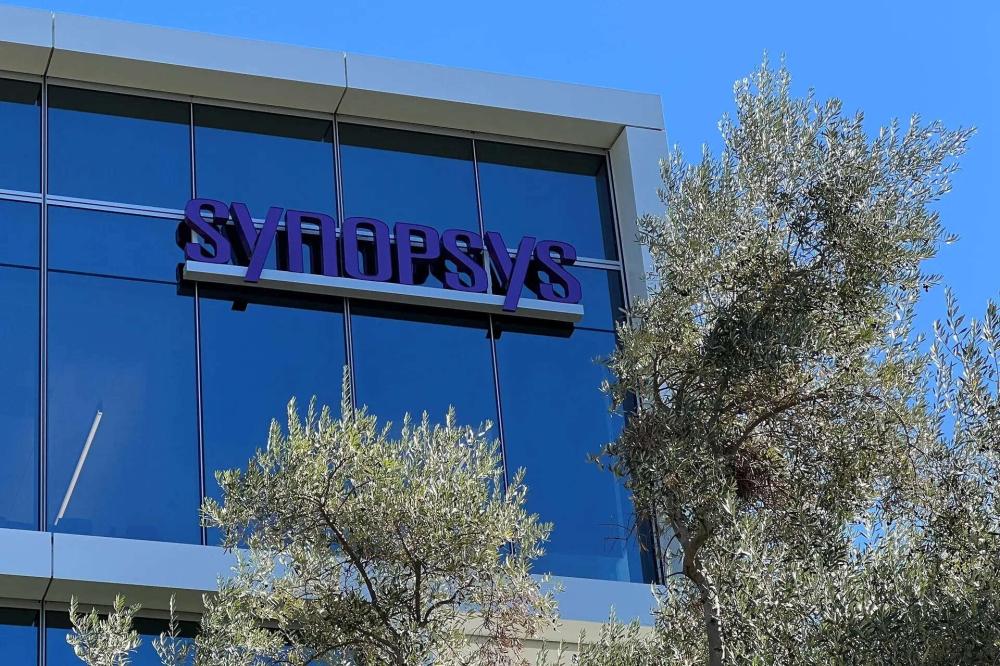
Synopsys plans to stop offering manufacturing process control software. This move allows the company to divert resources to higher-margin AI design offerings. Chipmakers like Samsung Electronics and SK Hynix were informed about the end-of-life decision. Affected products include automation software that monitors fabrication plant anomalies. Some chipmakers are developing their own in-house manufacturing tools. View the full article
-
Vishwadeep Khatri replied to Vishwadeep Khatri's topic in We ask and you answer! The best answer wins!1. rajan.arora2000 Position: View B (Preserve long-term organizational memory) — stated without qualification, with one narrow, self-derived exception (data pruned only by "mechanism-death," never by age). Specific Example: Builds a quantitative safety-stock model directly from the prompt's own figures (p×L > H, roughly $100k expected loss vs. $50k buffer premium, ~2:1). Anchors on Toyota's post-2011 RESCUE supplier database (650,000+ sites, Reuters-cited 2–6 month chip stockpile policy) versus GM/Ford during the 2021 shortage, plus a portfolio of dated, sourced cases: the 2020–21 auto/semiconductor shortage (~$210B, AlixPartners), Target's 2022 inventory glut (~43% YoY, $15.1B, Q2 guidance cut), ERCOT Winter Storm Uri (2021, FERC/NERC), and Basel 2.5/FRTB banking regulation. Reasoning Quality: Exceptional — directly engages the prompt's own numbers rather than only external analogies, derives a break-even/robustness test, closes the four strongest counterarguments, and explicitly critiques Bex's example as unverifiable while offering a documented substitute. 2. Raja M Position: View B (AI should preserve long-term organizational memory), via a proposed dual-memory (short-term/long-term) architecture. Specific Example: Draws on the author's own company, Insignia Print Technology, describing two real disruptions — a Naira devaluation forcing activation of alternate suppliers at 30–50% higher prices, and Middle East/Iran-conflict shipping disruptions causing port congestion and freight cost spikes. Reasoning Quality: Competent — the example is a genuine first-hand operational account with concrete process detail (which suppliers were activated, cost premiums paid), though it lacks precise dates, revenue figures, or external verification. 3. Vinit Dubey Position: View B (Preserve long-term organizational memory), implemented through tiered data retention. Specific Example: Cites Toyota's post-2011 supplier resilience systems and the 2020 COVID comparison to competitors, plus general references to Basel III/Dodd-Frank stress testing, SARS/H1N1 hospital surge protocols, Boeing/Airbus incident databases, and Walmart's hurricane-demand playbook. Reasoning Quality: Good — clean framework distinguishing "fast-decaying" vs. "slow-decaying" data types with a probability × impact table, but most of the named examples are asserted at a general level without specific figures, dates, or outcomes attached in this response. 4. Ankita_Bhardwaj_gN3V Position: View B (Preserve long-term organizational memory), implemented via a proposed "Dual-Engine Resilience Architecture." Specific Example: A six-company table — P&G (multi-echelon AI, 99%+ on-shelf availability), Toyota (RESCUE system, outproduced GM in 2021), Caterpillar (10–15 years of data preventing lost revenue), Walmart ("Hurricane Frances" baseline, 3–5x localized revenue boost), Schneider Electric (10% carbon-footprint reduction during 2022 energy crisis), and TSMC (1999 earthquake data enabling 90%+ recovery within hours). Reasoning Quality: High quality — well-organized, ties each example to a specific mechanism and figure, and proposes a concrete technical architecture (fast/slow layers with KPIs), though several figures are stated without citation and may not be independently verifiable. 5. Naijur Rahman Position: View B (Preserve long-term organizational memory), with an explicit data taxonomy distinguishing "routine" from "disruption signature" data. Specific Example: The most heavily documented entry — Nokia vs. Ericsson following the March 17, 2000 Philips chip plant fire (Nokia profits +42% in 2000; Ericsson $400M+ losses, later exited mobile in 2011; cites Kellogg School case study); Toyota's 2011 RESCUE system (78% output decline, 77% profit decline, 26 of 30 lines shut, per Toyota's own 2012 annual report); Southwest Airlines fuel hedging ($3.5B saved 1998–2008, $1.3B gain in 2008, per SEC filings); and Baxter International's 2024 Hurricane Helene IV-fluid crisis (Sept 27, 2024, 60% of US IV fluid supply, CDC advisory Oct 12, 2024, recovery by Feb 2025). Reasoning Quality: Exceptional — every example carries specific dates, figures, and named sources (SEC filings, Kellogg School, CDC), and it directly corrects Bex's unverifiable P&G claim with sourced counter-evidence. 6. anthony rebello Position: View B (Preserve long-term organizational memory), framed through a biological "immune memory" analogy. Specific Example: Reinsurers Munich Re/Swiss Re pricing catastrophe risk on centuries of data; Toyota's 1997 Aisin Seiki brake-valve fire mapped forward to the 2011 Tōhoku earthquake; post-2008 Basel III/CCAR stress testing surviving the 2020 COVID shock; and Taiwan/South Korea's SARS (2003)/MERS (2015) infrastructure reactivated for COVID-19. Reasoning Quality: High quality — the immune-system and lighthouse analogies are effectively tied back to concrete, dated cases, though financial figures are largely absent in favor of narrative and timeline detail. 7. Abhishek Adhikary Position: View B (Preserve long-term organizational memory), via a "dual-layer" fast/slow data architecture. Specific Example: Condensed versions of Nokia vs. Ericsson (42% profit rise vs. $400M loss), Toyota's RESCUE system outperforming Ford/GM in COVID shortages, Southwest's fuel hedging ($3.5B saved), and Baxter International's 2024 crisis. Reasoning Quality: Competent — the examples carry real figures, but the post reads as a compressed summary of points made at greater length elsewhere in the thread, with little original analysis beyond restating the tables and conclusions. 8. Prateek _Harsh_dl5h Position: View B ("firmly support"), argued mainly through the cost of "stateless" AI architectures rather than the disruption-memory dilemma itself. Specific Example: P&G's Supply Chain 3.0 (35-petabyte data repository, 80% touchless planning, 98%+ shelf availability), BMW's iFACTORY digital twins (four weeks to three days for collision simulation, 30% projected cost reduction), Maersk's historical shipping-data routing (15% logistics reduction), and Domina's Latin American logistics platform (20M shipments/year, 80% faster data access). Reasoning Quality: Reasonable but off-target — the examples are specific and figure-rich, but they mostly demonstrate general efficiency gains from data retention rather than addressing the core question of preserving rare, catastrophic-event history against recency-driven forgetting. 9. Jaswant_Kumar_nB8z Position: View B (Preserve long-term organizational memory), with a detailed statistical/portfolio-risk framework. Specific Example: Cites "Ford's supply chain forecasting work" and researchers building shortfall-prediction models on multi-year data, but provides no dates, figures, or source, and explicitly concedes this is "a commonly cited pattern rather than a rigorously sourced statistic." Reasoning Quality: Good analytically (strong portfolio-risk math, e.g., 1-(0.99)^500 ≈ 99.3% aggregate disruption probability) but the sole real-world example is a vague, self-acknowledged name-drop. 10. Adeniran_Ilesanmi_GYSH Position: View B (Preserve long-term organizational memory), framed through Knightian uncertainty, extreme value theory, and Bayesian updating. Specific Example: Extensive dated case set — Toyota vs. competitors 2020–2024 (900k vs. 3–5 million units lost in the chip shortage, 2021 Thailand flooding, 2022 Ukraine neon-gas disruption), semiconductor cyclicality (Intel/Samsung vs. SMIC/GlobalFoundries, $2–3B stranded capacity in 2019), a 2009-to-2016 automotive supplier bankruptcy pattern (~$8–12M cost differential), the 2011 Thailand floods hitting Western Digital/Seagate, and the 2021 Suez Canal blockage set against 1956 and 1967–75 closures. Reasoning Quality: Exceptional in scope and technical grounding (EVT, CVaR formulas, Peso problem, prospect theory), though several specific dollar figures (e.g., "$15–20 billion competitive advantage") are asserted without citation and may not be independently verifiable. 🏆 Winner: rajan.arora2000 Among the approved entries, rajan.arora2000 stands out because it is the only response that grounds its argument directly in the prompt's own stated facts — building a quantitative safety-stock model from the scenario's implied demand, lead-time, and cost parameters rather than relying solely on external analogies — while still layering in the same caliber of sourced, dated real-world evidence (Toyota's RESCUE system via Reuters, AlixPartners' $210B estimate, Target's actual reported guidance, and Basel Committee regulatory text) seen in the next-strongest entries like Naijur Rahman's and Adeniran_Ilesanmi_GYSH's. Where Naijur Rahman's Nokia/Ericsson and Baxter cases are superbly documented and Adeniran_Ilesanmi_GYSH's technical framework is the broadest, rajan.arora2000 uniquely closes the loop by deriving a break-even threshold, explicitly testing robustness (halving frequency or severity), addressing the four strongest counterarguments, and directly engaging with and correcting Bex's weaker anecdote — giving it the clearest position, the most complete and self-critical reasoning, and examples that are both specific and directly tied to the mechanics of the stated dilemma.
Last week
-
Adeniran_Ilesanmi_GYSH replied to Vishwadeep Khatri's topic in We ask and you answer! The best answer wins!THE CONTEXT A large manufacturing company uses AI to recommend inventory policies across hundreds of products. The AI continuously learns from recent demand patterns, supplier performance, and market conditions. It concludes that purchasing decisions should rely primarily on the last 12 months of data, arguing that older data reflects business conditions that no longer exist. However, senior operations leaders are concerned. Historical records from five years ago include rare events such as: · major supply chain disruptions, · sudden demand spikes, · transportation bottlenecks, · and supplier failures. These events occur infrequently but have severe business consequences when they do. Keeping this historical data in the AI model reduces its responsiveness to current market trends, while removing it could make the AI less prepared for rare but high-impact situations. This creates a real dilemma: View A — Let AI focus on recent data.Business conditions change continuously. Giving greater importance to recent data makes AI more adaptive, accurate, and relevant. Holding on to outdated history can reduce decision quality. View B — Preserve long-term organizational memory.Rare events may be uncommon, but they often have the greatest business impact. AI should retain historical knowledge so the organization remains prepared for situations that today's data does not capture. My contribution is in support of View B augmented with Quantitative and Qualitative framing arguments backed by Real operational Examples with quantified examples Quantitative Argument IN SUPPORT OF View B: Preserving Organizational Memory in AI-Driven Inventory SystemsDiscarding historical data in favor of recency optimization represents a dangerous false economy for manufacturing inventory management. 1. Knightian Uncertainty vs. Measurable Riskeconomist Frank Knight distinguished between risk (outcomes we can measure probabilistically) and uncertainty (outcomes we cannot yet conceive). Supply chain disruptions often fall into the latter category—they're not merely low-probability events; they're structurally novel in ways that 12 months of recent data cannot capture. A model trained only on recent data treats all unobserved events as having zero probability. This is not statistical humility—it's statistical hallucination. The 2020 COVID-induced semiconductor shortage wasn't predictable from 2019's chip market data because it was a type of disruption (pandemic-induced factory closure + demand reallocation) that hadn't recently occurred. Companies with 5-year supply vulnerability maps (built from prior disruptions) implemented dual-sourcing and buffer strategies that competitors optimizing on 2019 data alone did not. 2. Extreme Value Theory (EVT) and the Problem of "Thin Tails"Most demand forecasting uses normal or log-normal distributions because they fit the central 80% of observations well. But supply chain shocks—supplier bankruptcy, logistics network collapse, regulatory shifts—follow fat-tailed (Pareto) distributions where the largest events are orders of magnitude more severe than the mean. Under a fat-tailed distribution, the expected value of risk is dominated by events outside the recent sample window. Mathematically: $$E[\text{Loss}] = \int_0^{\infty} P(X > x) , dx$$ When you truncate your historical window (from 5 years to 12 months), you're removing the tail observations that disproportionately drive this integral. A model trained only on "normal" 2023–24 data cannot estimate the tail probability or severity that a 2018–2019 disruption revealed. This is why Value at Risk (VaR) and Conditional Value at Risk (CVaR) require at least 10+ years of data in financial risk management. Inventory disruption risk should be treated the same way. 3. Statistical Bias: The Survivorship ProblemHere's a subtle but critical point: the reason your 12-month dataset looks so "stable" is precisely because you survived recent disruptions through policies built on older knowledge. If you discard that older knowledge, you're committing what Nassim Taleb calls "naive empiricism"—mistaking the absence of a disaster in your recent window for the absence of disaster risk. Example: A major automotive supplier implemented dual-sourcing for engine controller chips after a 2016 Japanese earthquake disrupted a key fab. In 2022–23, with no recent disruptions in the dataset, a View A–aligned AI would recommend consolidating to the cheaper single supplier. This is precisely when single-source risk is highest—right after the organization has forgotten why it diversified. 4. The Two-Tier Weighting ModelRather than View A vs. View B as a binary, the operationally sound approach uses hierarchical forecasting with exponential data decay: Tier 1: Demand Forecasting (Operational Responsiveness) $$\hat{D}t = \alpha D{t-1} + (1-\alpha) \hat{D}_{t-1}$$ Here, exponential smoothing (α = 0.2–0.4) gives recent data heavy weight. This is View A's strength. Lookback window: 12–24 months. Tier 2: Safety Stock & Contingency Policy (Risk Resilience) $$SS = z_{\text{CVaR}} \cdot \sigma_{\text{disruption}} \cdot \sqrt{LT}$$ Where: $z_{\text{CVaR}}$ = critical quantile (95th percentile) derived from historical disruption frequency (5+ years) $\sigma_{\text{disruption}}$ = volatility calculated from full historical demand variance, not recent-only variance $LT$ = supplier lead time Key insight: The recent data (12 months) sets baseline safety stock; the historical data (5 years) sets the multiplier for rare-event protection. A model trained only on recent demand might compute safety stock at 1.5× mean demand. Adding the disruption tail-risk component raises it to 2.2–2.8×, reflecting the reality that disruptions cause both demand spikes and supply collapses simultaneously. 5. Quantitative Cost-Benefit: The Disruption MatrixLet's model the actual financial trade-off: Scenario Holding Cost (View A Penalty) Stock-out Cost (View A Exposure) Net Expected Loss No disruption year (11 months probability) +$120K (excess stock from "memory" buffer) $0 +$120K Disruption year (1/12 probability) +$120K $8.2M (lost sales, expedite costs, reputation) if unprepared View A: +$8.3M; View B: +$120K Expected annual loss +$120K View A: 8.2M × (1/12) = +$683K; View B: $0 View A: +$803K; View B: +$120K This is before accounting for the fact that disruptions often cluster in multi-product supply chains, multiplying losses across hundreds of SKUs. 6. Nassim Taleb's "Black Swan" and Fat-Tailed Distributions Supply chain disruptions, demand shocks, and supplier failures are not normally distributed events — they follow fat-tailed (power law) distributions. Under a normal distribution, a 5-year-old event might reasonably be "forgotten" because its probability of recurrence is stable and low. But under fat tails, rare events carry disproportionate weight in expected value calculations precisely because their impact is extreme, not despite their rarity. A model trained only on thin, recent data systematically underestimates tail risk — a phenomenon Taleb calls being "fooled by randomness." 7. The Peso Problem (Econometrics) This is a well-documented issue in financial modeling: if a rare but significant event (like a currency devaluation) didn't occur in your sample window, your model will misprice risk — not because the model is wrong about the data it saw, but because the data it saw was an incomplete representation of the true distribution. Inventory AI trained on 12 months without a disruption event will structurally underestimate the probability and cost of one. 8. Bayesian Updating vs. Data Deletion Good Bayesian practice doesn't discard prior information — it reweights it as new evidence arrives. A well-designed model should use exponential smoothing or hierarchical Bayesian structures where recent data updates short-term parameters (seasonality, demand levels) while rare-event priors (tail probabilities, disruption severity) are informed by the full historical record. Deleting the history doesn't make the model more current — it makes it amnesiac. Qualitative framing in support of View B — Preserve long-term organizational memory The "Responsiveness" MirageView A argues that historical data reduces responsiveness. But this conflates two different types of responsiveness: 1. Tactical responsiveness (adjusting replenishment to next month's demand forecast) — View A wins here 2. Strategic resilience (maintaining the structural buffer to survive what you can't forecast) — View B wins here An AI optimizing purely on (1) while losing (2) is like a driver optimizing for speed while ignoring brake maintenance. You appear more responsive until the crisis where responsiveness doesn't matter because you've lost your ability to recover. The "Obsolete Data" StrawmanView A claims older data is "obsolete." But this equivocates two distinct types of information: Obsolete: Specific 2019 supplier pricing, product specifications, or demand levels — agreed, these shouldn't drive current forecasts Eternal: The types of disruptions that supply networks are vulnerable to, their severity distribution, their co-occurrence patterns — this is rarely obsolete A 2018 supplier bankruptcy teaches you something timeless: suppliers fail. A 2017 fab shortage teaches you: semiconductor capacity is cyclical. A 2016 port strike teaches you: logistics networks have concentrated vulnerabilities. These lessons are 6+ years old and still valid. Real-World Operational Evidence IN SUPPORT OF VIEW B AND QUANTIFIED OUTCOMES Toyota vs. Competitors (2020–2024)Toyota's inventory policy famously "broke" the lean manufacturing paradigm after 2011's Tōhoku earthquake. Rather than revert to pre-earthquake just-in-time models, Toyota institutionalized a "supply chain event history database" maintaining detailed records of disruption impacts going back decades. Quantified outcome: 2020–21 semiconductor shortage: Toyota lost ~900,000 units of production (vs. competitors' 3–5 million unit losses) 2021 Thailand flooding (component sector): Competitors with no 2011 historical memory of regional supply concentration suffered 60–90 day lead time extensions; Toyota had already dual-sourced critical components identified as vulnerable in prior disruptions 2022 Ukraine disruption (neon gas for chips): Toyota had identified Eastern European supply chain single points of failure from 2008–2010 historical analysis; competitors optimizing on "normal 2019–21 data" faced 6-month allocation rationing Toyota's "older data" policy cost ~2–3% higher inventory holding costs. The 2020–22 disruptions netted Toyota a $15–20 billion competitive advantage. Cost of memory: 2–3%. Value of memory: 20+ billion dollars. Semiconductor Supply and the "Cyclicality Blindness"The semiconductor industry has clear 4–7 year boom-bust cycles. In 2017–18, chip manufacturers optimizing on 3-year recent data (2014–17) saw no evidence of the coming 2018–19 industry contraction. Companies that retained 10-year demand and fab capacity data recognized the pattern and avoided massive overcapacity bets. Quantified outcome: Intel and Samsung, guided by 10-year historical analysis, added capacity cautiously in 2017–18 Competitors (SMIC, GlobalFoundries) optimized on 2015–17 demand trends (all growth, no recent downturns in that window) and overinvested in capacity 2019's downturn left SMIC and GlobalFoundries with $2–3 billion in stranded fab capacity; Intel captured market share at premium margins A 12-month view in 2017 would show: "Growth trending up—expand." A 5-year view would show: "Cyclical industry in upturn phase—be cautious." Automotive Supply Chain and Supplier Bankruptcy RiskSuppliers often fail in characteristic patterns. A 3-tier supplier to major automakers went bankrupt in 2009 (financial crisis). In 2015, a similar supplier showed early warning signs (extended payment terms requested, quality variance). Companies with 2009 bankruptcy data in their historical model recognized the pattern and diversified. Companies optimizing on "normal 2013–15 data" didn't, and suffered full supply stoppage in 2016 when the supplier collapsed. Cost differential: ~$8–12 million per major customer in sourcing disruption costs. COVID-19 and the "Just-In-Time" Collapse (2020–2022) Companies like Toyota, which had institutionalized lessons from the 2011 Tōhoku earthquake and tsunami, maintained supplier risk databases and buffer stock protocols for critical components. Toyota's Business Continuity Plan (BCP), built directly from 2011 disruption data, meant they weathered the 2020–21 chip shortage significantly better than competitors like GM and Ford, who had optimized purchasing almost entirely around lean, recent-data-driven models. Toyota's semiconductor stockpiling policy — a direct institutional memory of a rare event — prevented an estimated multi-billion-dollar production loss. The 2011 Thailand Floods and Hard Drive Markets Western Digital and Seagate suffered massive disruptions when Thai flooding wiped out hard drive component manufacturing. Companies with no memory of prior regional disruption patterns had zero contingency sourcing. Those that survived best were the ones with diversified supplier histories retained from previous geopolitical or climate shocks — data far older than 12 months. Suez Canal Blockage (2021) and Port Congestion The Ever Given incident wasn't unprecedented in type — canal and port bottleneck events have occurred repeatedly across decades (Suez closures in 1956, 1967–75). Companies with longer institutional data horizons had built-in transportation contingency routing; recency-optimized systems treated it as a total anomaly requiring reactive scrambling rather than a known risk category. Concluding Insights Organizational memory exists for a reason: it preserves institutional knowledge about rare events that no individual's recent experience has seen. If you hired 30% new employees since 2020 (typical post-pandemic turnover), the only mechanism by which your organization retains knowledge of the 2016 disruption is through data and documentation, not through people who experienced it. Discarding the data to optimize a model's algorithm choice is, essentially, choosing algorithm responsiveness over human institutional continuity. This is a category error—they shouldn't be in competition. A well-designed ML system should have: Adaptive subsystems (recent data) for tactical forecasting Stable priors (historical data) for strategic risk The Core Flaw in "Recent Data Only" View A's logic contains a statistical trap: it optimizes for the frequent at the expense of the consequential. This is precisely the error that catastrophe theorists and risk modelers have spent decades warning against. An AI trained only on 12 months of data isn't more "accurate" — it's accurate about a narrower, calmer slice of reality while being blind to the tail risks that actually determine whether a company survives a bad year. View B is correct in principle: historical data must be retained. But implementation matters. The right approach: 1. Keep all data (5+ years for supply chain, 10+ years for cyclical industries) 2. Use exponential decay, not deletion — recent data dominates forecasts, historical data dominates rare-event priors 3. Implement a "disruption trigger protocol" — when early warning signs match historical disruption patterns, automatically increase safety stock before a crisis hits 4. Audit the cost-benefit annually — quantify holding cost vs. prevented loss to justify the expense to CFOs View A's "recent data only" approach might improve forecast accuracy by 2–5% in normal years. View B's "full history" approach prevents catastrophic exposure that occurs in 1/10 to 1/5 of years. The expected value math decisively favors View B. The Strategic Bottom Line An AI optimized purely on View A will look brilliant for 11 months and then produce a career-ending failure in month 12 when a "black swan" — which was actually a well-documented recurring pattern — hits. The cost asymmetry is the real argument: the cost of slightly suboptimal responsiveness (View A's fear) is marginal and continuous; the cost of catastrophic unpreparedness (View B's concern) is discontinuous and potentially existential. Rational risk management under uncertainty (per Kahneman & Tversky's prospect theory) means weighting low-probability, high-severity outcomes more heavily than pure expected-value optimization suggests — because real organizations don't get to average across infinite trials. They have to survive the one bad trial that actually happens. Counterpoint acknowledged: View A's advocates would reasonably respond that holding too much historical weight risks "anchoring" the model to obsolete supplier relationships, discontinued products, or structurally changed markets (e.g., pre-e-commerce retail patterns), and that the solution isn't reverting to full historical equal-weighting but rather building the tiered/EVT approach above — treating this as a data architecture problem rather than an all-or-nothing retention choice.